Table of Contents >> Show >> Hide
- Why The Unique Space Made Sense in Los Angeles
- What Made The Unique Space Actually Unique
- The Sonja Rasula Factor
- Why LA Creatives Fell for Spaces Like This
- The Bigger Lesson: Atmosphere Is Not Fluff
- A Beautiful Idea With a Finite Run
- What Today’s Workspace Designers Can Learn From It
- Final Thoughts
- Experience: What a Day in a Space Like The Unique Space Might Feel Like
If Los Angeles had to invent the opposite of a sad office park, it would probably come up with something a lot like The Unique Space. Think less beige cubicle maze, more old-factory-meets-creative-playground. For years, this Arts District address stood out as the kind of workplace that understood a basic truth about creative people: inspiration does not usually arrive under fluorescent lights next to a dying ficus and a microwave that smells like fish.
The Unique Space earned its reputation by doing something many workplaces only talk about in branding decks and motivational Slack messages. It created an environment that actually felt built for makers, founders, designers, photographers, editors, and all the gloriously hard-to-explain job titles that thrive in Los Angeles. It was part office, part clubhouse, part event venue, and part proof that workspace design can shape the way people think, collaborate, and build careers.
That matters in a city like LA. Los Angeles has long been one of America’s most creative labor markets, and the Arts District has become one of its most recognizable neighborhoods for art, design, media, fashion, and adaptive-reuse spaces. In that context, The Unique Space was not just a pretty place to put a laptop. It was a physical expression of how LA creatives wanted to work: collaboratively, stylishly, flexibly, and without feeling like they had accidentally wandered into a tax seminar.
Today, The Unique Space is best understood as a memorable chapter in the story of creative work in Los Angeles rather than a currently operating coworking destination. But that does not make it less interesting. In fact, it makes it more revealing. Its rise says a lot about what creative professionals wanted from a workspace, and its legacy still offers smart lessons for anyone designing offices, studios, or hybrid community spaces in LA and beyond.
Why The Unique Space Made Sense in Los Angeles
Location did a lot of the heavy lifting. The Unique Space was set in LA’s Arts District, a neighborhood with deep industrial roots and a long-standing identity as one of the city’s creative and cultural hubs. That backdrop was not some happy accident. It was part of the appeal. In the Arts District, old warehouses, factories, and commercial buildings have repeatedly been repurposed into lofts, galleries, offices, studios, retail concepts, and hospitality spaces. The neighborhood practically speaks fluent exposed brick.
For creative professionals, that kind of urban fabric matters. Los Angeles has never fit neatly into the classic East Coast model of work, commute, tower, repeat. The city’s creative industries stretch across entertainment, design, fashion, art, publishing, photography, and entrepreneurship. Many people work across multiple disciplines at once. They freelance, consult, direct, style, produce, sketch, edit, and pitch. A rigid office can feel like a costume that does not fit. A flexible, design-forward workspace in the Arts District, on the other hand, feels like LA being honest with itself.
The broader economics support that story too. Los Angeles has long posted one of the highest concentrations of creative workers in the country, and the region’s creative economy has played an outsized role in output, jobs, and cultural influence. In plain English: LA is not just where people go to make things. It is one of the places where the business of making things becomes a major economic engine. A workspace that catered to that reality was not a luxury. It was an intelligent response to the city around it.
What Made The Unique Space Actually Unique
A historic shell with strong design instincts
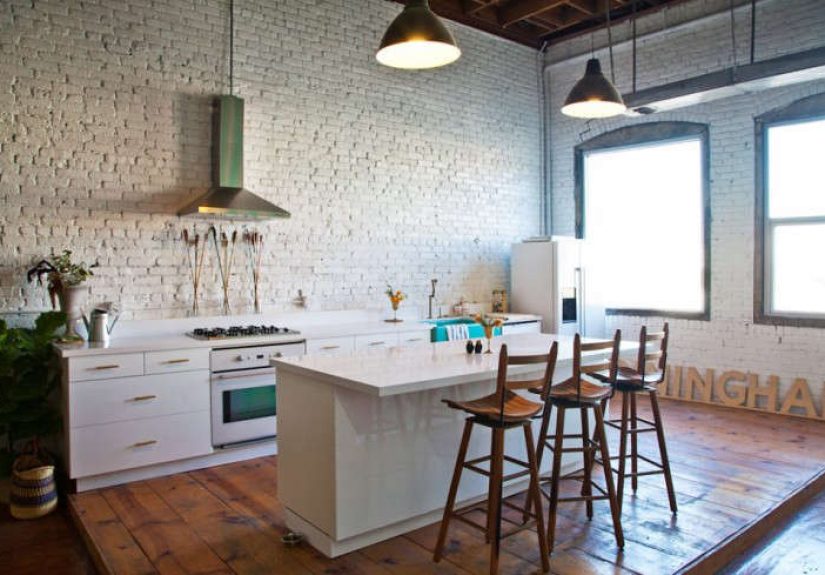
The Unique Space was housed in a renovated historic factory in the Arts District, and that detail was central to its personality. It reportedly measured around 18,000 square feet, which gave it the scale to be more than a boutique studio but less than a soulless office bunker. Photos and descriptions from its early coverage emphasized high ceilings, exposed brick walls, wood floors, open beam structure, and a general warehouse-meets-editorial-shoot atmosphere that LA creatives can spot from a mile away.
But this was not industrial chic for industrial chic’s sake. Founder Sonja Rasula reportedly leaned into locally made décor, wallpaper, and furniture, which helped the space feel connected to the community it served. Instead of the usual corporate minimalism that whispers, “Please do not have a personality near the receptionist,” the interiors had warmth, texture, and a sense of curation. One of the more memorable details was a Joshua Tree photographic mural, the kind of move that could have been cheesy in the wrong hands but here helped the place feel distinctly Californian.
Amenities built for the way creatives really work
This was not just a room with Wi-Fi and optimism. Coverage of The Unique Space consistently described a communal kitchen, lounge and library, meeting rooms, private offices, a boardroom, and a rooftop terrace. There were also references to event capabilities, a flexible floor plan, and even Linus bikes that guests and tenants could borrow. That mix tells you everything about the intended user. This was a space for people who needed to answer emails, hold client meetings, brainstorm a campaign, shoot content, host a gathering, and then decompress for ten minutes without staring into a drywall corner.
Even the historical pricing helped tell the story. In 2015, published rates suggested a drop-in day pass around $35 and a full-time membership around $350 per month. That positioned the workspace somewhere between “accessible experiment” and “serious business base.” In other words, it could appeal to the freelancer who needed a landing pad, the startup team that needed structure without stiffness, and the small creative company that wanted legitimacy without losing its cool.
The Sonja Rasula Factor
You cannot talk about The Unique Space without talking about Sonja Rasula. Her name comes up repeatedly in press coverage because the workspace reflected her broader mission. Rasula was already known for building community around independent makers and entrepreneurs through Unique Markets, and The Unique Space appears to have grown from a very practical insight: talented creatives often need more than inspiration. They also need infrastructure.
That insight sounds obvious now, but it was sharp. Many artists, designers, and makers are excellent at the work itself and less thrilled by the business machinery wrapped around it. Social media strategy, accounting, logistics, client presentations, meetings, growth plans, and event production are not always the glamorous part of the dream. The Unique Space tried to bridge that gap by creating a home base where creative identity and professional seriousness could coexist without awkwardness.
That is part of why the space seems to have resonated with a broad mix of tenants and users. Reports connected it not only to artists and designers but also to media companies and mission-driven organizations. It was not a monoculture. It was a creative ecosystem, which is far more useful in real life than a room full of people whose LinkedIn bios all end with the same buzzword.
Why LA Creatives Fell for Spaces Like This
The appeal of The Unique Space was about more than aesthetics. Yes, people like beautiful surroundings. Yes, exposed brick remains undefeated in the battle against dullness. But the deeper appeal was psychological. Creative work is often messy, nonlinear, and collaborative in bursts. It requires solitude, then conversation, then focus, then an accidental hallway idea that changes everything. Traditional offices often optimize for supervision. Creative workspaces need to optimize for energy.
The Unique Space did that by blending work and community. You could imagine a day there unfolding naturally: arrive with a plan, get derailed by a better idea, pull a collaborator into a lounge conversation, move to a meeting room, take a breather on the rooftop, return to your desk, and leave with three new contacts and one unexpectedly solid plan. That kind of day is hard to replicate in a generic workspace where every surface seems to have been selected by a committee dedicated to neutral disappointment.
There was also something very Los Angeles about the format. LA professionals often live in multiple lanes at once. A person can be a brand strategist, ceramic artist, creative producer, and part-time founder before lunch. A rigid office model assumes stable categories. The Unique Space seemed designed for people whose careers behave more like playlists than filing cabinets.
The Bigger Lesson: Atmosphere Is Not Fluff
One of the smartest things The Unique Space demonstrated is that atmosphere is not decoration. It is infrastructure. The look and feel of a workspace influence whether people want to stay, return, invite collaborators, host clients, or claim the place as part of their professional identity. For creatives especially, the environment can either support momentum or quietly drain it.
That does not mean every creative workspace needs expensive furniture, a photogenic sink, or a mural big enough to get its own mood board. It means the space should understand its audience. The best workspaces for creatives make room for different kinds of labor: quiet focus, visual inspiration, private conversation, communal exchange, informal downtime, and public presentation. The Unique Space appears to have succeeded because it grasped that creative professionals do not simply need desks. They need settings that match the rhythm of the work.
It also proved the value of local identity. So many offices feel like they were downloaded from the same template. The Unique Space felt rooted in downtown Los Angeles, in the Arts District, and in a community of makers and entrepreneurs who wanted more character from the places where they spent their days. That sense of place is incredibly hard to fake, and it is one of the reasons people still remember the workspace years later.
A Beautiful Idea With a Finite Run
There is one important reality check. The Unique Space does not appear to be operating today. Its official Instagram bio labels the project “CLOSED RIP” and dates it 2012–2022, while a more recent wedding-platform review also notes that the venue was permanently closed. That detail matters because it keeps the story honest. This is not a current booking guide dressed up as a feature. It is a look at a workspace that captured something real about a city and a moment.
In a way, that makes the story richer. Not every influential creative space lasts forever. Some matter because they define an era, gather the right people at the right time, and leave behind a template others continue to borrow. The Unique Space seems to fit that category. Its legacy lives in the larger shift toward design-conscious, community-oriented, flexible work environments that now feel almost standard in creative industries, even though they once looked refreshingly radical.
What Today’s Workspace Designers Can Learn From It
First, design for real use, not just pretty photos. The Unique Space looked good, but its appeal came from how its pieces worked together: communal zones, private rooms, event capacity, and amenities that made long workdays more humane.
Second, let a building keep some of its biography. The best adaptive-reuse creative spaces do not erase the past. They repurpose it. Historic factory bones, warehouse scale, and tactile materials helped The Unique Space feel like a place with memory rather than a brand-new box pretending to be interesting.
Third, build community into the floor plan. A creative workspace should not force togetherness every second, but it should make connection easy. A kitchen, library, lounge, rooftop, and bookable rooms are not random perks. They are invitations for interaction, collaboration, and trust.
Finally, know your city. The Unique Space worked because it felt unmistakably LA: entrepreneurial, artsy, polished but not uptight, and allergic to blandness. Workspaces that reflect local culture tend to age better than those designed to impress everyone and therefore truly delight no one.
Final Thoughts
The Unique Space was more than a coworking address. It was a small but vivid answer to a bigger question: what kind of workplace helps creative people do their best work? Its answer was clear. Give them beauty without pretension, flexibility without chaos, community without forced networking, and a setting that feels connected to the neighborhood around it.
For LA creatives, that formula made immediate sense. For everyone else, it still offers a useful reminder. People do not just work in spaces. They absorb them. And when a workspace gets the mix right, it can become part office, part identity, and part catalyst. The Unique Space may no longer be open, but the idea behind it is very much alive.
Experience: What a Day in a Space Like The Unique Space Might Feel Like
You show up a little earlier than planned because downtown traffic performed its usual miracle and somehow did not ruin your morning. Outside, the building still looks like the kind of place that once made or stored something practical, but inside it has been reintroduced to the world as a space for ideas. The first impression is not “office.” It is “possibility.” There is height, texture, light, and that faint creative buzz that tells you people are doing things here, not merely forwarding emails with the word “circle back” in them.
You settle in with coffee, and almost immediately the room starts working on you. The exposed brick and wood floors do not magically make you more talented, unfortunately, but they do something subtler. They make work feel less like punishment and more like participation. You are not hiding in a cubicle. You are in a setting that seems to expect thought, taste, and momentum. For a creative professional, that emotional shift matters more than most managers realize.
By midmorning, the day has already changed shape. A quick solo work block becomes a spontaneous conversation at a communal table. Someone nearby mentions a photographer, a grant opportunity, a fabricator, or a producer you have been meaning to meet. Another person is preparing for a client presentation. Somebody else is storyboarding. Nobody looks like they have the same exact job, which is oddly reassuring. In a city full of unconventional careers, a space like this makes unconventional feel normal.
Later, you drift into a meeting room or boardroom to talk through a pitch, and suddenly the room is doing another kind of work. It is helping you look more organized than you felt thirty minutes earlier. Good creative spaces have that power. They can gently upgrade your professionalism without sanding off your personality. Then maybe lunch spills into the kitchen or lounge, where the conversation bounces from practical problems to bigger ambitions. A workspace like this can turn networking into something less dreadful simply because it feels like hanging out with people who understand the same weird deadlines, client notes, and career zigzags.
By the afternoon, the rooftop or lounge starts to matter. Not because you are avoiding work, but because creative work needs pauses the way muscles need recovery. A few minutes away from the screen can save an idea from becoming overcooked. Then you go back downstairs, tighten the copy, revise the deck, send the invoice, or map out the next collaboration. By the time you leave, you have not just completed tasks. You have inhabited a rhythm. That is the part many ordinary offices miss. A truly effective creative workspace does not merely provide desks and internet. It shapes the cadence of the day, and in the best cases, it reminds people why they wanted to make things in the first place.