Table of Contents >> Show >> Hide
- Why Detecting Rebar Matters Before Cutting or Drilling
- Understanding What You Are Looking For
- Best Methods to Detect Rebar in Concrete
- Step-by-Step: How to Detect Rebar in Concrete
- How Deep Can Rebar Be Detected?
- Common Mistakes When Detecting Rebar
- DIY vs. Professional Rebar Detection
- Practical Example: Finding Rebar Before Installing Anchors
- Professional Tips for Better Rebar Detection
- Experience-Based Notes: Lessons from Real Rebar Detection Work
- Conclusion
- SEO Tags
Finding rebar inside concrete sounds like a job for X-ray vision, a superhero cape, and maybe a suspiciously dramatic soundtrack. In real life, thankfully, you do not need superpowers. You need the right scanning method, a careful workflow, and enough patience not to drill first and ask questions later.
Rebar is the steel reinforcement hidden inside concrete slabs, walls, beams, columns, sidewalks, bridges, foundations, and many other structures. It gives concrete tensile strength, helping it resist cracking and structural failure. But when you are planning to core drill, anchor, saw cut, remodel, inspect, or repair concrete, that hidden steel can become a serious obstacle. Hit it with a drill bit and you may damage the structure, ruin expensive equipment, create a safety hazard, or turn a simple project into a very loud invoice.
This guide explains how to detect rebar in concrete using practical, professional, and DIY-friendly methods. We will cover ground penetrating radar, cover meters, metal detectors, magnetic locators, visual clues, construction drawings, and smart jobsite habits. Whether you are a contractor, inspector, engineer, facility manager, or determined homeowner with a hammer drill and dreams, this article will help you locate rebar before concrete starts fighting back.
Why Detecting Rebar Matters Before Cutting or Drilling
Concrete may look like one solid gray block, but it often hides a busy internal neighborhood. Besides rebar, you may find post-tension cables, electrical conduit, plumbing, wire mesh, radiant heating lines, embedded plates, and old mystery objects that no one remembers installing. Detecting rebar is not just about avoiding steel. It is about understanding what is inside the concrete before you disturb it.
Cutting through rebar can reduce the load-carrying capacity of a slab or beam. Drilling into rebar can weaken reinforcement, create corrosion pathways, and compromise the structural design. In post-tensioned concrete, accidentally striking a tensioned cable can be extremely dangerous. Even on smaller jobs, hitting rebar can snap bits, stall tools, damage anchors, and make your project feel like it has developed a personal grudge.
Rebar detection is especially important before core drilling, installing anchors, cutting trenches, adding mechanical penetrations, remodeling commercial buildings, inspecting bridge decks, checking concrete cover, or verifying reinforcement layout when drawings are missing or unreliable.
Understanding What You Are Looking For
Rebar is usually arranged in a grid or mat pattern. In slabs, bars may run in two directions at regular spacing, such as 6, 8, 12, or 18 inches apart, depending on the design. In walls and columns, vertical and horizontal reinforcement may overlap, creating multiple layers. In beams, rebar may be concentrated near the top, bottom, or sides where tensile forces are expected.
The distance from the concrete surface to the top of the rebar is called concrete cover. Cover protects steel from corrosion, fire, and weather exposure. In many scanning projects, you are not only trying to find where the rebar is located; you are also trying to estimate how deep it is. That depth matters when choosing anchor length, planning saw cuts, or deciding whether a drilling location is safe.
Best Methods to Detect Rebar in Concrete
There is no single perfect rebar detection method for every job. The best choice depends on slab thickness, concrete moisture, bar spacing, depth, access, budget, and whether you also need to locate conduits or post-tension cables. Below are the most common and reliable methods.
1. Ground Penetrating Radar
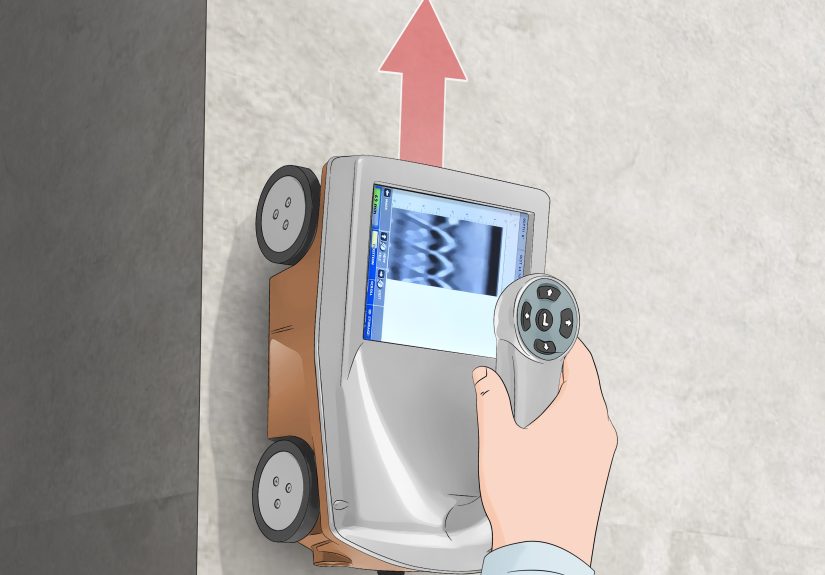
Ground penetrating radar, commonly called GPR, is one of the most widely used professional methods for scanning concrete. A GPR scanner sends electromagnetic radar pulses into the concrete. When those pulses encounter a change in material, such as steel rebar, conduit, voids, or the bottom of a slab, part of the signal reflects back to the scanner. The operator interprets the display and marks the surface.
GPR is popular because it is fast, non-destructive, and useful for scanning larger areas. It can locate rebar, estimate depth, identify patterns, detect multiple layers, and often show other embedded objects. On many jobs, GPR is the go-to choice before core drilling, saw cutting, trenching, or installing heavy-duty anchors.
The main limitation is interpretation. A GPR screen is not a magical photograph of the slab. It is a signal image that requires training. Rebar, conduit, post-tension cables, mesh, and slab edges can produce reflections that need to be read correctly. Concrete moisture, dense reinforcement, surface conditions, and limited access can also affect results.
2. Cover Meters and Rebar Locators
A cover meter, also known as a rebar locator, is designed specifically to detect steel reinforcement and estimate concrete cover. Many cover meters use electromagnetic or eddy-current principles. They are especially useful when you need to locate rebar, measure bar spacing, estimate cover depth, or confirm safe drilling spots.
Cover meters work well for reinforcing steel near the surface. They are commonly used in quality control, structural inspections, repair planning, and investigations where cover depth matters. A good cover meter can help determine whether reinforcement is too shallow, whether spacing matches the expected design, and where to avoid drilling.
The limitation is depth and complexity. In heavily reinforced concrete, multiple layers of rebar can confuse readings. Large bars, closely spaced bars, wire mesh, and nearby metal objects may affect accuracy. Cover meters are excellent tools, but they perform best when used with a planned grid and a clear understanding of the structure.
3. Handheld Metal Detectors
Handheld metal detectors can be useful for quick rebar checks, especially for smaller projects. Some contractor-grade scanners are designed to detect ferrous metal, non-ferrous metal, live wiring, and other embedded materials. These tools may be enough when you only need to avoid shallow rebar before drilling a few holes.
For example, a homeowner installing a railing on a concrete step may use a quality metal scanner to identify likely rebar locations near the surface. A maintenance worker installing light-duty anchors may use one to check a small area before drilling. These devices are typically less expensive than professional GPR systems and easier to operate.
However, a basic metal detector is not a substitute for professional concrete scanning when the stakes are high. It may not distinguish rebar from conduit, may have limited depth, and may struggle with dense reinforcement. If you are cutting a suspended slab, drilling in a commercial structure, or working near utilities, use a professional scanning service or advanced equipment.
4. Magnetic Locators
Magnetic locators detect ferrous metal by sensing magnetic fields. Since rebar is steel, these tools can sometimes help locate reinforcement. They are commonly used for finding buried iron, property pins, valves, and other ferrous objects, but they can also provide clues in concrete work.
The advantage is simplicity. Magnetic tools do not need to “see” through concrete in the same way radar does; they respond to metal. The disadvantage is limited detail. They generally do not provide the same mapping quality, depth information, or object differentiation as GPR or a specialized cover meter.
5. Construction Drawings and As-Built Plans
Before turning on a scanner, look for drawings. Structural plans, as-built documents, shop drawings, and prior inspection reports may show rebar size, spacing, depth, lap locations, and post-tension cable profiles. If the building is newer, digital records may be available from the owner, engineer, municipality, or facility team.
Drawings are helpful, but they are not proof. Field conditions often differ from plans. Rebar can shift during placement, repairs may have changed the structure, and old drawings may be incomplete. Treat plans like a treasure map: useful, but not something you should trust blindly while swinging a core drill.
6. Visual Clues and Surface Inspection
Sometimes the surface gives hints. Look for previous anchor holes, exposed steel at cracks or spalls, rust staining, saw-cut patches, repair mortar, slab edges, construction joints, and repeating crack patterns. In some older slabs, rebar or wire mesh may be visible at edges, openings, or damaged areas.
Visual inspection cannot replace scanning, but it can guide your expectations. If you see rust stains along a line, reinforcement may be close to the surface. If cracks repeat at regular spacing, they may follow reinforcement or control joints. If a slab edge exposes a bar pattern, measure the spacing and compare it with scan results.
Step-by-Step: How to Detect Rebar in Concrete
Step 1: Define the Work Area
Start by marking the exact area where drilling, cutting, anchoring, or inspection will occur. Do not scan only the tiny spot where the bit will touch. Scan a generous surrounding area so you can understand the pattern. Rebar is usually arranged in lines, and one target often tells you where the next one will be.
For a core hole, scan at least several inches around the planned opening. For a saw cut, scan along the full path and beyond both ends. For anchor installation, scan each hole location and the surrounding pattern so you can adjust without guessing.
Step 2: Review Available Plans
Check drawings if you have them. Note expected bar direction, spacing, cover, slab thickness, beam locations, and post-tension warning notes. If the plans show post-tensioning, elevated slabs, or embedded conduits, increase the level of caution immediately. This is not the moment for cowboy construction.
Step 3: Choose the Right Detection Tool
Use GPR for broad scanning, suspended slabs, unknown structures, multi-layer reinforcement, or situations where conduits and post-tension cables may be present. Use a cover meter when you need rebar cover, spacing, and bar layout details. Use a handheld metal scanner for small, low-risk checks where shallow steel is the main concern.
If the work could affect structural reinforcement, public safety, electrical systems, or post-tension cables, hire a qualified scanning professional. The cost of scanning is usually tiny compared with the cost of hitting the wrong thing.
Step 4: Calibrate and Test the Equipment
Follow the manufacturer’s instructions. Some scanners are calibration-free, while others require setup based on material, scan mode, or expected depth. Select the correct mode for concrete. Clean the surface so the scanner can move smoothly. Remove loose debris, standing water, metal scraps, screws, nails, tools, and anything else that could create false readings.
If possible, test the tool on a known area where rebar is visible or already documented. This gives you a feel for signal strength and helps confirm that the tool is responding as expected.
Step 5: Scan in Multiple Directions
Move the scanner slowly and steadily across the surface. Mark each detected line with chalk, pencil, or removable marker. Then scan perpendicular to the first direction. Rebar grids usually run in two directions, and crossing scans help reveal the layout.
For GPR, scan in parallel lines and keep consistent spacing. For a cover meter, move slowly enough for the signal peak to register clearly. For a metal detector, approach the target from multiple sides to find the centerline rather than simply marking the first beep like an excited game-show contestant.
Step 6: Mark the Rebar Pattern
Once you identify the center of each bar, draw lines on the concrete surface. Label them if needed: “rebar,” “possible conduit,” “unknown target,” “do not drill,” or “safe zone.” Use different colors when marking different object types. Good marks prevent confusion later, especially when several trades are working in the same area.
Do not mark uncertain readings as certain. If a signal might be conduit or a post-tension cable, label it as unknown and avoid it until verified. Accuracy is not just about finding things; it is about honestly communicating what you know and what you do not know.
Step 7: Confirm the Safe Location
After mapping the reinforcement, select a drilling or cutting location that avoids marked bars and unknown objects. Confirm the spot with a second pass. If the project is critical, use more than one method. For example, GPR can map a broad area, while a cover meter can confirm shallow rebar positions and cover depth.
Step 8: Drill or Cut Carefully
Scanning reduces risk, but it does not turn concrete into a guaranteed surprise-free dessert. Use the correct drill speed, bit, dust control, and personal protective equipment. When drilling, advance carefully. If you feel sudden resistance, stop. Do not force the bit through suspected steel unless the engineer or project plan specifically allows it.
Concrete work can create respirable silica dust, so use wet methods, dust collection, shrouds, HEPA-filtered vacuums, and other controls appropriate for the task. Safety is part of the scanning process, not an optional accessory sold separately.
How Deep Can Rebar Be Detected?
Detection depth depends on the tool, concrete conditions, target size, and reinforcement density. Some handheld metal detectors can locate rebar several inches deep. Professional cover meters may provide reliable readings for near-surface reinforcement and cover measurement. GPR systems can often detect deeper objects and slab features, but higher-resolution antennas generally trade depth for detail.
In simple terms, shallow rebar is easier to locate. Deep rebar, congested steel, wet concrete, metal decking, thick slabs, and closely spaced mats are harder. If your project involves thick structural elements or multiple reinforcement layers, do not rely on a basic scanner and wishful thinking. Wishful thinking is not an approved measuring instrument.
Common Mistakes When Detecting Rebar
Scanning Too Small an Area
A single beep does not reveal a reinforcement layout. Scan enough area to see the pattern. Rebar is rarely random, and understanding the grid helps you verify your marks.
Ignoring Post-Tension Cables
Post-tension cables are not ordinary rebar. They can be under high tension and may be dangerous if cut. If a slab may be post-tensioned, use professional scanning and review structural documents before penetrating it.
Trusting Old Drawings Too Much
Drawings are valuable, but they can be wrong, outdated, or incomplete. Always verify field conditions before drilling or cutting.
Using the Wrong Tool
A cheap stud finder may detect some metal near the surface, but it is not designed for serious concrete scanning. Match the tool to the risk level of the job.
Failing to Document Results
Photograph marked areas, record scan results, and save notes. Documentation helps future workers and protects everyone if questions come up later.
DIY vs. Professional Rebar Detection
For small household projects, a quality metal scanner may be enough to avoid shallow rebar before installing light-duty anchors. Examples include mounting a handrail on a concrete step, fastening a small bracket, or checking a non-structural slab edge.
Professional scanning is the better choice when you are core drilling through slabs, saw cutting floors, working in commercial buildings, dealing with suspended concrete, modifying structural members, or drilling near utilities. Professionals use advanced equipment, understand signal interpretation, and can provide clear surface markings and reports.
A simple rule works well: if hitting the wrong object could injure someone, damage the structure, shut down a facility, or cost more than the scanner rental, call a professional.
Practical Example: Finding Rebar Before Installing Anchors
Imagine you need to install four anchor bolts for a steel base plate on a concrete slab. First, mark the plate location and anchor hole positions. Next, scan the area in both directions. You discover rebar running east-west every 12 inches and north-south every 16 inches. One planned anchor lands directly over a bar.
Instead of drilling and discovering the steel the hard way, you adjust the plate slightly or consult the project engineer for an approved alternate anchor layout. You rescan the revised locations, confirm that each hole avoids rebar and unknown objects, then drill using dust control. The job finishes cleanly, the anchors work properly, and your drill bit does not file a complaint with human resources.
Professional Tips for Better Rebar Detection
Use slow, overlapping passes. Mark the center of the signal, not the edge. Scan from more than one direction. Keep metal tools away from the scanning surface. Compare scanner results with drawings and visible clues. Label uncertain targets clearly. Take photos before cutting. When in doubt, stop and verify.
Also remember that rebar is only one piece of the puzzle. Electrical conduit, plumbing, post-tension cables, wire mesh, and embedded plates can be just as important. A scanner that only finds metal may not detect plastic pipe or some non-metallic conduit. Choose equipment based on all possible hazards, not only the one you are expecting.
Experience-Based Notes: Lessons from Real Rebar Detection Work
One of the biggest lessons in detecting rebar is that concrete rarely tells the whole truth at first glance. A smooth slab can hide a tidy reinforcement grid, a chaotic repair history, or a surprise conduit placed exactly where someone wants to drill. That is why experienced workers treat every concrete surface as unknown until it has been checked.
A common field experience is discovering that the first scan only gives part of the story. For example, a contractor may scan a slab in one direction and mark several clean rebar lines. Everything looks simple. Then a second scan in the perpendicular direction reveals another layer of steel crossing the first. Without that second pass, the “safe” drilling location might not have been safe at all. The lesson is simple: one-direction scanning is like reading only every other page of a manual and hoping the plot makes sense.
Another practical lesson is that surface preparation matters more than beginners expect. Dust, small metal shavings, tie wire, screws, nails, foil tape, or nearby tools can create confusing signals. Before scanning, clear the work area. Move toolboxes, extension cords, metal straightedges, and loose hardware away from the slab. A clean surface helps the scanner read the concrete, not the clutter sitting on top of it.
Experienced scanners also learn to respect uncertainty. Not every signal can be confidently identified. A strong line may be rebar, but in some locations it could be conduit or a post-tension tendon. A faint signal might be deep reinforcement, wire mesh, or noise. The professional habit is to mark uncertainty honestly. Writing “unknown target” on the slab is much better than pretending every mark is rebar. Confidence is useful; fake confidence is how expensive meetings are born.
On renovation projects, older buildings deserve extra caution. Drawings may be missing, repairs may have been made decades earlier, and embedded systems may not follow modern expectations. In one typical scenario, a team plans to drill for new mechanical supports in an old concrete ceiling. The original drawings show one reinforcement pattern, but scanning reveals irregular spacing and possible conduit in the area. The smart move is to adjust the layout and verify with additional scanning, not argue with the scanner because the drawing looks prettier.
Depth readings also require judgment. A scanner may estimate that rebar is 2 inches below the surface, but jobsite conditions can affect that number. Concrete density, moisture, bar size, overlapping reinforcement, and surface roughness can all influence readings. For routine anchor work, an estimated depth may be enough. For structural investigation, repair design, or critical drilling, the readings should be interpreted by someone qualified and, when necessary, confirmed with multiple methods.
Another experience-based tip is to plan escape routes for your layout. If you need four anchor holes, do not mark only one perfect location and assume the slab will cooperate. Scan a slightly larger area so you have options. When one hole conflicts with rebar, you can shift the layout, rotate a base plate, use an approved alternate anchor, or consult an engineer before the schedule starts sweating.
Finally, the best rebar detection work combines technology with discipline. Tools are powerful, but they are not mind readers. Good results come from a careful process: review documents, inspect the surface, choose the right scanner, scan in a grid, mark clearly, verify safe zones, document everything, and drill with caution. That workflow may take a little longer, but it is far faster than repairing a damaged slab, replacing a snapped core bit, or explaining why the “quick hole” became the most dramatic part of the project.
Conclusion
Detecting rebar in concrete is one of those tasks that rewards patience and punishes guessing. The best method depends on your project, but the goal is always the same: locate reinforcement, understand the slab, avoid hidden hazards, and complete the work safely.
Ground penetrating radar is excellent for professional concrete scanning and locating multiple embedded objects. Cover meters are ideal for finding rebar, checking spacing, and estimating concrete cover. Handheld metal detectors can help with smaller low-risk jobs, while drawings and visual clues provide useful context. The smartest approach often combines several methods instead of relying on one tool alone.
Before you drill, cut, core, or anchor, take the time to scan properly. Concrete may be tough, but it is not mysterious when you use the right process. Find the rebar first, mark it clearly, and let your tools do their job without turning hidden steel into an unpleasant surprise.