Table of Contents >> Show >> Hide
- Why This Tiny Apartment Captures Every Small-Space Lover’s Heart
- Meet Beata Heuman and Her Tiny Paddington Apartment
- Color, Pattern, and Texture: How to Go Bold in a Small Room
- Smart Storage and Layout Tricks You Can Copy
- Steal-This-Look: Small Room Design Ideas Inspired by Beata Heuman
- Real-Life Experiences from Living in a Colorful, Well-Planned Tiny Apartment
- Final Thoughts: Let Your Small Room Sing
If you have ever looked around your tiny apartment and thought, “There’s just not enough room for my stuff and my personality,” London-based designer Beata Heuman is here to prove you wrong. Her now-iconic tiny Paddington mews apartment shows that with clever planning, bold color, and a sense of humor, a small space can feel like a jewel box instead of a shoebox.
This petite apartment has all the challenges most city homes share: limited square footage, awkward corners, and a need to work hard for a busy owner. Yet it manages to squeeze in a full kitchen, cozy living area, dining nook, bedroom, and bathroom, all wrapped in joyful color and pattern. Let’s walk through the design moves that make this space singand how you can borrow the same small room design ideas for your own home.
Why This Tiny Apartment Captures Every Small-Space Lover’s Heart
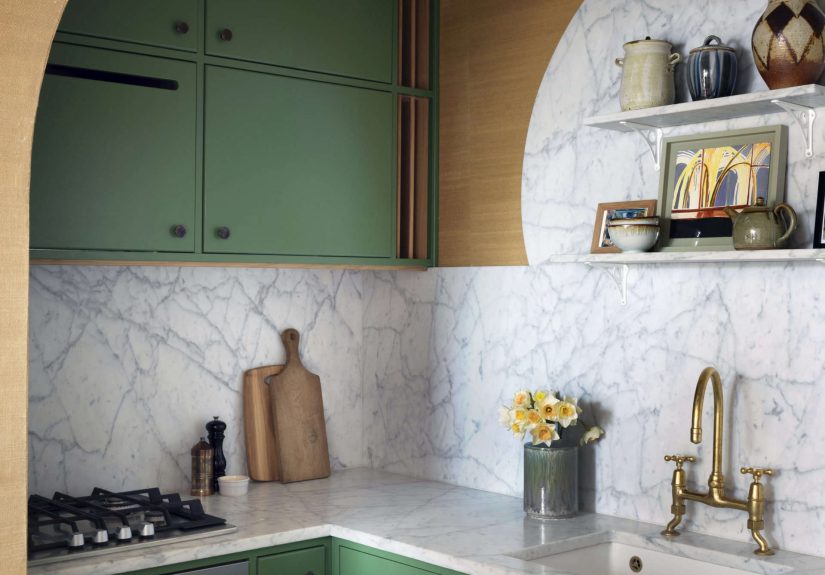
The apartment is compact, but it never feels apologetic. Instead of trying to hide the fact that it is small, the design leans in and turns every inch into a feature. There is an arch-framed kitchen with rich green cabinetry and marble, a built-in banquette under a glazed roof, a grasscloth-clad living area with a simple sofa, and a bathroom where blush-pink walls meet a bright blue vanity.
In other words, it is a masterclass in how to create a home that feels both glamorous and grounded, even when the square footage is closer to “micro loft” than “luxury penthouse.” The magic comes from three big ideas:
- Zoning without walls so each zone has a clear purpose.
- Color and pattern with discipline, not chaos.
- Furniture and storage that multitask, keeping clutter under control.
The best part? These tricks translate beautifully to almost any small room: studios, student housing, tiny condos, or that one awkward spare room you never quite figured out.
Meet Beata Heuman and Her Tiny Paddington Apartment
Beata Heuman, a Swedish-born, London-based interior designer, is known for interiors that feel playful yet tailored. Her style mixes Swedish lightness with quirky English charm: think sculptural lighting, custom upholstery in unexpected colors, and bespoke details that feel almost cartoonishly joyful but somehow still sophisticated.
In this small apartment, she was tasked with creating a pied-à-terre for a writer who splits her time between the city and the countryside. The brief was essentially: “Make it feel like stepping into another world.” Challenge accepted.
The client brief: a tiny pied-à-terre with big dreams
The owner wanted the apartment to do a lot in a little footprint: a place to work, read, host a couple of friends for dinner, and unwind after long days. That meant the layout needed to be hyper-efficient, but not at the cost of charm. No sterile “hotel room with a kitchenette” vibes allowed.
Heuman responded by designing the main living-kitchen-dining space as one continuous room, then carving it into visually distinct zones through color, materials, and furniture placement rather than solid walls. It feels open, yet each area has its own identity.
Zoning an open-plan room without walls
Instead of partitions, the apartment uses a series of soft boundaries:
- Flooring and rugs subtly shift between the living and dining areas, signaling different “rooms” without blocking light.
- A curtain can be drawn across part of the space to hide clutter or create a feeling of separation when needed, but remains light and airy.
- The kitchen arch frames the cooking area like a proscenium, turning an ordinary galley into a stage set.
You can steal this approach even if you are working with a basic rental box: change up your rug under the sofa, add a small pendant above your dining table, or use an open bookcase as a divider to carve out a micro office. You get privacy and structure, but the space stays visually open.
Color, Pattern, and Texture: How to Go Bold in a Small Room
Conventional wisdom says small rooms should be painted white and kept minimal. This apartment proves you can go bold without making the space feel crampedas long as you are intentional.
Choose a grounded base, then layer the fun
Heuman starts with a calm base: warm, natural-textured grasscloth on the walls, pale stone in the kitchen, and a simple floor color. On top of that, she layers richer hues: leafy green cabinetry, a striped or patterned ottoman, and cheerful pillows. The result is colorful but not chaotic, because the background stays consistent.
In your own small room, think about choosing one or two quiet, grounding elementslike a neutral sofa and a wood floorand then adding drama through accents: a vibrant ottoman, patterned curtains, or a statement lamp. That way, if you ever tire of a color, you can swap out the accents instead of repainting everything.
Use pattern placement to “edit” the architecture
Pattern is used strategically in this apartment to guide the eye. The kitchen features a crisp marble splash-back framed by an arch, drawing attention to the cooking area and making it feel special. The bathroom tile and artwork concentrate color where it matters, leaving enough negative space so the room does not feel busy.
One powerful move you can copy is creating a statement wall or a patterned “moment” in a small space rather than wrapping every surface. A single wall of wallpaper behind a bed or sofa, or a patterned backsplash in the kitchen, can deliver impact without overwhelming the room. Removable wallpaper and peel-and-stick murals are perfect if you rent or just fear commitment.
Light versus dark: when to go moody in a small space
Designers often recommend light colors to reflect more light and visually expand a room, and that rule absolutely worksespecially for walls, ceilings, and large furniture pieces. However, this apartment shows that carefully chosen richer tones can feel cozy rather than cramped.
The trick is balance: let most surfaces stay light or mid-tone, then concentrate deeper hues on smaller items like a vanity, chair, or accent cabinet. The eye reads the space as bright and open, while the pops of color add depth and drama.
Smart Storage and Layout Tricks You Can Copy
A charming apartment is lovely; a charming apartment where you can actually stash your stuff is a life upgrade. Much of this home’s success comes from how ruthlessly functional it is behind the scenes.
Let your furniture do double duty
Because floor space is precious, the design leans heavily on pieces that multitask:
- Built-in banquette seating in the dining nook doubles as lounge space and can hide storage under the cushions.
- A generous ottoman stands in as coffee table, footrest, and extra seating when guests come over.
- Compact dining chairs and stools can tuck fully under the table or counter, keeping circulation paths clear.
In your own space, look for furniture that works as both seating and storage: storage ottomans, benches with lift-up tops, beds with drawers, or a media console that hides office supplies. One piece that earns its keep in multiple ways is worth two or three single-purpose items.
Think vertically, not just horizontally
Small homes live or die by how they use wall space. This apartment leans on tall shelving, art hung higher than you might expect, and thoughtfully placed lighting to lift the eye upward. The result: even when the footprint is tight, the room feels taller and more generous.
Practical ways to borrow that trick include:
- Installing shelves or cabinets nearly to the ceiling, and using baskets at the very top for less-used items.
- Choosing tall bookcases or wall-mounted storage instead of short, squat pieces.
- Using wall sconces or plug-in lamps to keep surfaces clear and brighten dark corners.
Even a single tall cabinet can make a huge difference in a small bedroom or studio, especially if it replaces multiple small dressers that chop up the room.
Editing is a design decision
One underrated lesson from this apartment is how curated it feels. Yes, there are books, art, and accessories, but they have been edited down and displayed with intention. Surfaces are not crammed; there is always a bit of breathing room.
When floor area is limited, decluttering becomes a design move, not just a weekend chore. Building in storage allows you to keep the “visual noise” down and highlight what really matters: a favorite print, a sculptural lamp, or the framed poster you actually love rather than a dozen random knickknacks.
Steal-This-Look: Small Room Design Ideas Inspired by Beata Heuman
Here are practical takeaways you can apply right now, even if your home looks nothing like a London mews flat.
1. Create micro-zones with lighting and rugs
Use a floor lamp by the sofa, a pendant above the table, and a task lamp near your desk to define zones and make each one feel intentional. Layer in different rug styles to signal a “living area” versus a “dining corner” in a studio.
2. Invest in one showpiece color moment
Maybe it is a rich green cabinet, a tomato-red accent chair, or a cobalt vanity. Give yourself one big color moment and let everything else support it. This keeps the space lively without reading as chaotic.
3. Say yes to built-ins and banquettes
A small, tight corner can become a powerful feature if you wrap it with a built-in bench and a simple table. It turns leftover space into a breakfast nook, work-from-home station, or reading zone that feels bespoke rather than squeezed-in.
4. Use art to control the vibe
Heuman often uses witty, slightly unexpected art: a whimsical print over the fireplace, a graphic poster in the bathroom. Art is a low-risk way to inject personality without consuming any floor space. In a tiny room, a single large piece can actually feel calmer than a cluster of many small frames.
5. Mix high and low textures
Combine grasscloth, linen upholstery, lacquered or glossy finishes, stone, and woven baskets. The more varied the textures, the richer the room feelseven if your color palette stays fairly simple. Texture keeps a small space from feeling flat or overly minimal.
6. Make the bathroom a tiny jewel box
The bathroom in this apartment is proof that small does not have to mean bland. Soft pink walls, a blue vanity, and graphic art create a space that feels special instead of utilitarian. In your own small bath, consider a playful wall color, a patterned shower curtain, or a bold mirror frame.
Real-Life Experiences from Living in a Colorful, Well-Planned Tiny Apartment
Design photos are inspiring, but what is it actually like to live in a tiny, well-planned apartment day after day? The short answer: surprisingly freeingif you embrace the mindset shift that comes with it.
You become intentional about what earns space
In a small apartment, every item has to justify its footprint. That does not mean living like a minimalist monk, but it does mean being selective. You start asking better questions: Do I love this, or did it just follow me home from a sale? Will I use it weekly, or is it destined to be a dust collector?
Over time, that selectiveness feels less like restriction and more like relief. Cabinets close easily, drawers are not overflowing, and cleaning takes minutes instead of hours. The apartment begins to feel like a supportive backdrop, not a storage locker you happen to sleep in.
Color genuinely affects your mood
Living with color every day has its own rhythm. On gray mornings, a green kitchen and a sunny banquette can jolt you awake more effectively than a second coffee. In the evening, warm lamp light on textured walls makes the room feel like a cocoon. You start to notice how certain hues energize you and others calm you down.
When the palette is thoughtfully chosenbalanced by neutrals and grounded texturesthe color never feels overwhelming. Instead, it acts like a subtle soundtrack: always there, shaping the mood, but not shouting.
Entertaining becomes intimate, not embarrassing
Many people in small spaces avoid inviting friends over because they worry it will feel cramped or messy. A well-planned tiny apartment flips that narrative. A banquette that hugs the wall, stacking stools, and a generous ottoman make it easy to host even in close quarters.
Guests naturally cluster in defined zones: someone perches at the counter, others gather on the sofa, and one person inevitably claims the banquette corner. Instead of apologizing for the size of your place, you will find yourself bragging about how cleverly it works.
Daily routines feel more deliberate
Because the space is compact, you move through it in clear, repeatable patterns: coffee at the nook, laptop at the table, reading under the floor lamp, bedtime ritual in the little jewel-box bathroom. Each zone becomes associated with a specific activity, which can actually help with focus and relaxation.
There is a quiet satisfaction that comes from knowing exactly where everything lives and how each part of your home supports your day. You may have fewer square feet, but you gain a stronger sense of control over how you use them.
You stop waiting for a “forever home” to live beautifully
Perhaps the most powerful lesson of all: you do not need a giant house or unlimited budget to live in a space that delights you. A small rental, a first condo, or a long, narrow apartment deserves just as much imagination as a sprawling townhouse.
When you treat a tiny home as a design opportunity instead of a temporary compromise, you start enjoying it right now instead of waiting for something bigger. That is the spirit of this Beata Heuman apartmentand the mindset that can transform any small room into a place you are genuinely proud to come home to.
Final Thoughts: Let Your Small Room Sing
Small rooms do not have to be shy rooms. By zoning with intention, embracing color and pattern thoughtfully, and choosing furniture that works overtime, you can turn even the tiniest footprint into a vibrant, functional home. Beata Heuman’s tiny apartment proves that when every inch is considered, a small space can feel layered, joyful, and incredibly personal.
You may not have arched marble backsplashes or custom upholstery, but you can absolutely borrow the principles: one bold color moment, smart storage, vertical thinking, and a playful attitude. Your small apartment might just become your favorite design projectand the place where your style grows up, even if the square footage never does.
SEO JSON