Table of Contents >> Show >> Hide
- What Does It Mean to Build a Neural Network With Actual Neurons?
- From Artificial Intelligence to Biological Intelligence
- The DishBrain Experiment: When Neurons Played Pong
- Brainoware: Brain Organoids Meet Reservoir Computing
- Why Use Real Neurons at All?
- The CL1 and the Move Toward Biological Computing Platforms
- Are These Systems Conscious?
- What This Means for the Future of AI
- Specific Examples Worth Watching
- Why the Hype Needs a Seatbelt
- Experience Notes: What Living Neural Networks Teach Us
- Conclusion
Artificial intelligence has spent decades trying to imitate the brain. Researchers build bigger models, stack more layers, feed them more data, and then ask a stadium-sized server farm to please not melt the electrical grid. But a new branch of computing is asking a delightfully strange question: what if we stopped pretending to build brain-like systems and used actual neurons instead?
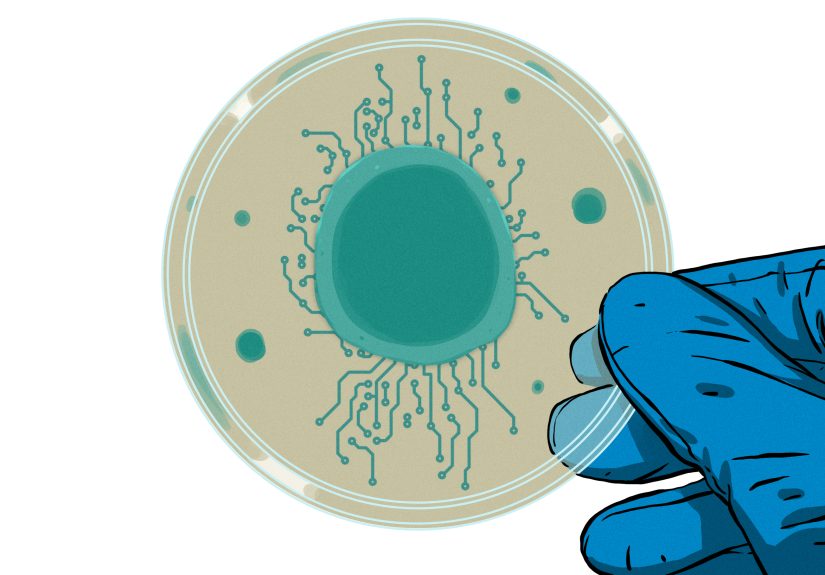
That is the idea behind biological neural networks, living computing systems made from real neurons grown in a lab and connected to electronic hardware. Instead of a software model inspired by neurons, these systems use cells that fire, adapt, connect, and learn in ways silicon still struggles to copy. It sounds like science fiction wearing a lab coat, but it is already happening in research labs.
In recent years, scientists have grown neurons on microelectrode arrays, trained cell cultures to respond to simulated environments, connected brain organoids to computing hardware, and built early platforms that can send signals into living neural tissue and read the activity that comes back. The results are not “tiny brains plotting world domination.” Relax. Your toaster remains innocent. But they do suggest a remarkable future for biocomputing, neuroscience, drug testing, and perhaps a new kind of AI hardware.
What Does It Mean to Build a Neural Network With Actual Neurons?
In everyday AI, a neural network is mathematical software. It contains artificial “neurons,” which are really equations that process inputs and pass values forward. These systems can recognize images, generate text, recommend videos, and sometimes confidently explain things that are completely wrong. Charming, in a very expensive way.
A biological neural network is different. It is made from living neurons that communicate through electrical and chemical signals. Researchers culture these cells in a controlled environment, often on top of a chip covered with tiny electrodes. The electrodes can stimulate the neurons with patterns of electricity and record how the neurons respond. In other words, the chip becomes a translator between biology and software.
This creates a closed-loop system. A computer sends information to the neurons, the neurons respond with activity, and the computer converts that response into an action or measurement. Then the system sends new feedback. Over time, the neurons may change their connections and activity patterns. That ability to reorganize is called neuroplasticity, and it is one of the reasons living tissue is so interesting to AI researchers.
From Artificial Intelligence to Biological Intelligence
The current AI boom depends heavily on silicon chips, massive datasets, and huge amounts of energy. Modern machine learning can do astonishing things, but it is not especially elegant. It often learns by brute force: train on mountains of data, adjust billions of parameters, repeat until the electricity bill asks for a support group.
The human brain, by comparison, is compact, adaptive, and energy-efficient. It does not need a warehouse of graphics processors to learn that a hot stove is a terrible place for a hand. Neurons process information in parallel, form dynamic connections, and learn from sparse feedback. Researchers are not claiming that a dish of cells equals a human brain. It does not. But even small networks of neurons may reveal forms of computation that are hard to reproduce in conventional electronics.
That is why terms like biocomputing, synthetic biological intelligence, and organoid intelligence are now showing up in serious scientific conversations. The goal is not to replace computers with jars of thinking soup. The goal is to study how biological learning works, build better models of brain function, and explore whether living cells can become useful components in future computing systems.
The DishBrain Experiment: When Neurons Played Pong
One of the most famous examples is DishBrain, a system developed by researchers connected with Cortical Labs and academic collaborators. The experiment used living neurons grown on a microelectrode array. Some neurons came from mouse embryonic cells, and others came from human stem-cell-derived neurons. The researchers connected the neural culture to a simplified version of the classic game Pong.
The setup was clever. The neurons did not “see” a screen like a person does. Instead, the computer translated the ball’s position into electrical stimulation patterns. The neurons’ activity was then interpreted as movement commands for the paddle. When the system produced activity that kept the paddle near the ball, it received more predictable feedback. When it missed, the feedback became less organized.
The fascinating part was that the neural cultures changed their behavior during the task. They appeared to improve at controlling the paddle in the simplified environment. This does not mean the cells understood Pong, enjoyed Pong, or planned to open an arcade. It means living neuronal networks can be embodied in a feedback loop and show adaptive behavior. For neuroscience, that is a big deal. For anyone who has lost to a 1970s arcade game, it is also mildly humbling.
Brainoware: Brain Organoids Meet Reservoir Computing
Another major step came from work on Brainoware, a system that used a three-dimensional brain organoid as part of a computing framework. Brain organoids are tiny lab-grown clusters of human cells that can develop features resembling aspects of brain tissue. They are not miniature people, and they are not conscious brains in a jar. They are simplified biological models that allow researchers to study neural development, disease, and information processing.
Brainoware used a high-density multielectrode array to send electrical stimulation into a brain organoid and record the organoid’s responses. The researchers framed the system as a type of reservoir computing. In reservoir computing, a complex dynamic system transforms input signals into rich patterns, and a simpler readout layer learns to interpret those patterns.
In practical demonstrations, Brainoware was tested on tasks such as speech recognition and nonlinear equation prediction. The performance was not a direct threat to commercial AI systems, but that is not the point. The point is that living neural tissue can serve as an adaptive computational substrate. That sentence sounds like it was grown in a sci-fi greenhouse, but it describes a real research direction.
Why Use Real Neurons at All?
Energy Efficiency
Brains are famously energy-efficient. A human brain runs on about the power of a dim light bulb while handling perception, memory, motion, language, emotion, and the daily crisis of remembering where the keys went. AI systems, especially large ones, require far more power. Biological neural networks may offer clues for designing lower-energy computing systems, even if they do not directly replace chips.
Fast Adaptation
Living neurons adapt continuously. They do not need to be paused, retrained from scratch, and redeployed like many machine learning systems. In a closed-loop setup, the biological network can respond to feedback in real time. That makes actual neurons valuable for studying learning as it happens, not after the fact.
Better Models for Medicine
One of the most practical applications may be drug discovery and disease modeling. If researchers can grow neurons from donor cells, including cells from people with neurological conditions, they can test how those living networks process information. This could help scientists study disorders such as epilepsy, Alzheimer’s disease, autism-related conditions, and other neurological or psychiatric challenges in a more functional way than static cell tests.
A Window Into the Brain
Biological neural networks also give neuroscientists a controllable system for studying how neurons learn, synchronize, fail, recover, and respond to stimulation. A living cell culture is simpler than a brain, but it is still biology. It can reveal patterns that pure software simulations may miss.
The CL1 and the Move Toward Biological Computing Platforms
Cortical Labs has pushed this concept toward a commercial research platform called CL1. The system combines lab-grown neurons with silicon hardware, life-support systems, stimulation tools, and recording interfaces. The basic idea is to make living neural networks programmable enough for researchers to run experiments without building an entire wetware laboratory from scratch.
The CL1 is designed for closed-loop experiments where real neurons interact with software in real time. It includes systems to keep the neurons alive for months, manage signals, and connect biological activity with digital applications. This is not a laptop you bring to a coffee shop. Please do not ask the barista for “one latte and a neuron rack.” It is a specialized research tool for neuroscience, biotech, AI exploration, and drug development.
The significance is not that biological computers are about to replace gaming PCs. The significance is that researchers can now begin treating living neural cultures as experimental computing systems. That could accelerate discoveries about how brains learn and how diseases disrupt information processing.
Are These Systems Conscious?
This is the question everyone asks, usually right after making the same nervous face. The responsible answer is: current systems are not considered conscious in the way humans or animals are conscious. A dish of neurons or a small brain organoid lacks the full structure, sensory experience, body, developmental history, and complex organization of an actual brain.
However, the ethical discussion matters. As biological computing becomes more advanced, scientists need clear rules for cell sourcing, donor consent, oversight, monitoring, and limits on experiments. Brain organoids and living neural networks raise questions that ordinary chips do not. Silicon does not care if you overclock it. Living cells require a higher standard of responsibility.
Many researchers support an embedded ethics approach, meaning ethical analysis should grow alongside the science instead of arriving late with a clipboard and a headache. This includes asking what kinds of neural complexity require extra review, how to avoid unnecessary suffering in animal-derived systems, and how to communicate findings without hype.
What This Means for the Future of AI
Biological neural networks could influence AI in several ways. First, they may inspire new algorithms. Watching real neurons learn from sparse feedback could help engineers design systems that need less data and energy. Second, they may become hybrid tools, where living networks handle certain adaptive tasks while silicon manages storage, interface, and control. Third, they may become experimental platforms for testing how intelligence emerges from physical networks.
Still, there are major challenges. Living neurons are messy. They vary from culture to culture. They need nutrients, temperature control, sterile conditions, and careful handling. They can change unpredictably. They do not come with a convenient “factory reset” button, which is honestly rude.
Scaling is another problem. A small neuron culture can show learning-like behavior, but useful general-purpose computing would require better interfaces, longer lifespans, reproducible architectures, reliable training methods, and robust ethical standards. Data storage is also complicated. Biological systems may adapt, but transferring a learned state from one culture to another is not as simple as copying a file.
Specific Examples Worth Watching
Game-Based Learning
Games like Pong and Doom are not used because scientists think neurons dream of retro entertainment. They are useful because games create simple, measurable environments. The system receives input, produces output, and gets feedback. That makes it easier to observe learning and adaptation.
Speech Recognition
Brainoware’s speech-related experiments showed how organoid responses could be used in a computational pipeline. This does not mean a brain organoid is chatting at a party. It means biological dynamics can help transform complex audio signals into patterns that a computer can classify.
Drug Response Testing
A living neural network can be exposed to carefully controlled compounds while researchers watch how its activity changes. This could provide richer information than simply checking whether cells survive. Scientists may be able to ask: does the network still learn, coordinate, and respond normally?
Neurological Disease Modeling
Neurons derived from patients could help researchers study how genetic differences affect network behavior. This could support more personalized approaches to neurological research, especially for disorders where animal models or traditional cell cultures do not fully capture human brain function.
Why the Hype Needs a Seatbelt
Living computers make irresistible headlines. “Scientists build brain in a dish” is the kind of phrase that runs through the internet wearing tap shoes. But the reality is more careful and more interesting. Researchers are not building human minds. They are building simplified biological systems that can process information, adapt to feedback, and reveal principles of neural computation.
The distinction matters. Overhyping the field can create fear, confusion, and unrealistic expectations. Underplaying it would also be a mistake. The work is genuinely important because it connects AI, neuroscience, bioengineering, ethics, and medicine. It may help us understand intelligence not as a magical software trick, but as something that emerges from living networks interacting with the world.
Experience Notes: What Living Neural Networks Teach Us
The experience of studying biological neural networks is different from working with ordinary software because the “hardware” is alive. A computer chip behaves according to specifications. A culture of neurons behaves according to biology, which is another way of saying it follows rules, but occasionally hides the rulebook under the couch.
Researchers working in this space must think like engineers and biologists at the same time. The engineering side asks whether the signal is clean, whether the electrodes are working, whether the closed-loop environment is stable, and whether the output can be measured. The biology side asks whether the cells are healthy, whether the culture is developing properly, whether contamination has been avoided, and whether the network is mature enough to produce meaningful activity.
That combination creates a useful lesson for anyone interested in the future of AI: intelligence is not only about computation. It is also about embodiment, feedback, environment, and adaptation. DishBrain became interesting because the neurons were not just sitting quietly while scientists recorded them. They were placed inside a structured loop where their activity had consequences. Brainoware became interesting because a living organoid was not treated as decoration; it became part of a computational process.
Another experience from this field is humility. Artificial neural networks are often judged by benchmarks, leaderboards, and accuracy scores. Living neural systems force researchers to slow down and ask deeper questions. What counts as learning? What counts as memory? How much structure is needed before a network can be called intelligent? How do we measure improvement in a system that does not learn the way software learns?
There is also a practical lesson: the future of computing may not be one technology defeating another. Biological computing is unlikely to march into data centers and throw GPUs out the window. More likely, it will become a specialized tool. It may help researchers test drugs, model diseases, explore learning, and design more efficient AI systems. Silicon will still be excellent for speed, precision, storage, and scale. Neurons may be excellent for adaptation, biological realism, and energy-efficient dynamics.
For readers, the most important takeaway is that “actual neuron” computing is not a gimmick. It is an early, messy, fascinating attempt to bridge the gap between brain-inspired AI and real biological intelligence. The field is young, but it is already teaching us that intelligence is not just something we program. Sometimes, under the right conditions, it is something we grow, guide, measure, and respectfully try to understand.
Conclusion
Researchers building neural networks with actual neurons are opening a door into a new era of computing. These systems are not tiny human brains, and they are not ready to replace modern AI infrastructure. But they are real, scientifically meaningful, and full of potential.
By connecting living neurons to electronic interfaces, scientists can observe learning, feedback, adaptation, and network behavior in ways that ordinary software cannot fully capture. Projects such as DishBrain, Brainoware, organoid intelligence, and CL1 show that the boundary between biology and computation is becoming more flexible.
The best future for this field will be careful, ethical, and practical. It should avoid hype, protect human and animal-derived biological materials, and focus on meaningful benefits: better neuroscience, better drug testing, better disease models, and new inspiration for energy-efficient AI. Actual neurons may not be the next mainstream processor, but they may help us understand the processor nature built first.