Table of Contents >> Show >> Hide
- Why This Opening Mattered
- A Brand With Real History, Not Decorative History
- The Store Design Did the Seducing
- What Cire Trudon Actually Sells Besides Candles
- Why the New York Customer Was Always the Right Customer
- The Craft Story Still Matters
- From Boutique Opening to Cultural Signal
- A Longer Shopper’s Diary: The Experience of Entering Cire Trudon in New York
- Conclusion
New York has never exactly suffered from a lack of things to buy. The city offers handbags with waiting lists, sneakers with fan clubs, and skincare serums priced like minor real estate transactions. So when Cire Trudon opened in New York, it did not enter a quiet market. It stepped into a city that already believed shopping should feel a little theatrical. That, as it turns out, was perfect.
Cire Trudon did not arrive with the energy of a trendy candle brand trying to persuade downtown shoppers that a nice scent might improve their living room. It arrived with history, stagecraft, and enough old-world flair to make an ordinary purchase feel like a cultural event. This was a house founded in 1643, long before modern branding, before influencer gifting, and certainly before anyone decided that every candle name should sound like a yoga retreat. When Trudon opened its first New York outpost, the move felt less like a store launch and more like a small piece of Parisian mythology being lowered carefully into Manhattan.
That is what makes the story so interesting. “Shopper’s Diary: Cire Trudon Opens in New York” is not just about a luxury retailer crossing the Atlantic. It is about how heritage, scent, design, and urban fantasy can be packaged into one unforgettable shopping experience. And in a city that loves a good origin story almost as much as it loves a good window display, Cire Trudon was built to charm.
Why This Opening Mattered
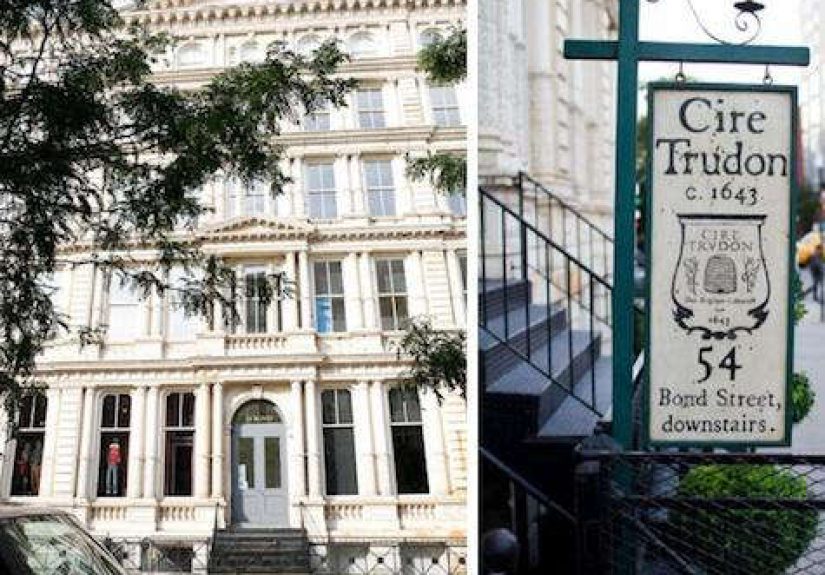
When Cire Trudon opened on Bond Street, it was not trying to be loud. It was trying to be memorable. The space was tucked below street level inside the landmark Bouwerie Lane Theater building, which already sounds like the kind of address a novelist would invent and an editor would reject for being “too perfect.” Instead of chasing the polished sameness that can flatten many luxury interiors, the boutique leaned into mood. Mirrors, antiques, hand-crafted furniture, and a slightly secretive entrance gave the store the feeling of a private discovery rather than a mass-market rollout.
That mattered because New York shoppers are not just buying objects. They are buying entry into a story. A candle can be a candle almost anywhere. In Manhattan, however, it also has to be a conversation piece, a gift, a design statement, and a subtle announcement that the owner has excellent taste and probably knows a place in Nolita where the coffee is annoying but worth it.
Cire Trudon understood this immediately. The brand did not merely sell fragrance. It sold atmosphere. It sold memory. It sold the fantasy that your apartment, no matter how aggressively New York-sized, could suddenly feel more elegant, more layered, and somehow more European. That is powerful retail magic.
A Brand With Real History, Not Decorative History
Luxury brands love to whisper the word “heritage” as if it were a perfume note. Cire Trudon barely has to whisper at all. The house traces its roots to 1643, when Claude Trudon owned a shop on rue Saint-Honoré in Paris and sold spices and candles. By the early eighteenth century, the Trudon name had become associated with wax manufacture on a serious level, and by 1719 the house had royal standing. In other words, this is not a company that invented a backstory in a brainstorming session between espresso shots.
That history still shapes the brand’s appeal. Trudon has long been associated with churches, courts, ceremonial light, and the kind of decorative seriousness that makes modern luxury feel a little flimsy by comparison. It is one thing to buy a candle from a brand that launched during the era of startup offices and soft pretzels. It is another to buy from a house whose timeline runs through French royalty, grand interiors, and centuries of craft.
The funniest part is that all this gravitas could have turned the brand into a museum piece. Instead, it gave Cire Trudon something better: authority. The company does not need to convince shoppers that it understands ritual, atmosphere, and design. It has been in that business for centuries. New York, a city that has seen every kind of luxury performance imaginable, tends to respect that kind of confidence.
The Store Design Did the Seducing
Bond Street as a Mood
The original New York opening on Bond Street was memorable because it looked like a set designer and a historian had teamed up with excellent taste and no fear of drama. The boutique drew on Versailles-inspired references, especially the Hall of Mirrors, but avoided becoming a costume party. There were aged mirrors, curiosities, artisanal furnishings, and a deep sense of atmosphere. It felt intimate rather than grandiose, which made the luxury more persuasive. Instead of shouting, the shop murmured, “You are in the right place, and yes, you probably do need a very expensive candle.”
The belowground location helped. Descending into a scent shop already feels faintly ceremonial, like entering a chapel for people who worship excellent interiors. The retail experience became part of the product. Before the shopper even smelled a candle, the store had already prepared the imagination.
The Nolita Sequel
Years later, when the brand deepened its New York footprint with a boutique on Elizabeth Street in Nolita, it refined the formula rather than abandoning it. The later downtown space was described as a tiny jewel box, rich with burgundy lacquer, mirrored walls, antique objects, and carefully chosen decorative references. Architect Fabrizio Casiraghi gave the store a balance of Parisian history and New York intimacy, which is not easy. Too much Paris and it feels like a theme park. Too much downtown restraint and the Trudon mystique disappears. The store managed to land right in the sweet spot.
That consistency matters. Whether on Bond Street or Elizabeth Street, Cire Trudon’s New York retail identity has always been built around atmosphere, not inventory overload. These are stores designed to slow people down. They invite lingering, comparing, sniffing, and daydreaming. In a city addicted to urgency, that alone feels luxurious.
What Cire Trudon Actually Sells Besides Candles
Yes, the candles are the stars. But the genius of the brand is that it never lets them feel lonely. The boutiques surround them with room sprays, matches, wax busts, candle accessories, and decorative objects that turn a simple purchase into a larger ritual. That matters because Cire Trudon is not really in the wax business. It is in the world-building business.
The scent names alone tell you what kind of house this is. Roi Soleil, La Marquise, and Carmélite do not sound like products engineered by committee. They sound like chapters in an ornate novel. The fragrances are meant to evoke places, moods, characters, and eras. A Trudon candle does not simply smell woody, floral, or smoky. It tries to transport. It wants your living room to become a salon, a library, a garden, or a grand old stone space that has seen things.
That emotional storytelling is part of the brand’s ongoing success. Modern luxury shoppers increasingly want goods that feel layered and specific. They do not just want a “fresh” scent. They want a scent with personality. Trudon has made that instinct feel wonderfully legitimate. Even better, it wraps the whole thing in hand-crafted presentation, from green glass vessels to finely considered packaging, so the object keeps performing long after the match is struck.
Why the New York Customer Was Always the Right Customer
Cire Trudon’s arrival in New York makes sense when you think about what kind of shopper the city creates. New Yorkers are used to compact living, overstimulating streets, and apartments that need to do emotional heavy lifting. Home fragrance in this context is not frivolous. It is architecture for people who rent. A scent can soften a room, signal a mood, and create the illusion that you are living a more composed life than your inbox suggests.
That is exactly where Trudon shines. Its candles feel decorative even before they are lit, and once they are lit, they turn ambience into an event. This is why the brand has remained beloved among designers, editors, and luxury-minded shoppers. Trudon is not simply sold as home fragrance. It is sold as part object, part ritual, part self-editing. It suggests that taste can be practiced in small but meaningful ways.
And New York shoppers understand the emotional value of that. They know that a beautifully made object can rescue an ordinary Tuesday. They know that one elegant purchase can rebalance a chaotic room. They also know that buying a candle with royal credentials is objectively more fun than buying one named “Weekend Linen.”
The Craft Story Still Matters
One reason Trudon continues to feel credible is that its manufacturing story has not been erased by its luxury status. The house still emphasizes handwork and production in Normandy, where the candles are prepared and poured with a level of care that gives the finished product weight beyond branding. In an era when many high-end goods seem to have been optimized first for social media and only later for actual use, that matters.
Craft, in this case, is not just marketing garnish. It supports the entire value proposition. When shoppers pay a premium for a Trudon candle, they are not only buying scent. They are buying composition, burn quality, materials, and the accumulated trust of a brand that has spent generations thinking about flame, wax, glass, and atmosphere. That may sound romantic, but it is also practical. Good luxury usually is.
Even the signature vessels contribute to the appeal. The hand-finished green glass has become part of the brand’s visual language, which helps explain why so many people keep the containers long after the candle is gone. A Trudon purchase is designed to linger. The scent fades eventually. The object does not.
From Boutique Opening to Cultural Signal
“Shopper’s Diary: Cire Trudon Opens in New York” works as a title because it captures something bigger than a ribbon-cutting moment. The opening signaled that New York had room for a fragrance house that treated shopping as cultural seduction. It also proved that heritage retail could feel alive rather than dusty. Cire Trudon did not win attention by being noisy. It won attention by being deeply itself.
There is a lesson in that for luxury retail more broadly. The most compelling stores are not always the biggest or the brightest. Sometimes they are the ones that know exactly what world they are building and trust shoppers to step inside. Cire Trudon built a world of mirrors, wax, memory, and ritual, then placed it in one of the most competitive shopping cities on Earth. Naturally, New York leaned in.
And that may be the real reason the opening still feels memorable. The store did not merely offer products. It gave people a story to carry home. In the best cases, that is what shopping becomes: not accumulation, but atmosphere with a receipt.
A Longer Shopper’s Diary: The Experience of Entering Cire Trudon in New York
To understand why the New York opening resonated, it helps to think less like a retail analyst and more like a shopper with ten free minutes, decent taste, and a dangerous weakness for beautiful things. You are walking downtown, probably not planning to buy a candle that costs more than dinner, when suddenly the storefront catches you. Or maybe it does not even catch you at first. Maybe that is the point. Trudon has always been better at intrigue than volume.
You step inside and the city instantly lowers its voice. That is one of the store’s smartest tricks. New York is all noise, velocity, elbows, and urgency. Trudon responds with mirrors, lacquer, shadow, texture, and scent. The effect is not simply “pretty.” It is disarming. The store feels curated in the old sense of the word, as though every object has been placed with care and every surface is there to support a mood. Nothing feels accidental. Nothing feels rushed. In Manhattan, that almost counts as supernatural.
Then there is the scent experience itself, which is much more interesting than the usual retail routine of sniff, nod, forget. Trudon’s fragrances tend to unfold like characters instead of category labels. One reads smoky and intellectual. Another feels floral but stately. Another suggests old stone, polished wood, or some romantic idea of Europe that would be completely intolerable in real life but absolutely wonderful in candle form. The pleasure comes from comparison. You do not just pick what smells “nice.” You pick what version of yourself you would like your home to become.
That is where the New York customer enters the story. In a compact apartment, every object earns its place. A candle that doubles as decor, mood, and identity has a better argument than most. So the shopper circles back. The green glass looks richer the second time. The wax bust is weirder and better than expected. The matches suddenly seem essential. A room spray begins to feel like a practical necessity instead of a grand indulgence. This is how luxury works when it is done well: it persuades without begging.
And maybe the best part is what happens after the purchase. The bag leaves the store, but the performance continues at home. The candle gets placed on a table, a shelf, a mantel, or whatever part of the apartment is trying hardest to look composed. It is lit during dinner, before guests arrive, after a long day, or purely because the room needs rescue. That is when the store’s promise becomes real. New York may remain noisy outside, but inside, for a little while, the apartment feels finished.
That is why Cire Trudon opening in New York mattered then and still feels relevant now. It was never just about a candle shop. It was about giving downtown shoppers a beautifully staged excuse to believe that atmosphere is worth investing in. Honestly, that may be one of New York’s most reliable fantasies, and Trudon sells it exceptionally well.
Conclusion
Cire Trudon’s New York opening worked because it united three things luxury shoppers rarely get in one place: genuine history, transportive design, and products that still feel personal once the packaging is gone. The brand did not arrive in the city trying to imitate downtown cool. It arrived with a fully formed identity and let New York adapt to it. That confidence made the boutique feel special from the start.
For shoppers, designers, fragrance lovers, and anyone who has ever wanted a home to feel more cinematic, that is the lasting appeal. Trudon does not just sell candles. It sells atmosphere with lineage. And in New York, that combination still burns bright.