Table of Contents >> Show >> Hide
- Why Water in the Crawl Space Is a Big Deal
- Signs You Have Crawl Space Water Problems
- What Causes Water in a Crawl Space?
- How to Fix Water Problems in the Crawl Space
- Step 1: Clean Gutters and Extend Downspouts
- Step 2: Correct the Grading
- Step 3: Install Drainage if Water Still Collects
- Step 4: Cover the Soil With a Vapor Barrier
- Step 5: Seal Vents, Gaps, and Air Leaks When Appropriate
- Step 6: Control Humidity With Conditioning or a Dehumidifier
- Step 7: Remove and Replace Damaged Materials
- Should You Encapsulate the Crawl Space?
- Common Crawl Space Water-Fix Mistakes
- When to Call a Professional
- How to Keep the Crawl Space Dry for Good
- Real-World Experiences With Crawl Space Water Problems
- Conclusion
Crawl spaces have a special talent: they can turn a small water issue into a full-blown household drama. One damp corner becomes a musty smell. That musty smell becomes warped floors, moldy insulation, and a home that feels like it is quietly sighing in disappointment. The good news? Most crawl space water problems are fixable, and many of the best solutions are surprisingly practical.
If your crawl space has puddles, muddy soil, condensation, funky odors, or wood that feels damp when it should not, this guide walks you through what is actually going on and how to fix it. We will cover the real causes of crawl space water, the smartest repair sequence, common mistakes homeowners make, and how to keep the space dry for the long haul. No magic. No gimmicks. Just solid, crawl-space-saving strategy.
Why Water in the Crawl Space Is a Big Deal
A wet crawl space is not just an ugly little secret under the house. It can affect your entire home. Moisture rising from exposed soil can increase humidity, encourage mold growth, attract pests, and contribute to wood rot. Damp insulation stops insulating very well. Metal components can corrode. Flooring above the crawl space may start to cup, buckle, or feel cold and clammy. In short, the crawl space may be “down there,” but the consequences travel up fast.
And here is the annoying part: many homeowners focus only on the water they can see. The standing water gets all the attention, but high humidity and recurring condensation can be just as destructive over time. Sometimes the crawl space looks merely “a little damp,” while the structure is slowly auditioning for a disaster movie.
Signs You Have Crawl Space Water Problems
Before you fix anything, confirm the symptoms. Common red flags include:
- Standing water or muddy soil after rain
- Musty odors inside the home
- Mold on joists, subflooring, or insulation
- Sagging or wet insulation
- Condensation on ducts, pipes, or the vapor barrier
- Peeling paint, discoloration, or soft wood near the foundation
- High indoor humidity and cold floors above the crawl space
- Pest activity, especially termites and moisture-loving insects
If you notice these signs, do not waste time blaming the weather, the moon cycle, or your unlucky socks. Water is getting in from somewhere, and the fix starts with identifying the source.
What Causes Water in a Crawl Space?
1. Roof Runoff and Overflowing Gutters
This is one of the most common causes. If gutters overflow or downspouts dump water right next to the foundation, that water can soak the soil and make its way into the crawl space. Your roof may be doing a fine job of collecting water, but if it drops it beside the house, that is less “drainage system” and more “foundation sabotage.”
2. Poor Grading Around the House
The soil around your home should slope away from the foundation so rainwater naturally moves away. If the yard pitches toward the house, water collects where you absolutely do not want it. Even a modest grading problem can create major moisture issues over time.
3. Groundwater Pressure
Sometimes the problem is not surface runoff at all. In rainy seasons or areas with a high water table, groundwater can rise and push moisture or water into the crawl space from below or through the foundation perimeter.
4. Bare Soil and Ground Moisture
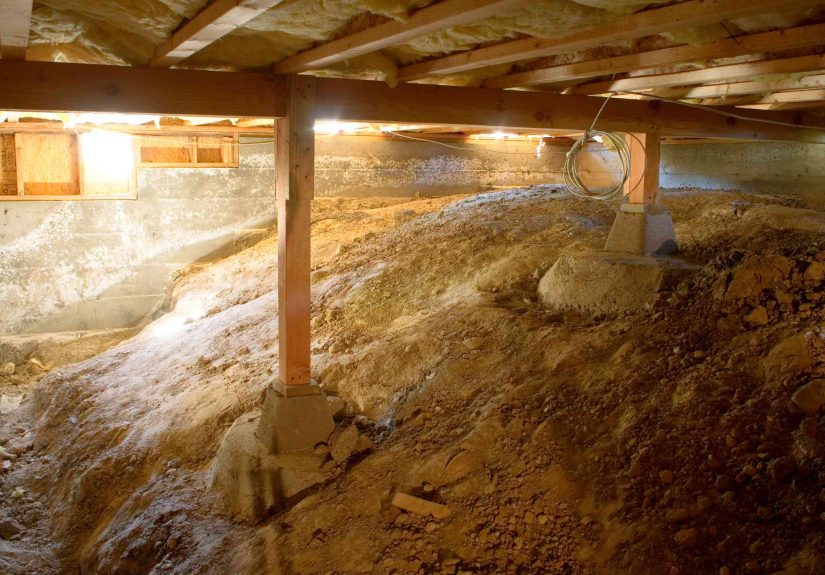
If your crawl space has exposed earth, moisture vapor from the soil can continuously move into the space. You may not see a pond, but you can still end up with high humidity, condensation, mold, and wood damage.
5. Plumbing Leaks or HVAC Condensate
Leaking pipes, poorly drained condensate lines, or malfunctioning equipment can drip into the crawl space and imitate a drainage problem. Sometimes the culprit is not the weather. Sometimes it is one rude little pipe.
6. Ventilation and Humidity Problems
Traditional vented crawl spaces do not always behave the way people hope. In humid weather, outdoor air can bring in moisture that condenses on cooler surfaces. That means “more ventilation” is not automatically “more dry.” In many climates, unmanaged venting makes things worse.
How to Fix Water Problems in the Crawl Space
The best repair sequence is simple: handle exterior water first, then stop ground moisture, then control the crawl space environment. If you skip that order, you may spend money on the wrong thing and still end up with damp joists and regret.
Step 1: Clean Gutters and Extend Downspouts
Start outside. Clean out clogged gutters and repair any sections that overflow. Make sure downspouts discharge well away from the foundation. Splash blocks help a little, but extensions that carry water farther away are usually better. If rainwater is pouring next to your crawl space wall, you are basically watering your house.
Look for roof valleys that dump a heavy stream of water in one spot. Those areas may need larger downspouts, better extensions, or even drainage improvements in the yard.
Step 2: Correct the Grading
Check whether the ground around the house slopes away from the foundation. If it does not, add soil and regrade carefully so water drains outward instead of collecting at the perimeter. The goal is gentle but effective slope, not a weird dirt ramp that looks like your house is preparing for takeoff.
Also check for landscape beds, edging, or hardscaping that trap water against the home. Sometimes the problem is not dramatic. It is just years of mulch, settling soil, and good intentions gone rogue.
Step 3: Install Drainage if Water Still Collects
If your crawl space gets standing water after storms or during wet seasons, you may need a drainage system. Depending on the site, that can include a perimeter drain, footing drain, curtain drain, French drain, or an interior drain that leads to a sump pump. This is especially important when groundwater is part of the problem.
A sump pump can be a smart fix when water naturally gathers at a low point and needs to be mechanically removed. The key is not just having a pump, but making sure it discharges to an approved location away from the foundation. Pumping water out only to let it boomerang back toward the house is not a repair. It is a water-themed prank.
Step 4: Cover the Soil With a Vapor Barrier
If the crawl space floor is dirt, cover it with a continuous polyethylene vapor barrier. This is one of the most important steps in reducing moisture migration from the ground. The material should fully cover the soil, overlap at seams, and extend up walls and piers. The seams should be taped so the barrier works like a system, not like a loose tarp you tossed down in a hurry.
For basic moisture control, many professionals start with a minimum ground cover, but heavier reinforced liners are often more durable and better suited for long-term crawl space encapsulation. If your crawl space sees service traffic or frequent maintenance access, flimsy plastic can tear faster than your patience.
Step 5: Seal Vents, Gaps, and Air Leaks When Appropriate
In many homes, especially in humid climates, a closed or encapsulated crawl space performs better than a vented one. That means sealing wall vents, closing air leaks, and treating the crawl space more like part of the building enclosure than an outdoor cave with opinions.
Seal penetrations around plumbing, wiring, ductwork, and the rim area. If the crawl space is being converted to a closed system, this step matters. Outdoor humid air slipping in through gaps can undo everything you just fixed.
Step 6: Control Humidity With Conditioning or a Dehumidifier
Once bulk water and ground moisture are under control, manage the air. In a closed crawl space, that may mean a dedicated dehumidifier or a code-compliant conditioning strategy. The goal is to keep relative humidity in a healthy range so mold, condensation, and wood moisture problems do not come back for a sequel.
If you install a dehumidifier, choose one sized for the space and make sure it drains properly. Emptying a tiny bucket every day is not a moisture strategy. It is a hobby you will quickly resent.
Step 7: Remove and Replace Damaged Materials
After the space is drying out, inspect insulation, wood framing, and any stored materials. Wet or moldy insulation often needs to be removed and replaced. Damaged wood may need treatment or repair, depending on how severe the deterioration is. If materials got soaked, dry them quickly. The longer they stay wet, the more likely mold and structural damage become.
Also inspect ducts. If duct insulation is falling apart, if ducts are sweating, or if air leaks are obvious, fix them. A wet crawl space and leaky ducts are a chaotic duo.
Should You Encapsulate the Crawl Space?
In many cases, yes. Crawl space encapsulation is often one of the most effective long-term solutions for persistent moisture problems. A proper encapsulation system usually includes a sealed vapor barrier, closed vents, sealed penetrations, wall treatment, and humidity control.
Encapsulation can improve comfort, reduce musty odors, help protect framing, and support better energy performance. It is especially useful where outdoor humidity is high or where vented crawl spaces consistently stay damp. That said, encapsulation is not just “plastic on the floor.” If exterior drainage is still bad, encapsulation without water management is like wearing nice shoes in a flooded basement.
Common Crawl Space Water-Fix Mistakes
- Fixing the inside before the outside: If runoff is still pouring toward the house, interior fixes alone will struggle.
- Using thin, poorly installed plastic: Small tears and loose seams let moisture win.
- Ignoring humidity: No standing water does not always mean no moisture problem.
- Leaving vents open in a humid climate: More outside air can mean more condensation.
- Skipping drainage discharge planning: Sump water needs to go far enough away to stay gone.
- Forgetting plumbing leaks: Not every wet crawl space is caused by rain.
When to Call a Professional
Call a pro if you have recurring standing water, foundation cracks, structural sagging, severe mold growth, obvious wood rot, pest damage, or a sump and drainage design that needs to comply with local codes. A professional is also worth bringing in when the crawl space is too tight, contaminated, or hazardous to inspect safely.
There is no trophy for crawling through six inches of mud with a flashlight and supreme optimism. Sometimes the smartest DIY move is knowing when not to DIY.
How to Keep the Crawl Space Dry for Good
Once repairs are done, maintenance matters. Clean gutters regularly. Check downspouts after storms. Inspect the crawl space seasonally for condensation, torn liner seams, plumbing drips, and pump performance. Watch for new grading issues after heavy rain or landscaping work. Test humidity levels now and then instead of waiting for your house to start smelling like a damp cardboard box.
A dry crawl space is not about one heroic repair. It is about a system that keeps water moving away, keeps soil moisture sealed down, and keeps humidity under control.
Real-World Experiences With Crawl Space Water Problems
One homeowner noticed the first clue in the living room, not the crawl space. The hardwood floor near the exterior wall felt slightly wavy after rainy weekends. At first, it seemed like seasonal movement. Then came the musty smell. When the crawl space was finally inspected, there was no dramatic flood, just damp soil, sagging insulation, and a downspout dumping water right next to the foundation. The fix was not glamorous. The gutters were cleaned, the downspout was extended, the grading was corrected, and a vapor barrier was installed. Within a few weeks, the smell improved. Within a few months, the floors stopped changing so dramatically. The big lesson was simple: the problem looked “minor” until the whole house started reacting to it.
Another case involved a homeowner who assumed more venting would solve everything. They opened every crawl space vent and even added a fan because the area felt damp in summer. Instead of drying out, the crawl space got worse. Metal ducts began sweating, insulation looked tired and droopy, and the air upstairs felt sticky. The issue was humid outdoor air entering a cooler crawl space and creating condensation. Once the space was professionally sealed, the ground was covered properly, and humidity control was added, the crawl space became much drier and more predictable. This experience teaches an important truth: the “more air equals more dry” idea does not always hold up in the real world.
Then there was the house with actual standing water after every heavy storm. The owners kept shop-vacuuming the puddles like determined champions of denial. It worked for about twelve hours. The real problem turned out to be groundwater and poor site drainage. A drainage system and sump pump solved what buckets and optimism never could. The homeowners said the biggest surprise was how much the home felt better after the repair. Less odor. Less humidity. Less anxiety every time rain showed up on the forecast. Water in the crawl space had been a hidden stress point for years.
A final experience comes from a renovation where the crawl space was “kind of okay” until contractors started working in it. The old plastic ground cover tore in multiple places, the HVAC condensate line dripped into the space, and moisture levels shot up. Because the issue was caught early, the solution was straightforward: replace the damaged liner with a stronger one, fix the condensate drainage, seal penetrations, and monitor humidity. That project is a good reminder that crawl spaces do not just get wet from storms. Maintenance work, aging materials, and small mechanical problems can quietly create a moisture issue too.
These experiences all point to the same conclusion. Crawl space water problems rarely have one dramatic villain in a black cape. More often, they come from a handful of boring but fixable issues that work together: bad runoff, poor grading, exposed soil, humid air, and delayed repairs. The sooner you identify the pattern, the easier and less expensive the fix tends to be.
Conclusion
If you want to fix water problems in the crawl space, think like a detective and repair like a systems person. Start with the outside water. Move it away from the house. Stop moisture from rising through the soil. Seal what should be sealed. Dry what got wet. Then control humidity so the problem does not quietly come back.
That is the real trick. A dry crawl space is not a lucky accident. It is the result of smart drainage, good moisture control, and a refusal to let your house sit over a damp science experiment.