Table of Contents >> Show >> Hide
- The Tiny Laptop That Made Perfect Sense for a Minute
- What Actually Counted as a Netbook?
- Why People Fell in Love With Netbooks
- The Problems Were There From Day One
- How the Boom Turned Into a Bust
- The Netbook Legacy Is Still Everywhere
- Could a Netbook Make Sense Again?
- Conclusion
- Extended Experience: What Living With a Netbook Actually Felt Like
- SEO Metadata
There was a brief, strange, glorious period when the future of personal computing appeared to be a tiny plastic laptop with a cramped keyboard, a humble Intel Atom chip, and a price tag that made your wallet whisper, “Well… maybe.” That machine was the netbook: a category that exploded in the late 2000s, dominated coffee shops and college backpacks for a hot minute, and then got steamrolled by tablets, Chromebooks, and increasingly affordable full-size laptops.
If you were around for the netbook boom, you probably remember the pitch. These were not “real” laptops in the traditional sense. They were smaller, cheaper, lighter, and built around a single seductive promise: do the stuff you actually do most of the time. Browse the web. Answer email. Write in Google Docs. Watch a few videos. Post your thoughts online before social media became a full-time emotional occupation. Netbooks were never about power. They were about good enough, and for a few years, good enough felt revolutionary.
Today, netbooks are mostly remembered as a dead-end branch of laptop evolution. That is only half true. The machines themselves disappeared, yes, but the ideas behind them never really died. They just got a makeover, a better processor, and a more respectable marketing department.
The Tiny Laptop That Made Perfect Sense for a Minute
The netbook arrived at exactly the right historical moment. Broadband was spreading, web apps were becoming more useful, Wi-Fi was expected instead of magical, and consumers were getting comfortable with the idea that not every computer needed to be a beast. In the wake of the 2008 financial crisis, “cheap and functional” was not a compromise. It was a selling point with excellent timing.
Early models like the Asus Eee PC helped define the category. They were small enough to feel novel, cheap enough to feel accessible, and limited enough to force a rethinking of what people actually needed from a portable computer. That was the secret sauce. Netbooks did not try to do everything. They aimed for the core bundle of everyday digital life and cut everything else with the enthusiasm of a budget airline trimming free snacks.
Born for a Web-First World
Netbooks were built around an emerging truth: a huge chunk of personal computing had moved online. If your day revolved around a browser, a keyboard, and some patience, a netbook could handle the job. In hindsight, that sounds obvious. At the time, it felt oddly radical. Traditional laptops were still designed as general-purpose machines. Netbooks were among the first mass-market computers to say, “What if the internet is the main event?”
That made them feel modern even when their specs were hilariously modest. Tiny screens? Manageable. Limited local storage? Fine, the web exists. Weak processors? Annoying, sure, but survivable if your expectations were calibrated somewhere between “email machine” and “digital typewriter with Wi-Fi.”
Price Was the Killer Feature
More than anything else, netbooks sold a dream of affordability. A machine in the $250 to $400 range could suddenly get you a keyboard, a screen, a browser, and an operating system in one portable package. That mattered. Full-size notebooks were still expensive enough to feel like capital purchases. Netbooks flirted with impulse-buy territory.
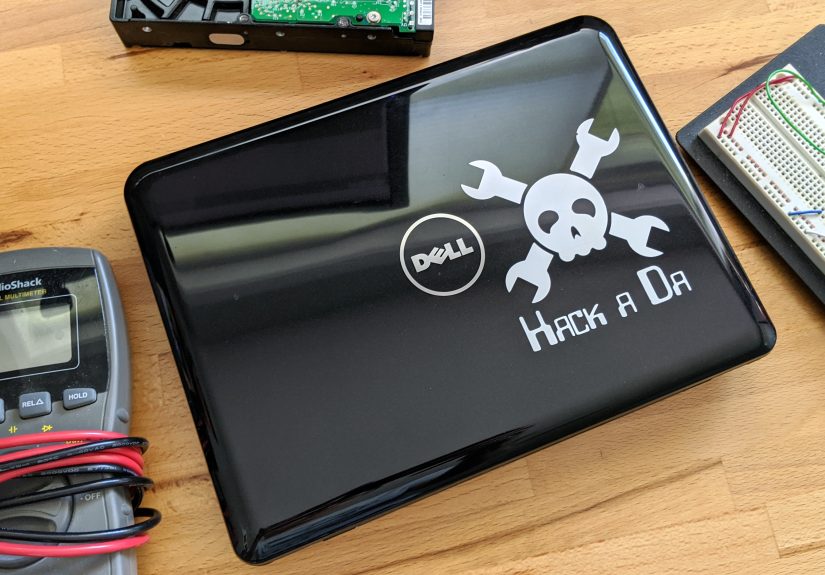
And once one company proved there was a market, everybody showed up to the party. Acer, Dell, HP, Lenovo, Samsung, and MSI all entered the game. The category went from quirky newcomer to full-blown product flood in record time. If the late 2000s had a national animal, it might have been a glossy 10-inch laptop in pearl white.
What Actually Counted as a Netbook?
Netbooks usually lived in a pretty specific hardware neighborhood. Most had screens between 7 and 10.2 inches, low-power processors, around 1GB of RAM, and either a small solid-state drive or a basic hard drive. Many shipped with Linux at first, then quickly leaned on Windows XP because it was familiar, lightweight enough to run, and far less likely to make buyers call customer support in a panic.
They also tended to weigh under three pounds, which made them genuinely easy to carry. That portability mattered more than spec sheets. A netbook could disappear into a tote bag, a student backpack, or the passenger seat of a car. It was a travel companion, not a desktop replacement.
Some of the most memorable examples included the Asus Eee PC line, Acer Aspire One, Dell Inspiron Mini 9, HP Mini 1000, MSI Wind, and Lenovo IdeaPad S10. The good models nudged the category forward with better keyboards, bigger batteries, or slightly less painful touchpads. The bad ones mostly proved that not every cheap computer deserves your trust.
Why People Fell in Love With Netbooks
They Felt Liberating
There is something psychologically powerful about a device that feels light, simple, and low-risk. If your main laptop was expensive, heavy, or precious, the netbook felt like freedom. You could toss it in a bag, bring it to class, use it on the couch, or carry it on a flight without feeling like you were transporting a museum artifact.
For students, travelers, commuters, and people who mainly needed a second machine, this was perfect. A netbook did not need to be amazing. It just needed to be available when you wanted to write, browse, or answer email somewhere other than your desk.
Battery Life Could Be Weirdly Great
Because they ran low-power chips and small screens, many netbooks delivered battery life that felt impressive for the era. Not every model was a champ, but the better ones made a big deal out of lasting a work session, a class day, or a long train ride. In a time when many mainstream laptops still made you think nervously about the nearest wall outlet, that felt like magic.
Some machines, especially later 10-inch models with extended batteries, stretched endurance into genuinely useful territory. They were not elegant, and the oversized batteries sometimes protruded like an afterthought designed by a camel, but they worked.
They Were Honest About Their Job
One of the netbook’s charms was its honesty. A gaming laptop pretends to be portable while weighing as much as a baby rhinoceros. A workstation promises power but drains batteries like it is being paid by the percentage point. A netbook basically said, “I am here to open a browser, type words, and not complain too much.” That clarity made the best ones oddly lovable.
The Problems Were There From Day One
Of course, the category also had deep flaws, and they were not subtle. Netbooks were affordable because corners had been cut so aggressively that some models looked less like engineering and more like an apology.
Performance Was the Party Pooper
Intel’s Atom chips enabled the whole category, but they also defined its limits. For basic browsing and writing, they were fine. For multitasking, heavier web pages, media playback, or anything remotely ambitious, they often felt winded. The internet itself was getting richer, heavier, and less tolerant of tiny underpowered machines. Netbooks did not age gracefully because the web did not stand still for them.
And then there was the operating system problem. Windows XP stayed around longer than almost anyone expected partly because it could run on these little machines without collapsing into a dramatic faint. Newer, heavier software stacks were often a bad fit. That made netbooks feel stuck in a weird time bubble: modern enough to buy, old enough to already seem behind.
Keyboards and Screens Were a Gamble
Some netbooks had surprisingly good keyboards. Others felt like they had been designed for raccoons with typing certificates. Screen quality was equally inconsistent. You could find usable 10-inch displays, but early 7-inch and 8.9-inch machines often turned ordinary tasks into an exercise in eye strain and patience.
Touchpads were another recurring comedy act. Small, fiddly, awkwardly placed, and occasionally determined to interpret your intentions as abstract art, they reminded everyone that miniaturization is not always a kindness.
Linux Was Smart in Theory, Messy in Practice
Many early netbooks shipped with Linux because it was lightweight and cheap. That was logical from the manufacturer’s point of view. From the average buyer’s point of view, it was sometimes a surprise party they had not agreed to attend. Familiar software was missing, interfaces varied wildly, and return rates on Linux netbooks reportedly ran higher than their Windows counterparts. For mainstream consumers, “different” was often mistaken for “broken.”
How the Boom Turned Into a Bust
Netbooks did not die because of one single villain. They got squeezed from multiple directions at once.
The iPad Changed the Casual Computing Conversation
When Apple launched the iPad in 2010, it reframed what a lightweight everyday device could be. For web browsing, video, email, games, and casual computing, the iPad felt faster, smoother, and dramatically more pleasant than the average netbook. It did not replace every laptop use case, but it did expose how compromised netbooks really were.
That mattered because many consumers were not looking for a productivity workhorse. They wanted a couch computer, a travel computer, a family computer, or a simple personal device. Tablets stole that audience by being easier to use and far more polished.
Regular Laptops Kept Getting Cheaper
Netbooks also suffered from their own success. They pressured the wider laptop market to get smaller, lighter, and more affordable. Once decent full-size notebooks drifted closer to netbook pricing, the value proposition got shaky. If a buyer could spend a little more and get a larger screen, better keyboard, faster processor, and fewer regrets, the math changed quickly.
That was the category’s fatal contradiction: netbooks created demand for affordable portable computing, then lost that demand when better computers answered it.
Chromebooks Took the Core Idea and Cleaned It Up
If the iPad exposed the weaknesses of netbooks, Chromebooks inherited their mission. Cheap? Check. Lightweight? Check. Focused on web tasks? Absolutely. But ChromeOS felt more coherent than the patchwork Linux experiments of the early netbook years, and Google arrived at a moment when cloud-based computing made more sense to more people.
In that sense, Chromebooks were not a separate revolution so much as a better sequel. Same premise, fewer identity issues.
The Netbook Legacy Is Still Everywhere
Calling netbooks a failure misses the bigger story. They were not the final form, but they were a major transition point. They normalized the idea that a computer could be cheap, light, web-centric, and “enough” for millions of people.
You can see their fingerprints all over modern devices. Chromebooks for education. Entry-level Windows laptops. Ultraportables that prioritize battery life and portability over raw horsepower. Even the renewed interest in ARM-based laptops echoes old netbook logic: more efficiency, better endurance, lower heat, and performance aimed at real-world tasks rather than benchmark bragging rights.
Netbooks also helped teach the industry that software matters as much as hardware in low-cost devices. A cheap machine can succeed if the interface is clear, the battery life is strong, and the workflow is built around what the machine actually does well. A bad cheap computer, on the other hand, is not a bargain. It is just a slower way to become annoyed.
Could a Netbook Make Sense Again?
Technically, yes. Culturally, probably not under that name. “Netbook” now carries the baggage of cramped keyboards, spinning beach balls, and browser tabs that sounded like they were asking for help. But the underlying idea remains incredibly relevant.
If you designed a modern netbook today, it would probably look a lot like a Chromebook or a budget ultraportable: fanless or near-silent, all-day battery, instant wake, cloud-friendly apps, and a screen large enough that your eyeballs do not file a labor complaint. It would keep the spirit but ditch the trauma.
That is the funniest part of the whole story. The form factor time forgot was not really forgotten. It just graduated, got a new wardrobe, and stopped introducing itself as a netbook.
Conclusion
Netbooks were imperfect, underpowered, and often one browser tab away from an existential crisis. They were also genuinely important. They arrived before the market had fully caught up to the idea they represented: portable, affordable computing built around everyday online life. For a brief moment, they showed the industry where consumer priorities were heading. Then other devices arrived and executed the vision better.
So yes, netbooks are gone. But their ghost is everywhere: in Chromebooks, in lightweight budget laptops, in the expectation that a small computer should last all day, and in the broader shift toward machines designed around typical behavior instead of maximal capability. The netbook was not the future. It was the rough draft. And sometimes the rough draft matters more than the final headline.
Extended Experience: What Living With a Netbook Actually Felt Like
Using a netbook in its heyday felt a bit like joining a clever little secret society. You would pull one out in a classroom, on a train, or at a coffee shop, and it instantly announced something about you. Not that you were rich. Definitely not that. It said you were practical, internet-native, and maybe just a little smug about not carrying a giant laptop brick everywhere. A netbook felt modern in a way that had less to do with raw performance and more to do with attitude. It suggested that you understood the assignment: most computing was becoming browser work, and you did not need a hulking machine to check email, write a paper, or drift through Wikipedia at 1:00 a.m.
There was also a particular joy in the physicality of those machines. They were tiny enough to feel charming but still real enough to be useful. Opening one on a cramped airplane tray table felt like beating the system. Tossing one into a bag without planning your entire spine around it felt luxurious. A good netbook made you feel nimble. A bad netbook made you feel like you had purchased a dare.
The daily experience, though, was always a balancing act between affection and compromise. When things worked, they worked beautifully. You could take notes for hours, draft blog posts, answer messages, and browse the web in a way that felt pleasantly minimal. The machine got out of your way because there was not much machine there to begin with. It was just enough computer to keep you connected. But when things did not work, the illusion shattered fast. Open too many tabs, try to stream something ambitious, or install software with a pulse, and suddenly the whole device moved with the grim determination of a shopping cart missing one wheel.
Still, that friction became part of the personality. Netbook users learned little rituals. Keep only a few tabs open. Use lighter apps. Accept that patience is a system requirement. Know which websites are friendly and which ones will crush your tiny CPU like a soda can. In a weird way, netbooks trained people to think more intentionally about computing. They encouraged focus simply because distraction was harder to render.
And then there was the emotional side. Netbooks often became sidekick computers rather than primary machines, which made them feel personal. People decorated them with stickers, slipped them into every bag, brought them on every trip, and forgave their flaws because the form factor itself was lovable. They were not status symbols. They were companion devices. Little digital notebooks for an era when the web was becoming the center of gravity and nobody quite knew what shape the ideal portable computer should take.
That is why netbooks still have a strange hold on tech memory. They were flawed, but they were also sincere. They tried to give ordinary people an affordable, portable gateway to online life before the rest of the market figured out how to do it elegantly. And for a while, that was enough to make them feel not just useful, but exciting.