Table of Contents >> Show >> Hide
- What Do We Mean by “Barbecue,” Anyway?
- Iconic Barbecue Traditions Across the Globe
- 1. American Barbecue: Low, Slow, and Deeply Regional
- 2. Korean Barbecue: Grill-at-the-Table Social Hour
- 3. Japanese Yakitori and Yakiniku: Precision on a Skewer
- 4. Argentine Asado: Fire, Friendship, and Very Large Steaks
- 5. Brazilian Churrasco: All-You-Can-Eat Skewer Heaven
- 6. Indian Tandoori: Clay Oven, Blistered Perfection
- 7. Jamaican Jerk: Heat, Smoke, and Island Vibes
- 8. South African Braai: The Fire That Brings Everyone Together
- Tools of the Trade: Grills, Fuel, and Flavor
- Healthier, Safer Grilling: Keeping the Feast, Losing the Risk
- How to Taste the World from Your Own Backyard
- Experiences and Practical Tips from a Global Grill “Journey”
- Conclusion: Fire as a Shared Language
If your passport had a “sauce” page, it would be absolutely covered in barbecue.
From sticky Kansas City ribs to sizzling Korean short ribs and smoky Argentine steak,
every culture seems to have discovered the joy of putting food over fire and inviting
everyone they know to stand around and comment on it.
This global love affair with barbecue and grilling isn’t just about feeding people.
It’s about identity, ritual, and the gentle art of arguing about charcoal versus gas
like it’s a matter of national security. Today, we’re taking a trip around the world
in barbecue and grillingno plane ticket required, just an open mind, a hungry stomach,
and maybe a meat thermometer.
What Do We Mean by “Barbecue,” Anyway?
Before we start collecting sauce stains from every continent, it helps to define our terms.
In many parts of the United States, “barbecue” means low-and-slow cooking over indirect heat,
usually with smoke from wood or charcoal. “Grilling,” on the other hand, is fast, high-heat
cookingthink burgers, steaks, skewers, and veggies over direct flames.
The word “barbecue” likely comes from the Spanish barbacoa, itself derived from
Indigenous Caribbean languages describing wooden frameworks used to dry or smoke meat over
a fire. Over centuries, European colonizers and enslaved Africans adapted the technique,
eventually giving rise to the famously diverse barbecue traditions of the Americas.
Globally, the line between “barbecue” and “grilling” is fuzzy. In some countries, any
festive outdoor cooking is “barbecue.” In others, what Americans would call “BBQ” is just
one tiny corner of a much bigger grilled-meat universe. So in this tour, we’ll be generous:
if it involves heat, smoke (sometimes), and people standing around discussing doneness,
it counts.
Iconic Barbecue Traditions Across the Globe
1. American Barbecue: Low, Slow, and Deeply Regional
American barbecue is really a family of styles rather than a single method. Ask ten pitmasters
how to cook ribs and you’ll get eleven answersplus a marriage proposal if you compliment
their bark correctly.
-
Texas: Beef is king, especially brisket. Classic Texas BBQ involves
simple seasoning (salt and pepper), heavy smoke from oak or mesquite, and hours of low
heat until the meat jiggles like gelatin. -
Carolina: Pork dominates herewhole hog or pulled porkoften paired with
tangy vinegar-based sauces in Eastern North Carolina and mustard-based “Carolina gold” in
South Carolina. -
Memphis: Famous for dry-rub ribs dusted with spices rather than drowned
in sauce, though “wet” sauced ribs exist too. -
Kansas City: A bit of everythingpork ribs, burnt ends, sausageoften
coated in thick, sweet, tomato-based sauce.
These styles evolved from different combinations of local livestock, wood supplies, and
cultural influences, but they share a core principle: meat + smoke + patience = happiness.
2. Korean Barbecue: Grill-at-the-Table Social Hour
Korean BBQ (or gogi-gui) flips the script: instead of one pitmaster feeding a crowd,
everyone becomes their own mini grill chef. Thinly sliced beef short ribs (galbi) or
marinated ribeye (bulgogi) are grilled right at the table, usually over gas or charcoal,
then wrapped in lettuce with rice, chili paste, garlic, and crunchy banchan (side dishes).
More than a cooking method, it’s a social ritual. You share grills, pass side dishes, and
quietly judge anyone who burns the meat while distracted by their phone.
3. Japanese Yakitori and Yakiniku: Precision on a Skewer
In Japan, grilling is about precision and balance. Yakitori shops serve skewers of chicken
partsfrom thigh to skin to heartsseasoned simply with salt or brushed with a soy-based
glaze, grilled over extremely hot charcoal. Yakiniku restaurants, similar to Korean BBQ,
offer bite-size cuts of beef and other meats grilled at the table.
The focus is on quality of ingredients and control of heat. The grill isn’t just “on” or “off”;
every square inch is a carefully managed temperature zone.
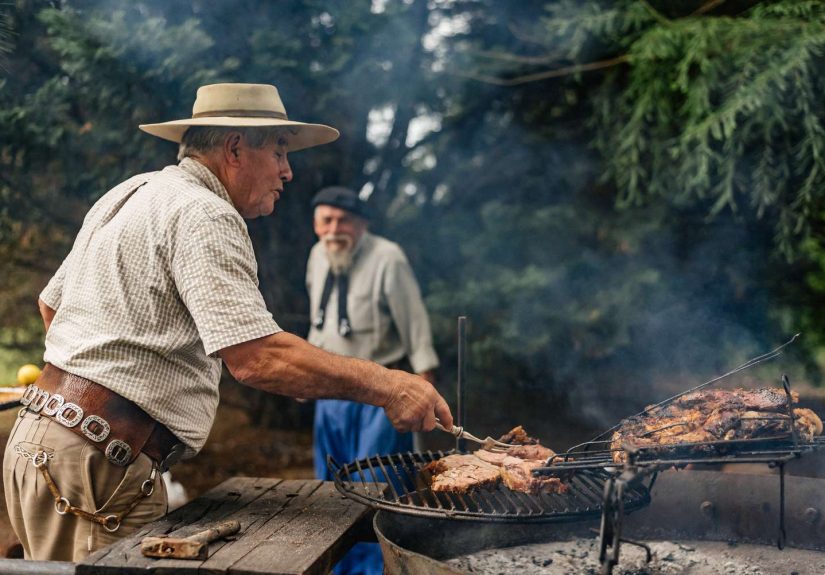
4. Argentine Asado: Fire, Friendship, and Very Large Steaks
In Argentina, asado is both the meal and the eventa long, leisurely gathering centered
around beef grilled over wood or charcoal. Large cuts like ribs and flank steak are cooked
slowly on a parrilla (grill) or on metal crosses near the fire. Sausages like
chorizo and morcilla join in, plus crusty bread and simple salads.
There’s usually one grill master, the asador, who is basically a combination of chef,
entertainer, and unofficial life coach for the afternoon.
5. Brazilian Churrasco: All-You-Can-Eat Skewer Heaven
Brazilian churrasco takes skewers to dramatic heightsliterally. Long swords holding beef,
pork, lamb, and chicken are slowly roasted over charcoal, then carved at the table in an
endless parade of meats. Popular cuts include picanha (top sirloin cap) with a
thick fat cap that crisps beautifully.
It’s a celebration of abundance and perfectly timed “No, really, I’m full” conversations
with the server who is still offering more sausage.
6. Indian Tandoori: Clay Oven, Blistered Perfection
In India, the tandooran intensely hot clay ovenproduces some of the world’s most aromatic
grilled dishes. Tandoori chicken, for example, is marinated in yogurt, lemon juice, chili,
and warm spices, then cooked at very high heat so the exterior chars and the inside stays
juicy.
Flatbreads like naan share the oven, slapped directly onto the hot walls until they bubble
and blister. It’s smoky, spicy, and the opposite of boring.
7. Jamaican Jerk: Heat, Smoke, and Island Vibes
Jamaican jerk is both a spice blend and a grilling style. Traditionally, meatoften chicken
or porkis marinated with a potent mix of Scotch bonnet peppers, allspice, thyme, scallions,
and other aromatics. It’s then grilled or smoked low and slow over pimento wood, which adds
a distinctive aromatic flavor.
The result is a fiery, smoky, deeply seasoned dish that tastes like sunshine, ocean breeze,
and a friendly warning label all at once.
8. South African Braai: The Fire That Brings Everyone Together
In South Africa, a braai is both the grill and the gathering. Meats like boerewors
(a coiled sausage), steaks, and lamb chops are cooked over wood or charcoal, often supplemented
by grilled corn, breads, and salads. The braai isn’t rushed; people arrive early, the fire
is carefully tended, and conversations stretch late into the evening.
Wherever you go, the pattern is clear: barbecue and grilling are less about the recipe and
more about the shared experience.
Tools of the Trade: Grills, Fuel, and Flavor
Across cultures, grill setups differ wildly, but the basic questions are universal:
What am I cooking on, and what am I burning?
Charcoal vs. Gas: The Eternal Backyard Debate
Charcoal grills are beloved for their smoky flavor and ability to reach very high temperatures.
They’re flexible, relatively affordable, and portableperfect for searing steaks, charring
vegetables, and pretending you’re running a tiny smokehouse. Gas grills, on the other hand,
win on convenience: faster preheating, precise temperature control, and easier cleanup.
Flavor purists often swear by charcoal, but blind tastings show it’s not always obvious which
method produced what. If charcoal feels like a weekend hobby, gas grilling is the weeknight
workhorseand both can produce excellent barbecue when used well.
Wood, Smokers, and Specialty Grills
For serious low-and-slow barbecue, dedicated smokersoffset smokers, pellet grills, or ceramic
kamado cookersmake it easier to maintain low temperatures for hours. Different woods add
different flavors: hickory and mesquite are bold, oak is balanced, fruit woods like apple or
cherry are milder and slightly sweet.
Around the world you’ll find clay ovens (tandoors), tabletop charcoal grills for Korean and
Japanese BBQ, and massive open-fire rigs for Argentine asado and South African braai. Each
setup shapes the flavor, texture, and culture of its barbecue tradition.
Healthier, Safer Grilling: Keeping the Feast, Losing the Risk
Grilling and barbecue do come with a few health caveatsbut don’t panic and throw away
your tongs just yet. High-heat cooking of meat, especially over open flames, can create
potentially carcinogenic compounds called HCAs (heterocyclic amines) and PAHs (polycyclic
aromatic hydrocarbons). These form when meat is exposed to very high temperatures, smoke,
and dripping fat.
Smart Grilling Strategies from Nutrition and Cancer Experts
-
Marinate generously: Studies show that marinating meat, especially with
acidic ingredients (vinegar, citrus, yogurt, wine) and antioxidant-rich herbs and spices,
can reduce the formation of HCAs and PAHs dramaticallysome research suggests by up to
90%. -
Lower the heat a bit: HCAs are more likely to form at very high
temperatures, so moderate heat plus a slightly longer cook time is often safer and
more forgiving for beginners. -
Flip frequently and skip the char: Turning meat often reduces the
buildup of HCAs. Remove or trim off any blackened, heavily charred parts before serving. -
Trim visible fat: Less dripping fat means fewer flames and less smoke
loaded with PAHs. -
Invite plants to the party: Grilling vegetables, fruits, tofu, and
plant-based proteins avoids the HCA issue entirely and adds color, fiber, and flavor. -
Use a thermometer: Safe internal temperatures matter: for example,
poultry to at least 165°F (74°C) and ground beef to 160°F (71°C), according to food
safety guidelines.
In other words, you don’t have to choose between flavor and safety. With a bit of planning,
you can keep the smoke, lose the stress, and still impress your guests.
How to Taste the World from Your Own Backyard
You don’t need a passport or a plane ticket to explore global barbecue. A basic backyard
grill, a few pantry staples, and some curiosity can get you surprisingly close.
Build a “World Tour” Menu
- Starter: Grilled vegetable skewers with olive oil, lemon, and herbs (Mediterranean flair).
- Main #1: Texas-style dry-rubbed beef ribs or brisket slices, smoked or cooked low and slow.
- Main #2: Korean-style marinated short ribs, grilled hot and fast, served with lettuce wraps.
- Main #3: Jamaican jerk chicken thighs, marinated overnight and grilled until lightly charred.
- Side: Argentinian-style chimichurri spooned over grilled steak or vegetables.
- Bonus: Tandoori-inspired chicken pieces marinated in yogurt, turmeric, garlic, and garam masala, then grilled until lightly charred.
Each dish brings a different spice profile and cooking style to the same grill, turning one
evening into a mini global barbecue festival.
Experiences and Practical Tips from a Global Grill “Journey”
Hosting an “around the world” barbecue is more than a cooking projectit quickly turns into
a social experiment, a flavor lab, and occasionally a lesson in humility when the skewers
cook faster than expected.
The first thing many home cooks notice is how different barbecue traditions teach different
skills. American-style low-and-slow barbecue is an exercise in patience and planning. You
learn to start early, watch the temperature, and resist the urge to peek every five minutes.
The reward is that quiet moment when you slice into a brisket and it’s tender enough to
fall apart under its own weight.
In contrast, Korean or Japanese tabletop grilling teaches timing and teamwork. Everyone
becomes part of the cooking processturning slices of meat, arranging banchan or dipping
sauces, wrapping lettuce parcels, and politely fighting over the crispiest edge of short rib.
It doesn’t feel like “someone is cooking for us”; it feels like “we are cooking together,”
which is half the fun.
Trying out Argentine asado techniques in a backyard often changes how people think about
heat. Instead of cranking a grill to maximum and hoping for the best, you start to see the
fire as something you shape. You learn to build a hot zone for searing and a cooler side
for gentle cooking, to move steaks and sausages around like pieces on a chessboard. You also
learn that conversation, music, and a drink in hand are part of the timingby the time the
fire settles and the coals are ready, everyone is relaxed and ready to eat.
Experimenting with jerk chicken or tandoori-style marinades is often when people fall in love
with overnight prep. Mixing spices, citrus, and aromatics the day before transforms grilling
day from chaotic to calm. Instead of frantically seasoning raw meat while guests hover, you
simply pull marinated pieces from the fridge and let the grill do its thing. The flavors are
deeper, the meat is juicier, and you have time to actually enjoy your own party.
There’s also a subtle shift that happens when you invite plant-forward dishes into the mix.
Grilled peppers, zucchini, eggplant, corn, or halloumi cheese step out of their usual role
as “sidekicks” and become genuine stars. Guests who might shrug at a plain salad suddenly
get excited about charred corn with lime and chili, or smoky eggplant topped with yogurt
and herbs. And for anyone trying to balance indulgence with health, half a plate of grilled
vegetables next to a few slices of brisket feels like a very livable compromise.
Perhaps the most memorable part of a global barbecue night is the conversation it sparks.
Someone will bring up childhood memories of family cookouts. Another will talk about discovering
street food skewers while traveling. Someone else will share how their grandparents marinated
meat or which holiday always involved grilling. As recipes travel and evolve, they become
personalyour “house jerk chicken” or “signature bulgogi marinade” ends up being a mix of
global inspiration and local improvisation.
Over time, these experiences add up. The grill stops being just a piece of backyard equipment
and becomes a kind of storytelling tool. Each new techniquewhether it’s South African braai
style fires, Brazilian-style skewers, or careful Japanese skewersadds another chapter to
your personal barbecue story. And the best part? There’s always another country, another
spice blend, another cut of meat (or vegetable) waiting to be discovered the next time
you light the coals or turn on the burners.
That’s the real magic of barbecue and grilling around the world: it’s endlessly repeatable,
delightfully imperfect, and always better when shared.
Conclusion: Fire as a Shared Language
Whether it’s a slow-smoked American brisket, a sizzling Korean tabletop feast, a towering
Brazilian skewer, or a fragrant tandoori chicken, barbecue and grilling give us a delicious
way to taste how other cultures celebrate, gather, and relax. The tools and marinades may
change, but the essentials stay the same: good ingredients, thoughtful heat, and people
who are glad to be eating together.
So the next time you fire up your grill, think of it as a tiny embassy of global flavor.
Try a new rub, a new marinade, or a new technique from somewhere else in the world.
Your backyard may never look the samebut your dinner table will definitely be happier.
SEO meta JSON