Table of Contents >> Show >> Hide
- What Is a Duck and Pork Terrine?
- Why This Recipe Works
- Ingredients for Duck and Pork Terrine
- Equipment You Will Need
- Step-by-Step Duck and Pork Terrine Recipe
- Chef Tips for the Best Homemade Terrine
- Flavor Variations
- What to Serve with Duck and Pork Terrine
- Storage and Make-Ahead Advice
- Common Mistakes to Avoid
- Experience Notes: What Making Duck and Pork Terrine Teaches You
- Conclusion
There are recipes that whisper, “Weeknight dinner,” and then there is a duck and pork terrine, which strolls into the room wearing a linen blazer and carrying cornichons. Rich, rustic, sliceable, deeply savory, and surprisingly make-ahead friendly, this classic French-style terrine is the kind of dish that looks like it required a culinary school diploma, a countryside château, and a mysterious great-aunt named Colette. In reality, it needs patience, good seasoning, a loaf pan, a water bath, and the self-control not to eat half the bacon before lining the mold.
This duck and pork terrine recipe combines the luxurious flavor of duck with the satisfying structure of pork shoulder, bacon, herbs, aromatics, and a splash of brandy or port. The result is a homemade terrine that lands somewhere between country pâté and elegant charcuterie centerpiece. It is perfect for holidays, dinner parties, picnics, wine nights, or any occasion where cheese and crackers deserve a promotion.
The beauty of a terrine is that it improves while you ignore it. After baking, pressing, and chilling overnight, the flavors settle, the texture firms, and the slices become neat enough to make you feel extremely competent. Serve it cold or cool, with crusty bread, sharp mustard, pickled vegetables, and a glass of dry white wine, Pinot Noir, or whatever bottle makes you say, “Yes, this feels French enough.”
What Is a Duck and Pork Terrine?
A terrine is both a dish and, traditionally, the vessel it is cooked in. In practical home-cooking terms, it is a seasoned meat mixture packed into a mold, baked gently in a water bath, pressed, chilled, and sliced. Unlike a silky mousse-style pâté, a country-style terrine usually has a coarse texture. You should see little pieces of meat, herbs, fat, pistachios, or dried fruit in the slice. It is rustic, but not careless; refined, but not fussy.
Duck brings deep, slightly gamey richness. Pork adds body, moisture, and that familiar savory comfort. Bacon does double duty: it lines the pan to protect the terrine from drying out and adds smoky, salty flavor. Aromatics such as shallots, garlic, thyme, bay, black pepper, and warm spices make the meat taste rounded rather than heavy. A small amount of brandy, Cognac, Madeira, or port gives the finished terrine a restaurant-style aroma without making it taste boozy.
Why This Recipe Works
Duck Adds Luxury Without Making the Recipe Complicated
Duck has a fuller flavor than chicken or turkey, which means a little goes a long way. In this recipe, duck breast or duck leg meat is chopped and folded into ground pork. The duck stays noticeable in the final slice, giving the terrine a special-occasion feel without requiring advanced butchery.
Pork Shoulder Gives the Terrine Structure
Pork shoulder has the right balance of lean meat, connective tissue, and fat. A terrine made only with lean meat can turn dry and crumbly, which is not the dream. Pork shoulder helps the loaf hold together and keeps each slice tender. If your pork looks very lean, add a little extra bacon or pork fat.
A Water Bath Keeps the Texture Gentle
The terrine bakes in a roasting pan filled with hot water. This water bath, also called a bain-marie, helps the meat cook evenly and prevents the edges from overcooking before the center is done. Think of it as a spa day for meatloaf’s fancy cousin.
Pressing and Chilling Create Clean Slices
After baking, the terrine needs weight on top while it cools. This compresses the meat, removes air pockets, and gives the finished dish its firm, sliceable texture. The overnight chill is not optional. It is where the magic happens, and also where your refrigerator gets to feel like a Parisian charcuterie counter.
Ingredients for Duck and Pork Terrine
Main Ingredients
- 1 pound pork shoulder, cut into small cubes or coarsely ground
- 12 ounces duck breast or duck leg meat, skin removed and diced
- 8 ounces bacon, divided: half chopped, half reserved for lining the pan
- 4 ounces chicken livers, trimmed and chopped, optional but recommended for depth
- 2 shallots, finely minced
- 3 garlic cloves, minced
- 1 tablespoon unsalted butter or duck fat
- 1 large egg
- 1/3 cup heavy cream
- 1/4 cup brandy, Cognac, Madeira, or port
- 1/2 cup shelled pistachios, optional
- 1/3 cup dried cherries, cranberries, or prunes, chopped, optional
Seasonings
- 2 teaspoons kosher salt, plus more as needed
- 1 teaspoon freshly ground black pepper
- 1 teaspoon fresh thyme leaves or 1/2 teaspoon dried thyme
- 1/4 teaspoon ground allspice
- 1/4 teaspoon ground nutmeg
- 1 bay leaf
- 1 tablespoon chopped parsley
- 1 teaspoon orange zest, optional but excellent with duck
For Serving
- Toasted baguette slices or country bread
- Dijon mustard or whole-grain mustard
- Cornichons or pickled onions
- Apple chutney, fig jam, or cranberry relish
- Simple green salad with vinaigrette
Equipment You Will Need
You do not need professional charcuterie equipment to make this homemade duck and pork terrine recipe. A standard 9-by-5-inch loaf pan works well. You will also need a mixing bowl, skillet, roasting pan, foil, instant-read thermometer, and something heavy for pressing the terrine. Canned tomatoes, a foil-wrapped brick, or a smaller loaf pan weighted with jars all work. It is not glamorous, but neither is most greatness before plating.
Step-by-Step Duck and Pork Terrine Recipe
Step 1: Marinate the Meat
Place the pork, duck, chopped bacon, chicken livers if using, brandy, thyme, black pepper, allspice, nutmeg, orange zest, and bay leaf in a large bowl. Mix well, cover, and refrigerate for at least 4 hours or overnight. Overnight marinating gives the terrine deeper flavor, but even a few hours will help the seasoning move through the meat.
Step 2: Cook the Aromatics
Melt the butter or duck fat in a small skillet over medium heat. Add the shallots and cook for 3 to 4 minutes, until soft and translucent. Add the garlic and cook for 30 seconds more. Do not brown the garlic; burnt garlic has the personality of a smoke alarm. Let the mixture cool completely before adding it to the meat.
Step 3: Prepare the Pan
Heat the oven to 325°F. Line a 9-by-5-inch loaf pan with overlapping strips of bacon, letting the ends hang over the sides. These strips will fold over the top of the terrine before baking. If your bacon is thick, gently stretch it with the back of a knife so it lies flat and covers the pan neatly.
Step 4: Mix the Terrine
Remove the bay leaf from the marinated meat. Add the cooled shallot mixture, egg, cream, parsley, pistachios, and dried fruit if using. Mix firmly with clean hands or a sturdy spoon until the mixture becomes slightly sticky. This helps bind the terrine. Do not blend it into paste; a duck and pork terrine should still have rustic texture.
Step 5: Test the Seasoning
Before packing the mold, cook a teaspoon of the mixture in a skillet and taste it. Cold meat mixtures often seem saltier or milder than they will after cooking, so this quick test is your best insurance. Add a pinch more salt, pepper, or spice if needed. This tiny step separates a good terrine from one that makes guests politely reach for extra mustard.
Step 6: Pack the Mold
Spoon the mixture into the bacon-lined loaf pan, pressing it down firmly to remove air pockets. Smooth the top, then fold the overhanging bacon strips over the filling. Place a piece of parchment on top, then cover tightly with foil.
Step 7: Bake in a Water Bath
Set the loaf pan inside a larger roasting pan. Pour hot water into the roasting pan until it reaches halfway up the sides of the loaf pan. Carefully transfer to the oven and bake for about 1 hour and 30 minutes, or until the center reaches at least 160°F on an instant-read thermometer. Because this terrine contains duck and pork, always use a thermometer rather than guessing by appearance.
Step 8: Press and Chill
Remove the terrine from the water bath and let it rest for 20 minutes. Pour off excess liquid carefully. Replace the foil, set a small pan or cardboard rectangle on top, and weigh it down with cans. Let it cool to room temperature, then refrigerate overnight, still weighted. The next day, remove the weights and chill until ready to serve.
Step 9: Slice and Serve
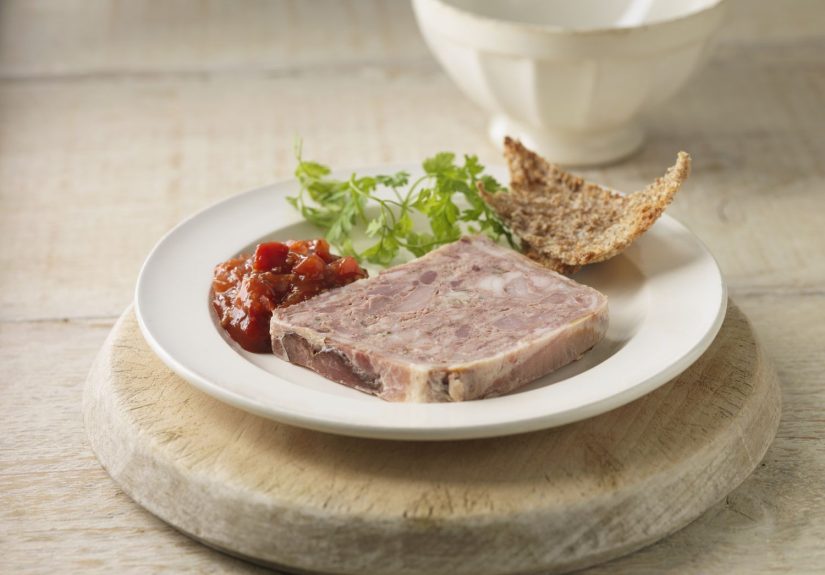
To unmold, run a thin knife around the edges of the pan. Dip the bottom briefly in warm water if needed, then invert onto a board. Slice with a sharp knife into 1/2-inch pieces. Serve cool, not icy cold, so the flavors can bloom. Add bread, mustard, pickles, and something bright or acidic to balance the richness.
Chef Tips for the Best Homemade Terrine
Keep the Meat Cold
Cold meat binds better and produces a cleaner texture. If your kitchen is warm, chill the mixing bowl before starting. If you grind the meat yourself, chill the grinder parts too. This sounds fussy until you see how much better the final texture becomes.
Do Not Skip the Fat
A terrine is not diet food. That is part of its charm. Lean meat alone can become dry, grainy, and disappointing. Bacon, pork shoulder, cream, and duck fat all help create the moist, sliceable texture associated with classic French terrine.
Use Warm Spices Carefully
Allspice, clove, and nutmeg are traditional in pâté and terrine recipes, but they should behave like background music, not a marching band. Start small. You want warmth and complexity, not dessert loaf confusion.
Let It Rest Long Enough
The terrine needs at least one night in the refrigerator. Two days is even better. This is excellent news for entertaining because the main work is finished before guests arrive. You get to look relaxed, which is the true luxury ingredient.
Flavor Variations
Duck and Pork Terrine with Pistachios
Add 1/2 cup shelled pistachios to the meat mixture. They add color, crunch, and a festive look when sliced. This version is especially good for holidays and charcuterie boards.
Duck and Pork Terrine with Prunes and Brandy
Use chopped prunes and brandy for a deeper, slightly sweet flavor. Prunes and duck are natural partners because the fruit balances the richness of the meat.
Rustic Country Terrine
Leave the meat coarser, add extra black pepper, and serve with strong mustard and sour pickles. This version feels like something you would eat at a farmhouse table after pretending you helped with the harvest.
Elegant Dinner Party Terrine
Use port, dried cherries, pistachios, orange zest, and a smooth bacon lining. Slice carefully and serve with dressed greens, toasted brioche, and a small spoonful of fig jam.
What to Serve with Duck and Pork Terrine
The best sides for duck and pork terrine are bright, crisp, tangy, or lightly sweet. Cornichons are classic because their acidity cuts through the fat. Mustard adds heat and sharpness. Crusty bread gives each slice a sturdy stage. A simple salad with vinaigrette keeps the plate from feeling too heavy.
For a charcuterie board, pair the terrine with aged cheddar, creamy brie, pickled mushrooms, olives, apple slices, walnuts, and seeded crackers. For wine, choose something with acidity rather than heavy oak. Pinot Noir, Beaujolais, dry Riesling, Champagne, Chenin Blanc, and Côtes du Rhône all work beautifully.
Storage and Make-Ahead Advice
Duck and pork terrine is one of the best make-ahead recipes because it needs time to chill. Prepare it one to two days before serving for the best flavor. Keep it tightly wrapped in the refrigerator and use it within 3 to 4 days. For longer storage, wrap individual portions tightly and freeze for up to 2 months. Thaw overnight in the refrigerator before serving.
Always keep terrine chilled until close to serving time. Do not leave it sitting at room temperature for long periods, especially at parties. If serving on a buffet, place out a smaller portion and refresh the platter as needed. Food safety is not glamorous, but neither is explaining to guests why the “fancy meat loaf” became a group project in regret.
Common Mistakes to Avoid
Underseasoning the Mixture
Cold terrines need confident seasoning. Always cook a small sample before baking. Once the terrine is cooked, chilled, and sliced, it is too late to add salt inside the loaf.
Skipping the Thermometer
Color is not a reliable sign of doneness in a dense meat terrine. Use an instant-read thermometer and check the center. This protects both flavor and safety.
Serving It Too Cold
Terrine straight from the refrigerator can taste muted. Let slices sit for 10 to 15 minutes before serving so the fat softens slightly and the flavors become more expressive.
Cutting Before It Sets
If you slice the terrine before it has chilled overnight, it may crumble. Give it time. Terrine rewards patience, which is inconvenient but delicious.
Experience Notes: What Making Duck and Pork Terrine Teaches You
Making a duck and pork terrine for the first time can feel intimidating because it belongs to that category of food people usually buy from specialty shops and then describe with dramatic hand gestures. But the process is actually calming once you break it down. It is not fast cooking; it is thoughtful cooking. You season, marinate, pack, bake gently, press, chill, and wait. The recipe asks you to slow down, which is probably why it tastes like something made with more wisdom than panic.
One of the biggest lessons is that texture matters as much as flavor. When the meat is chopped too finely, the terrine can become dense and sausage-like. When it is too chunky and not mixed enough, slices may fall apart. The sweet spot is a coarse mixture that still binds when pressed. You learn to feel the mixture change under your hands as the proteins become tacky. That small sensory cue is more useful than any timer.
Another experience worth noting is the importance of balance. Duck and pork are rich, so the supporting ingredients must do real work. Shallots add sweetness, garlic adds backbone, herbs add freshness, brandy adds aroma, and pickles at serving time add the bright snap that keeps the dish lively. Without acidity, a terrine can taste heavy after two bites. With mustard, cornichons, and good bread, it becomes almost dangerously snackable.
The make-ahead nature of terrine also changes how you entertain. Instead of juggling pans while guests arrive, you simply unmold, slice, and arrange. It feels elegant without last-minute chaos. In fact, the terrine gets better while you sleep, which is frankly more than can be said for many recipes and most inboxes.
There is also something satisfying about the reveal. When you turn the loaf out of the pan and slice into it, you see the pattern of duck, pork, bacon, herbs, nuts, and fruit. Every slice looks a little different. It is rustic, but it has drama. The first clean slice feels like a small culinary victory, especially if you have spent the previous night wondering whether you made refined charcuterie or expensive meat pudding.
If you are new to terrines, start with this recipe before experimenting. Once you understand the base formula, you can adjust the flavors with confidence. Try dried apricots instead of cherries, walnuts instead of pistachios, Madeira instead of brandy, or add a strip of cooked duck breast through the center for a more decorative slice. The technique stays the same, but the personality changes.
Most importantly, duck and pork terrine reminds home cooks that impressive food does not always require complicated moves. Sometimes it requires seasoning properly, cooking gently, chilling thoroughly, and serving with pickles. That may not sound glamorous, but on a board with warm toast and mustard, it tastes like you know secrets.
Conclusion
This duck and pork terrine recipe is rich, rustic, elegant, and far more achievable than it looks. By combining duck, pork shoulder, bacon, herbs, warm spices, and a splash of brandy, you get a sliceable homemade terrine that works as an appetizer, charcuterie board centerpiece, holiday starter, or make-ahead dinner party dish. The key is simple: keep the meat cold, season boldly, bake gently in a water bath, press the terrine properly, and let it chill overnight.
Served with crusty bread, mustard, cornichons, and a crisp salad, this French-inspired terrine delivers big flavor with old-world charm. It is the sort of recipe that makes guests pause after the first bite, then casually ask whether there is more. There should be. Always make enough for second slices.
Note: For best results and safe serving, check the center of the terrine with an instant-read thermometer, chill it thoroughly after cooking, and keep it refrigerated until shortly before serving.