Table of Contents >> Show >> Hide
- Why These Celebrity Photo Recreations Are So Funny
- What Makes The Results Better Than The Originals
- The 50-Pic Formula: Glamour Meets Real Life
- The Bigger Message Hidden Inside The Joke
- Why Audiences Never Get Tired Of This Trend
- Experience: What It Feels Like To Scroll Through 50 Of These Pics
- Final Thoughts
There are two kinds of pictures on the internet. The first kind says, “I woke up like this,” while obviously waking up required a glam squad, a lighting crew, and at least one emotionally supportive silk robe. The second kind says, “No, you absolutely did not.” That second category is where this story lives, thrives, and trips over a laundry basket in the most glorious way possible.
That is exactly why galleries built around a woman hilariously recreating celebrity pics are so irresistibly funny. They do not just make people laugh. They puncture the balloon of internet perfection with the gentlest possible pin. One side shows the polished fantasy: the impossible pose, the dramatic stare, the luxury bath nobody has ever actually taken without slipping, and the oddly intense commitment to looking mysterious while standing near fruit. The other side shows reality barging into the room wearing oversized underwear and the confidence of someone who knows that comedy hits harder than contour.
At the center of the trend is a style of parody that works because it is not cruel. It is observational, playful, and surprisingly smart. These recreations do not mock beauty itself. They mock the performance of perfection. They remind us that many celebrity and influencer images are less “casual moment” and more “human origami under expensive lighting.” And once you see that, you can never unsee it.
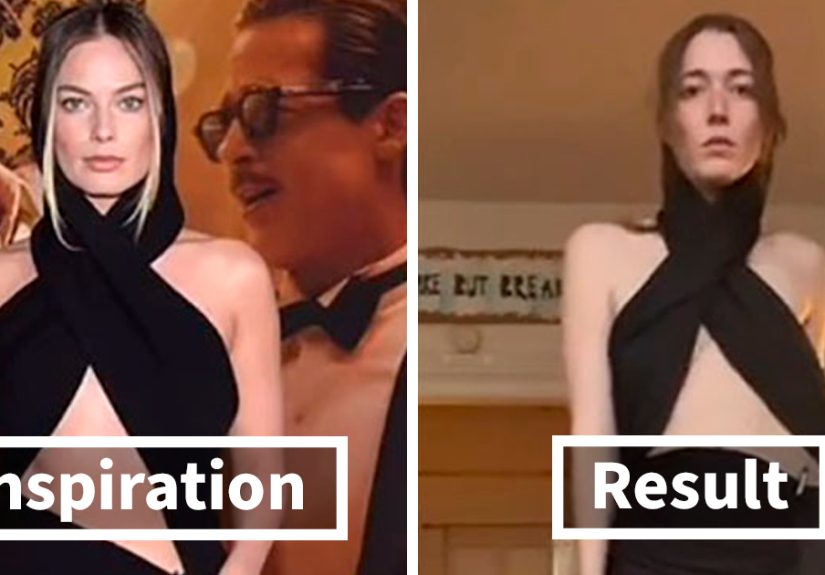
Across a 50-pic gallery, the formula stays simple but never gets old. A glamorous original is paired with a hilariously grounded remake. A couture beach pose becomes a backyard wobble. A seductive fashion shot becomes a person trying not to pull a hamstring. A dreamy bathtub image turns into the universal experience of wondering why there is suddenly water in your ear. The joke lands because the contrast is immediate, visual, and painfully relatable.
Why These Celebrity Photo Recreations Are So Funny
The humor works on three levels at once. First, there is the obvious visual gag. A perfectly polished celebrity image gets recreated with everyday props, ordinary body language, and a complete refusal to pretend gravity is optional. That alone is enough to earn a laugh. But the deeper reason these pictures spread so fast is that they capture a truth everyone already feels: much of online glamour looks ridiculous when translated into real life.
Second, the side-by-side format gives the joke excellent timing. You do not need a long explanation. Your brain handles the punchline in half a second. Original image: effortless chic. Recreated image: someone clearly one muscle cramp away from calling it a day. Comedy achieved.
Third, these recreations are funny because they turn the audience into insiders. Instead of staring up at celebrity culture from the cheap seats, viewers get invited into the joke. Suddenly the whole audience becomes one big group chat saying, “Thank you. I knew that poolside pose looked unhinged.”
What Makes The Results Better Than The Originals
Calling the recreations “better than the originals” is obviously cheeky, but only a little. In many cases, the parody version is more memorable because it contains something the original often lacks: a story. Perfection is static. Comedy moves. A flawless editorial image can be visually striking, sure, but the recreated version gives you tension, chaos, and character. It feels alive.
That is why these parody shots linger in your mind. A celebrity draped over furniture in a silk gown is pretty. A comedian trying that same pose while looking mildly inconvenienced by her own spine is unforgettable. One image sells fantasy. The other sells truth with a punchline.
There is also a weirdly refreshing honesty in seeing a real body occupy the same visual space usually reserved for polished fantasy. Not because one body is “better” than another, but because the parody breaks the illusion that beauty must always appear effortless, expensive, and suspiciously backlit. These recreations say what millions of people already know: normal bodies can be funny, expressive, glamorous, chaotic, and camera-worthy too.
And let us be honest, the props deserve awards. Blankets become couture scarves. Kiddie pools become luxury getaways. Bathroom tiles become high fashion scenery. Household clutter becomes supporting cast. Half the charm is watching ordinary items rise to the occasion like underpaid stagehands in a comedy masterpiece.
The 50-Pic Formula: Glamour Meets Real Life
If you scroll through a gallery like this, patterns start to emerge. The first category is the dramatic beauty shot, where a celebrity appears to have been lightly kissed by moonlight and a favorable contract with the laws of physics. The recreated version usually replaces mystery with discomfort, which is exactly correct. Most people do not look seductive lying across a staircase. Most people look like they dropped something and regret bending for it.
The second category is athletic elegance. Celebrities and models often appear to float, stretch, balance, leap, or lounge in ways that imply they were assembled by a luxury yoga studio. The parody version restores human truth: balancing is hard, jumping is awkward, and beachside flexibility should not be attempted immediately after lunch.
The third category is aspirational domesticity. This is where the internet really starts acting up. Here we get staged bed photos, carefully curated “messy” mornings, and bath moments that appear to require twelve candles and zero responsibilities. The recreated images are brilliant because they remind us that actual life is less spa retreat and more trying to find your phone charger under a pile of unfolded laundry.
Then there is celebrity romance, a genre that often looks like perfume ads written by aliens. Windswept embraces, emotional gazes, and highly suspicious levels of beach coordination are transformed into parodies that capture what most relationships actually look like: practical, messy, funny, and interrupted by children, pets, or somebody asking what is for dinner.
Finally, there is full-on fashion absurdity. This is where parody becomes public service. When an original image involves impossible poses, giant accessories, or an expression that says “I have never paid my own parking ticket,” the recreated version becomes a kind of visual fact-checking. It asks the question everybody is thinking but too polite to say out loud: was this stunning, or was it just expensive?
The Bigger Message Hidden Inside The Joke
For all the silliness, these recreations tap into something much bigger than celebrity gossip. They push back against the idea that women must always look composed, tiny, polished, and effortlessly desirable in order to deserve attention. That message has been floating around pop culture for years, and social media put it on steroids. Suddenly everybody had access to filters, flattering angles, and a public stage. The pressure did not get smaller. It got portable.
That is what makes this kind of parody so satisfying. It does not lecture. It does not wag a finger. It simply holds up a mirror and says, “Look how absurd this gets when real life enters the chat.” That is far more effective than a thousand preachy captions about authenticity.
It also helps that the tone usually stays playful instead of bitter. The best recreations come across like a wink, not a takedown. The point is not that celebrities are evil for posting glamorous photos. The point is that audiences are allowed to laugh at the gap between the curated image and everyday human experience. In fact, that gap is where some of the best internet comedy lives.
And yes, the joke is often especially sharp when it involves celebrity culture. Modern fame runs on aspiration. Stars, influencers, and brand ambassadors sell beauty, access, youth, ease, luxury, and confidence. A parody image strips away the sales pitch and leaves only the pose. Without the prestige packaging, the whole thing can look wonderfully, gloriously ridiculous.
Why Audiences Never Get Tired Of This Trend
Because perfection is exhausting. That is the simple answer.
People are tired of being sold a fantasy that nobody can actually live in full time. They are tired of “effortless” content that clearly took three hours, four outfit changes, and somebody crouching behind a fern with a ring light. A funny recreation gives viewers relief. It says you are not failing at life because your vacation photos do not look like a jewelry campaign. You are just a person, and honestly, that is a much better genre.
There is also comfort in seeing confidence expressed through comedy instead of control. So much online content is about mastering the image: the angle, the edit, the body, the brand. These parody shots do the opposite. They let the image be messy. They let the face scrunch. They let the stomach fold, the limbs flop, and the moment unravel. In a culture obsessed with polishing every surface, that kind of looseness feels radical.
No wonder audiences share these galleries like candy. They are funny, but they are also freeing. They give people permission to laugh at the rules they never agreed to in the first place.
Experience: What It Feels Like To Scroll Through 50 Of These Pics
Scrolling through 50 celebrity recreations in one sitting is a very specific emotional journey, and frankly, science should study it. At first, you click for the obvious reason: curiosity. You want to see the comparison, spot the original vibe, and enjoy the visual gag. But after about seven pictures, something changes. The gallery stops feeling like a simple joke and starts feeling like therapy with better props.
You begin by laughing at the first few images because they are outrageous. Maybe it is a dramatic pose recreated with a mop bucket nearby. Maybe it is a luxury photo echoed with drugstore energy and determined eye contact. Either way, you laugh because the contrast is immediate. But then another feeling sneaks in: recognition. Not of the celebrity, but of yourself. You have made that face trying to get comfortable on a couch. You have stood in a towel and briefly believed you looked cinematic. You have attempted a flattering angle and accidentally discovered your front camera has the spirit of a documentary filmmaker.
That is when the gallery gets really good. It stops being about celebrities and starts being about everybody who has ever felt one inch too ordinary in a world that rewards polished illusion. Each parody image becomes a tiny act of rebellion. Not the loud, dramatic kind. The funny kind. The kind that says, “Actually, I refuse to be embarrassed by being human.”
There is also something deeply communal about the experience. These images invite people to laugh together instead of compare themselves in silence. Most social media encourages quiet measurement. Who looks better, who dressed better, who vacationed better, who aged less, who somehow managed to eat pasta in white pants without consequences. A gallery like this interrupts that pattern. It turns comparison into comedy. The pressure drops. The shoulders unclench. The group chat wakes up.
And somewhere around picture number thirty-two, the whole thing becomes oddly inspiring. Not because it makes glamour look stupid, but because it makes honesty look powerful. The woman in the parody is not hiding, shrinking, or apologizing. She is taking up space in the exact kind of image that usually excludes anybody who is not polished to within an inch of their life. That confidence lands. It tells viewers that you do not need elite lighting, impossible proportions, or designer drama to be memorable. Sometimes all you need is commitment to the bit and a household object willing to become couture for one afternoon.
By the end of the gallery, you are not just entertained. You are lighter. You have laughed at the absurdity of internet perfection, but you have also loosened its grip on your own brain. That may be the secret ingredient in why these recreations keep going viral. They do not only roast celebrity pics. They rescue regular people from taking those pics too seriously.
So yes, the results can feel better than the originals. Not because they are more expensive, more polished, or more “aspirational.” They are better because they are braver. They trade performance for personality. They swap polish for perspective. And in a feed full of images begging to be admired, the funniest ones are often the ones bold enough to be real.
Final Thoughts
“Woman hilariously recreates celebrity pics” sounds like a simple viral headline, but the best versions of this trend do more than collect laughs. They expose how weird modern image culture can be, and they do it without becoming mean-spirited. That balance is rare. It is easy to make fun of people. It is much harder to make fun of an entire visual culture while still keeping the joke warm, human, and sharply observant.
That is why these 50 pics hit so hard. They are not just better than the originals because they are funny. They are better because they are honest. They remind us that behind every polished fantasy is a camera angle, a performance, and usually a lot more effort than anybody wants to admit. The parody cuts through all of that. And once it does, the internet suddenly feels a little less intimidating and a lot more fun.