Table of Contents >> Show >> Hide
- 1. Misconception: The Middle Ages Were Just One Long “Dark Age”
- 2. Misconception: Medieval People Thought the Earth Was Flat
- 3. Misconception: Everyone Was Filthy and Nobody Bathed
- 4. Misconception: The Church Smothered All Science and Learning
- 5. Misconception: Everyone Thought the World Would End in the Year 1000
- Why These Misconceptions Keep Surviving
- Experiences That Make the Middle Ages Feel Real
- Conclusion
- SEO Tags
Mention the Middle Ages and many people instantly picture muddy roads, miserable peasants, plague carts, and a crowd of deeply confused villagers wondering whether a ship might fall off the edge of Earth. It is a dramatic picture. It is also, in many ways, a very lazy one.
The medieval period lasted roughly a thousand years, stretched across different regions, and included enormous changes in politics, religion, technology, trade, education, architecture, and everyday life. That alone should make anyone suspicious of one-size-fits-all stereotypes. Yet the era is still treated like history’s favorite punchline, as if everyone between Rome and the Renaissance was just improvising in candlelight and bad wool.
The truth is much more interesting. Yes, the Middle Ages could be violent, unequal, and brutally hard. No serious historian is trying to turn medieval Europe into a cozy theme park with better bread. But a lot of the most popular assumptions about the period are myths created later, especially during the Renaissance and modern times, when people wanted a convenient “before” to make themselves look more enlightened.
So let’s clear the fog, shake the dust off the record, and take a closer look at five of the biggest misconceptions about the Middle Ages.
1. Misconception: The Middle Ages Were Just One Long “Dark Age”
Why this idea became popular
The label “Dark Ages” has stuck around because it is catchy, dramatic, and wonderfully smug. Later writers, especially Renaissance thinkers, loved contrasting their own supposedly bright, rational age with the centuries that came before. Calling the medieval period “dark” made the Renaissance look even shinier. It was a brilliant branding move, even if it was not great history.
What the Middle Ages were actually like
The problem is that the phrase suggests total cultural collapse, and that simply does not fit the evidence. The Middle Ages saw the rise of universities, the development of major legal traditions, the growth of towns and trade networks, and extraordinary achievements in architecture and art. Gothic cathedrals did not assemble themselves out of pure pessimism. They required advanced planning, engineering, skilled labor, and serious money.
Medieval people also produced manuscripts, chronicles, romances, devotional texts, philosophical works, scientific compilations, and practical manuals. Monasteries and scriptoria helped preserve older knowledge, while later medieval cities and schools became centers of new debate and learning. Even the idea that the period was intellectually empty falls apart once you start looking at what people were actually reading, copying, teaching, and building.
It is more accurate to think of the Middle Ages not as a single dark tunnel, but as a long, changing period with moments of crisis, recovery, invention, and cultural brilliance. Some centuries were rougher than others. Some regions flourished while others struggled. That is called history, not darkness.
2. Misconception: Medieval People Thought the Earth Was Flat
The movie version of the myth
This is one of those myths that refuses to die because it is too convenient. It gives modern people a satisfying way to feel clever. In the popular version, Christopher Columbus storms into a room full of flat-Earth believers, slams down a globe, and heroically drags Europe into spherical awareness. It makes for a nice classroom cartoon. It just is not what happened.
What educated medieval people knew
Educated people in medieval Europe inherited classical knowledge that treated Earth as a sphere. The real disagreement in Columbus’s time was not whether the planet was round, but how big it was and whether sailing west to Asia was practical. That is a much less meme-friendly argument, but it is the historical one.
Medieval learning included astronomy as part of the liberal arts, and scholars studied texts that dealt with the heavens, the calendar, and the structure of the cosmos. Maps from the era may look strange to modern eyes, but unusual map design is not proof that people believed the planet was flat. Many maps were symbolic, theological, or regionally focused. They were trying to express meaning, not win a satellite imaging contest.
In other words, medieval people were not staring nervously at the horizon waiting for boats to tumble into the void. That stereotype tells us more about later mythmaking than medieval thought.
3. Misconception: Everyone Was Filthy and Nobody Bathed
Why this myth sounds believable
To be fair, the Middle Ages do not have a great publicist. Add plague, livestock, open fires, and crowded towns, and it is easy to assume that cleanliness was basically a lost art. Popular culture often pushes this even further, portraying the entire period as one giant smell with a monarchy attached.
The messier, cleaner truth
Medieval hygiene was inconsistent, but that is not the same as nonexistent. People washed. They cared about grooming. They changed linens, washed hands and faces, used basins, and in many places visited baths. Public bathing traditions existed in different parts of the medieval world, and bathing spaces could serve both practical and social functions.
What really matters here is variation. Standards differed by class, region, climate, religion, and century. Urban crowding could create awful sanitary problems, especially during epidemics. At the same time, some later early modern Europeans became more suspicious of full-body bathing than many medieval communities had been. So the simplistic story that hygiene moved in a straight line from “medieval gross” to “modern clean” does not hold up very well.
Medieval life could absolutely be dirty by modern standards. Streets could be foul. Waste disposal was limited. Disease was devastating. But the idea that people did not care about cleanliness or never bathed at all is exaggerated. Human beings have always preferred not to smell terrible when they had a choice. That is one of history’s most stable traditions.
4. Misconception: The Church Smothered All Science and Learning
The stereotype
Another common myth paints medieval Europe as a place where curiosity went to die. In this version, the Church spent the whole period stamping out inquiry, banning investigation, and yelling at anyone who looked too interested in a star chart.
The historical picture
The reality is more complicated. Religion shaped medieval intellectual life in profound ways, and Church institutions were deeply involved in education. That does not mean every idea was welcomed or every scholar had total freedom. Conflict existed. Boundaries existed. Orthodoxy mattered. But it is simply false to say that learning stopped.
Medieval schools and universities taught grammar, logic, rhetoric, arithmetic, geometry, music, and astronomy. Medical schools operated in Europe by the twelfth century, and some places, such as Salerno, became famous for medical study. Manuscripts circulated knowledge on medicine, natural philosophy, law, and theology. Convents and monasteries functioned as centers of reading and preservation. Women also participated more than the stereotype allows, particularly through convent education, manuscript culture, and patronage.
Scientific progress in the Middle Ages did not look exactly like modern laboratory science, but that does not make it fake. Medieval thinkers asked serious questions about nature, bodies, motion, time, and the heavens. Their methods were shaped by the intellectual tools available to them, just as ours are shaped by ours.
The bigger lesson is this: a society can be deeply religious and still intellectually active. Medieval Europe was not a blank space between ancient genius and modern brilliance. It was one of the bridges between them.
5. Misconception: Everyone Thought the World Would End in the Year 1000
The dramatic legend
This story has everything: apocalypse, panic, religious fervor, and a whole continent supposedly losing its mind because the calendar rolled over. It sounds cinematic. It also sounds suspiciously like something later centuries invented because they could not resist a good “ignorant old Europe” story.
What historians usually say instead
Modern historians generally view the claim of a universal year 1000 panic as exaggerated or flat-out mistaken. That does not mean medieval people never worried about the end times. Apocalyptic belief was part of Christian thought, and fears about war, famine, plague, and judgment were real. But that is not the same as saying all of Europe stood around screaming on December 31, 999.
One major problem with the myth is practical: the dating system we use today was not uniformly applied in the way modern people imagine, and people across medieval Europe did not all experience time through the same neat, synchronized calendar logic. Even when anxiety existed, it was not one giant continent-wide countdown party from hell.
In fact, the centuries around the year 1000 saw evidence of continuity and growth in many regions, including reform movements, religious building, local power consolidation, and expanding social life. Medieval people certainly believed history had sacred meaning. They just also had fields to plow, disputes to settle, taxes to dodge, and buildings to finish.
Why These Misconceptions Keep Surviving
Bad history survives because it is efficient. Myths flatten complexity into neat little packages that are easy to repeat in movies, memes, textbooks, and dinner-table trivia. “The Middle Ages were dirty and dumb” takes five seconds to say. “The medieval period was diverse, regionally varied, intellectually active, socially stratified, and constantly changing over a thousand years” takes a little longer and sounds less dramatic over appetizers.
But lazy myths do real damage. They make it harder to understand how Europe changed over time, how knowledge moved across cultures, how institutions evolved, and how ordinary people actually lived. They also encourage a smug version of progress that assumes people in the past were foolish by default and we are naturally wiser just because we own chargers.
The Middle Ages deserve better than that. Not because they were perfect, but because they were human: inventive, contradictory, ambitious, fearful, devout, political, artistic, practical, and often surprisingly sophisticated.
Experiences That Make the Middle Ages Feel Real
One of the best ways to shake off medieval myths is to stop thinking about the period as an abstract cartoon and start experiencing it through places, objects, and stories. Walk into a cathedral built in the High Middle Ages and the stereotype of a “backward” society starts looking pretty flimsy. You do not need a history degree to feel the scale of the engineering. You just need functioning eyeballs and maybe a neck brace after staring up for too long. The height, symmetry, stained glass, and acoustic design all remind you that medieval builders were not stumbling through history in a fog. They knew exactly how to create awe.
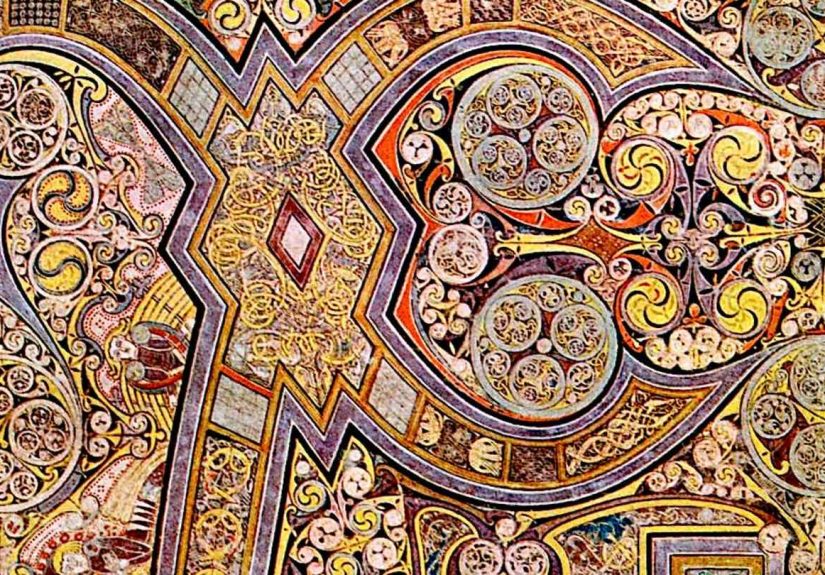
Museum experiences do something similar. Stand in front of an illuminated manuscript and you realize that “medieval people were ignorant” is an embarrassing sentence. These books are dense with symbolism, technical skill, and patience that borders on supernatural. Gold leaf, careful script, astronomical diagrams, devotional imagery, legal texts, and practical instruction can all exist in the same world. Suddenly, the Middle Ages stop being a muddy blur and become a civilization of readers, makers, patrons, and specialists.
Even reconstructed daily life can be revealing. Visit a historic site with a medieval kitchen, workshop, or market display and you start noticing how much labor, organization, and expertise shaped ordinary survival. Bread did not appear by magic. Cloth did not weave itself. Buildings did not maintain themselves. People needed systems, trades, routines, and skill. That reality makes the era feel less like a fantasy setting and more like a functioning society filled with working adults who would probably be annoyed by modern people calling them primitive.
Reading medieval voices can be just as powerful. Chronicles, letters, saints’ lives, romances, and works by writers such as Christine de Pizan reveal wit, frustration, ambition, and argument. The people on the page are not flat props from a grim costume drama. They gossip, defend themselves, complain about injustice, praise rulers, criticize enemies, and worry about money, morality, and reputation. In other words, they sound uncomfortably familiar.
Travel can sharpen that perspective too. A castle ruin, a stone bridge, a monastery cloister, or a surviving street plan can teach you that the Middle Ages were not only about war and disease, though both mattered. They were also about infrastructure, devotion, trade, law, community, and memory. When you physically move through medieval spaces, you feel how intelligently many of them were designed for defense, ceremony, work, or worship.
The most valuable experience, though, may be intellectual humility. The more closely you look at the Middle Ages, the less you can get away with cheap jokes. You begin with the expectation of darkness and end with a more complicated impression: hardship, yes, but also creativity; superstition, yes, but also inquiry; inequality, yes, but also agency and achievement. That shift is worth having, because it makes history richer and makes us a little less smug about our own time.
Conclusion
The Middle Ages were not a thousand-year disaster zone populated by flat-Earth believers who never bathed, feared every comet, and accidentally tripped into the Renaissance. They were a long and complicated era shaped by faith, conflict, trade, creativity, scholarship, and constant change. The myths endure because they are simple. The truth endures because it is better.
So the next time someone uses “medieval” as shorthand for hopelessly backward, it may be worth pushing back. Politely, of course. No need to challenge them to a duel in the town square.