Table of Contents >> Show >> Hide
- The Current Status of Ingenuity: Permanently Grounded, Still Important
- From Five Flights to 72: How Ingenuity Obliterated Expectations
- What Happened on Ingenuity’s Final Flight?
- Why Ingenuity Still Matters Even Though It Cannot Fly
- What Happened After the Mission Ended?
- Will NASA Build Another Mars Helicopter?
- The Experience of Following Ingenuity: Why This Tiny Helicopter Felt So Big
- Conclusion
- SEO Tags
For a little machine that weighed about as much as a chunky house cat, Ingenuity sure knew how to make history. It arrived on Mars tucked beneath NASA’s Perseverance rover, looking less like a future legend and more like something you would hide from a windstorm. Then it did the impossible anyway: it proved that powered, controlled flight on another planet was not science fiction, not a maybe, and not a “give us a decade.” It was real.
So what is the status of Ingenuity now? Here is the clear answer: Ingenuity is permanently grounded. Its mission officially ended in January 2024 after rotor blade damage during its 72nd flight. But that is not the same as saying the story is over. Far from it. The latest Mars helicopter updates show that Ingenuity kept delivering lessons even after its final landing, helped engineers understand what went wrong, and continues to shape the future of aerial exploration on Mars.
If you came here looking for a simple update, here it is in plain American English: Ingenuity is no longer flying, it is not expected to fly again, and its final chapter has turned into a surprisingly useful one. Instead of buzzing around Jezero Crater like the coolest mosquito in the solar system, it now stands as a stationary testbed and a giant engineering lesson in very small packaging.
The Current Status of Ingenuity: Permanently Grounded, Still Important
The latest public mission updates leave very little room for suspense. Ingenuity completed its final flight on January 18, 2024, and NASA announced the end of the mission on January 25, 2024. The helicopter remained upright after the hard landing, but damage to its rotor blades meant it could no longer fly. In other words, the aircraft survived, but its flying career did not.
That makes Ingenuity’s status today both simple and fascinating. It is not operational as a helicopter, but it is still one of the most successful technology demonstrations NASA has ever flown. Publicly reported follow-up updates showed that engineers prepared the vehicle to act as a stationary science and engineering platform after the mission ended. The idea was elegant: if Ingenuity could no longer fly, it could still wake up, check its systems, take surface images, and collect environmental information for as long as power and communications allowed.
That “retirement plan” was a lot better than most humans get, honestly.
Later operations reporting added an especially interesting twist: regular Ingenuity operations wrapped up in April 2024, and the last successful communication publicly documented between Ingenuity and Perseverance happened in late November 2024. So the best current picture is this: the helicopter is permanently grounded, no longer in active flight operations, and preserved in place at its final location on Mars as both a monument and a lesson book written in dust, telemetry, and broken rotor blades.
From Five Flights to 72: How Ingenuity Obliterated Expectations
What Ingenuity was supposed to do
When NASA sent Ingenuity to Mars, the plan was modest by design. The helicopter was a technology demonstration meant to attempt up to five short flights over about 30 days. That was it. The goal was not to become a long-term aerial scout, a route-planning partner, or a celebrity robot with global fan mail. It simply needed to answer one enormous question: Can a powered aircraft fly in the ultra-thin Martian atmosphere?
That atmosphere, by the way, is brutal for aviation. Mars has far less air density than Earth, which means lift is hard to generate and mistakes are expensive. Ingenuity had to spin its blades at very high speed, operate autonomously, and survive extreme temperature swings while communicating through Perseverance like a pilot texting through a friend.
What Ingenuity actually did
Instead of stopping after five flights, Ingenuity completed 72. Instead of lasting about a month, it operated for nearly three years. Instead of making a few proof-of-concept hops, it became an aerial scout for Perseverance, helping mission planners understand terrain ahead and demonstrating how aircraft can support surface exploration on another world.
By the end of its mission, Ingenuity had logged a little over two hours of total flight time and traveled roughly 11 miles, or about 18 kilometers. For a rotorcraft that was originally built to prove a point, that is the kind of overachievement that makes every group project teammate look bad.
Its record mattered because it changed the conversation. Before Ingenuity, aircraft on Mars sounded like a future concept. After Ingenuity, aerial exploration became a tested capability. That is a huge difference. NASA and its partners did not just get bragging rights. They got real flight data, real operational experience, and real proof that a rotorcraft can be useful in a Martian mission architecture.
What Happened on Ingenuity’s Final Flight?
Flight 72 was supposed to be routine
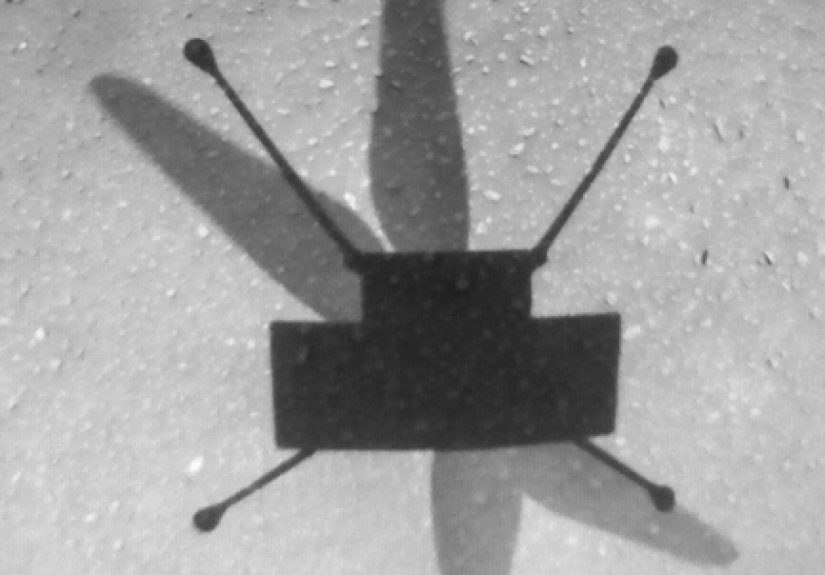
Ingenuity’s 72nd flight was not designed as some dramatic last stand. It was supposed to be a short vertical hop, basically a systems check with a little sightseeing. The helicopter climbed to about 40 feet, or 12 meters, as planned. Then communications between Ingenuity and Perseverance ended before touchdown.
That early loss of contact raised immediate concern, but not instant panic. Mars missions are many things, and “boringly predictable” is rarely one of them. NASA later reestablished communications, and images returned from the helicopter showed that one or more rotor blades had been damaged during landing.
The likely cause: a navigation problem over bland terrain
The formal accident investigation released later gave the clearest explanation yet. Ingenuity’s vision-based navigation system needed visible surface texture to track motion accurately. Earlier in the mission, that approach worked beautifully over flatter, more textured terrain. But by Flight 72, the helicopter was operating above an area of steep, relatively featureless sand ripples in Jezero Crater.
That bland-looking terrain was not harmless. It appears to have starved the navigation system of the visual clues it needed. During the descent, the helicopter likely could not estimate its motion with enough accuracy, which led to high horizontal velocity at touchdown. In plain language: Ingenuity seems to have landed harder and more awkwardly than intended, on terrain that gave its software too little to “see.”
The result was ugly physics. The impact likely caused the vehicle to pitch and roll, placing loads on the fast-spinning rotor blades beyond their design limits. The blades snapped, vibration spiked, and the helicopter lost the ability to fly again. Later imagery even showed a broken blade section lying on the Martian surface some distance from the aircraft.
It is a dramatic ending, but also a strangely fitting one. Ingenuity was not beaten by a grand catastrophe. It was beaten by one of Mars’ favorite tricks: terrain that looked simple until it absolutely was not.
Why Ingenuity Still Matters Even Though It Cannot Fly
Some missions matter because they collect huge volumes of science. Others matter because they prove a whole new category of exploration is possible. Ingenuity did the second thing, and it did it brilliantly.
First, it proved that controlled, powered flight can work on Mars. That alone puts it in the history books forever.
Second, it showed that aircraft can do useful operational work for surface missions. Ingenuity was not just performing airshow tricks over the Red Planet. It helped scout routes, gave Perseverance’s team a new perspective on terrain, and revealed how aerial assets could complement rovers in future missions.
Third, it exposed the real-world limits of operating aircraft on another planet. That may sound less glamorous, but it is just as valuable. Engineers now know more about the challenges of visual navigation over low-texture terrain, the wear-and-tear of extended operations on Mars, communications over long surface distances, and how rotorcraft can be integrated into a larger planetary mission.
Even Ingenuity’s accident is useful. Nobody wanted that outcome, of course, but failure analysis is how aerospace gets smarter. The final-flight investigation is already shaping thinking about future Mars aircraft, including how they might better handle visually bland ground, trickier terrain, and more ambitious missions.
What Happened After the Mission Ended?
The stationary testbed phase
After NASA ended the flying mission, Ingenuity was not simply abandoned like a forgotten camping chair on Mars. Engineers uploaded software intended to let the helicopter keep waking up, checking its health, taking pictures with its color camera, and measuring conditions around it. NASA described this next act as a stationary testbed role, which is a fancy way of saying the helicopter might still be able to teach us things while standing still.
That plan had real value. Long-term data on temperatures, dust accumulation, solar performance, batteries, and electronics could help future Mars aircraft designers understand how hardware ages on the Red Planet. JPL also noted that Ingenuity’s onboard memory could potentially hold years’ worth of daily data even after direct communication stopped.
Communications gradually became part of the story
As Perseverance continued driving farther away, communications naturally became harder. Public updates later indicated that Ingenuity remained in contact with the rover for more than six months after regular operations ended, and that a late-November 2024 communication set a notable surface-distance record between two vehicles on Mars. After that, public reporting suggests the helicopter’s communication era effectively closed out, with the dedicated helicopter integration team eventually disbanded in early 2025.
That means the most current Ingenuity Mars helicopter update is not a comeback story. It is a legacy story. The rotorcraft is still on Mars, still famous, still scientifically useful in principle, but no longer part of active flight operations. Mars has kept the aircraft. Earth kept the lessons.
Will NASA Build Another Mars Helicopter?
Not another Ingenuity exactly, but Ingenuity’s success has absolutely fueled the design of future Mars rotorcraft. Technical work published after the mission shows continuing interest in larger, more capable vehicles that could travel farther, carry science instruments, and tackle more demanding exploration tasks.
That is one of the biggest reasons Ingenuity still matters. It was small, but it changed the scale of the conversation. Engineers are now thinking beyond a proof-of-concept drone and toward aircraft that could scout human landing sites, support rovers more directly, study difficult terrain, or even help access places that wheeled vehicles cannot reach efficiently.
In other words, Ingenuity did not just fly on Mars. It gave Mars aviation a business plan.
Future rotorcraft designs will likely need better autonomy, more robust navigation over difficult terrain, and stronger tolerance for the kind of visually bland landscapes that contributed to Ingenuity’s final hard landing. But that is exactly how exploration grows up. One mission proves the door can open. The next mission figures out how to walk through it without hitting the frame.
The Experience of Following Ingenuity: Why This Tiny Helicopter Felt So Big
There was something unusually human about following Ingenuity’s journey. Rovers are inspiring, orbiters are impressive, and landers can be heroic, but a helicopter on Mars somehow felt personal. Maybe it was the scale. Ingenuity was small enough to seem vulnerable. It was not a giant machine stomping across another world. It was a delicate flier trying to stay upright in an atmosphere that barely wanted to cooperate.
That made every update feel a little more dramatic than usual. When Ingenuity survived a cold Martian night, people cheered. When it made its first flight, it was not just a mission milestone; it felt like a genre shift. Suddenly, Mars was not only a place for rolling machines and stationary labs. It was a place where something could rise into the air and look around. The planet got a little less distant in that moment, and a lot more alive.
There was also a wonderful scrappiness to the whole mission. Ingenuity never carried itself like a diva. It was a technology demonstration with modest original goals, the kind of spacecraft that might easily have been remembered as a cool side experiment. Instead, it kept succeeding. Then it kept surviving. Then it kept becoming useful in ways that sounded increasingly less like a test and more like a preview of the future.
That emotional arc matters because space exploration is not powered by hardware alone. It runs on imagination. Ingenuity made people imagine new kinds of exploration. Scientists saw new mission architectures. Engineers saw real performance data. Students saw a machine doing something on Mars that looked almost familiar, yet was completely extraordinary. Even casual observers could understand the basic thrill: a helicopter is flying on another planet. That sentence still has excellent mileage.
Its ending also felt strangely poignant. Ingenuity did not explode in cinematic fashion. It stumbled, got hurt, and stayed standing. There is something deeply affecting about that image: a small aircraft alone in Jezero Crater, upright but unable to fly, after doing far more than anyone asked of it. It is hard not to read that as a kind of mechanical courage, even if the engineers in the room would probably prefer the less dramatic phrase “successful extended technology demonstration.” Engineers are sensible like that.
And yet the emotional response is part of the mission’s legacy. Ingenuity became more than a box of electronics, carbon-fiber blades, and clever software. It became a symbol of how exploration often works in real life. You start with a limited objective. You learn fast. You stretch the mission. You adapt. You solve problems. You push farther than planned. And sometimes the final chapter includes a hard landing. Even then, the mission can still leave behind useful data, sharper questions, and the confidence to design whatever comes next.
That is why the status of Ingenuity matters beyond a yes-or-no answer about whether it still flies. No, it does not. But its influence absolutely does. In that sense, Ingenuity remains airborne in the place that matters most for exploration: the minds of the people building the next machines.
Conclusion
So, what is the status of Ingenuity? The Mars helicopter is permanently grounded after rotor damage on its 72nd flight, and it is not expected to fly again. But calling that the whole story would undersell one of NASA’s most important modern technology demonstrations. Ingenuity outlasted its original mission by years, helped Perseverance explore Mars, exposed real design limits, and handed future rotorcraft designers a priceless stack of lessons.
That is a pretty spectacular résumé for a machine that was only supposed to make five flights. Mars may have ended Ingenuity’s flying career, but it did not end Ingenuity’s relevance. The helicopter’s final status is grounded. Its legacy is anything but.