Table of Contents >> Show >> Hide
- Why an Upcycled Sweater Heating Pad Just Makes Sense
- Heat Therapy 101 (The Quick, Useful Version)
- Safety First (Because “Cozy” Should Not Smell Like Burning Rice)
- Materials & Tools
- Pick Your Filler (Rice vs. Flaxseed vs. “Whatever’s in My Pantry”)
- Choose the Right Sweater (Not All Knitwear Wants to Meet a Microwave)
- DIY #1: The Sweater-Sleeve Heating Pad (Simple and Fast)
- DIY #2: The Safer, Smarter Version (Cotton Inner Pouch + Sweater Cover)
- How to Heat Your Microwave Heating Pad (Without Starting a Lifestyle Change Called “No More Microwaves”)
- How to Use It (Comfortably and Correctly)
- Care, Storage, and When to Retire Your Heat Pack
- FAQ (Because Everyone Asks These)
- Real-World Experiences (The Stuff You Only Learn After Making One)
- Conclusion
You know that sweater. The one that’s too loved to donate, too pilled to wear, and too sentimental to turn into cleaning rags. Congratulations: it’s been promoted. Today, we’re turning it into a cozy, microwavable heating pad that feels like a warm hug… without the awkward small talk.
This guide walks you through a beginner-friendly DIY (two versions: “super simple sleeve” and “fancy removable cover”), explains filler options, and covers the not-so-fun-but-very-real safety rules that keep your heat pack comforting instead of… exciting in the wrong way.
Why an Upcycled Sweater Heating Pad Just Makes Sense
A DIY microwavable heating pad made from an old sweater hits the sweet spot of cozy, practical, and less waste. You’re giving new life to fabric you already own, and you get a reusable heat pack that can help with everyday aches, stiffness, or just plain winter misery.
Bonus: it makes an excellent handmade giftespecially if you include a note that says, “Microwave in short intervals” instead of “Good luck and Godspeed.”
Heat Therapy 101 (The Quick, Useful Version)
Heat is generally best when you’re dealing with muscle tightness, stiff joints, or soreness that’s been hanging around a while. It works by encouraging circulation and helping tissues relaxthink “unknotting a hoodie drawstring,” but for your shoulders.
If something is freshly injured (swollen, hot, angry, brand-new pain), heat may make it feel worse. In many cases, cold is the first move early on, then heat later. When in doubtespecially with significant pain, numbness, or ongoing symptomscheck with a clinician.
Not medical advicejust practical guidance: if heat feels soothing, use it gently and briefly. If heat makes the area throb, swell, or turn extra red, that’s your cue to stop.
Safety First (Because “Cozy” Should Not Smell Like Burning Rice)
DIY heat packs are simple, but they still involve microwaves + dry grains + fabric. Respect the combo. Use these rules every time:
- Start low and go slow: heat in short intervals (30 seconds at a time) until warm, not scorching.
- Never leave the microwave unattended while heating a grain-filled pack.
- Don’t sleep with a heating pad (electric or microwaved). Prolonged heat can burn skin even if it doesn’t feel “that hot” at first.
- Use a barrier: don’t place it directly on bare skin; use a thin layer of clothing or a towel.
- Time limits matter: aim for about 15–20 minutes on the body, then take a break.
- If it smells “toasty” in a bad way (burnt, smoky, singed), stop using it and let it cool fully. If fabric is scorched, retire it.
One more important note: repeated, prolonged low heat on skin (like frequent heating pad use) can cause a net-like discoloration sometimes nicknamed “toasted skin syndrome.” It’s a solid reason to use moderate heat, short sessions, and avoid daily marathon cuddles with your heat pack.
Materials & Tools
You can make this with very basic supplies. Choose your adventure level:
Basic (Sleeve Heat Pack)
- 1 old sweater (a sleeve works beautifully)
- Uncooked rice or flaxseed (more on fillers below)
- Needle + thread (or a sewing machine)
- Scissors
- Funnel or rolled paper (to pour filler neatly)
Safer + Nicer (Inner Pouch + Removable Sweater Cover)
- Old sweater (cover)
- 100% cotton fabric (muslin, quilting cotton, or an old pillowcase) for the microwavable inner pouch
- Cotton thread (recommended for anything that will be microwaved)
- Optional: hook-and-loop tape, snaps, or buttons for a removable cover closure (avoid metal if it will be microwaved)
Pick Your Filler (Rice vs. Flaxseed vs. “Whatever’s in My Pantry”)
The filler determines how your heating pad feels, how long it stays warm, and whether it smells faintly like dinner. Here’s a practical breakdown:
Uncooked Rice
- Pros: cheap, easy to find, holds heat well, classic choice for DIY rice heat packs.
- Cons: can dry out over time, may smell “rice-y,” can scorch if overheated.
- Best for: general-purpose heating pads and gifts when you want budget-friendly.
Flaxseed
- Pros: softer feel (more “moldable”), tends to heat evenly, often considered premium for neck wraps.
- Cons: pricier than rice, smaller seeds can leak if seams are messy.
- Best for: neck/shoulder wraps and anyone who wants a more spa-like texture.
Other Pantry Fillers (Corn, Wheat, Barley, Oats)
- Pros: they work! Many grains hold heat nicely.
- Cons: textures vary; some can smell stronger when heated.
- Best for: experimentingif you’re the type who reads ingredient labels for fun.
Tip: A rice + flax blend is a popular “best of both worlds” option: good heat retention plus a softer drape.
Choose the Right Sweater (Not All Knitwear Wants to Meet a Microwave)
Here’s the truth: plenty of sweaters are partly synthetic. Acrylic and polyester can melt or warp with heat. Metallic threads, sequins, and mystery embellishments can cause real problems.
That’s why the safest approach is this: Microwave a cotton inner pouch, then slide it into your sweater cover afterward. You still get the upcycled sweater look and softnesswithout gambling on fiber content.
- Great sweater candidates: wool, cotton, or other natural fibers; sleeves without bulky seams.
- Avoid: glitter threads, metal buttons, zippers, heavy plastic tags, and anything you wouldn’t put near heat.
DIY #1: The Sweater-Sleeve Heating Pad (Simple and Fast)
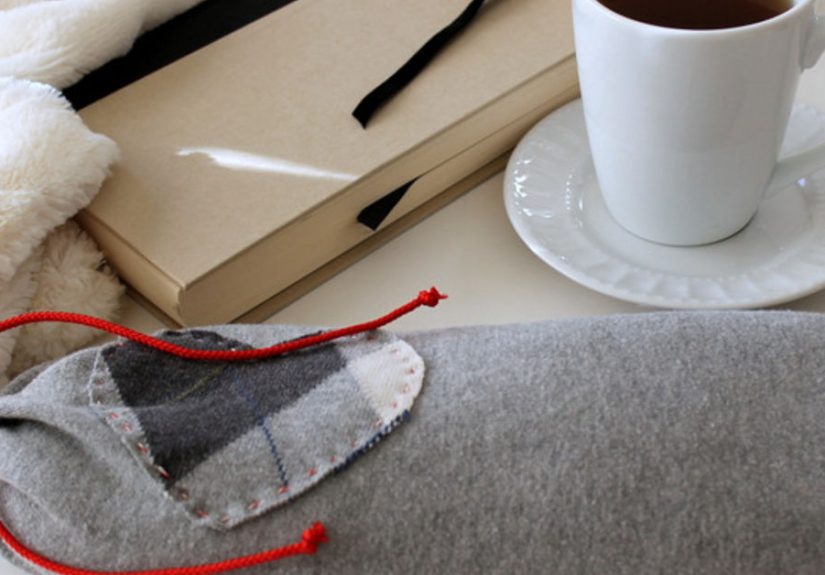
This is the “I want cozy by tonight” version. You’ll turn a sweater sleeve into a long heat packperfect for necks, shoulders, lower backs, or wrapping around your hands while you binge-watch something that “totally isn’t that scary.”
Step 1: Prep the Sleeve
- Wash and dry the sweater first (clean fabric is happier fabric).
- Cut off one sleeve (leave it as long as you want; 16–20 inches is a popular size).
- Turn the sleeve inside out.
Step 2: Sew One End Closed
Stitch straight across the cuff end. Go over it twice. If your knit is loose, use a zigzag stitch (or a tight backstitch by hand) to reduce stretching.
Step 3: Add “Channels” (Optional but Highly Recommended)
Want your filler to stay evenly distributed instead of migrating like it’s trying to start a new life in one corner? Sew 2–4 vertical seams along the length of the sleeve to create long tubes (channels). Leave the top open for filling.
Step 4: Fill It
- Turn it right-side out if you didn’t add a separate inner pouch.
- Use a funnel to pour in rice/flax until it’s about 2/3 to 3/4 full. You want flexibility, not a rice brick.
Step 5: Close the Top Securely
Fold the raw edge inward and stitch it closed. For extra security, sew a second line of stitching. If you want it to be refillable, you can hand-sew a tight opening with strong stitches and undo laterbut stitched shut is safest for daily use.
Important: If you’re microwaving the sweater itself, make sure there’s no metal, no synthetic melting risk, and no decorative bits. When in doubt, use the safer method below.
DIY #2: The Safer, Smarter Version (Cotton Inner Pouch + Sweater Cover)
This version is my top recommendation for an upcycled sweater heating pad that’s durable, washable, and microwave-friendly. The inner pouch is what gets heated. The sweater becomes the removable “cozy jacket.”
Step 1: Sew the Inner Pouch
- Cut two rectangles of 100% cotton fabric (about 7″ x 12″ for a standard pad, or longer for a neck wrap).
- Place right sides together. Stitch around the edges, leaving a 2–3″ opening for turning and filling.
- Turn right-side out.
- Sew 2–4 channel seams if you want the filler to stay evenly distributed.
Step 2: Fill the Pouch
- Add rice/flax until about 2/3 full.
- Stitch the opening closed securely (double stitch).
Step 3: Make the Sweater Cover
- Use a sleeve, or cut a rectangle from the sweater body.
- Make a simple envelope cover (overlapping flap) or a tube cover with one end stitched closed.
- Slide the cotton pouch inside. Remove the cover for washing as needed.
The result: a microwavable inner pack that’s consistent and safer, plus an upcycled sweater cover that keeps it extra soft and gift-worthy.
How to Heat Your Microwave Heating Pad (Without Starting a Lifestyle Change Called “No More Microwaves”)
Microwave power varies a lot, so your exact time is something you dial in. Use this approach:
- Place the heat pack in the microwave.
- Heat for 30 seconds.
- Carefully check temperature and shake/knead it to distribute heat.
- Repeat in 15–30 second bursts until comfortably warm.
Many DIY guides land around 60–120 seconds total for a medium pack, but the safest habit is always gradual heating. If you want an extra safety trick: place a microwave-safe mug of water in the microwave alongside the pack to reduce dryness and help prevent scorching.
After heating, let it sit for 30 seconds, then test it with your hand before placing it on your body. If it’s too hot for your hand, it’s too hot for your skin.
How to Use It (Comfortably and Correctly)
- Neck/shoulders: drape a long sleeve-style pack across the trapezius area.
- Lower back: place it on top of clothing while sitting upright (avoid lying directly on it).
- Menstrual cramps: use gentle heat on the lower abdomen for short sessions.
- Cold hands/feet: hold it or place it at the foot of your bed to “preheat” the sheets.
Keep sessions around 15–20 minutes, then take a break. If you’re using heat frequently every day, rotate in rest breaks and keep the temperature moderate.
Care, Storage, and When to Retire Your Heat Pack
Care
- If you made a removable cover: wash the cover, not the filled pouch.
- Keep the inner pouch dry. Moisture can lead to odors or spoilage over time.
Storage
- Store in a cool, dry place.
- If you live somewhere humid, consider sealing it in a breathable cotton bag with a little desiccant packet nearby (not inside the pouch).
Retire It If…
- It smells burnt or you see scorch marks.
- Seams are coming apart and filler escapes.
- It’s gotten damp repeatedly and smells “off.”
FAQ (Because Everyone Asks These)
Can I add essential oils?
You can, but be cautious: oils can create hot spots and may increase scorching risk if overdone. If you want fragrance, consider adding dried lavender to the cover (not the microwaved pouch), or use just a drop or two on the cover after heating.
Can it be a cold pack too?
Yes. Seal it in a bag (to protect it from moisture) and place it in the freezer for a couple of hours. It won’t get as cold as a gel pack, but it’s a handy dual-purpose option.
How long does it stay warm?
Many people get about 20–45 minutes of noticeable warmth depending on pack size, filler type, and room temperature. Flax tends to feel “even,” while rice often holds warmth nicely.
Real-World Experiences (The Stuff You Only Learn After Making One)
If you’re expecting your upcycled sweater heating pad to behave like a fancy electric pad with settings, timers, and a smug little LED screenadjust expectations. What it does offer is a different kind of magic: the “I made this in my kitchen and now my shoulders forgive me” kind. And after you use it for a week, you’ll start noticing a few patterns that almost everyone runs into.
First, you’ll learn your microwave’s personality. Some microwaves heat like gentle sunshine; others heat like they’re trying to forge a sword. The first time you warm your pad, you’ll probably do the normal human thing: heat it too long, panic, fling it onto the counter, and poke it like it’s suspicious. That’s why the short-interval method is such a game-changer. Once you find your sweet spotsay, 60 seconds for a small pack or 90 seconds for a longer one you’ll stop guessing and start enjoying.
Second, you’ll discover that “2/3 full” isn’t a suggestion; it’s the difference between a flexible comfort wrap and a crunchy rice baton. Overfilling feels like hugging a bag of pantry staples (which, honestly, it is). Underfilling makes it drape nicely but cool faster. Most makers end up tweaking the fill level on their second one. The good news is: if your first try is slightly off, you didn’t failyou prototyped.
Third, the sweater fabric changes the vibe more than you’d think. A thick wool sweater makes the heat feel softer and more gradual. A thinner knit feels warmer faster but can also feel “hotter” on contact. That’s why a removable sweater cover is so satisfying in real life: you can adjust the comfort level instantly. Too warm? Add an extra layer or swap covers. Not warm enough? Use a thinner cover so more heat reaches you.
Fourth, people often underestimate the “weight comfort” factor. A rice or flax pack has a gentle heft that feels groundingespecially on shoulders or the lower belly. It’s not the same as heat alone; it’s heat plus a light pressure that tells your muscles, “Hey, unclench. We’re off duty.” That’s also why channel stitching is worth the extra five minutes. When the filler stays evenly distributed, the weight feels steady instead of lumpy.
Finally, you’ll probably end up making more than one. Not because they break (though seams do deserve respect), but because you’ll want a “neck one,” a “feet one,” and maybe a “desk one” that lives permanently next to your laptop like an emotional support burrito. And once friends or family discover you can turn an unloved sweater into a practical little luxury, you may become the person who gets handed suspicious bags of old knitwear with the words, “You can do your thing with this, right?” Yes. Yes you can.
Conclusion
An upcycled sweater heating pad is one of those rare DIY projects that’s easy, genuinely useful, and oddly delightful. Whether you go with a quick sweater-sleeve rice pack or the safer inner pouch + removable cover setup, you’ll end up with a reusable microwavable heating pad that feels cozy, personal, and happily not disposable.
Keep your heating times short, your materials microwave-safe, and your comfort levels sensibleand you’ll have a warm companion for sore muscles, chilly nights, and the universal need to feel like a toasted marshmallow (the safe kind).