Table of Contents >> Show >> Hide
- What “Dinner in the Countryside” Really Means (Hint: It’s Not a Zip Code)
- The Gardenista Formula: Place, Plate, and Pace
- Build a Gardenista-Worthy Tablescape (Without Renting a Chateau)
- Menu Blueprint: Country Dinner That Feels Fancy (But Cooks Like a Weeknight)
- Farm-to-Table Without the Stress-to-Impress
- Real-World Logistics: Bugs, Weather, and the Great Ice Chest Drama
- A Simple Hosting Timeline (So You Don’t Cook While People Watch You)
- Experience Notes: What a Countryside Dinner Actually Feels Like (The 500-Word Reality Check)
- The Point Isn’t Perfection. It’s Permission.
There are two kinds of dinners: the kind you host with a spreadsheet and a mild panic, and the kind you host with a linen napkin, a relaxed timeline, and a table that looks like it wandered in from a Gardenista daydream. “Dinner in the Countryside” is the second kindthe one that feels effortless, even when you absolutely did effort.
The vibe is simple to describe and weirdly hard to fake: seasonal food, a little dirt under someone’s fingernails (preferably yours), flowers that look “foraged” (even if they came from a grocery store bucket), and a pace that says, “We have nowhere else to be… except maybe outside with another glass of something cold.”
In this guide, we’ll break down what’s been trending around the Gardenista “countryside dinner” universefarm-to-table thinking, relaxed outdoor entertaining, rustic tablescapes, and practical hosting tricksthen turn it into a plan you can actually pull off in real life (with real bugs, real weather, and at least one guest who arrives early “to help”).
What “Dinner in the Countryside” Really Means (Hint: It’s Not a Zip Code)
“Countryside” doesn’t require a gravel driveway or a sheep you can name. It’s a hosting style: warm, unfussy, grounded in what’s in season, and designed to make people linger. Gardenista’s version leans “rustic, but make it intentional”natural materials, honest food, and small details that whisper rather than shout.
Think of it as a three-part promise:
- The setting feels like an exhale: outdoors if possible, and never overly formal.
- The food is seasonal and abundant, served family-style, and built around one or two “anchor” dishes.
- The pace is generous: fewer courses, fewer interruptions, more conversation.
If you nail those three, you can host a countryside dinner on a city patio, a suburban deck, a driveway (don’t laughdriveway dinners are a thing), or a literal field if you’re feeling brave and own enough citronella.
The Gardenista Formula: Place, Plate, and Pace
1) Place: Make the table do the talking
The “Dinner in the Countryside” look is basically a love letter to texture. Wood, linen, ceramic, wicker, glassmaterials that feel good under your hands. The table doesn’t need to match; it needs to feel cohesive. That’s a different thing.
- Choose one grounding neutral (cream, oat, soft gray, natural wood) and repeat it across linens, plates, or candles.
- Add one “found” element: a vintage pitcher, mismatched silver, enamelware cups, an old bread board as a serving tray.
- Prioritize comfort: chairs that don’t punish people for staying for dessert. Add cushions or throws if the temperature drops.
2) Plate: Build a menu that travels well (from kitchen to table)
Countryside dinners are rarely about complicated technique. They’re about peak ingredients and smart sequencing. The goal is to cook once, serve generously, and spend the evening with your guestsnot trapped indoors like a lonely reality-show contestant doing confessionals with the oven.
A reliable blueprint:
- One main dish with presence (roast chicken, grilled salmon, a big pasta, a vegetarian platter).
- Two to three sides that can be made ahead or served at room temp (salads, roasted vegetables, bread).
- One dessert that doesn’t require last-minute heroics (galette, brownies, ice cream with fruit).
3) Pace: The secret ingredient is “not rushing”
The countryside vibe is basically time management disguised as charm. Give yourself space. Start with something to nibble, let people settle, then bring out dinner in a calm rhythm. Your guests should feel like the evening has room to breathe.
Pro move: set the table early, light the candles before guests arrive, and put the first drink within arm’s reach of the front door. (Hospitality begins at the threshold.)
Build a Gardenista-Worthy Tablescape (Without Renting a Chateau)
Linens: Start soft, stay simple
Linen is basically the unofficial uniform of countryside entertaining. It wrinkles, which is perfect, because it means you can stop pretending you’re a “crisp napkin” person. Use a linen tablecloth or runner, then layer napkins in a slightly different tone for depth.
If you don’t have linens, grab a neutral cotton sheet (clean, please) or brown kraft paper as a runner and call it “rustic minimalism.” People will believe you.
Flowers: Borrow the “less is more” countryside logic
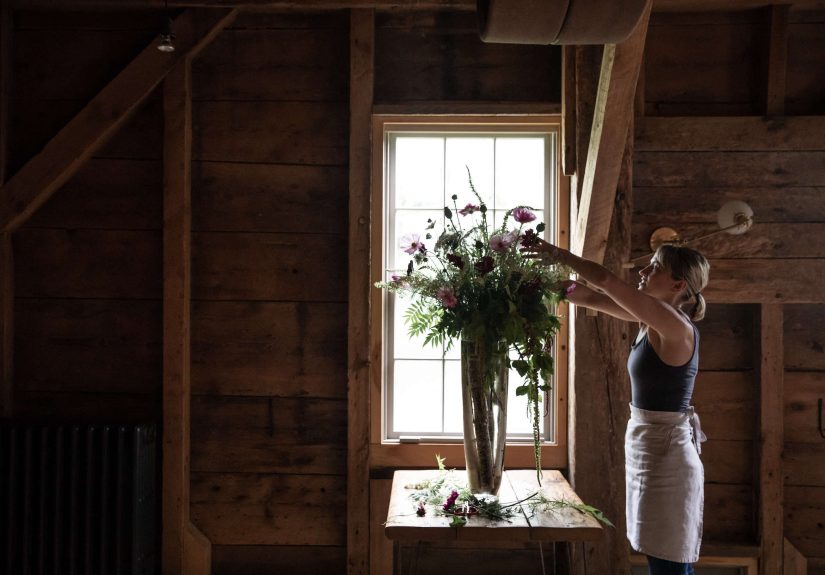
Gardenista’s countryside inspiration often circles back to flowers that feel gathered, not “arranged.” A famous Gardenista-adjacent lesson from a Maine chef’s approach is to winnow your choicespick fewer varieties, stick to a palette you love, and let abundance come from repetition rather than chaos.
- Choose 1–3 flower types, not 17. One flower en masse looks intentional.
- Start with “filler” greenery to build shape, then tuck in blooms.
- Use odd numbers (three bud vases, five mini arrangements) because the eye likes it.
Don’t want to fuss with stems? Go with potted herbs (basil, rosemary, thyme). They look great, smell amazing, and can be “accidentally” sent home with guests as favors.
Lighting: Let dusk do half the work
Countryside dinners love golden hour and tolerate nothing too harsh. Add layered lighting:
- Overhead: string lights or lanterns to define the space.
- Table-level: candles (tapers or votives) for warmth and a little sparkle.
- Path lighting: a few solar stakes or lanterns so guests don’t accidentally discover a garden bed with their shins.
The goal is glow, not stadium. If a guest can read a novel by your patio light, it’s probably too bright.
Menu Blueprint: Country Dinner That Feels Fancy (But Cooks Like a Weeknight)
The best “Dinner in the Countryside” menus have a clear point of view: seasonal produce, a grill or roast, and a few bright, fresh elements that keep the meal from feeling heavy. Below are three sample menus you can mix-and-match, depending on your mood and the farmer’s market situation.
Menu A: Classic countryside comfort
- Starter: Heirloom tomato salad with flaky salt, olive oil, and fresh herbs
- Main: Roast chicken (or grilled spatchcock chicken) with lemon and garlic
- Sides: Grilled corn with butter and herbs; big green salad with a tangy vinaigrette; crusty bread
- Dessert: Berry galette (or store-bought pie warmed and served with ice cream)
Menu B: Farm-to-table, mostly make-ahead
- Starter: Board of summer vegetables + dip (crudités, grilled zucchini, peppers)
- Main: Grilled salmon or trout with a herby sauce (chimichurri, salsa verde, or dill yogurt)
- Sides: Panzanella-style bread salad; roasted potatoes you can crisp on the grill; pickled onions for brightness
- Dessert: Peaches grilled lightly, served with yogurt or ice cream and a drizzle of honey
Menu C: Plant-forward countryside (still deeply satisfying)
- Starter: Seasonal soup served in mugs (gazpacho in summer, butternut squash in fall)
- Main: Big platter of roasted vegetables + lentils or grains, finished with lemon and herbs
- Sides: Charred broccoli or carrots; a crunchy slaw; bread with good butter
- Dessert: Brownies with berries (the world’s easiest crowd-pleaser)
Hosting tip: choose sides that taste great at room temperature. Outdoor dinners are not a great time to juggle six “serve immediately” dishes unless you enjoy sweating through your shirt while whispering, “No one touch the potatoes,” like a culinary supervillain.
Farm-to-Table Without the Stress-to-Impress
“Farm-to-table” sounds like a lifestyle brand, but it’s really a shopping strategy: buy what’s in season locally, then keep the cooking simple enough to let it taste like itself. The countryside dinner vibe thrives on restraint.
Shop like a countryside host
- Pick one “hero” ingredient (tomatoes, sweet corn, berries, stone fruit, winter squash) and build around it.
- Repeat a flavor note (lemon + herbs, smoky grilled notes, a tangy vinaigrette) across the menu for cohesion.
- Lean on make-ahead dishesgrain salads, marinated vegetables, and slaws often taste better after sitting.
Use the “one hot thing” rule
If you’re outdoors or bouncing between grill and kitchen, limit yourself to one dish that truly needs to be hot at serving time. Everything else can be room temp or gently warmed. This is how you look calm while hosting (even if your brain is doing cartwheels).
Real-World Logistics: Bugs, Weather, and the Great Ice Chest Drama
Food safety (aka: keep the memories, not the bacteria)
Outdoor dining is dreamy until the sun turns your potato salad into a science experiment. Keep cold foods cold, keep hot foods hot, and when in doubt, don’t leave perishable dishes sitting out for long stretches. Use coolers, ice packs, and smaller serving bowls you can refill from the fridge.
Bug strategy: make your patio less inviting to tiny freeloaders
- Remove standing water nearby (mosquitoes love it).
- Use airflow: an outdoor fan can make it harder for some insects to hover around your guests.
- Cover food with mesh domes or inverted bowls between servings.
- Go easy on perfumes: fruity scents can attract the wrong kind of party crashers.
Weather: have a Plan B that feels intentional
A countryside dinner is romantic until it’s… moist. If there’s any chance of rain, decide your pivot before guests arrive: dining under a porch, moving inside, or using a canopy. Keep a few extra throws handy for temperature drops. Your calm confidence here is half the aesthetic.
A Simple Hosting Timeline (So You Don’t Cook While People Watch You)
48–24 hours before
- Choose the menu (one main, 2–3 sides, one dessert).
- Shop for shelf-stable items, drinks, and candles.
- Wash linens and set out serving platters so you’re not hunting for them later like an archeologist.
Morning of
- Prep make-ahead sides, desserts, dressings, and marinades.
- Set the table early (yes, even if it’s windyuse a few discreet clips).
- Put drinks in the fridge or cooler and pre-chill anything that wants to be cold.
One hour before guests
- Finish the flowers (or arrange your “effortless” bud vases).
- Light ambient lighting right before arrival (candles, string lights).
- Put out a snack that buys you time: nuts, olives, bread, or crudités.
During
- Serve family-style and refill platters as needed.
- Keep dessert simple and low-stress.
- Let the night stretch. This is the whole point.
Experience Notes: What a Countryside Dinner Actually Feels Like (The 500-Word Reality Check)
Here’s the funny thing about hosting a “Dinner in the Countryside”: the most countryside part isn’t the menu or the linen. It’s the way the evening changes once people are outside and unhurried. Conversations get longer. Laughter gets louder. Someone inevitably stands up to look at the sky like they’ve never seen a star before (to be fair, city light pollution is rude).
The first few minutes usually feel like a small performance. You’re greeting guests, pointing them toward drinks, mentally checking that the chicken is doing its job. Then, somewhere between the first snack and the first candle being lit, the night starts to run itself. That’s the countryside magic: a gathering that stops feeling “hosted” and starts feeling shared.
Practical reality also shows upjust in a charming hat. Wind will test your napkins’ loyalty. A candle will blow out the moment someone says, “This is perfect.” A bug will land directly on the prettiest plate. Instead of fighting it, countryside hosting treats these moments as texture. The point isn’t to control nature; it’s to befriend it enough to eat near it.
Food-wise, the best experiences tend to come from restraint. When you choose one or two anchor dishes and keep the rest flexible, you’re free to enjoy the people. Guests don’t remember whether you served the “right” salad. They remember how they felt: welcomed, fed, relaxed. They remember bread passed hand-to-hand and the way everyone leaned in when the main platter hit the table.
A countryside dinner also has a special talent for turning “nice” guests into “helpful” guests. Someone will offer to pour wine. Someone will clear plates without being asked. Someone will bring out dessert with the excitement of a game-show host. This is normal. Let it happen. The more people participate, the more the night feels like a small community rather than an event.
And yescleanup exists. But here’s the secret: if you set yourself up with a few big trays, a lined trash bin, and a “dish drop zone,” it’s manageable. You can even do the final tidy later. Countryside dinners don’t end with a hard stop; they fade out. The last guest leaves, you blow out the candles, and the table looks a little messy in the most satisfying waylike proof that something good happened.
If you want the Gardenista feeling, aim for this: make it easy for people to linger. Add warmth, add glow, add enough food that nobody’s quietly calculating whether they’ll need a drive-thru on the way home. That’s not just good hosting. That’s a countryside tradition.
The Point Isn’t Perfection. It’s Permission.
“Trending on Gardenista: Dinner in the Countryside” is ultimately an invitation: to cook with the season, decorate with what you have, and host in a way that feels human. Let the table be a little imperfect. Let the flowers be a little wild. Let the night run long.
Because the best countryside dinners don’t look like a photoshoot. They look like a life you’d want to step intoone plate, one candle, and one good story at a time.