Table of Contents >> Show >> Hide
- The Moon Is Close Enough to Be a Real “Work Site”
- The Moon Has Resources That Are Actually Useful
- We’re Not Starting From Zero: ISRU Has a Playbook
- The Moon Is Becoming a Test Range Thanks to Commercial Missions
- Law Is Still Catching Up, but It’s Not Frozen in 1967
- The Business Case Starts With “Boring” Products
- The Unsexy Obstacles (That Are Still Very Real)
- So Why Does Mining the Moon Seem Possible Now?
- Experience Corner: What It Feels Like to Think Like a Moon Miner (Without Leaving Earth)
- Conclusion
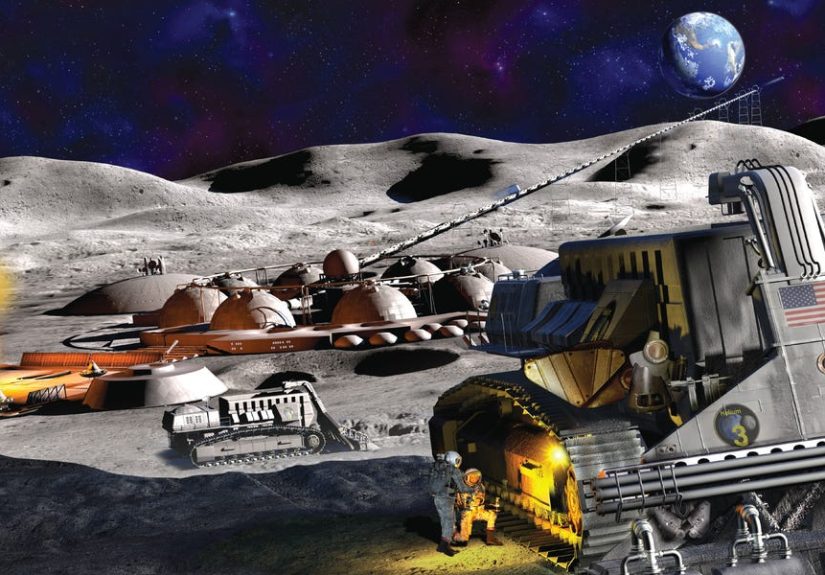
Moon mining used to live in the same mental drawer as jetpacks, flying cars, and “I’ll just do one more episode.” And yet, here we are: governments are building lunar roadmaps, private companies are landing spacecraft, and engineers are arguing (lovingly) about how to scoop dusty gray dirt without turning it into a spiteful cloud of abrasives.
The honest reason mining the Moon seems possible isn’t that we suddenly got braver. It’s that we’ve gotten practical. Launch costs have dropped, robotics have leveled up, and space agencies are openly designing missions around using local resources instead of hauling everything from Earth like an overpacked carry-on. Add in a growing legal framework and a steady drip of lunar data confirming there’s “stuff worth using” up there, and the idea starts looking less like sci-fi and more like… a weirdly complicated construction project with excellent views.
The Moon Is Close Enough to Be a Real “Work Site”
If the Solar System were a neighborhood, the Moon would be the place you can actually bike toassuming your bike is a rocket and you’re okay with the commute involving orbital mechanics. In space terms, proximity matters. The Moon is close enough for frequent missions, real-time-ish operations, and iterative learning: fly, fail, fix, repeat.
That feedback loop is how every industry becomes feasible. Nobody built perfect oil rigs on Day One. Nobody invented mining trucks and then immediately hauled ore from Antarctica in a blizzard. They started where logistics were manageable, mistakes were survivable, and resupply wasn’t a myth. The Moon checks those boxes better than anywhere else off Earth.
Also, the Moon’s lower gravity quietly changes the math. Once you’ve built the first pieces of infrastructure, launching materials from the lunar surfaceespecially to lunar orbit or other cislunar destinationscan require less energy than launching from Earth. That doesn’t make it “easy,” but it makes it strategically tempting. Think of the Moon as a potential supply depot where you manufacture and ship what you need for deeper space missions instead of paying Earth’s gravity tax every single time.
The Moon Has Resources That Are Actually Useful
“Mining” can sound like we’re going up there for space diamonds to impress space royalty. The near-term reality is much more humbleand that’s good news. Early lunar resource use is likely to focus on water, oxygen, and construction materials. Not glamorous, but if you want people and machines to stick around, you need the basics.
Water Ice: The Big Prize That Isn’t Even Trying to Hide Anymore
Water is mission-critical: drink it, grow with it, cool systems with it, and split it into hydrogen and oxygen for rocket propellant. The Moon’s polar regions have permanently shadowed areas that stay brutally cold, and multiple lines of evidence point to water ice there. That matters because hauling water from Earth is expensive, while local water could enable longer stays and refueling options.
Even better (for planners), the Moon’s poles have become the center of attention precisely because water ice plus near-continuous sunlight on some nearby ridges creates a sweet spot: power and resources in the same neighborhood. That’s not a guarantee of easy miningbut it’s the kind of “geography meets engineering” alignment that makes feasibility discussions sound less like fantasy and more like project management.
Oxygen: Hiding in Plain Sight Inside Regolith
The Moon’s gray “soil” (called regolith) is basically pulverized rock created by billions of years of impacts. It’s loaded with oxygenjust not in breathable form. Oxygen is chemically bound inside minerals (metal oxides), and the trick is extracting it efficiently. The compelling part? Oxygen is heavy, and missions need a lot of it. In fact, if you’re making rocket propellant, oxygen is most of the mass.
Researchers have studied multiple extraction approacheslike heating regolith to drive chemical reactions or using electrochemical methods to break down oxides. Some NASA work has suggested that, depending on the process and feedstock, oxygen yields can be significant per mass of processed regolith, which is exactly what you want if you’re thinking about sustained operations rather than one-off stunts.
Metals and Minerals: Not “Gold Rush,” More “Lunar Hardware Store”
Lunar regolith contains useful elements: iron, titanium, aluminum, silicon, and more. The first industrial use case might not be exporting these to Earth (Earth already has rocks, thank you), but using them on the Moon for construction and manufacturing. If you can extract metals as byproducts of oxygen productionor sinter/melt regolith into solid formsyou can create landing pads, radiation shielding, and structural components.
That’s not just nice-to-have. Lunar dust is abrasive and electrically clingy; landers blasting regolith with rocket exhaust can kick up high-speed debris that threatens nearby equipment. A tough, locally made landing surface could reduce damage and contamination. So “mining” may begin as “making a parking lot,” which is hilarious until you realize it’s also how you keep expensive machines from sandblasting each other to death.
Helium-3: The Celebrity Resource With a Lot to Prove
No discussion of Moon mining escapes helium-3, the isotope often linked to futuristic fusion power. The Moon has helium-3 implanted by the solar wind over immense time, concentrated in the upper regolith. The catch is that concentrations are low, meaning you’d have to process enormous amounts of material to extract meaningful quantities. That’s not impossible in principlebut it’s the opposite of a quick win.
So helium-3 belongs in the “maybe later” category: an interesting long-term possibility that could benefit from infrastructure built for more immediate needs like water, oxygen, and construction materials. In other words, helium-3 is the moon mining equivalent of buying a pizza oven before you have a kitchen. Cool idea. Let’s get plumbing first.
We’re Not Starting From Zero: ISRU Has a Playbook
The core concept making Moon mining feel plausible is in-situ resource utilization (ISRU): using local materials to produce what you need, instead of launching everything from Earth. NASA and others have been developing ISRU technology roadmaps for years, and the thinking is refreshingly straightforward: if you want a sustained presence, you must stop treating every kilogram like a priceless artifact that must be shipped from home.
ISRU is already being treated as a staged capability: map resources, test excavation, demonstrate processing, scale up production, then integrate manufacturing and construction. Each phase is hard, but the phases are legibleengineers love legible problems because you can measure progress and design around constraints.
Robots Don’t Need Air, and They Don’t Complain About Night Shifts
On Earth, mining involves humans plus big machines. On the Moon, it’s likely to start with robots plus slightly bigger robots. Autonomy has improved massivelyfrom navigation to manipulation to fault detection. And unlike humans, robotic systems don’t require life support, radiation shielding that feels like a bunker, or a motivational speech every Monday.
This matters because the first “mining” jobs on the Moon will be repetitive, dusty, and operationally unforgiving. A robot can dig a trench 10,000 times. A human will ask, reasonably, why they trained for this.
Construction From Regolith: The “Print It Where You Need It” Logic
One of the most practical lunar resource ideas is using regolith as construction feedstock. Concepts include sintering regolith with concentrated sunlight, binding it into brick-like materials, or 3D printing structures. The goal isn’t to build luxury condos; it’s to make functional infrastructure: berms, radiation shielding, landing pads, and protective walls.
When you step back, it’s a classic engineering substitution: replace shipped mass with local labor (robotic labor, in this case) and local material. Even if early products aren’t pretty, they don’t have to be. Nobody judges a bridge by its “aesthetic vibes” when it’s the only way across a canyon.
The Moon Is Becoming a Test Range Thanks to Commercial Missions
A big reason Moon mining now feels possible is that access to the lunar surface is no longer an “every few decades” event. NASA’s Commercial Lunar Payload Services (CLPS) initiative is designed to send science instruments and technology demos to the Moon using commercial landers. That means more shots on goal: more landings, more experiments, more data, and more hard-earned lessons about what breaks in lunar dust.
These missions aren’t just about planting flags or taking glamour shots (though yes, we all enjoy a good space photo). They’re about laying groundwork for long-term operationsexactly the kind of thing resource extraction needs. Some planned and ongoing CLPS deliveries specifically target regions relevant to volatile resources and south polar exploration, which is where water ice and “stay awhile” logistics start to overlap.
Why That Matters for Mining
Mining is not a single invention; it’s a system: scouting, extraction, hauling, processing, storage, maintenance, and safety. CLPS-style missions help de-risk pieces of that system by testing sensors, drills, thermal systems, and operations. Even failures are informativesometimes painfully so. But “painfully informative” is how engineering advances.
Law Is Still Catching Up, but It’s Not Frozen in 1967
Space law can feel like the least exciting part of Moon mininguntil you’re trying to raise money for a lunar bulldozer and your investors ask, “So… who owns the stuff we dig up?” Fair question!
The foundational legal backdrop is the Outer Space Treaty, which establishes that outer space is to be used for peaceful purposes, and that nations can’t claim sovereignty over the Moon like it’s beachfront property. That doesn’t automatically answer the resource question, which is where interpretations and newer agreements come in.
The Artemis Accordsa set of principles associated with NASA’s Artemis programexplicitly discusses space resources and frames extraction and utilization as something that can be done consistently with the Outer Space Treaty, emphasizing safe and sustainable operations and coordination. Meanwhile, U.S. policy has also aimed to encourage commercial activity related to space resources, signaling to companies that resource utilization isn’t legally taboo (even if international consensus is still evolving).
In plain English: we’re moving from “nobody talk about mining” to “okay, let’s talk about mining, but please don’t start a diplomatic incident.” That’s progress.
The Business Case Starts With “Boring” Products
If lunar mining ever becomes a real economy, it probably won’t begin with exporting rare materials to Earth. The Moon is far away, Earth already has established supply chains, and gravity wells are rude. The near-term business case is more like: make products in space that are valuable in space.
Product #1: Oxygen (for Life Support and Propellant)
Oxygen is needed for breathing, yesbut also for rocket propellant. If you can produce oxygen locally, you reduce the mass you must launch from Earth. That can lower mission costs or increase mission capability. This is the kind of utilitarian advantage that turns an expensive science demo into an operational necessity.
Product #2: Water (Drink It, Split It, Store It)
Water is the Swiss Army knife of lunar logistics. A small, reliable water-extraction system could support crews, generate propellant, and provide radiation shielding (water is good at attenuating some radiation). It’s difficult, but it’s also incredibly motivatingbecause nothing says “sustainable presence” like not shipping every sip from Earth.
Product #3: Infrastructure (Landing Pads, Berms, Bricks)
Infrastructure is a product, too. If you can build locallyusing regolithyou protect assets and enable more missions. That creates a feedback loop: better infrastructure enables more activity, which justifies scaling resource operations, which supports more infrastructure. That’s how “possible” becomes “inevitable,” or at least “likely if budgets cooperate.”
The Unsexy Obstacles (That Are Still Very Real)
Before anyone starts handing out “Lunar Miner of the Month” awards, we should acknowledge the problems that can ruin your day on the Moon:
Dust Is Not Cute
Lunar regolith is sharp, abrasive, and clingy. It can degrade seals, scratch surfaces, foul mechanisms, and generally behave like the world’s least charming glitter. Mining means moving regolith. Moving regolith means managing dust. Dust management is, therefore, a central engineering challengenot a footnote.
Temperature Swings and Power Constraints
The lunar environment can swing between extreme heat and extreme cold depending on location and sunlight. Permanently shadowed regions are incredibly cold; sunny areas can bake. Mining and processing systems need power, thermal control, and durability across cycles. Near the poles, power availability may be complex, requiring careful site selection and energy strategies.
Maintenance Without a Hardware Store Nearby
On Earth, a broken part is inconvenient. On the Moon, a broken part can end your mission. Early operations must be designed for reliability, modular repair, redundancy, and remote troubleshooting. This is where robotics, standardization, and iterative testing become mission-critical, not optional.
Economics: “Technically Possible” Isn’t the Same as “Worth It”
Lots of things are technically possible. It’s technically possible to make coffee using a car engine’s waste heat. (Please don’t.) Moon mining needs a market. The market may start with government demandsupporting Artemis-era activitiesand expand if commercial cislunar operations grow. The timing is uncertain, but the pathway is clearer than it used to be.
So Why Does Mining the Moon Seem Possible Now?
Because the puzzle pieces are finally on the table:
- Confirmed and mapped resources that support real mission needs, especially water ice and oxygen-bearing regolith.
- ISRU roadmaps that define step-by-step capability growth rather than magical leaps.
- Commercial lunar deliveries increasing flight cadence and technology testing on the surface.
- Legal frameworks evolving from “don’t even ask” to “coordinate, be responsible, and don’t claim the Moon.”
- Robotics and automation making remote industrial work less absurd than it once was.
Mining the Moon is still hard. It will still fail in creative ways. But it no longer requires a science-fiction miracle. It requires engineering, operations, and economicsmeaning it has officially entered the realm of things humans can brute-force with enough testing, patience, and funding.
Experience Corner: What It Feels Like to Think Like a Moon Miner (Without Leaving Earth)
Let’s talk about the “experience” sidebecause Moon mining isn’t just a technology stack; it’s a new kind of work culture. And while most of us won’t be driving lunar excavators anytime soon, the early experience of Moon-resource development is already taking shape in labs, analog sites, mission control rooms, and engineering teams that spend an unreasonable amount of time arguing about dust.
1) The first surprise: “mining” starts with mapping, not digging.
The earliest lunar-mining experience is closer to exploration geology than heavy industry. Teams obsess over resource maps, illumination models, temperature profiles, and where a rover can safely traverse. Polar water ice, for example, isn’t a single convenient slab labeled “ICE HERE.” It’s a probabilistic resource distributed across shadowed micro-environments. So you get a mindset shift: success depends on choosing the right square kilometersometimes the right few metersbefore you ever deploy hardware.
2) You learn to love small demos.
On Earth, mining success is measured in tons. In early lunar ISRU, success might be measured in grams of extracted oxygen, a drill that survives regolith abrasion, or a thermal system that doesn’t freeze solid at the worst possible moment. That can feel anticlimactic until you realize this is exactly how industrialization begins: prove a single link in the chain, then connect the links. Engineers celebrate “it worked for 20 minutes” because 20 minutes is evidence that physics is cooperating.
3) Dust becomes personal.
People outside the field imagine radiation as the big villain. Inside the field, regolith is the villain that shows up every day and steals your lunch money. The “experience” of lunar mining development includes endless iterations of seals, brushes, coatings, electrostatic mitigation ideas, and hardware layouts designed to keep dust out of bearings. You start to view dust the way sailors view leaks: not dramatic, just relentless. The mood is less “space opera” and more “industrial hygiene,” which is oddly comforting. It means the challenge is understandableeven if it’s annoying.
4) Operations thinking takes over.
Mining is a process, and processes live or die by operations: scheduling, power budgeting, fault response, spares strategy, and remote troubleshooting. Teams practice this in analog environmentsvolcanic terrain, deserts, and controlled testbedswhere they can simulate lunar constraints (limited comm windows, limited power, limited time). The experience becomes a blend of robotics, field operations, and logistics. You don’t just ask “can we extract oxygen?” You ask “can we do it every day, safely, with maintenance plans, while other missions are landing nearby?”
5) The vibe is “Apollo nostalgia meets startup urgency.”
Public imagination still treats the Moon like a museumbootprints, flags, history. But the current generation of lunar work adds a different vibe: iteration. Commercial missions and programs like CLPS push a faster cadence. The experience is closer to aviation testing than a once-in-a-lifetime national event. That’s how feasibility grows: you normalize the Moon as a place hardware goes, breaks, and returns smarter.
6) You start thinking in infrastructure, not missions.
The most important mental shift is that lunar mining becomes plausible when you stop picturing single hero missions and start picturing systems: landing pads, power networks, storage tanks, standardized interfaces, and robotic fleets. The experience of “moon mining readiness” is the gradual replacement of one-off prototypes with repeatable componentsthings you can deploy, swap, and scale. The Moon becomes less like a destination and more like a job site.
And that, honestly, is why Moon mining seems possible: people are already acting like it’s a job with a roadmap, not a dream with a soundtrack. The first lunar miners won’t feel like movie characters. They’ll feel like engineers and operators doing shift work, watching telemetry, celebrating small wins, and cursing dustquietly building the infrastructure that makes “impossible” look routine.
Conclusion
Mining the Moon seems possible because it’s shifting from a sci-fi concept to an engineering program with real drivers: local water ice for life support and propellant, oxygen extraction from regolith, construction using local materials, and a growing cadence of lunar missions that can test the pieces. The remaining challengesdust, power, thermal extremes, maintenance, and market economicsare serious, but they’re the kind of serious that engineers can plan around. If the 21st century is going to build anything big in deep space, it will almost certainly begin by learning how to use what’s already on the Moon.