Table of Contents >> Show >> Hide
- The Strange, Scrappy Origin of Mr. Peepers
- Enter Tom Hanks, Patron Saint of Good Weirdness
- Lorne Michaels, Resistance, and the Art of Letting a Sketch Live
- The Hosts Who Understood the Assignment
- Mr. Peepers and the Cost of Going Full Physical
- The Experience of Watching Mr. Peepers in Real Time
- Conclusion
Every long-running comedy institution has at least one sketch that makes audiences ask the same beautiful question: “Who approved this?” In the case of Saturday Night Live and Chris Kattan’s gloriously unhinged Mr. Peepers, the answer appears to be Tom Hanks. And honestly, that tracks. Of course the man who helped turn a pumpkin suit into a national holiday tradition would also be the guy who looked at a wild-eyed, apple-chomping, dry-humping “missing link” and thought, yes, let’s absolutely put that on live television.
The recent revelation that Hanks effectively helped usher Mr. Peepers onto SNL adds a fresh layer to one of the strangest recurring characters in the show’s history. It also says something important about how comedy works at Studio 8H: sometimes a sketch survives not because it makes immediate, sensible, boardroom-approved logic, but because one trusted performer sees chaos where everyone else sees danger and says, “No, no, let the chaos cook.”
That is the heart of this story. It is not just about Tom Hanks taking “responsibility” for Mr. Peepers in the playful, comedic sense. It is about how a top-tier host can spot a performer’s weird genius, throw open the doors, and help create the kind of sketch audiences remember decades laterwhether they loved it, hated it, or spent the whole time recoiling behind a couch cushion while laughing anyway.
The Strange, Scrappy Origin of Mr. Peepers
Before Mr. Peepers became one of the most bizarre recurring SNL characters of the late 1990s and early 2000s, the character was born in the fertile chaos of The Groundlings. That matters, because The Groundlings has long been the kind of place where a half-formed impulse can become a full-blown comic identity if the room reacts hard enough. Kattan has described the character as growing out of rough improv energy, not some polished thesis on character comedy. In other words, Mr. Peepers was not designed in a lab. He was built from comic instinct, body language, and a willingness to make other people onstage deeply uncomfortable. Which, to be fair, is a very efficient comedy engine.
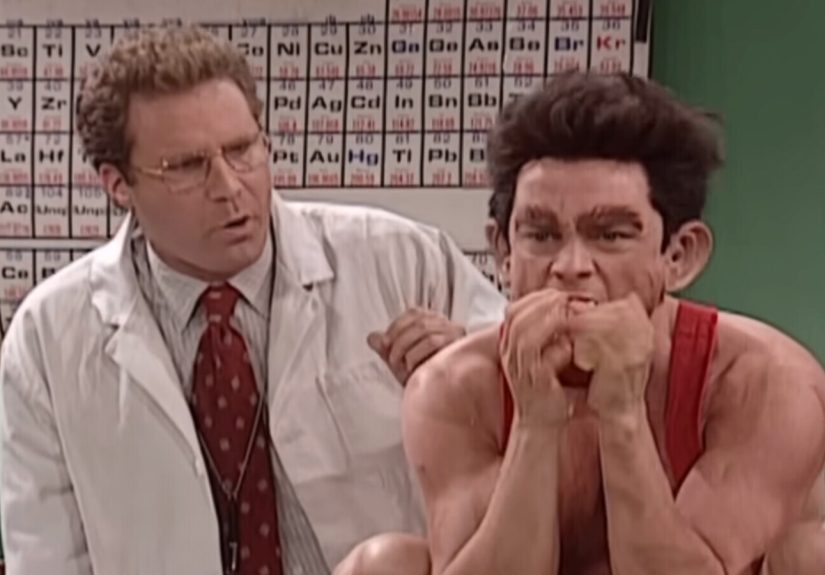
That origin story explains a lot. Mr. Peepers was never a tidy joke with a neat premise and a clean punch line. He was a disruption. The comedy came from velocity, unpredictability, and the sheer commitment Kattan brought to the bit. He crouched, leapt, screeched, inhaled apples like a woodland creature with a personal vendetta against produce, and turned every sketch into a hostage situation for the guest host. Viewers did not merely watch Mr. Peepers. They endured him, which was part of the point.
And yet that kind of raw physical character is exactly the sort of thing that can be difficult to get on air in a place like SNL, where every week involves a brutal collision between good ideas, bad ideas, practical limitations, timing, ego, and the ever-present question of what will actually work live. Mr. Peepers was not a safe bet. He was a monkey wrench in khakis.
Why the Character Worked Anyway
Mr. Peepers succeeded because Kattan committed so completely that the audience had no choice but to follow. There is a specific kind of sketch comedy magic that happens when a performer goes beyond “playing funny” and enters a zone where the character feels almost dangerous to contain. Kattan lived in that zone. His best recurring characters were not polished in a traditional sense; they were high-wire acts. Mango, the Roxbury guy, Mr. Peepersthey all depended on physical confidence, rhythm, and a performer willing to look ridiculous without blinking.
This also explains why the character divided viewers. Some fans considered Mr. Peepers a comic grenade: dumb in concept, brilliant in execution. Others thought the sketch was funny once and then steadily slid into repetition. Both reactions make sense. A character built on bodily absurdity can produce explosive first impressions and diminishing returns. But even people who disliked Mr. Peepers usually remembered him, and in sketch comedy, memorability is often the real currency.
Enter Tom Hanks, Patron Saint of Good Weirdness
Chris Kattan’s account that Tom Hanks helped get Mr. Peepers on the air feels surprising only if you ignore Hanks’ long history with SNL. He is not just a famous host. He is one of the defining hosts in the show’s history, the kind of performer whose presence carries both authority and trust. Hanks has hosted the show ten times, helped define the whole Five-Timers Club mythology, and built a reputation for being unusually game, unusually collaborative, and unusually good at calibrating the difference between “too weird” and “exactly weird enough.”
That distinction matters. A lesser host might have watched Kattan’s character work and responded with polite horrorthe expression of someone smiling while mentally calling their agent. Hanks, by contrast, has always had a radar for sketches that succeed because they are committed, not because they are respectable. He understands that comedy often lives in the extra step, the unnecessary flourish, the choice that makes everyone else in the room nervous. Frankly, he has made a second career out of looking directly at absurdity and saying, “Let’s put a jacket on it and send it to America.”
So when Kattan says Hanks was the reason Mr. Peepers got on air, it does not sound like a random celebrity override. It sounds like a veteran comedy instinct. Hanks saw a character with live-wire energy and used his influence to make sure the sketch survived the process. In the pressure cooker of SNL, that kind of support can be the difference between a weird idea becoming television history or dying in a rehearsal room while everyone eats cold deli sandwiches.
Hanks Wasn’t Just a HostHe Was a Participant
Part of what made Hanks so effective in the SNL ecosystem is that he did not treat hosting like a cameo. He has been described as one of the rare hosts who really got into the writing process, mixed it up with the staff, and approached the week like a collaborator instead of a tourist. That matters because a host who understands the writing room also understands how fragile a sketch can be. Strange ideas need champions. Oddball performers need backup. The sketch that sounds ridiculous at midnight on Tuesday can become the thing people remember twenty years later.
And Tom Hanks, perhaps more than almost anyone, knows that television history is littered with bits that should not have worked on paper. David S. Pumpkins should not have worked. “Black Jeopardy” could have gone sideways in a hundred directions. Plenty of classic Hanks sketches hinge on total commitment to odd premises. So if he recognized something in Mr. Peepers, it was likely because he already understood an eternal comedy truth: sometimes the dumbest idea in the room becomes the funniest one if everyone goes all in.
Lorne Michaels, Resistance, and the Art of Letting a Sketch Live
One of the more interesting angles in this story is that Mr. Peepers was apparently not an obvious favorite with Lorne Michaels. That, too, feels completely believable. Michaels has spent decades acting as both gatekeeper and gambling addict for American sketch comedy, forever balancing taste, pacing, tradition, and the need to let performers find something original. A physically aggressive, vaguely simian chaos machine who spits apple chunks at respected guest hosts was probably not his first choice for refined comic architecture.
But SNL has always been healthiest when it allows a little mess. Not every hit arrives looking dignified. Some arrive crawling across the furniture. If Michaels had reservations about Mr. Peepers, the sketch’s eventual success only reinforces one of the show’s defining lessons: the audience often decides what belongs, and when the room erupts, theory goes out the window.
This tensionbetween taste and anarchy, control and live reactionis what made SNL such a durable institution in the first place. The show needs polished political sketches and smart parody, yes, but it also needs the occasional lunatic character who feels like a dare. Mr. Peepers was that dare.
The Hosts Who Understood the Assignment
Another reason the Tom Hanks angle is so satisfying is that Mr. Peepers was never a one-man act. The character depended on guest hosts who were willing to be victims, accomplices, or both. Kattan has spoken warmly about performers who really leaned into the insanity, and those hosts helped transform Peepers from a one-off novelty into a recurring event.
Some hosts treated the sketch like an athletic event. Charlize Theron reportedly went all in. Jennifer Aniston gamely played along in a bizarre Sex and the City parody. The Rock got dragged into the family tree as Papa Peepers, which is somehow one of those sentences that still reads like it was generated by a fever dream. Katie Holmes, meanwhile, became part of the character’s legend for a different reason: Kattan later recalled an especially uncomfortable live performance that made clear how risky the sketch could feel in real time.
That is another reason Hanks’ support mattered. He was not just signing off on a bit. He was modeling how to host the show properly: trust the cast, trust the weird idea, and understand that your dignity is already gone by Thursday.
Why the Story Resonates Now
This story lands because it captures the essence of what fans love about SNL lore. People are endlessly fascinated by the sketches that almost did not happen, the characters one executive disliked, the moments one host saved, and the behind-the-scenes decisions that changed the show’s history. Hearing that Tom Hanks helped push Mr. Peepers into existence is catnip for comedy nerds because it reframes a famously absurd character as the product of taste, trust, and comic courage.
It also gently upgrades Hanks’ legacy from beloved host to chaos enabler, and that is a promotion he has more than earned. America’s Dad has always had a mischievous side. Sometimes it wears a pumpkin suit. Sometimes it helps a frantic comic actor turn bad improv into a recurring network television character. Either way, the pattern is clear: Tom Hanks does not merely tolerate nonsense. He curates it.
Mr. Peepers and the Cost of Going Full Physical
There is also a deeper angle beneath all the absurdity. Kattan’s whole SNL career was defined by all-in physical commitment, and in later years he spoke candidly about the toll that kind of performance took on his body and career. Mr. Peepers was one of the clearest examples of Kattan’s style: fearless, elastic, frenetic, and a little alarming. The character was funny because it looked unsustainable. That was the joke, but it was also the truth.
Seen in that light, the story of Tom Hanks championing Mr. Peepers is not just a funny anecdote. It is a reminder that great sketch comedy often depends on someone being willing to go farther than is probably wise, and someone else being wise enough to recognize the brilliance in it before the moment passes. Kattan supplied the fearless performance. Hanks supplied the confidence boost. The audience supplied the reaction. That combination is how a sketch becomes history.
The Experience of Watching Mr. Peepers in Real Time
To really understand why the Tom Hanks revelation hits so hard, you have to imagine what it felt like to watch Mr. Peepers during that era of SNL. This was not an algorithm-fed clip machine where every absurd moment was pre-certified for virality before breakfast. This was late-night television that still carried the thrill of genuine unpredictability. You stayed up, you watched live or caught the rerun talk the next day, and suddenly you were explaining to a friend that Tom Hanks had introduced a weird man-monkey in a talk-show parody and yes, this was apparently considered entertainment by a major American network.
That experience matters because Mr. Peepers was built for the live-wire atmosphere of the show. You could feel the tension in the room. Would the host break? Would the audience revolt? Would Kattan somehow escalate the bit one step past what standards and practices probably preferred? Watching those sketches felt less like consuming polished comedy and more like witnessing a public dare. The laughter was mixed with disbelief, and disbelief is one of television comedy’s most valuable fuels.
For fans, that is part of the nostalgia. SNL has always been uneven, but when it connects, it creates a very specific kind of memory: not just “that was funny,” but “I cannot believe that happened on live TV.” Mr. Peepers lived in that category. He was disruptive in a way that made the whole show feel a little more dangerous, a little less tidy, and therefore a lot more alive.
Tom Hanks being the person who helped open the door makes the story even better because it fits the emotional mythology of the show. Fans like to believe that the best hosts are the ones who understand the cast, respect the weirdos, and choose risk over bland professionalism. Hanks, by all accounts, was that kind of host. He did not just show up to promote a movie and smile through cue cards. He participated. He played. He understood that the soul of SNL is not found in safe competence; it is found in moments that feel one inch away from falling apart.
And that is exactly why this anecdote has stuck. It tells us something generous about Hanks, something validating about Kattan, and something eternal about sketch comedy. The memorable stuff rarely begins with universal approval. It begins with one performer saying, “Trust me, this is funny,” and another performer with enough power replying, “Fine, let’s find out.” Then the curtain rises, the audience gasps, somebody gets hit with apple fragments, and television history gets a little stranger.
So yes, Tom Hanks should shoulder all responsibility for Mr. Peepersat least in the most affectionate sense possible. If you helped unleash that creature on SNL, you do not get to walk away clean. But you do get credit for recognizing comic madness when you saw it. And in the grand ecosystem of live sketch television, that may be one of the noblest acts there is.
Conclusion
The beauty of this whole story is that it makes perfect sense only after you hear it. Chris Kattan created a character too weird to explain and too physical to ignore. Lorne Michaels reportedly had doubts. Some viewers adored the sketch, others wanted it launched into the sun, and the hosts who agreed to share a stage with Mr. Peepers basically signed a waiver with their souls. And right there, at the center of the madness, stands Tom Hanksthe trusted host with enough comic judgment and enough institutional clout to say, “Let the weird one through.”
That is why the phrase “Tom Hanks shoulders all responsibility” works so well. It is funny, but it is also weirdly flattering. In a show built on risk, Hanks apparently saw possibility where others saw a banana-peel emergency. He helped put a bizarre character on the air, and that character went on to become a memorable part of SNL history. If anything, the story is less an indictment than a badge of honor. Comedy needs people who know when to protect the oddball idea. Mr. Peepers had Chris Kattan’s body, but he may have needed Tom Hanks’ vote to become immortal.