Table of Contents >> Show >> Hide
- Why Built-in Microwaves Are Having a Moment
- What Counts as a “Built-in” Microwave?
- Key Features That Actually Matter
- 10 Easy Pieces: Built-in Microwaves to Know
- Design and Installation Tips (The Remodelista Way)
- Care, Safety, and When to Replace
- Real-Life Experiences with Built-in Microwaves
- Conclusion
Once upon a time, the microwave sat on the counter, hogged half the workspace, and
shouted “college dorm” no matter how fancy your backsplash was. Built-in microwaves
are the glow-up: same fast heating, but tucked neatly into your cabinetry so your
kitchen looks intentional instead of improvised. Think of this as a Remodelista-style
guide to the “easy pieces” of the built-in microwave worldwhat they are, how to
choose one, and which features are actually worth paying for.
Why Built-in Microwaves Are Having a Moment
Two big forces are driving the built-in microwave trend: space and style. Countertop
models work fine, but they eat up valuable prep space and visually clutter your
kitchen. A built-in microwave slides into a wall cabinet, tall pantry, oven stack, or
even a drawer, freeing your counters and giving you that uninterrupted, streamlined
look that design blogs obsess over.
They’re also workhorses. Modern built-in units offer higher wattage, more even
heating, sensor cooking that actually works, and sometimes full convection modes
that let them moonlight as a second oven. Consumer testing shows that microwaves
in the 900–1,200 watt range tend to heat faster and more evenly than weaker models,
which is exactly what you want when you’re reheating last night’s lasagna.
In short: built-ins are part appliance, part design move. They do the same job as
your old microwave while quietly making your kitchen look like it has its life together.
What Counts as a “Built-in” Microwave?
“Built-in microwave” is a slightly slippery term. In design-speak, it generally means
the microwave lives in your cabinetry or a wall opening rather than on your counter,
and it looks like it was meant to be there. There are three main types:
1. True Built-in Wall Microwaves
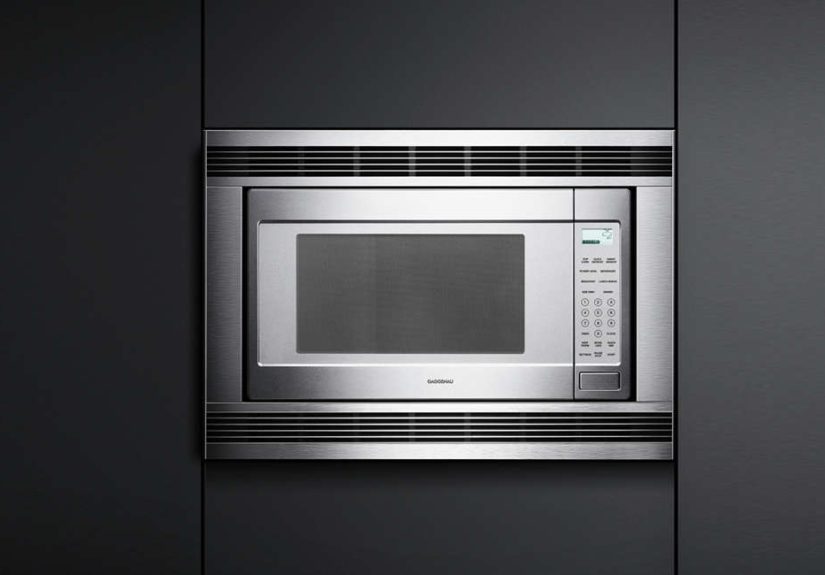
These are designed specifically to be installed in a wall cabinet or surround. They
typically share styling cues with wall ovensmatching stainless finishes, horizontal
handles, and clean, flush fronts. Brands like Whirlpool, KitchenAid, and Bosch offer
built-in models with optional trim kits so the microwave sits in a cutout and the trim
hides the gaps for a seamless look.
This is the classic “Remodelista kitchen” scenario: a microwave tucked into a tall
oven bank, aligned perfectly with a wall oven below or above. Zero countertop chaos,
100% grown-up energy.
2. Microwave Drawers
Microwave drawers pull out like a drawer instead of swinging open on a side hinge.
They’re usually installed in an island or lower cabinet, which makes loading heavy
dishes easier and reduces the chance of someone bumping their head on a door.
High-end kitchens love them because they disappear almost completely into the
cabinetry.
Functionally, they heat like standard microwaves but often cost more due to the
specialized mechanism and sleek design. If you want a minimalist look and have
the budget, drawer microwaves are a very “designer kitchen” move.
3. Countertop Microwaves with Trim Kits
The style-savvy workaround: some countertop models are designed to be paired with
a trim kit. The microwave slides into a cabinet cutout, and the trim pieces frame it so
it looks built-in. This is often the most affordable way to achieve a built-in look while
keeping the flexibility of a countertop unit.
Trim kits aren’t just about looksthey also help provide the proper ventilation
clearances that these “pseudo built-in” models need to run safely.
Key Features That Actually Matter
Once you’ve decided that a built-in microwave is the plan, it’s time to sift through
the features. Here’s what to focus on instead of getting distracted by blinking extras
you’ll never use.
Power and Performance
Power is measured in watts. Most decent built-in microwaves sit between 900 and
1,200 watts; higher wattage generally means quicker, more even heating. Independent
testing confirms that models with at least 700 watts are the bare minimum, but you’ll
feel the difference when you move into that 900–1,200 watt sweet spot.
If you’re constantly reheating dense dishes (casseroles, frozen meals, leftovers in
deep bowls), lean toward the higher end of that range. If your microwave life is mostly
coffee reheats and popcorn, you can afford to go slightly lower.
Size, Capacity, and Clearances
Built-in microwaves pull double duty: they have to fit both your dishes and your
cabinetry. Capacity is usually listed in cubic feetanything around 1.1 to 1.7 cubic
feet will handle everyday tasks, with larger 2.0+ cubic foot models ideal for big
casseroles and bakeware.
Just as important is the outside size. Measure your cabinet opening: width, height,
and depth. Many built-in and compact models cluster around a width of about 24–30
inches, but depth and height can vary more. Some guides suggest leaving 1.5 to
3 inches of clearance on the sides and top for ventilation, depending on the model,
and additional space behind for the plug and air flow.
Venting and Airflow
Built-in microwaves don’t always vent to the outdoors like a range hood, but they
still need to breathe. Manufacturers and testing labs emphasize leaving adequate
space around the unit and following the installation instructions closely; ignoring
those clearances can shorten the appliance’s life or cause overheating.
If you’re using an over-the-range microwave as a built-in above a cooktop, double
check whether it vents externally or simply recirculates air through a filterthat
makes a big difference for serious cooks.
Cooking Technology: Sensor, Convection, and More
Today’s built-in microwaves are more versatile than the “nuke and hope” units of
the past. Features worth considering:
-
Sensor cooking: Uses humidity sensors to adjust time and power for
things like veggies, rice, and leftovers, so you aren’t babysitting the keypad. -
Convection mode: Some models add a heating element and fan that
let your microwave bake, roast, or crisp, essentially acting as a mini oven. Brands
like KitchenAid and Bosch call these “convection” or “speed” microwaves. -
Preset programs: Popcorn, melt, soften, reheat, and defrost buttons
can be surprisingly accurate if you learn your machine’s quirks. -
Smart touches: Some higher-end models add Wi-Fi or app control so
you can start or stop cooking remotely, though this is more “nice to brag about”
than strictly necessary.
Design Details
This is where your inner Remodelista reader gets to play:
- Trim style: Minimalist, chunky, black stainless, or classic stainless.
- Door style: Side-hinged vs drop-down; touch control vs physical knobs.
- Handle shape: Match your wall oven, fridge, or cabinet hardware for a
cohesive look. - Control visibility: Black glass with subtle LED vs high-contrast buttons
(easier for guests and kids).
10 Easy Pieces: Built-in Microwaves to Know
Instead of pushing a specific brand, think of this as a style-based checklistten
“easy pieces” that cover the main built-in microwave personalities you’ll see in
appliance showrooms, reviews, and Remodelista-style kitchens.
-
The Classic 24-Inch Built-in with Trim Kit
A compact workhorse sized to slide into a standard 24-inch cabinet. Ideal for
apartments, small kitchens, or tight wall oven stacks. Look for a unit in the
1.1–1.5 cubic foot range with at least 900 watts and a simple stainless trim kit
that frames the front. -
The 30-Inch “Wall Oven’s Best Friend”
This is the tall, 30-inch built-in microwave that visually lines up with a 30-inch wall
oven. Together, they read as a coordinated, vertical appliance tower. If you bake a
lot, consider a convection model here so it can handle overflow during holidays. -
The Sleek Microwave Drawer
Installed in an island or base cabinet, a drawer unit keeps the look ultra clean and
makes it easy to lower heavy dishes in instead of lifting them up. Great for aging in
place, accessible design, or households that simply like their gadgets hidden. -
The Speed Oven Hybrid
Part microwave, part convection oven, part broiler. In small kitchens, this can
replace a secondary oven, taking frozen pizza from zero to crispy without
preheating a full-size oven. Bosch’s speed microwave ovens are good examples of
this concept. -
The Over-the-Range Built-in Look
Technically an over-the-range (OTR) microwave, but cabinet-mounted so it reads as
built in. You get cooking, lighting, and ventilation over your cooktop in one unit,
which is practical in compact kitchens. Just remember that venting performance
may not match a dedicated hood. -
The Countertop-with-Trim Kit Hero
Ideal for budget-conscious remodels: choose a compatible countertop microwave
and the matching trim kit, slide them into a cabinet, and you have a convincing
built-in for less. Retailers like Abt and specialty shops highlight which models have
trim kits available. -
The Family-Size 2.0+ Cubic Foot Giant
For serious reheaters and casserole lovers. These large-capacity built-ins swallow
big baking dishes and tall bowls. Perfect for households that batch cook or rely on
the microwave to keep multiple plates warm while everyone wanders into the
kitchen at different times. -
The Design-Forward Minimalist Front
Nearly flush with the cabinetry, with an understated handle and dark glass face.
These models disappear into a run of cabinets and are ideal for modern or
Scandi-inspired kitchens where you want as little visible “appliance-ness” as
possible. -
The Smart Built-in
Wi-Fi connectivity, app control, voice assistant compatibility, and maybe guided
cooking presets. It’s arguably overkill for reheating coffee, but handy if you like to
start defrosting from the car or if you live in a smart home ecosystem. -
The Built-in Microwave for Tiny Kitchens
Compact footprint, slightly smaller capacity, but thoughtfully designed to tuck into
a narrow cabinet or slim tower. When every inch matters, this is the way to gain
microwave functionality without sacrificing prep space.
Design and Installation Tips (The Remodelista Way)
Built-in microwaves aren’t just appliancesthey’re part of the architecture. A few
layout tricks can make them feel like they’ve always belonged there. Remodeling
guides often show microwaves tucked into “appliance garages,” tall cabinets, or
paired with wall ovens for a balanced look.
-
Mind the sightlines: Try to keep the microwave door no higher than
eye level for the shortest cook in the house. Overly high placements look impressive
but make hot dishes harder to handle. -
Respect the clearances: Follow the manufacturer’s cutout diagramdepth,
width, height, and ventilation spacedown to the millimeter. Don’t improvise. -
Match finishes where it counts: Align the microwave handle and trim
style with your wall oven or main range so the appliance wall reads as one cohesive
unit. -
Consider future swaps: If you’re customizing cabinetry, leave a bit of
flexibility so a future microwave with slightly different dimensions can still fit with a
new trim kit.
Care, Safety, and When to Replace
The average microwave lasts around nine years, give or take, depending on usage
and build quality. At a certain point, replacing a microwave with a failed magnetron
or control board is more sensible than repairing itespecially if a newer built-in
model adds better efficiency and features.
A few habits will keep your built-in happy:
- Cover food to prevent splatters (less mess, fewer odors).
- Wipe the interior regularly with warm, soapy water or steam-clean with a bowl
of water and lemon. - Never block vents or cram items around the microwave inside the cabinet.
- Use microwave-safe dishes only; metal racks should be used exactly as directed.
Real-Life Experiences with Built-in Microwaves
It’s one thing to read specs; it’s another to live with a built-in microwave day after
day. Here are some “kitchen table” lessons from real-world use that don’t always
make it into the brochures.
The Island Drawer That Changed Weeknights
One family swapped a countertop microwave for a drawer model in their island.
Before, every school-morning breakfast involved someone dodging the open
microwave door swinging at eye level. Now, kids can pull out the drawer, slide in
oatmeal bowls, and heat them without blocking the range or the sink. The adults
like that they don’t have to lift heavy casserole dishes up and out at shoulder height.
The trade-off? Drawer controls can be slightly less intuitive at first, and if the drawer
mechanism fails, repairs may be more expensive. But for accessibility and safety,
especially with kids, the island drawer wins.
The “Too High” Built-in That Looked Gorgeous but Annoyed Everyone
In another remodel, the microwave was placed above a wall oven so the fronts lined
up in a perfect vertical column. It looked great in photos. In real life, shorter family
members had to tip hot mugs and soup bowls down toward their face to get them
out of the microwavenever ideal when you’re half awake and holding boiling
liquid.
The takeaway: aesthetics matter, but safety matters more. When planning a built-in
microwave, mock up the height with painter’s tape and a cardboard “door” before
committing. If someone has to reach above their shoulders with a heavy dish, lower
the opening.
The Trim Kit Surprise
A homeowner picked a countertop microwave they loved and later discovered that its
trim kit was backordered for months. The microwave worked, but the temporary
“gap” around it made the brand-new kitchen feel unfinished.
Lesson learned: if you’re going the trim-kit route, treat the trim kit as non-optional
and order everything at once. Double-check that the exact model number of the
microwave matches the trim kit, since even small variations can cause fit issues.
The Speed Oven That Quietly Replaced the Second Oven
For serious cooks, a built-in speed or convection microwave can be the secret
weapon. One avid baker discovered that her speed microwave handled small
roasting and baking jobs faster and more efficiently than her full-size oven. Weeknight
chicken thighs, roasted veggies, and pan pizzas all moved into the smaller cavity,
leaving the big oven for holidays and baking marathons.
This setup also turned out to be more energy-efficient; there’s no need to preheat a
huge oven for a tray of fries when the speed microwave can crisp them in a fraction
of the time.
What People Wish They Had Done Differently
After living with built-in microwaves, many homeowners share the same handful of
“next time, I’d…” reflections:
-
“I’d test the door swing.” In tight spaces, a left-hinge vs right-hinge
door can make the difference between smooth workflow and bumping into the
fridge every time it opens. -
“I’d choose clearer controls.” Low-contrast, tiny touch buttons look sleek
but frustrate guests and older eyes. Simple, well-labeled controls age better. -
“I’d add under-cabinet lighting nearby.” A built-in microwave can cast
shadows on the counter below; dedicated task lighting helps. -
“I’d think about resale.” Standard widths and common brands make it
easier for future owners to swap the microwave without reworking cabinetry.
The overall vibe? Most people don’t want to go back to a hulking countertop
microwave once they’ve experienced the clean lines and everyday ease of a built-in.
As long as you respect clearances, plan the height thoughtfully, and choose features
you’ll actually use, a built-in microwave is one of those small remodeling choices
that quietly improves your kitchen every single day.
Conclusion
Built-in microwaves are the kitchen equivalent of tailoring: same basic garment,
better fit. Whether you choose a compact 24-inch unit with a trim kit, a sleek
drawer in your island, or a full-on speed oven above your wall oven, the goal is
the samea microwave that works hard without shouting for attention.
Think in terms of easy pieces: the right size, enough power, smart (but not gimmicky)
features, a layout that respects safety and comfort, and a face that plays nicely with
your cabinetry. Do that, and your built-in microwave will earn its spot as a quietly
essential part of your everyday kitchen routineand a Remodelista-worthy detail in
your next set of “after” photos.