Table of Contents >> Show >> Hide
- Why This Amazon Tiny House Is Getting So Much Attention
- The Real Star of the Show Is the Glass
- The $16K Catch: Why the Sticker Price Is Not the Final Price
- Can You Actually Live in It Full Time?
- Who This Tiny House Makes the Most Sense For
- How to Make a Glassy Tiny House Feel Even Better
- Final Verdict
- What the Experience of Living With a Tiny Glass House Really Feels Like
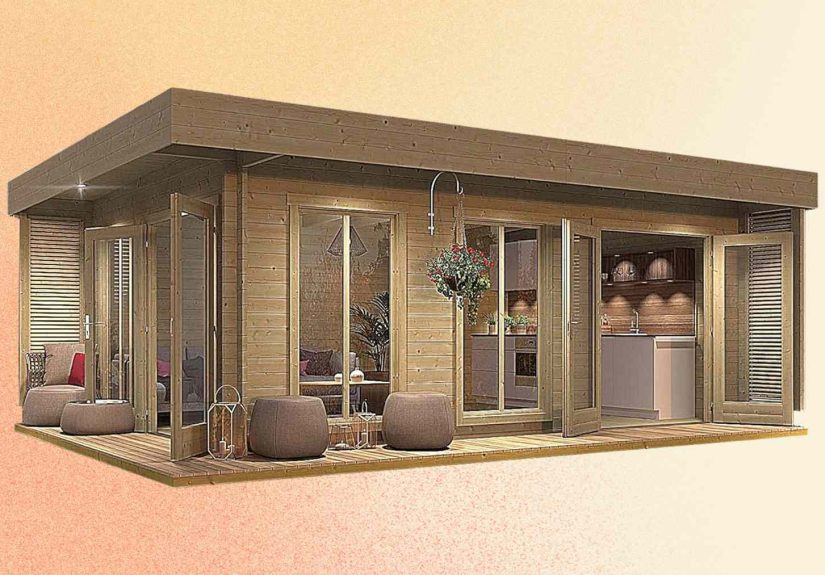
If the modern internet had a spirit animal, it might be a tiny house with dramatic glass, a vaguely Scandinavian vibe, and a suspiciously approachable price tag. That is exactly why this Amazon tiny house has been making the rounds online. For roughly $16,000, the Allwood Bonaire cabin kit promises the kind of bright, airy design that usually lives in Pinterest boards titled Someday, When I Become Mysteriously Good at Minimalism. It has floor-to-ceiling windows, a covered patio, and a footprint small enough to make your average suburban bonus room feel a little smug.
But the real reason people keep clicking is not just the price. It is the fantasy. A tiny home like this represents a cleaner, quieter, more intentional lifestyle. It suggests mornings with coffee and sunbeams, not six junk drawers and a garage full of “useful stuff” that has not been useful since 2018. And visually, this model knows exactly what it is doing. Big windows make a small home feel expansive, open, and far more luxurious than its square footage would suggest.
Still, smart buyers know a tiny house is not a magic trick. A low sticker price can be real, but it is rarely the full story. So let’s talk about why this particular Amazon tiny house is so appealing, what makes its design work, and what you need to know before you start mentally placing it by a lake, in the woods, or behind your main house like the world’s chicest backyard plot twist.
Why This Amazon Tiny House Is Getting So Much Attention
The buzz around this model makes sense the second you look at it. Recent coverage has described the Bonaire as a resort-style cabin kit with about 225 square feet of interior space, an open layout, large glass doors, and tall windows that pull in sunlight from nearly every angle. In a market full of prefab units that can look more “temporary office with ambition” than “dream retreat,” this one actually leans into design.
That matters because tiny homes do not have much room for bad ideas. Every detail has to earn its place. In a larger house, an awkward corner can disappear into the general square-footage fog. In a tiny house, one clunky choice can make the whole place feel cramped. This cabin kit avoids that problem by going all in on openness. The layout is flexible, the lines are clean, and the glass-heavy front makes the structure feel lighter than a lot of boxier prefab competitors.
What You Appear to Get for the Money
At the headline price, this is best understood as a cabin kit, not a fully turnkey home. That distinction is important. The structure has been described as a Nordic spruce build that arrives with the core shell materials: walls, floorboards, joists, roof rafters, windows, doors, fasteners, handles, and locking hardware. The cabin also comes unpainted, which is great news if you love customization and less-great news if your dream life does not involve finish work.
In other words, this is not a “click now, move in by Friday” situation. It is more like buying the stylish skeleton of a tiny retreat and then deciding how far you want to take it. Want a guest house? Great. Backyard office? Also great. A full-time residence with plumbing, insulation, climate control, and a real kitchen? Totally possible in some cases, but now the budget has started stretching like yoga pants at Thanksgiving.
The Real Star of the Show Is the Glass
Let’s be honest: the floor-to-ceiling windows are doing a lot of the flirting here. They are the reason the house looks far more expensive than its listed price. In small-space design, natural light is not just a nice extra. It is a full-time employee. It expands sightlines, makes walls feel less confining, and helps even a modest footprint read as open instead of cramped.
That is why window-heavy tiny homes keep showing up in design coverage. When a compact home is flooded with daylight, the interior instantly feels bigger, calmer, and more connected to the outdoors. The effect is part architecture, part psychology, and part “wow, this place looks fantastic in photos.” The Bonaire leans hard into that advantage.
Why Floor-to-Ceiling Windows Work So Well in a Tiny House
First, they visually borrow space from the outdoors. A tiny home tucked into trees, near a garden, or beside a lake can feel dramatically more spacious because your eye keeps traveling beyond the walls. Second, large windows reduce the cave effect that can happen in small dwellings with too many solid surfaces. Third, they elevate the entire mood of the space. Even a simple table, chair, and bed setup feels more polished when daylight is doing the decorating for free.
There is also a practical side. Good daylighting can reduce the need for artificial lighting during the day, and thoughtful window placement can support comfort when combined with shading and efficient glazing. North-facing windows tend to provide even light with less glare, while south-facing exposure can be useful when properly shaded. Translation: giant windows are fabulous, but giant windows with a plan are even better.
Of course, there is a catch. Glass can be a blessing and a diva. Without the right insulation strategy, shading, or coverings, all that lovely transparency can also mean summer heat gain, winter chill, privacy issues, and the sudden realization that your neighbors did not consent to starring in your breakfast scene. The dreamy tiny house look works best when beauty and performance are in the same group chat.
The $16K Catch: Why the Sticker Price Is Not the Final Price
This is where the fantasy needs a little adult supervision. A roughly $16,000 Amazon tiny house can absolutely be the starting point for a compelling small-space project. But “starting point” is the key phrase. The listing price typically covers the kit itself, not the total cost of creating a legal, functional, comfortable place to live.
If you plan to use the structure as anything more than a simple seasonal cabin or backyard retreat, there are several layers of cost waiting politely offstage.
What Buyers Commonly Forget to Budget For
Site preparation: The house needs somewhere stable to sit. That could mean a slab, piers, blocks, grading, drainage work, or a raised base depending on the site and local rules.
Permits and local fees: Even small structures can trigger permit requirements. Depending on your area and project type, those costs can add up quickly.
Utility hookups: Water, sewer or septic, and electricity are where the budget often stops being cute. If the land is raw or the utilities are not nearby, installation costs can jump fast.
Labor and assembly: A kit can save money, but unless you are unusually comfortable building a structure from the ground up, you may need professional help.
Insulation and weatherproofing: Many kit-style structures shine in the shell phase but require additional work to perform well year-round.
Interior build-out: Flooring finishes, kitchen components, bathroom fixtures, appliances, lighting, heating and cooling, storage, and furniture all cost real money. Sadly, vibes are not legal tender.
That is why the smartest way to look at a tiny house like this is not as a complete home for $16,000, but as a visually impressive entry point into a much larger project. It can still be a bargain compared with conventional construction in the right scenario. It is just not an all-inclusive fairy tale.
Can You Actually Live in It Full Time?
Maybe, but that answer depends less on Amazon and more on your local jurisdiction. Tiny homes occupy a strange little Venn diagram where design trends, building codes, zoning rules, and housing dreams all overlap awkwardly.
Generally speaking, tiny homes under 400 square feet may fall under the tiny-house provisions associated with Appendix Q of the International Residential Code, but local adoption and enforcement vary. Manufactured homes are regulated differently from modular homes, and prefab structures can be treated differently depending on how they are built, transported, and installed. Then there is zoning, which is the bureaucratic equivalent of the phrase, “Not so fast.”
Questions to Ask Before You Buy
Can you legally place a structure like this on your lot? Will it be treated as an accessory dwelling unit, a detached office, a guest house, or something else entirely? Does your municipality require a permanent foundation? Are minimum size rules an issue? What about setbacks, utility connections, inspections, and occupancy permits?
If you do not have clear answers before you buy, you are not shopping for a tiny home. You are shopping for a very expensive puzzle.
That said, there are plenty of realistic use cases where a cabin kit like this makes excellent sense. As a backyard office, art studio, pool house, reading retreat, guest cottage, or short-stay rental on properly permitted land, the Bonaire-style concept has obvious appeal. The layout is flexible, the design photographs well, and the large windows give the space a premium feel without requiring a premium footprint.
Who This Tiny House Makes the Most Sense For
This tiny house is best for buyers who are design-conscious, budget-aware, and not under the illusion that a structure becomes a finished home just because it arrived in cardboard with confidence.
It works especially well for:
Backyard dreamers: Homeowners who want a detached office, studio, or guest retreat with more personality than a standard shed.
Hospitality-minded buyers: People exploring a boutique rental or Airbnb-style setup where the visual impact of the property matters.
Second-space seekers: Buyers who want an escape hatch for hobbies, work, meditation, writing, or simply hiding from the chaos of the main house.
Minimalist romantics: Folks genuinely drawn to living smaller and more intentionally, provided they go in with a realistic budget and local approvals in hand.
It is a weaker fit for someone who wants a plug-and-play primary residence with no extra planning, no permitting research, and no added costs. For that buyer, the words “cabin kit” should set off the same internal alarm as “some assembly required” on a piece of furniture with 413 screws.
How to Make a Glassy Tiny House Feel Even Better
One of the most fun things about a structure like this is that the design foundation is already strong. The big job is not fixing a bad layout. It is finishing the space in a way that protects the openness instead of cluttering it to death.
Smart Design Moves for a Tiny Home with Big Windows
Start with a light palette. Soft whites, warm wood tones, sand, muted sage, and pale gray all play nicely with natural light and keep the interior feeling expansive. Choose furniture that sits a little off the floor so the room keeps visual breathing space. Use one or two standout pieces instead of twelve “maybe this will work” purchases.
Storage should be sneaky. Think bench seating with hidden compartments, a platform bed with drawers, slim wardrobes, wall hooks, and shelving that climbs vertically instead of spreading horizontally. In a tiny house, every square foot has commitment issues, so multifunction is your best friend.
Then there is privacy. Large windows are gorgeous, but unless your nearest neighbor is a deer with healthy boundaries, window coverings matter. Layered solutions work best: light-filtering shades for daytime softness, blackout options where needed, and exterior landscaping that gives the home a sense of shelter rather than exposure. Add a modest patio setup, and suddenly the house feels bigger than the actual floor plan because it has an outdoor room too.
Final Verdict
This $16K Amazon tiny house has floor-to-ceiling windows, yes, but that is only half the story. The other half is why people are so captivated by it. It offers a rare combination of affordability, strong visual design, and flexibility. At a glance, it looks like the tiny-house dream distilled into one neat package: bright, modern, compact, and just aspirational enough to make you open a new tab called “Land Near Water.”
But the smartest reading of this cabin is not as a miracle bargain. It is as a stylish shell with real potential. If you treat the listed price as the beginning of the budget, do your homework on codes and site needs, and plan carefully for comfort and performance, this kind of Amazon tiny house can be a genuinely compelling project. If you treat it like a complete home for the price of a used sedan, disappointment will show up before the delivery truck does.
Still, in a crowded world of prefab hype, this one earns attention. The design is charming, the light-filled concept is legitimately appealing, and the floor-to-ceiling windows are not just eye candy. They are the feature that turns a small cabin into an experience. And in the tiny-home world, experience is everything.
What the Experience of Living With a Tiny Glass House Really Feels Like
Spend even one full day in a tiny house with dramatic windows, and you understand why people get a little poetic about them. Morning arrives differently. In a regular house, daylight has to fight its way past blinds, hallways, and whatever laundry mountain has formed in the spare room. In a tiny house with glass everywhere, light just walks in like it pays rent. The whole place wakes up at once. The walls glow. The floor changes color by the hour. Even making toast feels vaguely cinematic.
That experience is a huge part of the appeal behind a model like this. A 225-square-foot interior does not sound huge on paper, and to be fair, it is not huge in reality either. You are not going to lose a teenager, a treadmill, and three armoires in there. But visually, the room feels stretched by the landscape beyond it. Trees become wallpaper. Rain becomes entertainment. A small backyard starts acting like a private resort if the windows are framed the right way and the patio gets a chair or two.
There is also something satisfying about how a tiny glassy space edits your habits. You become more aware of what you bring in because every object announces itself. One ugly charging cable can suddenly feel like a crime scene. One bulky chair can throw off the whole room. Oddly enough, that discipline can be freeing. You stop buying things just because they are on sale and start choosing things because they earn their square footage. The room teaches you to be selective without turning life into a punishment.
Of course, the dreamy experience depends on comfort. If the sun blasts through those giant windows all afternoon and the place turns into a decorative toaster oven, the romance fades quickly. The same goes for cold nights, glare on your laptop, or the realization that privacy is not automatic when your wall is mostly glass. The best lived-in version of this tiny house is one that respects the fantasy but also invests in the boring heroes: insulation, shades, airflow, decent climate control, and thoughtful placement on the lot.
When those details are handled well, the emotional payoff is real. A tiny home like this can feel calm in a way larger homes often do not. There are fewer distractions, fewer corners collecting forgotten junk, and fewer rooms demanding furniture just because they exist. The space encourages rituals. Coffee on the patio. Reading by the window. Working with natural light instead of overhead glare. Watching a storm roll in from the comfort of your little wood-and-glass cocoon. It is not just small living. It is highly edited living.
That is probably the best way to describe the overall experience: edited. You are closer to the weather, closer to the landscape, and closer to your own routines. For some people, that feels liberating. For others, it feels like there is nowhere to hide from the messiness of daily life. Both reactions are fair. Tiny-house living is not about pretending less space works for everyone. It is about recognizing that the right space, designed well, can feel better than more space designed badly.
And that is why this Amazon tiny house keeps generating so much fascination. It is not merely cheap by housing standards. It is emotionally legible. People see those windows, that porch, that bright interior, and instantly imagine a version of life that feels lighter. Less clutter. More air. Fewer rooms, but better moments. Whether buyers use it as a guest retreat, a studio, a rental, or a personal escape hatch, the experience it sells is bigger than its footprint. That may be the most powerful feature of all.