Table of Contents >> Show >> Hide
- Why Turkey Pho Works So Well
- What You Need for Leftover Turkey Pho
- How to Make Turkey Pho With Leftover Turkey: Step by Step
- A Simple Leftover Turkey Pho Recipe You Can Actually Use
- Best Tips for Better Turkey Pho
- Common Mistakes to Avoid
- How to Store and Reheat Turkey Pho Safely
- Easy Variations on Leftover Turkey Pho
- What Turkey Pho Tastes Like
- Common Home-Cook Experiences With Leftover Turkey Pho
- Conclusion
- SEO Tags
If your refrigerator is giving you that familiar post-holiday stare-down with a container of leftover turkey, this is your moment. Not for another dry sandwich. Not for a sad microwave repeat. For pho. Rich, fragrant, slurpable, deeply comforting pho. Specifically, turkey pho made from leftover turkey.
This is one of those rare kitchen moves that feels both clever and delicious. You get to rescue leftovers, build a broth that smells like you suddenly became much more competent than usual, and serve a bowl that tastes fresh instead of recycled. Leftover turkey pho takes the cozy soul of Vietnamese-style noodle soup and gives it a practical, weeknight-friendly twist. It is savory, aromatic, bright with herbs, and perfect for anyone who wants to turn “What are we doing with all this turkey?” into a very good dinner.
In this guide, you will learn how to make turkey pho with leftover turkey, how to build a flavorful broth without babysitting it all day, which spices matter most, how to keep the noodles from turning into mushy shoelaces, and how to serve a bowl that tastes vibrant instead of heavy. Let’s turn leftovers into something that actually feels exciting.
Why Turkey Pho Works So Well
Turkey pho works because leftover turkey already gives you a head start. The meat is cooked, easy to shred, and ready to reheat gently in hot broth. If you also have the bones or carcass, even better. That means you can deepen store-bought stock or homemade broth with turkey flavor and get much closer to the layered, aromatic quality people want from pho.
Traditional pho takes time and care, but the home-cook version succeeds by focusing on a few high-impact techniques: charred onion and ginger, toasted whole spices, a clean savory broth, and a pile of fresh toppings right before serving. Turkey is especially good here because its mild flavor absorbs pho spices beautifully. It behaves like the overachieving guest who somehow matches every conversation in the room.
This recipe is also practical. You do not need restaurant equipment, mysterious ingredients from a parallel universe, or seven uninterrupted hours of spiritual reflection. You need a pot, some pantry spices, rice noodles, herbs, and leftover turkey. The result tastes special without asking you to audition for a cooking show.
What You Need for Leftover Turkey Pho
Broth Ingredients
- 6 to 8 cups turkey stock, chicken stock, or a mix of stock and water
- 2 to 3 cups shredded leftover turkey
- Turkey bones or carcass, if available
- 1 large yellow onion, halved
- 1 piece fresh ginger, about 3 to 4 inches, halved lengthwise
- 2 to 3 star anise pods
- 1 cinnamon stick
- 3 to 4 whole cloves
- 1 teaspoon coriander seeds
- 1 teaspoon fennel seeds, optional but excellent
- 1 to 2 tablespoons fish sauce
- 1 to 2 teaspoons sugar
- Salt to taste
Noodles and Toppings
- 8 ounces dried rice noodles
- Bean sprouts
- Thinly sliced onion or scallions
- Cilantro
- Thai basil or regular basil
- Lime wedges
- Sliced jalapeno or serrano
- Hoisin sauce or sriracha, optional
You can absolutely make a great bowl with fewer toppings, but the contrast matters. The hot broth is rich and fragrant; the herbs, sprouts, and lime wake everything up. Pho without fresh garnish is still soup, but it loses some of the drama.
How to Make Turkey Pho With Leftover Turkey: Step by Step
1. Build the Broth
If you have turkey bones, place them in a large pot with the stock. Simmer for 30 to 60 minutes to pull more body and flavor into the broth. If you do not have bones, do not panic. Start with good-quality stock and move confidently to the aromatics. You are not disqualified from dinner.
While the stock heats, char the onion and ginger. You can do this in a dry skillet, under the broiler, or directly over a gas flame. You are looking for blackened edges and softened interiors, not total annihilation. That char adds smoky sweetness and complexity that makes the broth taste much more developed.
2. Toast the Spices
In a dry pan, toast the star anise, cinnamon, cloves, coriander seeds, and fennel for 1 to 2 minutes until fragrant. This step is tiny but mighty. Toasting wakes up the oils in the spices and gives the broth that unmistakable pho aroma. If your kitchen starts smelling like the best soup decision you have made all week, you are on track.
Add the charred onion, ginger, and toasted spices to the pot. Simmer gently for 20 to 30 minutes. Do not boil aggressively. A violent boil can make the broth cloudy and rough around the edges. Pho wants calm confidence, not chaos.
3. Season It Properly
Remove the bones, vegetables, and whole spices. Then season the broth with fish sauce, sugar, and salt to taste. The goal is balance, not obvious sweetness. Fish sauce brings savory depth, sugar softens the edges, and salt ties everything together. If it tastes flat, it probably needs more fish sauce or salt. If it tastes harsh, add a little more sugar or a splash of water.
This is the point where turkey pho goes from “pretty good soup” to “wait, why is this so good?” Taste patiently. Adjust slowly. Broth is the whole show.
4. Prepare the Turkey and Noodles
Warm the shredded leftover turkey separately or let it reheat gently in the hot broth just before serving. Avoid boiling it hard; overcooked turkey has a special talent for becoming stringy and sad.
Cook the rice noodles according to package directions, but err on the side of slightly underdone. They will continue softening in the bowl. Rinse briefly if needed to keep them from sticking, then portion them into serving bowls. Keeping the noodles separate until serving helps prevent the broth from turning starchy and the noodles from bloating into a soft tangle by round two.
5. Assemble the Bowls
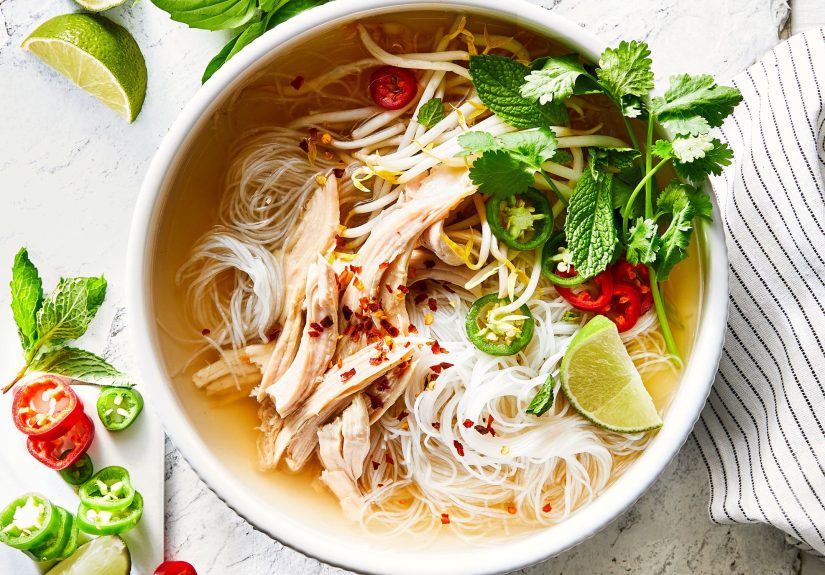
Add warm turkey over the noodles. Ladle the hot broth on top. Finish with bean sprouts, sliced onion, scallions, cilantro, basil, jalapeno, and lime. Let everyone add hoisin or sriracha at the table if they want. Some people treat this part like a calm finishing touch; others build a topping mountain. Both are valid life choices.
A Simple Leftover Turkey Pho Recipe You Can Actually Use
Here is the streamlined version if you want the practical recipe without scrolling back through my passionate relationship with broth.
- Simmer 6 to 8 cups stock with turkey bones for 30 to 60 minutes if available.
- Char 1 halved onion and a 3- to 4-inch piece of ginger.
- Toast 2 to 3 star anise, 1 cinnamon stick, 3 to 4 cloves, 1 teaspoon coriander seeds, and 1 teaspoon fennel seeds.
- Add aromatics and spices to the pot; simmer gently for 20 to 30 minutes.
- Strain and season with 1 to 2 tablespoons fish sauce, 1 to 2 teaspoons sugar, and salt as needed.
- Cook 8 ounces rice noodles separately.
- Divide noodles into bowls, top with 2 to 3 cups shredded leftover turkey, and ladle over hot broth.
- Finish with bean sprouts, herbs, sliced onion, lime, and chile.
Best Tips for Better Turkey Pho
Use the Bones if You Have Them
Even a quick simmer with the carcass or leftover bones makes the broth taste more turkey-forward and less like generic soup with ambition.
Do Not Skip Charring the Onion and Ginger
This is one of the most important flavor moves in any pho-inspired broth. It adds depth without making the broth heavy.
Toast the Whole Spices
Ground spices can muddy the broth. Whole spices give you better aroma and a cleaner finish. Think perfume, not potpourri.
Cook Noodles Separately
This keeps the broth clearer and the leftovers much easier to manage. It also prevents the noodles from drinking your soup like tiny rice straws.
Balance Salt, Sweetness, and Umami
A good turkey pho broth is savory first, aromatic second, and slightly sweet only in the background. Fish sauce is the backbone here, not a weird extra.
Common Mistakes to Avoid
Using bland broth: If your base is weak, the final soup will be weak. Start with the best stock you can find or reinforce it with bones.
Overcooking the turkey: Leftover turkey is already cooked. Warm it gently.
Adding too much sugar: Pho broth should not taste like dessert with herbs.
Skipping the fresh toppings: Without lime, herbs, and crunch, the bowl can taste flat.
Letting noodles sit in the broth too long: They will swell, soften, and eventually stage a texture coup.
How to Store and Reheat Turkey Pho Safely
If you are making turkey pho from leftovers, food safety matters. Store leftover turkey promptly, keep it refrigerated, and use it within a few days. For best texture, store the broth, noodles, turkey, and toppings separately. That way the noodles stay springy, the herbs stay fresh, and the broth reheats cleanly.
Reheat the broth until fully hot, then warm the turkey in the broth just long enough to heat through. Assemble with fresh noodles or reheated noodles right before serving. This method gives you leftovers that still taste intentional instead of “found in the back of the fridge and heavily negotiated.”
Easy Variations on Leftover Turkey Pho
Spicy Turkey Pho
Add extra sliced jalapeno, chili crisp, or a spoonful of sambal for heat lovers.
Vegetable-Heavy Turkey Pho
Add bok choy, mushrooms, or snap peas for a more substantial bowl. Keep the vegetables crisp-tender so they do not dull the broth.
Shortcut Turkey Pho
Use boxed stock, pre-shredded turkey, and a tea infuser or spice sachet for the whole spices. It will not taste exactly like an all-day broth, but it can still be deeply satisfying on a busy night.
Freezer-Friendly Broth Batch
Make a double batch of the broth and freeze it without noodles or garnishes. Future-you will feel suspiciously organized.
What Turkey Pho Tastes Like
Done right, turkey pho is light but savory, aromatic without being overpowering, and deeply comforting without feeling heavy. The turkey stays tender, the noodles slippery and soft, the broth clear and spiced, and the toppings bright and crisp. It is one of those dishes that manages to feel both restorative and exciting, which is a rare trick for leftovers.
The flavor profile is different from classic roasted turkey soup. Instead of leaning on celery, carrots, and sage, this bowl moves toward ginger, star anise, cinnamon, herbs, fish sauce, and lime. That shift is exactly why it works so well. It does not remind you of yesterday’s dinner. It becomes something new.
Common Home-Cook Experiences With Leftover Turkey Pho
One of the most relatable experiences with leftover turkey pho is realizing that the dish solves a very specific holiday problem: you are tired of turkey before the turkey is tired of you. The first meal was great. The sandwich was fine. By day three, morale is wobbling. Then turkey pho enters the chat and suddenly the leftovers feel interesting again. The smell alone changes the mood of the kitchen. Charred ginger, warm spices, and simmering stock do something magical: they convince everyone this was the plan all along.
Many home cooks also notice how forgiving this recipe can be. Maybe the broth is homemade, maybe it is boxed stock with a smart attitude adjustment. Maybe you have Thai basil, maybe only cilantro and a lime that has seen better days. Turkey pho still finds a way to work. It rewards good technique more than fancy perfection. Toast the spices. Balance the broth. Keep the noodles from overcooking. Those little decisions matter more than whether your garnish tray looks like it belongs in a magazine.
There is also the deeply satisfying moment when people take the first bite and stop calling it “leftovers.” That shift is important. A lot of reheated food tastes like a sequel no one asked for. Turkey pho can taste like a reboot with a better script. The turkey becomes softer and more savory in the broth, the herbs add freshness, and the lime cuts through everything with exactly the brightness the bowl needs.
Another common experience is learning that noodle timing is not a minor detail. Nearly everyone who makes pho-style soup twice becomes a little dramatic about noodles, and for good reason. The first time, people often leave the noodles in the pot too long and end up with a bowl that feels more swamp than soup. The second time, they cook and store the noodles separately and suddenly feel like they unlocked a family secret. Texture is everything here.
Home cooks also tend to discover their own preferred broth style. Some want it lighter and cleaner, with the herbs doing more of the work. Others want a richer, more savory bowl with extra fish sauce and deeper stock. Some go heavy on basil and bean sprouts. Others want lots of scallions and just enough jalapeno to announce itself. That is part of the charm. Turkey pho is structured, but it still leaves room for personality.
And then there is the comfort factor. This soup often gets made after a long holiday, after travel, after houseguests, after too much rich food, or after the sort of cleanup session that makes you question every life choice involving extra side dishes. A bowl of turkey pho feels restorative in exactly the right way. It is warming but not heavy, flavorful but not exhausting, practical but not boring. It gives leftover turkey a second life that feels less like obligation and more like a reward.
Conclusion
If you have been wondering how to make turkey pho with leftover turkey, the answer is simpler than it sounds: start with a solid broth, char the onion and ginger, toast the spices, season with balance, and finish with fresh toppings that bring everything to life. That is the formula.
What makes this dish special is not just that it uses leftovers. It is that it transforms them. Instead of tasting like yesterday, it tastes bright, fragrant, and entirely worth making on purpose. That is a good trick for any recipe, and an especially great one for turkey. So the next time your fridge is full of holiday remains, skip the boring repeat performance. Make turkey pho instead.