Table of Contents >> Show >> Hide
- What Happened to Jordan Chiles in Paris?
- The Two-Per-Country Rule, Explained Without the Fog Machine
- Why Jordan Chiles Became the Face of the Debate
- The Brutal Math of Team USA Depth
- Was the Rule Fair?
- How Jordan Chiles Responded
- Why This Story Resonated Beyond Gymnastics Fans
- Related Experiences: What It Feels Like to Be “Good Enough” and Still Left Out
- Conclusion
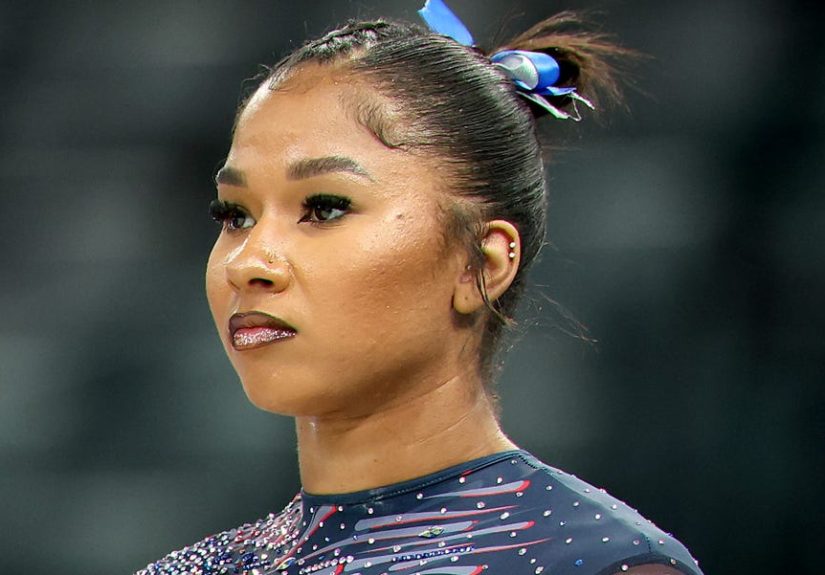
On paper, Olympic gymnastics sounds gloriously simple: compete in qualification, finish among the best, and move on. In reality, that sentence needs a giant asterisk, a legal disclaimer, and maybe a sympathetic shoulder pat. At the Paris Olympics, Jordan Chiles delivered an all-around score good enough to rank fourth in qualification. Fourth. As in, very much among the best on Earth. And yet she did not advance to the women’s all-around final.
The reason was not a fall, not a meltdown, not some mystery judging conspiracy cooked up in a dimly lit scoring room. It was the gymnastics two-per-country rule, one of the most debated pieces of Olympic competition format. Because Simone Biles and Sunisa Lee finished ahead of Chiles among the Americans, the United States had already used its two available spots in the all-around final. Chiles, despite posting a higher score than many gymnasts who did move on, was out.
That sounds harsh because it is harsh. It is also completely legal under Olympic gymnastics rules. The result was one of the most frustrating storylines of the Paris Games: a gymnast who absolutely looked like an all-around finalist ended up watching the final instead of competing in it. If that feels like sports logic wearing clown shoes, welcome to the annual conversation around this rule.
What Happened to Jordan Chiles in Paris?
During women’s artistic gymnastics qualification in Paris, Chiles put together a strong, balanced all-around competition across all four apparatuses. She finished with a 56.065 total, the fourth-best score in the entire field. Normally, that kind of number screams “see you in the final.” But Olympic gymnastics qualification is not purely a top-24 scoreboard race.
The format for the all-around final is top 24 overall with a maximum of two gymnasts per country. That caveat is where the plot twist lives. Simone Biles led qualification for the United States, and Sunisa Lee also finished ahead of Chiles. So even though Chiles outscored most of the world, she was third among Americans. That made her ineligible for the final.
What made the situation sting even more was the margin. Lee edged Chiles by just 0.067 points. That is not a canyon. That is not a comfortable gap. That is the kind of difference that feels less like a defeat and more like a paper cut from an official results sheet. Chiles was not blown away. She was squeezed out by depth, timing, and a rule that does exactly what it says on the tin.
The Two-Per-Country Rule, Explained Without the Fog Machine
Top 24… but not exactly
The women’s Olympic all-around final is often described as a top-24 final. That is technically true, but only after nationality limits are applied. If three gymnasts from one powerhouse country finish in the top 24, only the top two from that country can advance. The third gymnast is bumped, and an athlete lower in the standings moves up into the field.
So the all-around final is not always a list of the 24 highest scorers in qualification. It is the 24 qualifiers who remain after the country cap reshapes the bracket. That distinction matters, because it changes the meaning of ranking. In Chiles’ case, “fourth in the world that day” was not enough. The rule effectively treated “third-best American that day” as the more important category.
Why does this rule exist?
The logic behind the rule is that the Olympics are not only about finding the best athlete, but also about showcasing broad international representation. If the deepest programs in the world could stack a final with three or four athletes, smaller gymnastics nations would lose visibility, finalists, and maybe even investment momentum. Supporters argue that the cap helps the Olympics feel more global and less like a national championship with better lighting.
Critics, however, have never stopped pointing out the obvious downside: if the goal of an all-around final is to feature the best all-around gymnasts, then excluding one of the best all-around gymnasts feels backward. The rule protects diversity in the field, but it can also weaken the pure competitive standard of the final. Both statements can be true at once, which is why this argument never really retires. It just stretches, chalks up, and returns every Olympic cycle.
Why Jordan Chiles Became the Face of the Debate
Chiles was such a compelling example because her situation checked every box that makes people grumble at this rule. First, she was not a fringe qualifier. She was fourth overall. Second, she was extremely close to grabbing one of the U.S. spots. Third, she is the kind of gymnast fans understand instantly: dynamic, polished, emotionally expressive, and clearly capable of handling a high-pressure final.
Most importantly, Chiles did not look like an athlete who “missed her chance.” She looked like an athlete who earned a chance and then had it filtered through a nationality cap. That distinction matters in how the moment is remembered. This was not a story about underperformance. It was a story about format.
There is also a cruel irony in being eliminated by the strength of your own team. In many sports, having elite teammates helps open doors. In Olympic gymnastics, sometimes it slams one shut. The United States was so stacked that Chiles’ biggest obstacle in qualification was not the rest of the world. It was the fact that Biles and Lee were wearing the same flag.
The Brutal Math of Team USA Depth
That is what makes American women’s gymnastics both terrifying and weird. Team USA often arrives at the Olympics with enough talent to fill multiple medal-caliber lanes. Great problem for the country. Awful problem for the athlete stuck in the third slot. Chiles joined a painful lineage of U.S. gymnasts who have learned that “good enough for the final” is not always good enough when your passport and your teammate list are both extremely competitive.
The United States has seen versions of this heartbreak before. Jordyn Wieber famously missed the London 2012 all-around final despite being one of the top scorers in qualification. Gabby Douglas, the defending Olympic all-around champion, was pushed out of the Rio 2016 all-around final because two U.S. teammates finished ahead of her in qualifying. In Tokyo, MyKayla Skinner was blocked from the vault final by the same cap before later getting an unexpected opening and making the most of it.
That history matters because it shows Chiles’ experience was not some random fluke. It was another entry in a very recognizable Olympic gymnastics pattern. Every four years, the rule promises broader representation and delivers at least one storyline that makes viewers say, “Wait, she scored that high and still didn’t make it?”
Was the Rule Fair?
The honest answer is that it depends on what you think the Olympics should prioritize. If you believe the all-around final should be the cleanest possible test of the world’s best all-around gymnasts, then the Chiles situation feels deeply unfair. A fourth-place qualifier should compete. End of paragraph. End of meeting. Someone pass the gavel.
If you believe Olympic finals should reflect both excellence and international representation, then the rule makes more sense. Gymnastics is a global sport, and organizers do not want one or two countries swallowing the entire final. The cap creates room for athletes from more nations, more stories, and more federations. That can matter a lot for the visibility and growth of the sport.
The problem is that fairness is being measured in two different ways. One model says fairness means rewarding the highest scores. The other says fairness means preventing depth-rich countries from crowding out everyone else. Chiles’ exclusion exposed how those two ideas collide. Nobody needed a philosophy seminar to understand it. All they had to do was look at the results and realize the fourth-best gymnast in qualification was not in the final.
How Jordan Chiles Responded
One of the most impressive parts of the story is what Chiles did next. She did not vanish into the background. She remained central to Team USA’s Olympic effort and helped the U.S. women capture team gold in Paris. That response mattered. It reframed her Olympics from a tale of exclusion into a tale of resilience.
And that is part of why Chiles is so easy to root for. She competes with visible joy, visible fire, and visible connection to the people around her. In a sport that can sometimes feel sterile in its scoring precision, Chiles brings personality. When an athlete like that gets blocked by a rule, the frustration feels bigger because fans can immediately picture what the final would have gained from her presence.
Her Paris performance also reminded viewers that Olympic narratives are rarely neat. Chiles was good enough to contend individually, valuable enough to matter massively in the team competition, and popular enough to become one of the emotional centers of the meet. The rule kept her out of one final, but it did not define the full scope of what she brought to the Games.
Why This Story Resonated Beyond Gymnastics Fans
You did not need to know the difference between a Cheng and a double-twisting Yurchenko to understand why people were upset. The core story translated instantly: athlete ranks fourth overall, athlete does not advance. That is the kind of sentence that makes casual viewers put down their snacks and ask follow-up questions.
It also resonated because Chiles’ exclusion touched on a larger sports tension: should championships be about the absolute best individuals, or about balancing excellence with structural ideals such as representation and parity? That debate exists in different forms all over sports. Gymnastics just happens to stage it in a particularly dramatic way, with leotards, decimals, and a whole lot of heartbreak.
In other words, Chiles’ story was not just about a technical rule. It was about what fans believe sport is supposed to reward. That is why the conversation did not disappear after qualification. It stayed alive because the answer is not obvious, and because Chiles made the cost of the rule feel very human.
Related Experiences: What It Feels Like to Be “Good Enough” and Still Left Out
There is a very specific kind of sports pain in training for the biggest stage of your life, hitting under pressure, seeing your score go up, and then realizing the math still says no. That is the emotional neighborhood Jordan Chiles landed in. It is not the same as bombing out of a competition. It is not the same as making a mistake and living with it. It is the much stranger experience of doing your job and still being told the door is closed.
For gymnasts, that kind of disappointment hits on multiple levels at once. The all-around is not just another event. It is the identity event. It is the one that says you are the complete gymnast, the athlete who can survive all four pieces, all four moods, all four ways the sport tries to humble you. To earn one of the best all-around scores in the world and still not get the final can feel like being told, “Yes, you passed the test, but we ran out of chairs.” It is efficient. It is official. It is also emotionally absurd.
That is why fans immediately connected Chiles’ story to earlier Olympic moments. Jordyn Wieber in 2012 became one of the most famous examples of the rule’s cruelty when she missed the all-around final despite ranking high enough to be a real contender. In 2016, Gabby Douglas could not defend her Olympic all-around title because two American teammates placed ahead of her in qualification. In Tokyo, MyKayla Skinner got squeezed out of an event final by the same rule before circumstances later reopened the door. Different athletes, different Olympic cycles, same odd feeling: excellence was present, but access was limited.
There is also a teammate dimension that makes this tougher than a normal defeat. In most sports, if your teammate is amazing, you celebrate and move on. In gymnastics under the two-per-country cap, your teammate’s brilliance can be the exact reason you do not get to compete again. That creates a weird emotional balancing act. You can be proud, supportive, and genuinely happy for your teammate while still feeling gutted for yourself. Human beings are capable of holding both emotions at once, but it is not exactly a spa day for the nervous system.
For athletes like Chiles, the healthiest response often becomes redirection. Put the disappointment in a mental box, turn back to the team competition, and keep contributing. That sounds noble because it is noble. It is also hard. Really hard. The athlete has to move from “I lost a personal opportunity” to “I still need to be excellent for the group” in record time. Chiles did that in Paris, which is one reason her Olympics remained so impressive even without an all-around final appearance.
Fans feel a version of this too. They want Olympic finals to include the best performers. They also like seeing more countries represented and more flags in meaningful moments. So they end up arguing with themselves. They appreciate the spirit of parity right up until their eyes land on a results sheet that says a top-four gymnast is out. That tension is the real legacy of stories like Chiles’. The rule keeps producing broader fields, yes, but it also keeps producing unforgettable examples of what broad representation can cost.
In that sense, Jordan Chiles’ Paris experience was bigger than one qualification result. It became another case study in how elite sport can be both beautifully logical and strangely unfair at the exact same time. You can follow the rule, understand the rule, even defend the rule in theory, and still walk away thinking, “Yeah, but Jordan Chiles really should have been in that final.”
Conclusion
Jordan Chiles did not miss the Olympic all-around final because she was not good enough. She missed it because Olympic gymnastics uses a two-per-country limit that values international distribution alongside individual ranking. In Paris, that rule turned a fourth-place qualification finish into a seat outside the final.
That is why the story stuck. It was not a tale of failure. It was a tale of contradiction. Chiles proved she belonged among the best all-around gymnasts in the field, but the format rewarded nationality placement over raw global standing. Whether you view that as necessary balance or needless cruelty probably depends on what you want the Olympics to be.
What is undeniable is that Chiles handled the moment like an elite athlete and remained a major part of Team USA’s success. The rule may have kept her out of one final, but it did not erase what the world saw in Paris: a gymnast good enough to rank fourth, strong enough to pivot, and memorable enough to keep this debate alive long after the chalk settled.