Table of Contents >> Show >> Hide
- What Is a Japanese Floor Mattress, Exactly?
- My First Night: “This Is Either Genius or a Terrible Decision”
- What Happened After a Few Nights
- The Real Pros of Sleeping on a Japanese Floor Mattress
- The Cons Nobody Should Pretend Don’t Matter
- Who Will Probably Love It
- Who Should Probably Think Twice
- How I’d Make the Setup Better Next Time
- So, Would I Sleep on a Japanese Floor Mattress Again?
- My Extended Experience Sleeping on a Japanese Floor Mattress
- Conclusion
Sleeping on a Japanese floor mattress sounded like one of those ideas that seems wildly romantic in theory and mildly suspicious at 2:13 a.m. In my head, it promised minimalist bliss, better posture, more floor space and perhaps the calm of a Kyoto guest room. In reality? I half-expected to wake up shaped like a paperclip.
But after hearing so much about Japanese futons and floor mattresses, I decided to give one a real try. Not a five-minute lie-down in socks. Not a “seems comfy enough” test in a brightly lit showroom. I mean actual nights, actual sleep, actual groggy morning opinions. And to my surprise, the experience was not a disaster. It was just… different. Sometimes excellent. Sometimes humbling. Occasionally a little dramatic on the knees.
If you’ve been curious about sleeping on a Japanese floor mattress, this is the honest breakdown: what it felt like, what improved, what annoyed me and who should absolutely not assume that “firmer” automatically means “better.”
What Is a Japanese Floor Mattress, Exactly?
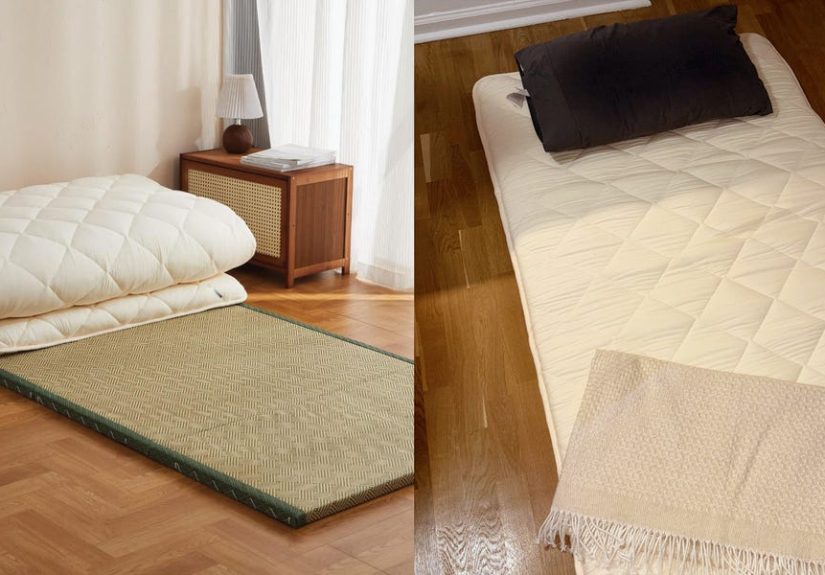
First, let’s clear up the great futon confusion. In the United States, “futon” often means a couch that folds flat and becomes a bed for guests you like just enough. A Japanese floor mattress, on the other hand, is usually a thinner, rollable sleep surface that sits directly on the floor or on tatami mats. It is designed to be folded, stored and brought out again, which makes it a favorite for small spaces, guest rooms and anyone pursuing a simpler, less furniture-heavy setup.
That flexibility is a huge part of the appeal. During the day, the mattress can be rolled up or folded away, instantly freeing up the room. It is the sleep-equivalent of having a friend who actually helps clean up after dinner. If you live in a studio apartment, host overnight guests or simply hate bulky furniture, the Japanese futon idea starts sounding very smart, very fast.
But a floor mattress is not just a regular mattress with fewer ambitions. It creates a different sleep experience because the support, height, airflow and pressure relief all change when your bed drops to floor level.
My First Night: “This Is Either Genius or a Terrible Decision”
The first thing I noticed was how low everything felt. Not just the mattress. Me. My expectations. My entire relationship with gravity. Lying down on a Japanese floor mattress felt strangely cozy, but also undeniably unfamiliar. There’s no bed frame, no bounce, no “ah yes, I have ascended onto my throne for the evening.” You are simply on the floor. Elegantly, perhaps. But still on the floor.
At first, the firmness was the biggest shock. It did not feel plush or cloudlike or remotely like the kind of mattress commercials where people swan-dive into a marshmallow kingdom. It felt supportive, flatter and more grounded. For a few minutes, I missed my regular mattress. Then something interesting happened: once I stopped expecting softness, I started appreciating stability.
I didn’t sink. My lower back didn’t feel like it was disappearing into a crater. My body felt more evenly supported. Falling asleep took a little longer than usual because my brain was busy shouting, “Why are we camping indoors?” But once I drifted off, I slept better than I expected.
What Happened After a Few Nights
My back felt surprisingly okay
This was the biggest surprise. A lot of people assume that the firmer the surface, the better the back support. That is not always true. In fact, going too hard can make sleep worse for some people, especially if the surface creates pressure points or throws off spinal alignment. What I noticed was that the Japanese floor mattress worked best when I paired it with the right pillow and sleep position. On my back, it felt stable and clean. On my side, it was a little less forgiving, especially around my shoulder and hip.
That means the mattress itself was not magic. It was a system. Pillow height mattered. My position mattered. Even how I got into bed mattered. This setup rewarded small adjustments and punished lazy assumptions.
I slept cooler
Another pleasant surprise: I felt less overheated. Floor sleeping can feel cooler than sleeping on a thick mattress, especially if your regular bed traps heat. If you tend to run warm at night, this can be a real perk. My bedroom didn’t suddenly turn into a breezy mountain retreat, but the surface itself felt less heat-retentive than my usual setup.
Mornings were a mixed bag
Waking up on a floor mattress was great for my sense of minimalism and not-so-great for my dramatic morning joints. The actual sleep quality was decent, but getting up required a little more coordination than usual. If you are young, mobile and at peace with using your legs before coffee, this may be a nonissue. If your knees complain, your hips negotiate and your lower back likes to file formal grievances, the floor-height setup can become annoying fast.
The Real Pros of Sleeping on a Japanese Floor Mattress
1. It saves a ridiculous amount of space
This is the most obvious win. When rolled up or folded away, a Japanese floor mattress gives your room back. A bedroom can double as an office, workout space or lounge without a giant mattress dominating the square footage.
2. It encourages a simpler, cleaner setup
There is something refreshing about a low-profile sleep setup. It can make a room feel calmer and less cluttered. If you like minimalist interiors, a Japanese futon fits right in without trying too hard.
3. It can feel more supportive than a sagging mattress
If your current bed is too soft, too old or too mushy in the middle, a floor mattress may feel surprisingly better. The stable support can help some sleepers feel more aligned, particularly back sleepers who hate the sensation of sinking.
4. It is easy to store for guests
This might be my favorite practical benefit. A Japanese floor mattress is far easier to store than an air mattress, and much less annoying than trying to act enthusiastic about a sleeper sofa. Roll it up, put it away and reclaim the room.
The Cons Nobody Should Pretend Don’t Matter
1. It is not ideal for everyone’s body
If you are a dedicated side sleeper, the thinner feel can be a challenge. More pressure can build up at the shoulders and hips, especially if the mattress is too thin for your body weight or comfort preferences. Some people love that “firm and grounded” feeling. Others wake up feeling like their shoulder has submitted a resignation letter.
2. Getting up and down is the hidden workout
This is the part minimalist influencers sometimes skip over. A low sleeping surface means more bending, more squatting and more pushing yourself upright. For people with mobility limitations, joint pain or balance concerns, that is not a small issue. It can be the issue.
3. Moisture and airflow are real concerns
Mattresses need airflow. Put any sleep surface too close to the floor in a humid room and you increase the risk of trapped moisture, musty smells and general “why does this smell like a damp cardboard box?” energy. This is why Japanese futons are often aired out, rotated and paired with surfaces that allow ventilation. If you live in a humid climate, maintenance is not optional. It is part of the deal.
4. It may not be the best long-term solution for chronic pain
A firm sleep surface can feel great for some people, but “harder” is not universally healthier. People with chronic back pain, neck pain, arthritis or pressure-sensitive joints often do better with a medium-firm setup that balances support with cushioning. So while a Japanese floor mattress can work, it should not be treated like a miracle cure wrapped in cotton.
Who Will Probably Love It
- People living in small apartments or multipurpose spaces
- Minimalists who want a flexible, low-clutter bedroom
- Back sleepers who prefer stable, firmer support
- Guest-room hosts who want a practical sleep option
- Anyone whose current mattress feels too soft or too hot
Who Should Probably Think Twice
- People with mobility limitations or trouble getting up from low surfaces
- Side sleepers who need serious pressure relief
- Anyone with chronic pain who already knows ultra-firm surfaces are a bad match
- People in very humid homes who will not realistically air out and rotate the mattress
- Sleepers who want that plush, elevated, hotel-bed feeling
How I’d Make the Setup Better Next Time
Add a breathable layer underneath
If I were using a Japanese floor mattress full-time, I would not just throw it on the floor and hope for the best. I would use tatami mats, a slatted base or at least a setup that improves airflow underneath. This matters for comfort, hygiene and the lifespan of the mattress.
Get serious about pillow strategy
The mattress and pillow have to cooperate. A floor mattress with the wrong pillow can make your neck feel like it attended a wrestling match. A lower, supportive pillow worked better for me than an overstuffed one.
Air it out regularly
A Japanese floor mattress is not a “set it and forget it” product. It needs to be aired out, rotated and kept dry. That small bit of upkeep is the difference between serene minimalist sleep and a musty science experiment.
So, Would I Sleep on a Japanese Floor Mattress Again?
Yes, with a few conditions. I would absolutely use one for guests, short-term stays, small-space living or phases when I want a room to be flexible. I would also use one personally for periods of time, especially if my regular mattress started feeling too soft or too hot. But would I tell every person on Earth to ditch their bed frame and embrace the floor forever? No. That would be unhinged.
The biggest lesson from this experiment is that sleeping well is less about trends and more about fit. A Japanese floor mattress can be comfortable, practical and genuinely impressive, but only if it matches your body, your room and your willingness to maintain it. For the right sleeper, it is a smart, simple solution. For the wrong sleeper, it is just stylish discomfort with excellent storage benefits.
In my case, the experience was better than expected. I slept cooler, felt more supported than I anticipated and enjoyed the space-saving design. But I also learned that a low sleeping surface asks more from your body and your routine. It is not just a different mattress. It is a different way of living with your bedroom.
My Extended Experience Sleeping on a Japanese Floor Mattress
By the third night, the novelty had worn off, which is exactly when the useful observations started. The first night was mostly curiosity. The second night was comparison. The third night was where my body stopped being polite and started being honest. And honestly? It adapted better than I expected.
I started noticing small things. For one, I felt more intentional about bedtime. Because the setup was lower and simpler, I naturally tidied the area before sleep. I folded blankets more neatly, kept clutter off the floor and paid more attention to the overall environment. It sounds minor, but the whole room felt calmer. My usual bed can become a launching pad for laundry, books, chargers and vague life chaos. The floor mattress somehow discouraged that. It said, very quietly, “Please do not put six unfolded hoodies on me.”
There was also a psychological shift. Sleeping closer to the ground made the room feel bigger, not smaller. The ceiling looked higher. The furniture felt less dominant. The space had a clean, almost hotel-like simplicity, except without the tiny $14 cashews in a minibar. During the day, once I rolled the mattress up, the room transformed again. That flexibility was genuinely satisfying in a way I did not expect.
Comfort-wise, I found that my best sleep came when I treated the setup like a deliberate system instead of a random mattress on the floor. I used lighter bedding, chose a pillow that did not push my neck too far forward and paid attention to how my shoulders felt when side sleeping. On nights when I slept on my back, I woke up feeling pretty good. Not “I have discovered enlightenment” good, but definitely “my spine is not sending angry emails” good.
On side-sleeping nights, the story changed a bit. The firmness that felt so stable on my back started feeling less generous on my shoulder and hip. Not painful, exactly, but noticeable. This is where I think a lot of people get tripped up with Japanese floor mattresses. They assume a traditional setup will automatically feel better because it sounds disciplined and elegant. But your body does not care about aesthetics. Your shoulder certainly doesn’t.
The other reality check came in the morning. Getting out of bed is easy when your bed is chair height. Getting up from a floor mattress requires at least a tiny amount of commitment. I would not call it difficult, but it was enough to remind me that this setup favors people who are comfortable moving easily from the floor to standing. If you are stiff, injured or just not in the mood to perform a mini lunge before breakfast, you will notice the difference.
Still, I came away impressed. The Japanese floor mattress did not feel like a gimmick. It felt like a smart, culturally grounded sleep solution that can work beautifully for the right person. It saved space, looked clean and gave me a surprisingly solid night’s sleep. I would not crown it the one true bed for all humanity, but I also would not dismiss it as a minimalist stunt. It earned my respect, my curiosity and, for a few nights, my full body weight.
Conclusion
Sleeping on a Japanese floor mattress turned out to be less “extreme sleep experiment” and more “smart alternative with a learning curve.” It worked best when I respected what it was designed to do: offer a simple, supportive, storable sleep surface instead of a plush Western mattress clone. If you want flexibility, cooler sleep and a minimalist bedroom setup, it may be worth trying. Just go in with realistic expectations, good pillow judgment and enough humility to admit that your knees may have opinions.