Table of Contents >> Show >> Hide
- What Is the Michael Scott Economy?
- Why Michael Scott Is the Perfect Mascot
- The Hot Labor Market: When Good News Gets Complicated
- The Great Resignation Was Not Just QuittingIt Was Repricing Work
- The Michael Scott Paper Company: A Tiny Case Study in Bad Pricing
- Inflation: The Toby of the Economy
- Management Lessons from the Michael Scott Economy
- Why the Phrase Still Matters
- Experience: What the Michael Scott Economy Feels Like in Real Life
- Conclusion: The Joke Is Funny Because It Is True
- SEO Tags
Every era gets the economic metaphor it deserves. The 1970s had “stagflation.” The 2000s had “too big to fail.” The early 2020s, in all their awkward glory, gave us something stranger, funnier, and weirdly accurate: The Michael Scott Economy.
At first, the phrase sounds like a joke scribbled on a Dundie Award. But it captures a very real puzzle: What happens when an economy looks strong in ways that also make experts nervous? Too many job openings. Wages rising quickly. Consumers still spending. Businesses still hiring. Workers finally getting leverage. And yet, behind the confetti cannon, inflation is lurking in the conference room like Toby Flenderson with paperwork.
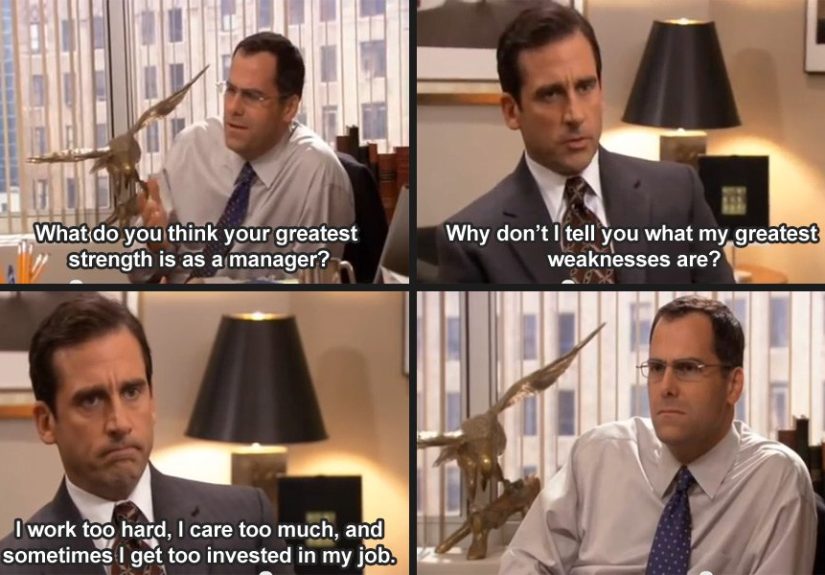
The Michael Scott Economy is not an official economic theory. No central banker is presenting it with a laser pointer, though honestly, that meeting would be appointment television. It is a useful pop-culture shorthand for an economy whose “weaknesses” sound suspiciously like strengths. Like Michael Scott listing his flaws in a job interview, the economy says, “My biggest weakness? I care too much. Also, everyone has a job and paychecks are getting bigger.”
Funny? Yes. But beneath the joke is a serious discussion about labor markets, inflation, management, small business survival, and the strange emotional life of modern work.
What Is the Michael Scott Economy?
The phrase “Michael Scott Economy” became popular as a playful way to describe the post-pandemic U.S. economy, especially around 2022, when the labor market was unusually hot. Employers were adding hundreds of thousands of jobs per month, unemployment was historically low, and workers had more power to change jobs, ask for raises, or rethink what they wanted from work.
That sounds wonderful, and for many workers, parts of it were. After years of stagnant wages in some industries, the Great Resignation gave employees a rare chance to say, “Actually, I would like better pay, flexibility, respect, and maybe a manager who does not schedule a surprise meeting called ‘Mandatory Fun.’”
But economists and policymakers saw another side. A very tight labor market can push wages higher. Higher wages can support consumer spending. Strong demand can make it harder for inflation to cool. If inflation stays hot, the Federal Reserve may raise interest rates to slow the economy. That can reduce hiring, cool demand, and possibly trigger a recession.
In other words, the economy was strong in a way that made people worry it might become too strong. That is the Michael Scott part. The “weakness” was also the brag.
Why Michael Scott Is the Perfect Mascot
Michael Scott, the fictional regional manager of Dunder Mifflin Scranton in The Office, is one of television’s greatest examples of chaotic confidence. He is often wrong, frequently inappropriate, and almost always convinced he is nailing it. Yet the Scranton branch somehow survives. Sometimes, it even performs better than expected.
That contradiction is the point. Michael is bad at many textbook management behaviors, but he is not useless. He cares about his people. He knows customers. He can sell. He builds loyalty in ways that corporate spreadsheets do not always capture. He is both the problem and, occasionally, the weird solution.
The Michael Scott Economy works the same way. It looks messy. It produces contradictions. It makes experts uncomfortable. But it also reveals something valuable: economies are not machines made only of charts, rates, and forecasts. They are built from people making choices under pressure. Sometimes those choices are rational. Sometimes they are emotional. Sometimes they involve starting a paper company in a closet.
The Hot Labor Market: When Good News Gets Complicated
A strong labor market is usually good news. Jobs mean income. Income supports households. Households spend money. Businesses earn revenue. Workers gain confidence. Communities become more stable. In normal times, “more jobs” is the economic equivalent of free pretzel day.
But in the post-pandemic economy, good news became complicated. The labor market recovered quickly after the shock of COVID-19. Employers competed for workers. Many workers quit jobs for better opportunities. Wages rose, especially in lower-paid service sectors where employers had trouble staffing restaurants, stores, warehouses, and health care roles.
This was not just a spreadsheet story. It was a power shift. For a brief period, workers who had been told to be grateful for any job discovered that employers were suddenly grateful for any worker. The vibe changed. The office thermostat was still broken, but the bargaining power had moved a few degrees.
Then came inflation. Prices rose quickly across food, energy, housing, vehicles, and everyday goods. Some of that inflation came from supply chain problems, global commodity shocks, and pandemic-era demand shifts. But policymakers also watched wage growth closely because pay increases can keep demand strong. If companies raise wages and then raise prices to protect margins, inflation can become harder to control.
That is the central tension of the Michael Scott Economy: workers earning more is good, but inflation eating those gains is bad. A booming job market is good, but overheating can be risky. A soft landing sounds perfect, but so does Michael’s “World’s Best Boss” mug, and we all know mugs can lie.
The Great Resignation Was Not Just QuittingIt Was Repricing Work
The Great Resignation is often described as millions of Americans quitting their jobs. That is true, but incomplete. The bigger story is that workers were repricing work. They were asking, “What is this job really worth to me?”
For some, the answer was more money. For others, it was flexibility, remote work, better health benefits, career growth, or simply not being treated like an office chair with a login password. Surveys from the period showed that low pay, lack of advancement, and feeling disrespected were major reasons workers left jobs. That matters because it tells us the labor market was not only about wages. It was about dignity.
Michael Scott accidentally understood this better than many executives. His methods were disastrous, but his instinct was human: people want to feel seen. They want inside jokes, recognition, belonging, and proof that they are not just replaceable cells in a quarterly forecast. Unfortunately, Michael often tried to create belonging by crossing every professional boundary within a five-mile radius. Still, buried under the cringe was a truth: culture has economic value.
Businesses that ignored that truth paid for it. Hiring became harder. Retention became expensive. Training new employees took time. Customer service suffered when workers churned. Suddenly, “employee experience” was not a fluffy HR phrase. It was a business survival issue.
The Michael Scott Paper Company: A Tiny Case Study in Bad Pricing
No discussion of the Michael Scott Economy is complete without the Michael Scott Paper Company, one of the funniest accidental business-school case studies ever filmed.
After clashing with corporate leadership, Michael leaves Dunder Mifflin and starts his own paper company with Pam Beesly and Ryan Howard. At first, the startup looks scrappy and inspiring. They steal clients. They hustle. They make sales. They appear to be proving that big companies underestimate personal relationships.
Then reality shows up with a calculator.
The company is winning customers by charging prices that are too low to sustain the business. Growth looks impressive, but each new sale deepens the problem. Delivery costs, labor needs, overhead, and basic operations make the model unprofitable. It is the classic small-business trap: revenue is not the same thing as profit.
This is where the show becomes more than comedy. Many real businesses make the same mistake. They chase market share without understanding margins. They discount heavily to attract customers, then discover that scale does not magically fix a broken unit economics model. “We lose money on every order, but we’ll make it up in volume” is not a strategy. It is a cry for help wearing a blazer.
In the broader economy, the lesson applies to households, startups, and governments alike. Growth matters, but sustainable growth matters more. A hot economy can hide structural weaknesses for a while. A booming job market can mask productivity problems. Strong consumer spending can cover debt stress. Like Michael’s paper company, the numbers may look exciting until someone asks whether the model actually works.
Inflation: The Toby of the Economy
Inflation is the Toby Flenderson of economic life: everyone knows it has a job to do, but nobody is happy when it walks into the room.
When prices rise faster than wages, households feel poorer even if their paychecks are bigger. This is why the Michael Scott Economy can feel so confusing. A worker might get a raise and still feel squeezed by rent, groceries, gas, insurance, and child care. A company might report strong sales while customers complain that everything costs too much. A government report might show low unemployment while voters say the economy feels terrible.
That gap between data and lived experience is crucial. Economists often look at aggregate numbers. Families live in specific bills. If your grocery total jumps, your car insurance rises, and rent renews at a higher rate, you do not celebrate a national payroll report. You wonder why your budget now looks like Kevin spilled chili on it.
The Michael Scott Economy helps explain this contradiction. It says the economy can be technically strong while emotionally exhausting. It can create jobs and anxiety at the same time. It can deliver wage growth while making people feel like they are running on a treadmill that just increased speed without asking.
Management Lessons from the Michael Scott Economy
1. People Are Not Just Costs
Companies often talk about labor as an expense. It is, but that is only half the story. Workers are also the source of customer relationships, operational knowledge, creativity, and trust. Michael Scott’s greatest strength was that he understood people as people, not just headcount.
2. Culture Cannot Replace Competence
Michael cared deeply, but caring did not make him financially literate. The same is true in business. A fun culture cannot save bad pricing, poor strategy, weak training, or chaotic leadership. Free pizza is not a retirement plan.
3. Retention Is an Economic Strategy
During tight labor markets, replacing workers becomes expensive. Hiring takes longer. Wages rise. Institutional knowledge walks out the door. Companies that build trust before a labor shortage are better prepared when workers gain options.
4. Workers Remember How They Are Treated
The Great Resignation showed that employees do not quit only because of money. They quit because of disrespect, burnout, lack of flexibility, and limited growth. Pay matters, but workplace dignity compounds like interest.
5. A Strong Economy Still Needs Balance
Too little demand creates unemployment. Too much demand can fuel inflation. The goal is not to make workers weaker or businesses fearful. The goal is balance: enough job growth to support families, enough price stability to protect purchasing power, and enough productivity to make wage growth sustainable.
Why the Phrase Still Matters
The Michael Scott Economy remains useful because it captures the absurdity of modern economic debate. We want low unemployment, but not too low. We want rising wages, but not too fast. We want consumers to spend, but not so much that prices rise. We want businesses to hire, but not panic-hire. We want growth with stability, confidence without bubbles, and flexibility without chaos.
That is a lot to ask. It is basically asking the economy to be confident, humble, ambitious, calm, generous, efficient, and emotionally available. Michael Scott would absolutely put that on a dating profile.
Still, the phrase also reminds us to be careful with language. Calling a strong labor market “too hot” can sound strange to people who spent years hoping for better pay. Workers are not inflation gremlins. They are parents, renters, borrowers, caregivers, commuters, and consumers. If wages rise after years of pressure, that is not automatically a problem. The problem is when the economy cannot produce enough goods, services, housing, energy, and productivity to support better living standards without price spikes.
That distinction matters. The solution to inflation should not simply be “make workers less powerful.” A healthier answer includes stronger supply chains, more housing, smarter immigration and training policies, productivity-enhancing investment, competitive markets, and management that does not treat employees like office furniture with feelings.
Experience: What the Michael Scott Economy Feels Like in Real Life
To understand the Michael Scott Economy, imagine a small business owner trying to hire in a tight labor market. A few years earlier, applicants came quickly. Now, candidates ask about pay transparency, remote options, health benefits, scheduling flexibility, and promotion paths. The owner may feel frustrated and think, “Nobody wants to work anymore.” But after a closer look, the truth is more complicated: people do want to work. They just want the deal to make sense.
That experience is not limited to employers. Workers feel the same tension from the other side. Someone might accept a higher-paying job, celebrate for two weeks, and then realize that rent, groceries, and transportation have swallowed most of the raise. Another person might stay in a job because layoffs are low but hiring has slowed, creating a “low-hire, low-fire” mood. They are employed, but cautious. Secure, but not relaxed. It is the workplace equivalent of sitting through one of Michael’s conference room meetings: technically fine, emotionally unpredictable.
For managers, this economy teaches humility. A boss cannot assume loyalty just because employees are still showing up. Some workers stay because they love the mission. Others stay because switching jobs feels risky. Some are engaged; others are quietly doing exactly what the job description requires and not one spreadsheet more. The difference is not always visible in a Monday morning meeting.
The best real-world response is not to imitate Michael Scott’s chaos, but to learn from his rare strengths. Know your people. Talk to them before they are halfway out the door. Celebrate wins without turning every birthday into a hostage situation. Give feedback clearly. Explain business pressures honestly. If costs are rising, say so. If raises are limited, be transparent about why. Adults can handle difficult news better than vague corporate poetry.
For employees, the Michael Scott Economy is a reminder to think like both a worker and an economist. A higher salary matters, but so do benefits, commute time, job security, career growth, manager quality, and stress. A job with slightly lower pay but better flexibility may be worth more in real life than a bigger paycheck attached to constant burnout. Personal finance is not just income; it is the full cost of earning that income.
For entrepreneurs, the Michael Scott Paper Company offers the loudest warning. Do not confuse attention with traction. Do not confuse sales with profit. Do not price your product so low that every new customer politely pushes you closer to bankruptcy. Growth should make the business stronger, not just busier. A full calendar and an empty bank account are not signs of genius. They are signs that Oscar from accounting needs to be invited into the room immediately.
Most of all, this economy feels human. It is funny because it is familiar. We have all seen organizations that succeed despite themselves. We have all watched leaders make confident decisions with incomplete information. We have all experienced moments when the numbers say one thing and daily life says another. The Michael Scott Economy gives that contradiction a name, a face, and probably an awkward improv routine.
Conclusion: The Joke Is Funny Because It Is True
The Michael Scott Economy is not just a meme about a goofy boss. It is a sharp way to describe an economy full of contradictions: strong jobs but high anxiety, rising wages but rising prices, business growth but fragile margins, employee leverage but managerial confusion.
Its biggest lesson is that economies are lived, not merely measured. A labor market can be strong on paper while families still feel squeezed. A business can grow revenue while losing money. A manager can care deeply and still manage badly. A worker can earn more and still feel behind.
Michael Scott once made incompetence look strangely survivable. The economy has done the same at times. But survival is not the goal. A healthier economy should reward work, preserve purchasing power, encourage sustainable business models, and treat people as more than inputs in a formula.
That may sound ambitious. But as Michael would say, you miss 100% of the shots you do not take. Wayne Gretzky said that first, of course. Michael just made it an economic mood.