Table of Contents >> Show >> Hide
- What Is a Domain Extension?
- Why Domain Extensions Matter
- Main Types of Domain Extensions
- The Most Popular Domain Extensions and What They Mean
- Do Domain Extensions Affect SEO?
- How to Choose the Best Domain Extension
- Common Domain Extension Mistakes
- Domain Extensions for Different Website Goals
- Should You Buy Multiple Domain Extensions?
- Practical Checklist Before Registering a Domain Extension
- of Real-World Experience: What Domain Extensions Teach You After You Use Them
- Conclusion
Choosing a domain extension can feel strangely dramatic. You start with a simple idea“I need a website”and suddenly you are comparing .com, .net, .org, .co, .io, .ai, .shop, and enough other endings to make your browser tab sigh. The good news? Domain extensions are not magic spells. They are practical tools that help users, search engines, and the domain name system understand where your website lives and, sometimes, what kind of brand you are building.
A domain extension, also called a top-level domain or TLD, is the final part of a web address. In example.com, the extension is .com. In charity.org, it is .org. In startup.ai, it is .ai. That tiny ending can influence branding, trust, memorability, international targeting, pricing, availability, and user expectations. It usually will not make or break your SEO by itself, but it absolutely affects how people perceive your site before they even click.
This complete guide to domain extensions explains what they are, how they work, which types exist, how to choose the right one, and what mistakes to avoid. Think of it as a friendly map through the land of dotsminus the confusing registrar jargon and the “limited-time offer” panic buttons.
What Is a Domain Extension?
A domain extension is the suffix at the end of a domain name. It sits at the highest visible level of a website address and helps route traffic through the domain name system, commonly known as DNS. When someone types a domain into a browser, DNS helps translate that human-friendly name into the technical information computers need to find the correct server.
For example, in mybakery.com, the word “mybakery” is the second-level domain, while .com is the domain extension. Together, they form a complete domain name. The extension may look small, but it plays a big role in identity. A law firm using .law, a nonprofit using .org, and a local French company using .fr are all sending subtle signals before visitors read a single headline.
Why Domain Extensions Matter
Domain extensions matter because people make fast judgments online. A familiar extension can make a website feel established. A niche extension can make a brand feel modern or industry-specific. A country-code extension can signal local relevance. A strange or spammy-looking extension, unfortunately, can make users hesitate.
From a technical perspective, a valid extension allows your domain to function within the global DNS. From a marketing perspective, it shapes first impressions. From a business perspective, it affects cost, renewal rules, ownership restrictions, and long-term brand protection. That is a lot of responsibility for a few letters after a dot.
Main Types of Domain Extensions
1. Generic Top-Level Domains (gTLDs)
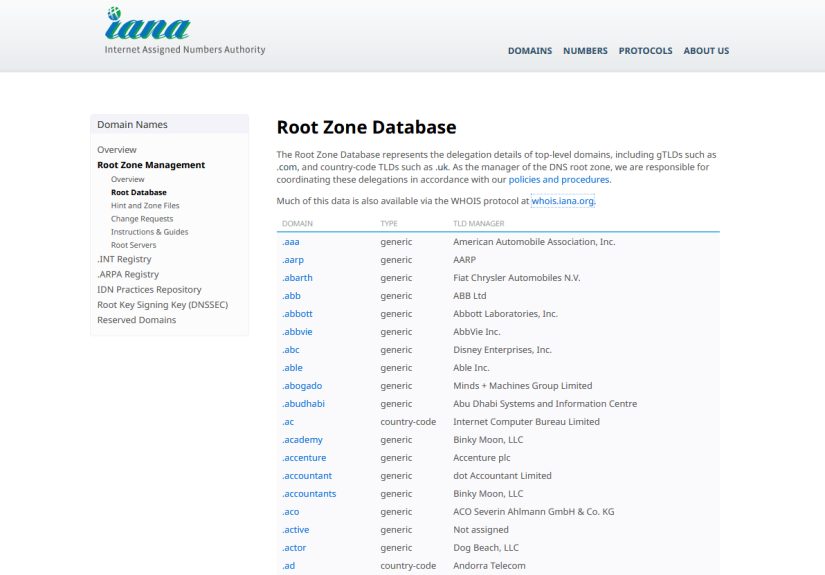
Generic top-level domains are broad, general-use extensions. The classic examples include .com, .net, and .org. These are widely recognized and commonly used around the world. Many newer generic extensions also exist, such as .app, .shop, .blog, .design, .tech, and .online.
The main advantage of a gTLD is flexibility. A business, blog, portfolio, SaaS product, community, or online store can usually use one without needing to prove a local presence. However, not every extension has the same reputation. A clean, relevant gTLD can support your brand. A confusing one may require more explanation than it is worth.
2. Country-Code Top-Level Domains (ccTLDs)
Country-code top-level domains are usually two-letter extensions assigned to countries or territories. Examples include .us for the United States, .uk for the United Kingdom, .ca for Canada, .de for Germany, .jp for Japan, and .vn for Vietnam.
These extensions can be powerful for local businesses. A company targeting customers in Canada may benefit from a .ca domain because it feels familiar to Canadian users. A business focused only on Germany may choose .de to strengthen local trust. Some ccTLDs have registration restrictions, while others are marketed globally. For example, .io, .co, and .ai began as country-code domains but are widely used by startups and tech companies.
3. Sponsored Top-Level Domains
Sponsored top-level domains are managed for specific communities, industries, or organizations. Examples include .edu, .gov, and .mil. These are not open to everyone. Their restrictions are part of what makes them trustworthy. A random online store cannot simply grab a .gov domain because it likes the serious government vibe. The internet has rules, even if your inbox spam folder suggests otherwise.
4. New Generic Top-Level Domains
New generic TLDs expanded the domain market far beyond the traditional choices. Today, businesses can choose descriptive extensions such as .store, .agency, .media, .finance, .restaurant, .photography, and many more. These extensions can help create short, brandable domains when the matching .com is unavailable or extremely expensive.
For example, a design studio might use brightpixel.design. A coffee company might use freshbeans.coffee. A software tool might use taskflow.app. These domains can look polished when the extension fits the brand naturally. The key is relevance. A bakery using .accountant would be memorable, yesbut mostly because people would wonder what happened.
The Most Popular Domain Extensions and What They Mean
.com
.com remains the most recognized domain extension. Originally associated with commercial websites, it is now used by nearly every type of site imaginable. Its biggest strength is familiarity. People often assume a business uses .com, which makes it easier to remember and type.
.org
.org is commonly associated with nonprofits, communities, open-source projects, educational resources, and mission-driven organizations. It is not limited only to nonprofits in many cases, but users often expect a .org site to be informational or cause-focused.
.net
.net was originally connected to networks and infrastructure-related businesses. Today, it is often used as an alternative when a desired .com is unavailable. It can still work well for technology, hosting, software, and internet-related services.
.co
.co is short, clean, and popular with startups. It is technically a country-code extension, but many brands use it as a shorthand for “company.” The downside is that users may accidentally type .com instead, so strong branding matters.
.io
.io is widely used in the tech and startup world. It can feel modern and developer-friendly. However, it may be less familiar to general audiences, so it works best when your users already understand startup-style naming.
.ai
.ai has become especially popular with artificial intelligence companies, tools, and platforms. It communicates a clear industry signal. The tradeoff is that popular .ai domains can be expensive, and not every business needs to look like it has a robot hiding in the break room.
.shop, .store, and .online
These extensions are straightforward and descriptive. They can work well for ecommerce brands, digital products, creators, and small businesses. Their clarity is useful, but they may not carry the same automatic trust as .com, especially for older or less technical audiences.
Do Domain Extensions Affect SEO?
A domain extension is not a magic ranking button. Search engines care far more about content quality, relevance, crawlability, page experience, backlinks, helpfulness, and user satisfaction. A weak website on .com will not outrank a better website simply because it has the classic extension.
That said, domain extensions can influence SEO indirectly. A trusted, memorable domain may earn more clicks. A clear brand name may attract more links. A country-code extension can help communicate geographic focus for local or regional targeting. A suspicious-looking extension may reduce user confidence, which can hurt engagement and conversions.
For international SEO, the decision matters more. A business targeting one country may prefer a ccTLD, such as .ca or .de. A global brand may prefer a generic extension with subdirectories, such as example.com/fr/ and example.com/de/. There is no universal winner. The best structure depends on your audience, resources, content strategy, and long-term expansion plans.
How to Choose the Best Domain Extension
Start With Your Audience
Ask who will visit your site. If you are building a U.S.-focused service business, .com is usually a safe choice. If you run a local business in a specific country, a ccTLD may feel more trustworthy. If you serve developers, creators, or startup founders, a newer extension may feel natural instead of risky.
Match the Extension to Your Brand
Your extension should support the story your brand is already telling. A creative studio can use .studio. A mobile app can use .app. A nonprofit campaign can use .org. A retail store can use .shop. The extension should feel like a finishing touch, not a costume.
Keep It Easy to Say, Spell, and Remember
The “radio test” still matters. If someone hears your domain in a podcast, meeting, video, or conversation, can they spell it correctly? GreenLeaf.com is easy. Green-Leaf-Online.biz is the kind of domain that makes people suddenly remember they have another tab to open.
Check Renewal Costs
Some domain extensions are cheap in the first year but expensive at renewal. Others have premium pricing for short or desirable names. Always check both the registration price and the renewal price before buying. A domain that costs a few dollars today but hundreds next year may not be the bargain it appears to be.
Look for Restrictions
Some extensions have eligibility rules. Certain country-code domains require local presence. Some professional or industry extensions may have verification requirements. Before building a brand around an extension, make sure you can legally and practically keep using it.
Think About Brand Protection
If your brand name is important, consider registering several key extensions. You may own yourbrand.com, but also register yourbrand.net, yourbrand.org, or important country versions to prevent confusion. You do not need to buy every extension on earth. That way lies madness, invoices, and a spreadsheet named “domains_final_FINAL_v7.” Focus on the ones customers are most likely to type or competitors are most likely to misuse.
Common Domain Extension Mistakes
Choosing Weird Just Because It Is Available
Availability is not the same as strategy. A strange extension may let you get the exact brand name you want, but it might also confuse customers. If your domain requires a 30-second explanation, it may not be helping.
Ignoring User Trust
Some users are cautious about unfamiliar extensions, especially when money, health, finance, or personal data is involved. If you run an ecommerce store, legal service, medical site, or financial platform, trust is critical. Choose an extension that feels credible to your specific audience.
Forgetting Email Deliverability
Your domain extension also appears in your email address. A clean professional email like [email protected] is easier to trust than a confusing address with an obscure ending. Email authentication, including SPF, DKIM, and DMARC, matters too, but the domain itself is part of the first impression.
Not Setting Auto-Renew
Letting a domain expire can be disastrous. Your website can go offline, your email can stop working, and someone else may eventually acquire the name. Turn on auto-renew, keep payment details updated, and use a registrar account protected by strong authentication.
Buying a Trademark Problem
Do not register a domain that includes another company’s protected brand name. A domain may be available for purchase and still be legally risky. Before buying, search for existing businesses, trademarks, and confusingly similar names. A cheap domain can become expensive very quickly if it invites a dispute.
Domain Extensions for Different Website Goals
For Small Businesses
Most small businesses should start by looking for a strong .com or a trusted local ccTLD. If those are unavailable, consider a clear industry extension such as .shop, .services, .agency, or .studio. The best choice is one customers can remember after seeing it once.
For Blogs and Publishers
Blogs can do well with .com, .blog, .media, or .online. If your blog is personal, brandable names matter more than exact keywords. A memorable domain gives readers something to return to and share.
For Nonprofits and Communities
.org is still a strong choice for nonprofits, advocacy groups, open-source communities, and educational resources. It signals mission and public value. However, nonprofits should also consider registering the matching .com if available to reduce confusion.
For Tech Startups
Tech startups often consider .com, .io, .ai, .app, .dev, and .tech. These can work well when they align with the product. Just remember that investor-friendly does not always mean customer-friendly. If your audience is mainstream, clarity beats cleverness.
For Ecommerce Stores
Ecommerce brands need trust, simplicity, and memorability. .com remains strong, but .shop and .store can also work when paired with a great brand name. Avoid extensions that look suspicious or bargain-bin if you expect users to enter credit card information.
Should You Buy Multiple Domain Extensions?
Buying multiple domain extensions can be smart, but only when done strategically. At minimum, many businesses try to secure their main domain and a few obvious variations. For example, if you own brightdesk.com, you might also register brightdesk.net and brightdesk.co if they are affordable and relevant.
You can redirect secondary domains to your main website. This helps capture mistyped traffic and prevents basic brand confusion. However, buying dozens of extensions rarely makes sense for a small project. Renewal fees add up, and unused domains can become a maintenance headache. Protect what matters, skip what does not, and resist the registrar checkout page when it starts whispering, “You may also like .ninja.”
Practical Checklist Before Registering a Domain Extension
- Is the extension familiar to your target audience?
- Does it match your business type, location, or industry?
- Is the full domain easy to say, spell, and remember?
- Are the first-year and renewal prices reasonable?
- Are there any registration restrictions?
- Could the domain create trademark or brand confusion?
- Will the email address look professional?
- Can you secure important variations for brand protection?
- Does the domain still make sense if your business expands?
of Real-World Experience: What Domain Extensions Teach You After You Use Them
After working with domain names for real websites, one lesson becomes obvious: the “best” domain extension is not always the fanciest one. It is the one people can remember, trust, and use without needing instructions. On paper, a clever domain hack may look brilliant. In real life, customers mistype it, sales teams explain it repeatedly, and someone eventually asks, “Wait, is that the whole website?” That is when the shine wears off.
The most reliable experience is still with clear, simple domains. A strong .com remains easy to recommend because people understand it instantly. When a business card, podcast mention, YouTube description, or email signature includes a .com, there is almost no friction. People know what to do. That familiarity is valuable, especially for local services, consultants, online stores, and brands targeting broad audiences.
However, newer extensions can work beautifully when the match is natural. A productivity app using .app feels clean. A design portfolio using .design feels intentional. An AI software company using .ai instantly tells users what category it belongs to. The problem begins when the extension is chosen only because the preferred .com was unavailable. A random extension attached to a weak name does not create a brand; it creates a puzzle.
Another practical lesson is that renewal pricing deserves more attention than registration pricing. Many beginners celebrate a low first-year price without checking what happens in year two. Domains are long-term assets. If your website grows, your domain becomes harder to replace. A painful renewal fee may not matter for a side experiment, but it matters a lot for a serious brand with email accounts, backlinks, search visibility, customer bookmarks, and printed marketing materials.
Brand protection is also more important than it seems at the beginning. When a project is small, buying extra extensions feels unnecessary. Once the brand gains traffic, lookalike domains become more tempting to others. You do not need to register every possible ending, but owning the most obvious alternatives can prevent confusion. At the very least, secure your main extension, common misspellings if they are realistic, and important country extensions if you plan to operate internationally.
Email is another overlooked issue. People often choose a domain based only on the website address, then later realize the email address looks awkward. A domain should work in an inbox as well as in a browser. If users hesitate before opening your email because the extension looks unfamiliar, your marketing and customer support may suffer.
The final lesson is simple: choose for the future, not just for today. Your domain extension should still make sense when your site grows, your product changes, or your audience expands. A hyper-specific extension may be perfect for a narrow launch but limiting later. A flexible, trustworthy extension gives your brand room to evolve. In the end, domain extensions are not just technical labels. They are tiny brand decisions that follow you everywhere online.
Conclusion
Domain extensions are small, but they carry real strategic weight. They shape trust, branding, local relevance, memorability, email identity, and long-term protection. The safest choice for many businesses is still a strong .com, but it is not the only smart option. Country-code extensions can support local targeting, .org can strengthen mission-based brands, and newer extensions like .app, .shop, .design, and .ai can work well when they fit the audience and purpose.
The best domain extension is not the trendiest one. It is the one that makes your website easier to trust, easier to remember, and easier to grow. Choose carefully, check the details, protect your brand, and never let a checkout discount pressure you into a domain you will regret. The dot may be tiny, but the decision deserves a grown-up amount of attention.