Table of Contents >> Show >> Hide
- Why Children Around the World Make Such Powerful Photo Subjects
- The First Lesson: Children Are Not Props
- Building Trust Before Pressing the Shutter
- What Local Children Can Teach Us About Culture
- The Beauty of Play Across Borders
- Avoiding Stereotypes in Travel Portraits
- How to Photograph Children Respectfully While Traveling
- Camera Tips for Warm and Natural Child Portraits
- What This Journey Reveals About Childhood
- Why These Photos Matter in a Fast-Scrolling World
- Additional Field Notes: Experiences From Photographing Local Children Around the World
- Conclusion
Travel has a funny way of making adults feel very important. We buy the right backpack, compare lens filters as if they are rare spices, and announce that we are “going off-grid” while secretly checking whether the hotel has Wi-Fi strong enough to upload a carousel. Then a child runs past with a paper kite, a plastic truck, or a soccer ball made from whatever life had lying around, and suddenly all our grown-up drama looks wonderfully ridiculous.
That is the quiet magic behind photographing local children around the world. It is not about collecting cute faces like postcards. It is not about turning childhood into a souvenir. At its best, children photography is about paying attention to the universal language of play, curiosity, family, shyness, laughter, and that mysterious ability kids have to turn a plain sidewalk into a kingdom before lunch.
The idea behind the journey is simple: travel across countries, meet families, spend time in neighborhoods, observe how children live, learn, play, and express themselves, then create portraits that feel honest, warm, and respectful. But the actual work is anything but simple. Photographing children while traveling requires more than a good camera. It demands patience, consent, cultural sensitivity, and the humility to understand that a person’s life is not a backdrop for your portfolio.
Why Children Around the World Make Such Powerful Photo Subjects
Children are often the first to reveal the emotional temperature of a place. Adults may carefully arrange their expressions for a camera, but children tend to tell the truth with their feet, hands, eyes, and posture. A child leaning into a grandmother’s lap in a village courtyard, another racing through a city alley after a ball, another proudly showing a handmade toythese scenes can say more about a culture than a dozen travel brochures promising “authentic experiences.”
Photographers have long been drawn to childhood because it reflects both difference and sameness. The clothes, homes, games, school routines, and family traditions may change from country to country. Yet the emotions are instantly familiar. A shy smile in Poland, a burst of laughter in Mexico, a serious little stare in Morocco, or a giggling group of children in the Philippines can all remind viewers that childhood is both local and universal.
That balance is what makes world travel photography so meaningful. A good image does not flatten children into symbols of poverty, innocence, hardship, or joy. It allows them to remain specific. They are not “a child from somewhere far away.” They are a child in a real place, with a real family, a favorite game, a morning routine, a grumpy mood, a missing sock, and possibly a strong opinion about snacks.
The First Lesson: Children Are Not Props
Let’s get the most important point out of the camera bag: children are not props. They are not decorative elements for a dreamy travel feed, and they are not there to make a photographer look adventurous, compassionate, or interesting. Any photographer who travels to take photos of local children must begin with respect, not aesthetics.
That means asking permission from a parent or guardian, and when possible, from the child as well. A child may not understand every future use of an image, but they can absolutely communicate comfort or discomfort. A turned shoulder, a stiff face, or a sudden silence is not a challenge to overcome. It is information. The correct response is not “just one more shot.” The correct response is to lower the camera.
Ethical travel photography also means explaining why the photo is being taken and where it may appear. Will it be used in a blog article? A social media post? A portfolio? A gallery? A book? The family deserves to know. Consent is not a magical checkbox. It is a conversation, and sometimes that conversation ends with “no.” A respectful photographer accepts that answer with grace, even if the light is perfect and the composition is practically begging for applause.
Building Trust Before Pressing the Shutter
The strongest portraits rarely happen in the first thirty seconds. They happen after tea, after conversation, after the child has decided the camera is not a strange metal monster, and after the photographer has stopped behaving like a person hunting for “content.”
In many places, the most valuable tool is not a lens; it is time. Spend time with local families. Learn basic greetings. Ask about routines. Watch how children naturally play before suggesting anything. Better yet, do not suggest much at all. The more a photographer tries to direct a child into a perfect moment, the faster the picture can become stiff, fake, and about as natural as a tourist pretending to know how to ride a camel gracefully.
Some of the most memorable images of children are not posed in the traditional sense. They are observed. A child arranging toy animals in a careful line. A brother and sister arguing over a kite. A group of friends turning a dusty field into a stadium. These moments work because they are rooted in real behavior. They allow children to be themselves, not miniature actors in an adult’s visual fantasy.
What Local Children Can Teach Us About Culture
Photographing children around the world can reveal small cultural details that are easy to miss. In one country, children may gather in courtyards while grandparents sit nearby. In another, play may happen in apartment hallways, schoolyards, beaches, temple steps, farms, or busy streets where scooters buzz past like caffeinated bees. The setting shapes the image, but it also tells a story about community life.
Toys are especially revealing. Some children have shelves full of store-bought dolls, cars, blocks, and electronic gadgets. Others build their fun from sticks, bottle caps, string, cloth, stones, or imaginationthe original open-source software. Neither scene should be romanticized or judged too quickly. A child with many toys is not automatically spoiled, and a child with handmade toys should not be used as a symbol of noble simplicity. Good photography notices without reducing.
Clothing, too, can tell a story. Traditional dress may appear during festivals, ceremonies, weddings, or family celebrations. School uniforms may reveal local education systems and daily discipline. Bare feet, winter coats, rain boots, sports jerseys, hair ribbons, and dusty sandals all carry texture. The photographer’s job is not to force meaning onto these details but to observe how they belong to the child’s real environment.
The Beauty of Play Across Borders
If there is one theme that appears almost everywhere, it is play. Children play in crowded cities, rural villages, refugee camps, suburban lawns, mountain paths, beaches, markets, and living rooms. They play when adults are watching and when adults are busy. They play with expensive toys, improvised toys, no toys, other children, animals, shadows, puddles, and occasionally the photographer’s shoelaces.
Play matters because it is not just “kids being kids.” It is how children learn cooperation, risk, creativity, language, problem-solving, and emotional control. A group of children inventing rules for a street game may be doing more social negotiation than a boardroom full of adults with matching notebooks. The difference is that the children usually get better snacks.
Photographing play can create warm, energetic images, but it also requires caution. The photographer should avoid interrupting the moment or encouraging dangerous behavior. A child climbing a wall, running into traffic, or performing a risky trick should not be pushed for a better frame. The best travel photographers know that no picture is worth a child’s safety.
Avoiding Stereotypes in Travel Portraits
One of the biggest mistakes in photographing local children is leaning into stereotypes. Too often, images from certain countries are framed only through hardship, while images from wealthier places are framed through comfort or possibility. This creates a lazy visual map of the world: some children become symbols of need, others symbols of normal life. Real childhood is much more complicated.
A child in a low-income community may be joyful, clever, stylish, bored, ambitious, mischievous, or deeply loved. A child in a wealthy neighborhood may be lonely, pressured, anxious, imaginative, or hilarious. A respectful photo essay allows emotional range. It avoids the tired habit of using children’s faces to make viewers feel pity, guilt, or quick inspiration before scrolling to lunch photos.
Responsible storytelling also means being careful with captions. Names, exact locations, school details, family circumstances, and sensitive personal information should never be shared casually. A beautiful image can become harmful if the caption exposes a child to stigma, unwanted attention, or privacy risks. In the internet age, a photo does not simply appear and disappear. It travels, copies, resurfaces, and sometimes wanders into places the photographer never intended.
How to Photograph Children Respectfully While Traveling
Ask Before You Shoot
Permission should come first. Ask a parent or guardian, and include the child in the process whenever possible. Use clear, simple language. If there is a language barrier, work with a trusted local guide or translator. Smiling and pointing at your camera may be common, but it is not always enough for informed consent.
Let Children Lead the Energy
Some children love the camera. Others treat it with suspicion, which is fair because cameras are basically tiny one-eyed robots. Let the child’s comfort level set the pace. If they want to show their toy, their drawing, their soccer ball, or their favorite corner of the yard, follow that lead. The resulting photo will usually feel more alive.
Do Not Stage False Stories
A portrait can be arranged without being dishonest. Asking a child to stand near a window is different from asking them to pretend to be sad, poor, lonely, or dramatic. Do not manufacture emotion. Do not move objects into the frame to create a stronger narrative. Do not ask children to perform hardship. Real life already has enough depth.
Share the Image When You Can
One of the simplest gestures is showing the photo to the child and family. The back of the camera can become a tiny theater. Children laugh, parents adjust hair, siblings demand equal screen time, and everyone suddenly becomes an art director. If possible, send the family copies later. Photography should not be a one-way extraction.
Camera Tips for Warm and Natural Child Portraits
Technically, photographing children is like photographing lightning with opinions. They move quickly, change expressions without warning, and rarely care about your carefully planned composition. A fast shutter speed helps capture movement, especially during play. Natural light is often more flattering and less intrusive than flash. A longer lens can give shy children space, while a wider lens can include more of the environment.
Focus on the eyes when making portraits, but do not obsess over perfection. Some of the best travel photos are slightly messy. A blurred hand, wind-tangled hair, uneven shadows, or a crooked smile can make an image feel honest. Childhood is not a studio catalog. It is motion, noise, crumbs, curiosity, and someone yelling, “Look what I found!” from three rooms away.
Composition matters, but context matters more. A tight portrait can be beautiful, yet environmental portraits often tell richer stories. Include the doorway, the family kitchen, the school wall, the mountain path, the market stall, the toy shelf, the dusty field, or the painted fence. These details help viewers understand where the child belongs.
What This Journey Reveals About Childhood
After traveling through different countries and meeting families from many backgrounds, one realization becomes impossible to ignore: children are shaped by place, but they are not limited to it. Their games, responsibilities, and opportunities may differ, yet their inner worlds are astonishingly vivid. They notice everything. They adapt quickly. They turn ordinary objects into stories. They laugh at adults with the accuracy of professional critics.
Local children also remind travelers that culture is not only found in monuments, museums, restaurants, or “top ten things to do” lists. Culture is in how a family gathers after school. It is in lullabies, playground arguments, birthday rituals, school uniforms, shared snacks, hand-me-down toys, and neighborhood games passed from older children to younger ones. Photographing children respectfully can reveal these human details with tenderness and depth.
The journey also changes the photographer. It becomes harder to think of travel as consumption. You stop asking, “What can I capture here?” and start asking, “What can I learn here, and what responsibility comes with being allowed to see it?” That shift makes the camera less of a trophy machine and more of a listening device.
Why These Photos Matter in a Fast-Scrolling World
We live in a world overflowing with images. Every day, people see more pictures than previous generations might have seen in months. That makes thoughtful photography more important, not less. A respectful portrait can slow the viewer down. It can invite attention instead of quick judgment. It can challenge stereotypes, celebrate ordinary beauty, and remind people that childhood deserves protection everywhere.
Photos of local children around the world can also encourage empathy when handled with care. They can show how much children share across borders while still honoring the differences that make each place distinct. They can help viewers think about education, play, family, safety, community, migration, technology, and the future without turning children into symbols or statistics.
The goal is not to make every viewer say, “How cute.” The better goal is to make them say, “This child has a world.” A world of relationships, routines, dreams, fears, jokes, favorite foods, and probably at least one adult who has said, “Please stop climbing that” more than once today.
Additional Field Notes: Experiences From Photographing Local Children Around the World
The most unforgettable experiences often happened before the camera came out. In one small neighborhood, the first half hour was spent doing absolutely nothing that looked like photography. I sat with a family, drank tea that was much hotter than my confidence, and watched three children decide whether I was interesting, suspicious, or simply another adult who owned too many zippers. The youngest child hid behind a doorway and peeked out every few seconds. The oldest asked questions about the camera. The middle child ignored everyone and continued building a heroic structure from boxes, sticks, and what appeared to be one retired kitchen spoon.
That afternoon taught me that patience is not a delay in the work. Patience is the work. The best image came only after the children forgot they were being photographed. They returned to their own rhythm: arguing, laughing, inventing, negotiating, forgiving, and beginning again. The final portrait was not perfect in a glossy sense. One child was half turned away. A sandal sat in the corner of the frame. The background included laundry. But the picture felt true, and truth often wears laundry in the background.
In another place, a group of children invited me to watch their street game. I did not understand the rules, and I am fairly certain the rules changed whenever someone was about to lose. Still, the scene made perfect sense emotionally. There was competition, teamwork, protest, celebration, and one dramatic fall that looked serious until the child popped up laughing. I learned that childhood games are tiny governments. They have laws, loopholes, judges, rebels, and citizens who demand justice with impressive volume.
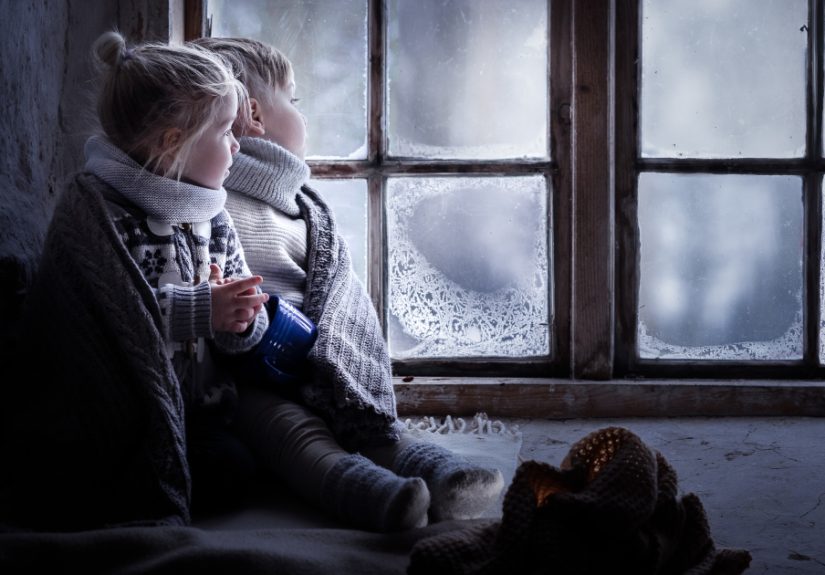
Some experiences were quieter. A child sitting near a window with a book. A brother tying his sister’s shoe. A girl carefully brushing dust from her dress before a family portrait. A boy holding a toy car with the seriousness of a museum curator. These moments were not spectacular, but they stayed with me because they resisted the loudness of travel photography. They reminded me that dignity often lives in ordinary gestures.
There were awkward moments, too. Sometimes the light was beautiful, but the child was tired. Sometimes a parent wanted a photo while the child clearly did not. Sometimes I had to explain that I would rather miss the shot than make a child uncomfortable. That decision never ruined the project. In fact, it strengthened it. A photo built on pressure carries that pressure inside it. A photo built on trust carries something gentler.
I also learned to be careful with my own assumptions. A home that looked simple to me might be full of pride, humor, and deep family connection. A child with many toys might still treasure one small object above all others. A serious expression did not always mean sadness; sometimes it meant concentration, suspicion, or the universal childhood belief that adults are strange and should be monitored.
By the end of the journey, the photographs felt less like a collection of places and more like a conversation about childhood itself. Across languages and landscapes, children kept showing the same brilliant pattern: they adapt, create, test boundaries, seek connection, and turn the available world into material for imagination. The camera captured faces, but the real subject was something largerthe fierce, funny, fragile, and endlessly inventive spirit of being young.
Conclusion
Traveling around the world to take photos of local children is not simply a photography project. It is an exercise in respect. It asks the photographer to slow down, listen first, seek permission, avoid stereotypes, and remember that every child has a right to dignity and privacy. When done ethically, children photography can reveal the beauty of play, the richness of culture, and the emotional threads that connect families across borders.
The most powerful portraits are not the ones that shout for attention. They are the ones that feel honest. A child laughing in a doorway. A child holding a favorite toy. A child watching the world with serious eyes. A child running toward friends in the last light of the day. These images matter because they remind us that childhood is not a decorative subject. It is a living, breathing, wildly imaginative chapter of human lifeand it deserves to be photographed with care.