Table of Contents >> Show >> Hide
- What Is the Hidden Dishwasher Setting?
- Why This Setting Matters More Than People Expect
- Why Plastic Is Always the Problem Child
- How to Find the Setting on Your Dishwasher
- The Setting Works Best With the Right Cycle
- Common Mistakes That Make This Setting Less Effective
- How to Use the Setting Like a Pro
- What Happened When I Finally Paid Attention to It
- Final Thoughts
- SEO Tags
Note: This article is formatted for direct web publishing and contains no citation placeholders or source-link artifacts.
Most people think the secret to cleaner dishes is a better detergent, hotter water, or a louder sigh while staring at a crusty casserole dish. But in many kitchens, the real hero is much less dramatic. It is not the flashy Sanitize button. It is not the “Quick Wash” cycle that sounds productive but often leaves you with damp mugs and false confidence. The hidden dishwasher setting most people miss is the rinse-aid dispenser setting.
Yes, that tiny, easy-to-ignore adjustment tucked next to the detergent cup or buried in a menu. The one many people never touch after installing the dishwasher. The one that looks so unimportant it may as well be labeled “mystery knob.” And yet, this setting can make the difference between crystal-clear glasses and a rack full of spotty disappointment.
If your dishes come out mostly clean but still look cloudy, wet, streaky, or suspiciously unimpressive, this overlooked dishwasher setting may be the missing piece. Once you understand what it does and how to adjust it, your dishwasher starts acting less like a moody roommate and more like the useful appliance you paid for.
What Is the Hidden Dishwasher Setting?
On many dishwashers, the hidden setting is the rinse-aid level. Not just the rinse-aid compartment itself, but the adjustable amount your machine dispenses during the final rinse. Some models use a small dial inside the dispenser. Others let you change it through the control panel. Either way, it is easy to miss because it does not look like a “main” setting.
That is a mistake. This setting quietly affects how well your dishes dry, how many water spots you see, and how much film gets left behind on glassware and flatware. In homes with hard water, it can be especially important. In homes with lots of plastic containers, it can feel borderline magical.
Think of rinse aid as the dishwasher’s finishing coach. Detergent handles the messy middle. Rinse aid shows up at the end, smooths everything out, and makes sure water slides off instead of clinging to every cup, spoon, and lunchbox lid like it has abandonment issues.
Why This Setting Matters More Than People Expect
Here is the problem: many people blame the dishwasher when the real issue is moisture management. If water sits on dishes in droplets, those droplets dry into spots, streaks, and mineral residue. If water sheets off more cleanly, dishes dry faster and look better. That is exactly why the rinse-aid setting matters.
When the rinse-aid level is too low, you may notice cloudy glasses, puddles on mug bottoms, wet silverware, and plastic containers that emerge looking like they just survived a rainstorm. When it is adjusted properly, the final rinse performs better, drying improves, and your dishes look closer to “cabinet-ready” instead of “maybe let’s towel these off.”
This is especially helpful for:
- Glassware that shows every spot like it is auditioning for a close-up
- Stainless steel flatware that dries with streaks
- Plastic cups, bowls, and food-storage containers
- Homes with hard water
- Dishwashers that seem to clean fine but never quite dry well
And no, this is not just about vanity. Better drying can also mean fewer musty smells, less need for hand-drying, and fewer complaints from whoever opens the dishwasher the next morning and finds a surprise puddle in every concave surface.
Why Plastic Is Always the Problem Child
If you have ever unloaded a dishwasher and found ceramic plates bone-dry while your plastic food containers looked freshly baptized, you are not imagining things. Plastic is harder to dry than glass, ceramic, or metal. It tends to hang onto water more stubbornly, and it does not retain heat the same way other materials do.
That is why people often think their dishwasher is failing when, in reality, it is just losing an ongoing argument with three plastic snack containers and a reusable lid collection that seems to multiply overnight.
This is where the hidden setting earns its paycheck. A properly adjusted rinse-aid level helps water slide off plastic more easily. It will not turn every lunch container into a miracle of engineering, but it can noticeably reduce droplets and help your dishwasher’s drying cycle do its job more effectively.
How to Find the Setting on Your Dishwasher
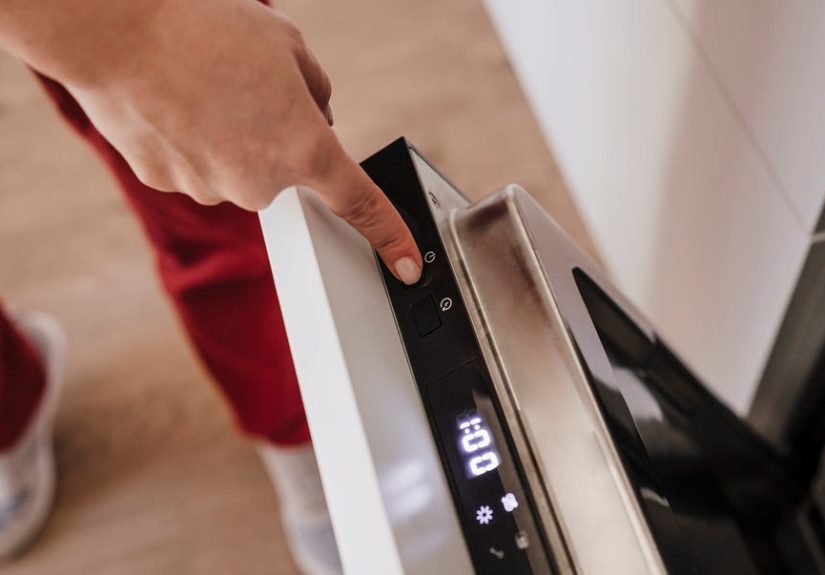
On many models, the rinse-aid setting is inside the door, right next to the detergent dispenser. Open the rinse-aid compartment and look for a small numbered dial, often ranging from low to high. On some dishwashers, you may need to press and hold a button combination to enter a settings menu where you can adjust the rinse-aid amount digitally.
If you never noticed this before, congratulations: you have found the exact kind of hidden dishwasher setting this article is about.
What the Numbers Usually Mean
Most dishwashers use a simple logic: higher number equals more rinse aid. If your dishes are coming out wet or spotty, you may need to increase the setting slightly. If you notice rainbow streaks, residue, or signs that too much product is dispensing, lower it a notch.
The key is not to go from “barely using any” to “pouring confidence directly onto your wine glasses.” Make small changes and test a few cycles before adjusting again. A dishwasher is not a reality show. It does not need dramatic plot twists.
Signs You Should Turn It Up
- Water spots on glasses
- Wet interiors on cups and bowls
- Plastic items coming out especially damp
- Visible film after otherwise normal cycles
Signs You Should Turn It Down
- Rainbow-like streaks on utensils or glassware
- Too much product seeming to linger after the cycle
- You live in a soft-water area and your dishes already dry well
The Setting Works Best With the Right Cycle
Here is where people get tripped up: the rinse-aid level is powerful, but it is not working alone. It performs best when paired with the right cycle and realistic loading habits.
For everyday loads, Auto or Sensor Wash is often the smartest choice. These cycles are designed to adjust water use, temperature, and time based on how dirty the dishes are. That means less guessing and fewer nights of picking “Heavy” for three plates and a coffee mug because you were feeling emotionally intense.
If drying is your main complaint, a Heated Dry, Extended Dry, Extra Dry, or Dry Boost option can help. These settings add more heat or extend the drying phase. But they usually work better when the rinse-aid setting is already doing its part. In other words, do not expect a drying cycle to perform Olympic-level gymnastics while the rinse-aid setting sits untouched at factory default from 2022.
Sanitize is useful too, but it is not necessarily the everyday answer for all loads. It is great when you want extra reassurance for baby bottles, cutting boards, or items that have touched raw meat. For regular dinner plates and cereal bowls, the more practical improvement is often better drying and spotting control, not maximum heat every single night.
Common Mistakes That Make This Setting Less Effective
Even the best dishwasher setting cannot save a load sabotaged by bad habits. If you want the hidden rinse-aid setting to actually help, avoid these classic errors.
1. Overcrowding the Racks
When dishes are packed too tightly, water and air cannot move properly. That means worse rinsing, worse drying, and a greater chance that your dishwasher turns into a humid storage locker for half-dry plates.
2. Loading Bowls Flat Instead of Angled
Any item that can hold water will hold water. Bowls, mugs, measuring cups, and plastic lids should be angled so water drains off instead of collecting like a tiny indoor pond.
3. Assuming Pods Do Everything
Some detergent packs advertise built-in rinse aid, but many experts still recommend using separate liquid rinse aid in the dispenser, especially if you have spotting or drying issues. Why? Because the dispenser releases rinse aid during the final rinse, when it is most useful.
4. Ignoring Hard Water
If your dishes always look chalky or spotty, hard water may be making life difficult. In that case, the hidden rinse-aid setting is not a minor tweak. It is part of your survival strategy.
5. Never Cleaning the Dishwasher
A dirty filter, mineral buildup, or general gunk can reduce performance. You cannot expect a machine with a clogged filter to suddenly become a spa for your stemware just because you changed one setting.
How to Use the Setting Like a Pro
If you want a practical plan, keep it simple:
- Fill the rinse-aid dispenser.
- Set the level at the manufacturer default or one step above it if you have drying issues.
- Run everyday loads on Auto or Sensor Wash.
- Add an Extra Dry or Heated Dry option when you are washing lots of plastic.
- Adjust only one notch at a time after a few cycles.
That is it. No elaborate ritual. No need to whisper motivational speeches to your dishwasher. Just one small setting, used intentionally.
What Happened When I Finally Paid Attention to It
My own relationship with the hidden dishwasher setting began the way many household epics do: with mild irritation and one very wet Tupperware lid. For months, I was convinced my dishwasher was underperforming. It washed dishes well enough, sure, but unloading it always felt like finishing someone else’s chore. The plates were fine, the glasses were decent, but the plastic storage containers? Absolutely soaked. Coffee mugs had water pooled in the base. Silverware looked like it had been misted by a decorative fountain.
So I did what many people do. I blamed the machine. Then I blamed the detergent. Then I blamed modern appliances in general, because that is a beloved tradition. I even considered whether my dishwasher had developed a personality disorder. Dramatic? Yes. Helpful? Not even a little.
Then one day, while refilling detergent, I noticed the rinse-aid compartment and the tiny adjustment setting hiding beside it. It had apparently been sitting there the whole time, minding its business while I performed a one-person theatrical production called Why Are My Dishes Still Wet?
I filled the dispenser, nudged the setting slightly higher, and ran the next load on Auto with an extra-dry option. I did not expect much. At best, I thought maybe the glasses would look a little shinier. At worst, I figured I would simply gain new material for future kitchen complaints.
The difference was not imaginary. The glasses came out clearer. The silverware looked brighter. The inside of mugs was noticeably drier. Even the dreaded plastic container situation improved from “tiny swimming pool” to “a couple of droplets I can live with.” It was not wizardry. It was just the dishwasher finally getting the right amount of help during the rinse phase.
What surprised me most was not that the setting worked. It was how many other things suddenly made sense. The machine had never really been “bad” at drying. I was just asking it to do the final stage of the job without the final-stage product it was designed to use properly. That is a bit like expecting a hair dryer to style your hair while unplugged. Technically optimistic, but not grounded in reality.
After a few more loads, I fine-tuned the setting again. One notch too high created a little streaking on some utensils, so I backed it down. That small adjustment was the sweet spot. From then on, unloading the dishwasher became far less annoying. I was no longer keeping a dish towel in hand like I was working a pit stop at a Formula 1 race.
The real win, though, was mental. Once I understood this hidden dishwasher setting, I stopped randomly switching between cycles in a desperate attempt to solve the wrong problem. I used Auto for mixed loads, Extra Dry for plastic-heavy loads, and Sanitize only when it made sense. Suddenly the appliance felt predictable. Cooperative, even. Which is honestly all anyone wants from a large box in the kitchen that cleans forks.
So if your dishwasher seems almost good but not quite there, this tiny setting is worth your attention. Sometimes the difference between “Why is everything still wet?” and “Wow, this actually works” is not a new appliance. It is one overlooked adjustment hiding in plain sight.
Final Thoughts
The hidden dishwasher setting most people miss is not glamorous, but it is genuinely useful. The rinse-aid level is one of those small details that quietly improves everyday results: drier dishes, fewer spots, better-looking glassware, and less frustration with plastic containers that seem determined to stay wet forever.
If your dishwasher already cleans well but never quite finishes strong, start there. Check the dispenser, adjust the setting thoughtfully, and pair it with the right cycle. You may discover that your dishwasher did not need to be replaced, lectured, or threatened. It just needed you to finally notice the setting it has been waiting for you to use all along.