Table of Contents >> Show >> Hide
- Why fertilizing mistakes matter more than most homeowners think
- Error #1: Fertilizing without a soil test
- Error #2: Fertilizing at the wrong time for your grass type
- Error #3: Using too much fertilizer because “more” sounds helpful
- Error #4: Fertilizing stressed, dormant, or heat-baked grass
- Error #5: Applying fertilizer unevenly and forgetting the cleanup step
- How to fertilize your lawn the smart way
- Real-world experiences: what these lawn fertilizing mistakes actually look like
- Conclusion
If your lawn fertilizer routine currently consists of “walk fast, fling green pellets, hope for the best,” we need to talk. Fertilizer can absolutely help a lawn look thicker, greener, and healthier. But it can also scorch the grass, feed weeds, waste money, and send nutrients where they definitely do not belong. In other words, lawn fertilizer is helpful right up until it becomes a tiny crunchy regret.
Turf experts tend to agree on one big point: most lawn disasters are not caused by a total lack of care. They are caused by good intentions plus bad timing, guesswork, or a spreader setting chosen with the confidence of someone assembling furniture without reading the instructions. The result? Patchy stripes, burned spots, disappointing growth, and a yard that looks personally offended.
The good news is that a healthier lawn usually does not require more fertilizer. It requires smarter fertilizer use. Below are five lawn fertilizing mistakes you should never make, along with what to do instead if you want greener grass without the drama.
Why fertilizing mistakes matter more than most homeowners think
Fertilizer is not just “grass food.” It is a tool that affects leaf growth, root strength, color, recovery from stress, and overall turf density. When applied correctly, it supports the natural growth cycle of your grass. When applied incorrectly, it can push weak top growth, encourage disease pressure, increase drought stress, or wash away before the lawn gets any real benefit.
That is why the biggest lawn fertilizing errors are usually not dramatic, movie-worthy mistakes. They are ordinary habits: fertilizing too early, applying too much, skipping the soil test, fertilizing during heat stress, or leaving granules on hard surfaces and leaf blades. These little mistakes stack up fast, and your lawn ends up paying the bill in yellow patches and thin turf.
Error #1: Fertilizing without a soil test
Guessing is not a lawn strategy
One of the biggest fertilizing mistakes is buying a bag because the front promises “lush green lawn in days” and calling that a plan. A soil test tells you what your lawn actually needs, including nutrient levels and pH. Without that information, you are basically trying to solve a math problem by shouting at it.
Many homeowners assume every lawn needs more nitrogen, phosphorus, and potassium on a regular schedule. Sometimes that is true. Sometimes the soil is already sufficient in one or more nutrients, and adding more is unnecessary or even harmful. Phosphorus, for example, is often overapplied when the lawn does not need it. And if pH is off, your grass may struggle to use the nutrients already in the soil no matter how generous you feel with the spreader.
A soil test also helps you choose the right fertilizer analysis. Those numbers on the bag matter. They tell you the percentage of nitrogen, phosphorus, and potassium. If your lawn is low in one nutrient but fine in another, the “one-size-fits-all” product may not be the right fit.
What to do instead
Start with a soil test through your local extension service or a reputable lab. Use the results to guide your fertilizer choice and rate. This one step removes the guesswork and usually saves money in the long run, because you stop buying nutrients your lawn does not need.
Think of it this way: a soil test is not an annoying extra chore. It is the difference between giving your lawn a balanced meal and handing it a mystery casserole.
Error #2: Fertilizing at the wrong time for your grass type
Not all lawns want the same schedule
This is where many homeowners get tripped up. They hear “spring fertilizing” and assume every lawn in every climate should get a heavy feeding the second the weather turns pleasant. Not so fast.
Your fertilizing schedule should match your grass type and active growing season. Cool-season grasses, such as tall fescue, Kentucky bluegrass, and perennial ryegrass, generally benefit most from fertilizing in late summer and fall, with lighter spring applications if needed. Warm-season grasses, such as bermudagrass, zoysiagrass, centipedegrass, and St. Augustinegrass, should usually be fertilized after they have fully greened up and are actively growing in spring and summer.
Why does this matter? Because fertilizing outside the grass’s natural growth window can create weak, shallow growth instead of durable turf. A cool-season lawn pushed too hard in spring may look flashy for a minute, then struggle in summer heat. A warm-season lawn fertilized too early may be encouraged to grow before conditions are truly right. And late-season nitrogen on warm-season lawns can create tender growth that is more vulnerable as temperatures cool.
Common timing mistakes
- Applying fertilizer to warm-season grass before full green-up
- Feeding cool-season grass heavily just before summer heat arrives
- Applying nitrogen to dormant lawns
- Fertilizing right before heavy rain, or on frozen ground
What to do instead
Learn what grass you have, then match the fertilizer schedule to that grass. If you do not know whether your lawn is cool-season or warm-season, that is the first mystery to solve. Once you know, the timing becomes much easier.
In general, fertilize when the lawn is actively growing, not when it is dormant, stressed, or merely pretending to be fine. Grass is dramatic, but the growth cycle does not lie.
Error #3: Using too much fertilizer because “more” sounds helpful
Overfertilizing is one of the fastest ways to hurt your lawn
If a little fertilizer is good, more must be better, right? Absolutely not. That logic works for vacation days and maybe garlic bread. It does not work for lawn fertilizer.
Overfertilizing can burn the grass, especially with fast-release nitrogen sources or during hot weather. It can also create overly lush top growth that looks green at first but becomes more susceptible to stress, disease, and extra mowing. And yes, it can waste a surprising amount of money. Nothing says “luxury landscaping” quite like paying to injure your own yard.
Excess nitrogen can also move beyond the lawn through runoff or leaching, particularly when applied carelessly or before heavy rain. That means the fertilizer you paid for may end up feeding algae in waterways instead of feeding turf in your yard.
Signs you may be overdoing it
- Yellow or brown streaks after application
- Rapid, excessive growth that requires constant mowing
- Dark green patches next to pale ones, suggesting uneven coverage
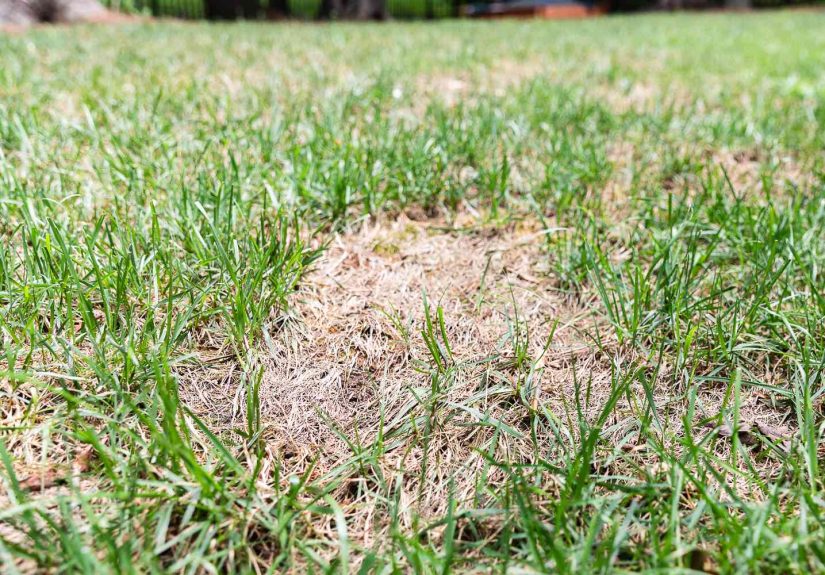
- Crusty or spilled fertilizer spots that leave burned circles
What to do instead
Measure your lawn so you know how much product you actually need. Then read the label and calculate the correct application rate based on the bag analysis. Do not eyeball it. Do not rely on vibes. Do not decide that one extra pass “can’t hurt.”
If your lawn has sandy soil, slopes, or other conditions that increase nutrient loss, smaller and more controlled applications may make more sense than one heavy feeding. And if you accidentally overapply, water the area appropriately and address the mistake quickly rather than hoping the lawn forgets.
Error #4: Fertilizing stressed, dormant, or heat-baked grass
A struggling lawn does not always need more food
This mistake is especially common in summer. The lawn turns dull, patchy, or brown from heat and drought stress, and the immediate reaction is, “Aha, fertilizer will cheer it up.” Unfortunately, stressed grass does not always want a pep talk. Sometimes it wants shade, water management, patience, and less interference from you.
Applying fertilizer to dormant or severely stressed turf can make problems worse. The grass is not actively growing in a way that lets it use nutrients effectively, so the fertilizer may sit, burn, or move away from the root zone. In hot weather, especially during drought, extra nitrogen can intensify stress rather than fix it.
This is particularly important for cool-season lawns in summer. Brown grass is not always dead grass. Often it is dormant grass. That is a huge difference. Dormancy can be a survival response. Treating dormancy like hunger is one of the biggest lawn-care misunderstandings out there.
What to do instead
Before fertilizing, ask what the lawn is actually experiencing. Is it nutrient deficiency, or is it heat stress, drought, compaction, poor drainage, disease pressure, shade, or insect damage? Fertilizer is not a universal cure-all. It is not lawn therapy.
If the lawn is stressed, focus first on the basics: correct watering, mowing height, traffic reduction, and identifying the real problem. Resume fertilizing when the grass is back in active growth and conditions are more favorable.
Error #5: Applying fertilizer unevenly and forgetting the cleanup step
Patchy application creates patchy results
Even a well-chosen fertilizer can underperform if it is applied badly. Uneven coverage is one of the most common reasons homeowners end up with stripes, blotches, or burned lanes across the yard. A spreader that is not calibrated properly can dump too much in one area and too little in another. Overlapping passes too heavily can also concentrate fertilizer and cause burn.
Then there is the cleanup issue. Granules spilled on driveways, sidewalks, patios, or streets should not be left there. Aside from wasting product, those pellets can wash into storm drains during the next rain. Also, fertilizer sitting on grass blades rather than moving into the soil can increase the risk of burn, particularly with granular products that are meant to be watered in.
What to do instead
Calibrate your spreader. Yes, actually calibrate it. This sounds wonderfully boring, which is probably why so many people skip it. But correct calibration is one of the easiest ways to improve your results immediately.
Walk at a steady pace, overlap carefully according to spreader instructions, and avoid filling the spreader on hard surfaces where spills are more likely. After applying, sweep or blow fertilizer granules off pavement and back onto the lawn. For most granular fertilizers, water them in according to the product label so nutrients move off the leaf blade and into the soil. If you are using a liquid product, check the label because timing is different and you may need to wait before watering.
This is the not-so-glamorous part of lawn care, but it is the difference between a clean application and a neighborhood crime scene made of neon pellets.
How to fertilize your lawn the smart way
If you want the short version, here it is: feed the lawn based on evidence, not enthusiasm. A smart lawn fertilizing routine usually includes these steps:
- Test the soil before choosing a product.
- Identify your grass type and fertilize during its active growth period.
- Measure your lawn and apply the correct rate.
- Avoid fertilizing during dormancy, drought stress, extreme heat, before heavy rain, or on frozen ground.
- Calibrate the spreader, apply evenly, clean up spills, and water in granular fertilizer if the label calls for it.
That may not sound thrilling, but healthy lawns are often built on predictable, unsexy consistency. The lawn-care aisle loves bold promises. Turf health prefers boring accuracy.
Real-world experiences: what these lawn fertilizing mistakes actually look like
In many neighborhoods, the story starts the same way: the first warm weekend of spring arrives, the birds are back, and someone decides this is the moment to give the lawn “a boost.” The fertilizer goes down early, the grass greens fast, and for about two weeks the yard looks fantastic. Then summer shows up swinging. The lawn that was pushed hard in spring suddenly looks tired, thin, and thirsty. What seemed like success turns into extra mowing, extra stress, and a yard that fades just when everyone wants to use it. That experience is incredibly common, especially with cool-season lawns that would have preferred a more measured approach.
Another classic experience is the stripe effect. A homeowner buys a broadcast spreader, skips calibration, and walks the lawn with the confidence of a parade marshal. A week later, the yard has dark green racing lanes, pale strips, and one suspiciously crispy patch near the driveway where the spreader stopped for a refill. It is not that the fertilizer was bad. It is that uneven application created uneven feeding. The lawn ends up looking like it was edited by a very confused barcode scanner.
Then there is the hot-weather panic application. The grass starts browning in July, and someone assumes the lawn is starving. They add more nitrogen during a heat wave, hoping for a miracle. Instead, the stressed grass gets even more stressed, because the real issue was drought or dormancy, not hunger. A few weeks later, after better watering and cooler temperatures, the lawn recovers in spots, but the fertilized areas may show burn or weird surges of uneven growth. That experience teaches a hard lesson: a brown lawn is not automatically a hungry lawn.
People also learn the soil test lesson the expensive way. They buy multiple bags over a season, try different products, and still do not get consistent improvement. Finally, they test the soil and discover the lawn did not need the nutrient they kept applying, or the pH was out of range all along. Suddenly the past season makes sense. What looked like a fertilizer failure was really a diagnosis failure.
And of course, nearly everyone who has fertilized a lawn long enough has had a driveway spill moment. One little pile of granules seems harmless until the next rain or the next week’s scorch mark. It is a small mistake, but it sticks in your memory because it is so visible. Lawn care has a funny way of turning tiny shortcuts into very public life lessons.
Conclusion
The biggest lawn fertilizing mistakes are surprisingly ordinary: guessing instead of testing, feeding at the wrong time, applying too much, fertilizing stressed grass, and spreading product unevenly. The upside is that these errors are all fixable. In fact, once you stop treating fertilizer like a magic trick and start treating it like a measured lawn-care tool, your results usually improve quickly.
A better lawn does not come from dumping more product on the grass. It comes from understanding what the lawn needs, when it needs it, and how to apply it without creating new problems. Follow that approach, and your yard has a much better chance of looking healthy, thick, and enviably green instead of like it just survived a chemistry experiment.