Table of Contents >> Show >> Hide
- What Was the GENIAC, Exactly?
- How the GENIAC Worked
- Edmund C. Berkeley and the Dream of Small Computing
- Why the GENIAC Mattered
- Why the GENIAC Faded Away
- The GENIAC Lives Again
- What Modern Educators and Makers Can Learn from It
- Specific Examples That Made the GENIAC Memorable
- Experiences Related to “The GENIAC Lives Again”
- Conclusion
Note: Body-only HTML, publish-ready, American English, with SEO JSON at the end.
Long before children learned coding through apps, before microcontrollers became cheap enough to toss into weekend projects, and long before “STEM toy” became a marketing phrase slapped onto every blinking gadget within a five-mile radius, there was the GENIAC. Its name sounded half genius, half science-fiction sidekick, and honestly, that was part of the charm. The GENIAC was not a sleek miracle of miniaturization. It was a hands-on construction kit built from disks, switches, bulbs, wire, and stubborn curiosity. Yet in the middle of the 1950s, it offered something extraordinary: a way for ordinary people to touch the logic of computing.
That is why the phrase “The GENIAC Lives Again” feels so right. This was never just a quirky relic from the age of diner coffee, chrome trim, and optimistic magazine ads. The GENIAC mattered because it made abstract ideas visible. It let people build little “electric brains” that could solve puzzles, play simple games, perform arithmetic, and model reasoning. Today, as replicas, archives, and renewed interest bring it back into the conversation, the GENIAC is not merely surviving as a museum oddity. It is getting a second life as a reminder that computing used to be something you could literally hold in your hands.
What Was the GENIAC, Exactly?
The GENIAC was introduced in the mid-1950s as an educational computer kit designed and marketed by Edmund C. Berkeley, working with Oliver Garfield. Sold for under twenty dollars, it was pitched as an “electric brain construction kit” that could teach users how machine logic worked without requiring a room-sized machine, a corporate budget, or a Ph.D. in advanced intimidation. For families, schools, and hobbyists, that mattered a lot.
At a time when most real computers were giant institutional machines hidden behind locked doors and technical mystique, the GENIAC brought the basic ideas of computing to the kitchen table and the workshop bench. That democratizing instinct is one of the reasons the kit still feels surprisingly modern. The hardware was humble, but the idea behind it was ambitious: computing should not be reserved for experts. It should be something people can explore, build, and understand.
Not Quite a Toy, Not Quite a Full Computer
The GENIAC sat in a fascinating middle ground. It was marketed as fun, but it was also serious. It was playful, but it was not trivial. Users could wire up different arrangements and produce dozens of small “brain machines” that handled logic, puzzles, game-playing, number operations, and symbolic reasoning. Some versions and manuals emphasized practical circuits; others leaned into games and storytelling. Either way, the point was the same: this machine taught structured thinking.
Calling the GENIAC “just a toy” misses the point. It was an educational system disguised as entertainment, which, frankly, is often the best kind of education. Many modern tools still fail this test. They look futuristic, but they teach very little about how anything actually works. The GENIAC, by contrast, made its logic impossible to ignore.
How the GENIAC Worked
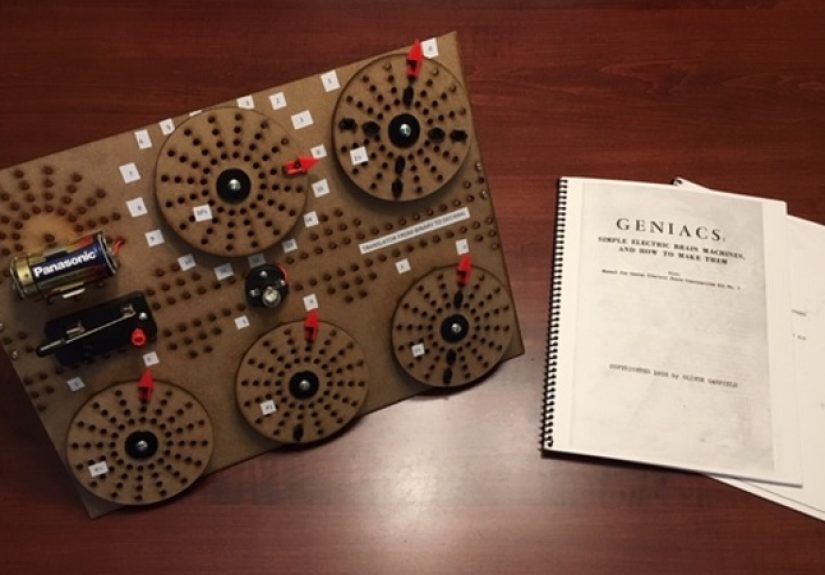
Mechanically, the GENIAC was built around rotary switch structures, perforated boards, electrical contacts, and small light bulbs powered by a simple battery. Users assembled the parts, wired connections, and changed the configuration depending on the task they wanted the machine to perform. No soldering was required, which was a major selling point. The kit was safe, approachable, and designed for experimentation rather than fear-based parenting.
Its genius was not raw computational power. By modern standards, a pocket calculator, a toaster oven, and probably your car key fob would all outperform it without breaking a sweat. The GENIAC’s real strength was that it turned logical operations into something visible. Inputs could be set physically. Outputs lit up as bulbs. Cause and effect were not hidden inside opaque chips. They were right there in front of you, glowing like a tiny lecture in Boolean logic.
Why That Design Was So Brilliant
The GENIAC did something most people still struggle with when learning computing: it connected abstract rules to concrete action. Instead of reading that a circuit can represent a decision, you built one. Instead of hearing that logical branches shape outcomes, you watched them happen. A switch changed. A path completed. A bulb lit. Suddenly, logic was not an invisible principle trapped in a textbook. It became a physical event.
That tactile quality is why the GENIAC continues to fascinate historians, makers, and educators. It offered a bridge between theory and intuition. You were not simply told that machines can “think” in a limited, logical sense. You saw how mechanical choices and electrical pathways could simulate reasoning. The machine did not pretend to be magical. It let you see the trick.
Edmund C. Berkeley and the Dream of Small Computing
To understand the GENIAC, you have to understand Edmund C. Berkeley’s larger mission. Berkeley was one of the earliest popularizers of computing in America. He believed computers were not just industrial tools for governments and large companies. He believed they were intellectually important machines that ordinary people should learn about. That conviction ran through his writing, his public advocacy, and his educational kits.
Before the GENIAC, Berkeley had already helped introduce computing ideas to broader audiences through his book Giant Brains; or, Machines That Think and through his earlier machine, Simon. Simon was an important milestone because it reflected Berkeley’s conviction that simplified machines could teach the public how computing worked. He was talking about smaller, more accessible computing long before home computing became real. In that sense, the GENIAC was not a random novelty. It was part of a consistent and visionary educational project.
Berkeley’s big insight was that understanding machines mattered culturally, not just technically. He saw computing as a field that would shape society, work, and education. He also understood that people are much less intimidated by ideas when they can play with them. The GENIAC translated that philosophy into wood, wire, bulbs, and possibility.
Why the GENIAC Mattered
The GENIAC mattered because it trained a way of thinking that would become essential in the computer age. It encouraged users to break problems into steps, map decisions onto systems, and think in terms of inputs, pathways, and outcomes. That sounds obvious now because we live in a world soaked in software. In the 1950s, it was revelatory.
The kit also helped move computing from a distant spectacle to a participatory activity. Real computers of the era were awe-inspiring, but they were also remote. The GENIAC answered that distance with access. It said, in effect, “You may not own a giant computer, but you can understand the logic that powers one.” That is a pretty radical educational promise.
Play Was the Secret Weapon
One reason the GENIAC succeeded as a teaching tool is that it did not lecture users in a dry, joyless voice. It invited them into challenges, puzzles, and games. Build a circuit. Solve a logic problem. Make a machine that handles a number task. Try a game like tic-tac-toe or nim. Follow a strange scenario. See what happens. In other words, it smuggled serious learning into a format that felt like exploration.
Modern educators talk constantly about engagement, discovery learning, and active participation. The GENIAC was doing all of that decades ago, without needing a Wi-Fi connection, a subscription plan, or a cheerful dashboard congratulating you for breathing near the lesson.
Why the GENIAC Faded Away
Like many brilliant mid-century inventions, the GENIAC eventually ran into the future. Berkeley and Garfield split, related kits such as the Brainiac followed, and the broader technology landscape changed quickly. By the early 1960s, the public imagination was shifting toward more electronic, more automated, and more visibly “advanced” devices. As genuine digital computing expanded, an electromechanical educational kit could start to look quaint.
But “quaint” and “obsolete” are not the same thing. The GENIAC faded from mainstream attention not because its teaching value disappeared, but because technology culture became obsessed with speed, scale, and novelty. Once machines got faster and more mysterious, the visible logic of older educational kits was easier to overlook. It is the same reason people sometimes treat a transparent engine model as less exciting than a sealed electric car battery. One is easier to understand, and for some people that means it looks less glamorous.
The GENIAC Lives Again
So why is the GENIAC back in the conversation? Because modern makers, historians, and retrocomputing enthusiasts have rediscovered what made it special. Archival manuals, museum collections, collector sites, and replica builders have helped rescue the GENIAC from the dusty corner where so many educational inventions go to wait for a second chance. That second chance has arrived.
Modern replicas are especially important. They do more than preserve an object. They restore an experience. A reproduction built with laser-cut parts, 3D-printed components, or careful workshop craftsmanship can show new audiences what the original kit actually felt like: the assembly, the experimentation, the trial and error, the small thrill when a correct pathway lights the right bulb. That is not just nostalgia. It is functional history.
Why Revival Matters Right Now
The GENIAC’s return comes at a perfect moment. Today’s devices are powerful, but they are also hidden behind layers of abstraction. A student can use software all day and still have no idea how logic is structured underneath the surface. The GENIAC offers an antidote to that opacity. It reminds us that computation can be taught physically, visually, and playfully.
It also fits beautifully with the maker movement. People who enjoy restoring radios, building robots, printing replica parts, or recreating historical machines understand that making is a form of learning. The GENIAC belongs in that world. It speaks the same language: curiosity first, tools second, understanding always.
What Modern Educators and Makers Can Learn from It
Make Logic Visible
The more visible a system is, the easier it is to understand. The GENIAC did not hide structure. It displayed it. That remains a powerful lesson for teaching coding, electronics, and systems thinking today.
Let Students Build Before They Memorize
People often understand ideas more deeply when they assemble something, test it, break it, and fix it. The GENIAC embraced that process. It made learning active and slightly messy, which is usually where the good stuff lives.
Use Play to Teach Serious Concepts
Puzzles and games were not decoration. They were the delivery system. The GENIAC understood that joy is not the opposite of rigor. It is often the engine that makes rigor sustainable.
Specific Examples That Made the GENIAC Memorable
Part of the GENIAC’s staying power comes from the variety of problems it could model. Arithmetic circuits gave users a foothold in machine operations. Logic and symbolic reasoning circuits introduced formal thinking without making it feel like punishment. Game-playing setups such as tic-tac-toe and nim showed that machine behavior could seem almost strategic. Code and decoding projects added a whiff of mystery. Story-driven scenarios made the experience feel surprisingly narrative for such a stripped-down device.
That mix mattered. It meant users were not learning one skill in isolation. They were learning that computing sits at the crossroads of math, logic, design, play, and imagination. The machine was simple, but the intellectual territory it opened was wide.
Experiences Related to “The GENIAC Lives Again”
What makes the modern return of the GENIAC so compelling is not just the machine itself. It is the experience surrounding it. The first experience is surprise. People expect early computer history to be all giant cabinets, blinking control panels, and enough cables to make a spaghetti dinner jealous. Then they encounter the GENIAC and realize that another story was unfolding at the same time: the story of computing as something intimate, handmade, and teachable.
Seeing a GENIAC or a well-made replica for the first time often produces a strange emotional double take. On one hand, it looks modest. On the other hand, it feels conceptually huge. You begin to understand why someone in the 1950s could have looked at this kit and felt they were peeking into the future. Today we are spoiled by polished screens and invisible processors. The GENIAC puts the machinery of decision-making right in front of your face. That is unexpectedly moving. It is like hearing an early demo recording of a famous musician and suddenly realizing the greatness was already there, just wearing simpler clothes.
Another experience tied to the GENIAC revival is the pleasure of reconstruction. For modern builders, reproducing the machine is more than a craft project. It is a conversation across time. You study manuals, inspect archival photos, compare dimensions, guess at missing parts, and improvise where the historical record goes fuzzy. Every step makes you appreciate the original designers more. It also reminds you that technology has always involved practical decisions, compromises, and creative workarounds. History stops being abstract when you have to align the holes, fit the contacts, and make the thing actually function.
There is also the educational experience, and this may be the most valuable one of all. When a student or curious adult interacts with a GENIAC-style machine, the learning is immediate and honest. If the circuit is wrong, the output is wrong. If the logic is right, the result appears. There is no helpful autocomplete, no hidden error correction, and no interface trying to protect you from your own misunderstanding. That can be humbling, but it is also liberating. The machine teaches through direct consequence.
Then comes the social experience. Historical computing devices often bring generations together in a way newer tools do not. A grandparent might remember the era of science-kit optimism. A parent may recognize the educational value instantly. A student may approach it as a puzzle box from another civilization. Suddenly, people who do not usually talk about computing are talking about logic, design, learning, and history at the same table. That is a rare achievement for any object, let alone one made of humble materials and powered by a flashlight battery.
Finally, there is the experience of perspective. The GENIAC’s return encourages a healthier way of thinking about innovation. It reminds us that progress is not only about making devices faster or smaller. Sometimes progress means making ideas more understandable. Sometimes it means restoring the lost art of showing how systems work. In that sense, when the GENIAC lives again, something else lives again too: the belief that technology education should invite people in rather than shut them out.
And that may be the machine’s greatest afterlife. Not as a museum piece that whispers from behind glass, but as a revived tool for wonder. The GENIAC still has the power to make people lean closer, ask better questions, and smile when the light comes on. For an educational machine from the 1950s, that is not a bad encore at all.
Conclusion
The GENIAC lives again because its core idea never stopped being important. Yes, it is a fascinating piece of computer history. Yes, it is a delight for collectors, replica builders, and retro-tech enthusiasts. But more than that, it is a reminder that the best teaching tools do not merely impress us. They help us understand. The GENIAC did that in the 1950s, and it can still do it today.
In a world crowded with sealed devices and abstract software layers, the GENIAC feels refreshingly honest. It shows its logic. It rewards patience. It turns reasoning into something visible and playable. That is why its revival matters. The GENIAC is not back because people are desperate to replace laptops with masonite disks and light bulbs. It is back because we are rediscovering the value of transparent, hands-on learning. Sometimes the future needs a little help from the past, and sometimes that help arrives with a battery, a bulb, and a wonderfully overconfident name.