Table of Contents >> Show >> Hide
- Why Your Fingers Hurt When You Start Playing Guitar
- The Best Way to Ease Finger Soreness: Practice Short, Often, and Correctly
- Use Less Pressure: Your Guitar Is Not a Stress Ball
- Check Your Guitar Setup Before Blaming Your Fingers
- Choose Strings That Are Kinder to Beginner Fingers
- Warm Up Your Hands Before You Play
- Keep Your Fingernails Short
- Take Breaks Before Your Fingers Get Angry
- Build Calluses Without Destroying Your Skin
- Use Ice Carefully for Temporary Relief
- Avoid Numbing Creams as a Practice Strategy
- Fix Your Hand Position
- Do Not Rush Barre Chords
- When Finger Soreness Usually Gets Better
- Common Mistakes That Make Guitar Finger Pain Worse
- Experience Notes: What Beginner Guitar Finger Soreness Really Feels Like
- Conclusion
Learning guitar is exciting until your fingertips start acting like tiny dramatic actors in a soap opera. One minute you are proudly strumming your first G chord; the next, your index finger is filing a formal complaint. If you are a beginner, finger soreness is one of the most common early challenges. It does not mean you are doomed, untalented, or secretly meant to play the triangle. It usually means your fingertips, hand muscles, and technique are adapting to a new physical skill.
The best way to ease finger soreness when learning to play guitar is not one magic cream, gadget, or heroic three-hour practice session. It is a smart combination of short, consistent practice, lighter finger pressure, proper guitar setup, beginner-friendly strings, good hand positioning, and enough rest for your skin and tendons to recover. In other words, you want to build guitar calluses without bullying your fingers into early retirement.
This guide explains how to reduce guitar finger pain, build calluses safely, avoid bad habits, and know when soreness may be a warning sign. Whether you are learning acoustic guitar, electric guitar, or classical guitar, these practical steps will help you keep playing without turning every chord change into a tiny medieval trial.
Why Your Fingers Hurt When You Start Playing Guitar
Beginner guitar finger soreness usually comes from pressure and friction. Guitar strings are thin, firm, and unforgiving. When you press them against the fretboard, they leave grooves in soft fingertip skin. Over time, your fingertips develop calluses: slightly tougher skin that helps you fret notes with less discomfort.
However, finger soreness is not only about skin. New guitarists often squeeze the neck too hard, bend the wrist awkwardly, press too far behind the fret, or practice too long before their hands are ready. That can lead to aching fingertips, hand fatigue, wrist discomfort, and frustration. The goal is not to “tough it out” until your fingers surrender. The goal is to train your hands efficiently.
Normal soreness vs. warning-sign pain
Normal beginner soreness feels like tenderness at the fingertips, especially after fretting chords. It should improve with rest and gradually become less intense as calluses form. Warning-sign pain is different. Stop playing and seek professional medical advice if you experience numbness, tingling, burning, sharp wrist pain, swelling, weakness, loss of control, pain that spreads, or symptoms that keep getting worse. Guitar should challenge your fingers, not start a tiny medical mystery.
The Best Way to Ease Finger Soreness: Practice Short, Often, and Correctly
The fastest safe path through beginner finger pain is short, consistent practice. Instead of playing for two hours on day one and then avoiding the guitar for a week, aim for small daily sessions. Try 10 to 15 minutes at a time, once or twice a day. When your fingertips adjust, increase slowly.
Short sessions help in three ways. First, they give your skin repeated contact with the strings, which encourages callus development. Second, they protect you from blisters and raw skin. Third, they help your brain learn chord shapes without turning practice into a pain contest. A beginner who practices 15 focused minutes daily usually progresses better than someone who practices once a week until their hand feels like a grilled cheese sandwich.
A beginner-friendly practice schedule
For the first two weeks, try this simple routine:
- Minutes 1–3: Gentle warm-up with open strings and slow finger placement.
- Minutes 4–8: Practice two or three easy chords, such as Em, G, C, D, or A.
- Minutes 9–12: Practice slow chord changes without rushing.
- Minutes 13–15: Play a very simple song or strumming pattern for fun.
If your fingertips become sharply painful, stop. Rest is not failure. Rest is part of the lesson plan.
Use Less Pressure: Your Guitar Is Not a Stress Ball
One of the biggest reasons beginners suffer sore fingers is over-pressing. Many new players believe a chord will sound cleaner if they squeeze harder. Sometimes the opposite happens. Too much pressure creates tension, slows chord changes, and makes your fingers hurt faster.
To find the right pressure, place a finger just behind the fret, not in the middle of the space between frets. Press gently, pluck the string, and slowly add pressure only until the note rings clearly. That is your target. You do not need to push the string through the fretboard and into another dimension.
Practice the “minimum pressure” test
Choose one note, such as the first fret of the B string. Press lightly and pluck. If it buzzes, add a little pressure. When the note rings cleanly, stop increasing pressure. Repeat this with every finger. This teaches your hand that clarity comes from placement and control, not brute force.
This small habit can dramatically ease guitar finger soreness. It also improves speed because relaxed fingers move faster than tense fingers. The best guitarists often look effortless because they are not wasting energy wrestling the instrument.
Check Your Guitar Setup Before Blaming Your Fingers
Sometimes sore fingers are not your fault. A poorly set-up guitar can make learning much harder. If the strings sit too high above the fretboard, a problem known as high action, you must press farther and harder to play each note. That can make chords feel impossible and fingertips feel punished.
A proper setup can include adjusting the action, checking the nut slots, setting the neck relief, and making sure the frets are comfortable. If you bought a budget acoustic guitar online or inherited one from a closet, have a guitar technician or experienced teacher look at it. A basic setup can turn a finger-fighting machine into a playable instrument.
Signs your guitar may be too hard to play
- You must press extremely hard to make notes sound clean.
- Chords hurt badly even after several weeks of consistent practice.
- The strings feel unusually far from the fretboard.
- Notes near the first fret are especially painful or difficult.
- Your teacher or a more experienced guitarist says the action feels high.
Beginners often assume pain is just part of learning guitar. Some tenderness is normal. Fighting a badly adjusted instrument is not. Your first guitar should invite you to practice, not act like a tiny wooden gym membership.
Choose Strings That Are Kinder to Beginner Fingers
String choice matters. Lighter-gauge strings are generally easier to press than heavier strings. Electric guitars usually feel easier on the fingertips than steel-string acoustics because the strings are often lighter and the action can be lower. Classical guitars use nylon strings, which are softer on the fingers, although the wider neck can feel different for beginners.
If you are learning on acoustic guitar and your fingers are miserable, consider switching to extra-light or custom-light strings. If you are on electric guitar, a set such as .009–.042 or .010–.046 can be beginner-friendly, depending on your style and setup. For acoustic, many beginners prefer .010 or .011 sets instead of heavier .012 or .013 sets.
Do lighter strings solve everything?
No. Lighter strings can reduce finger soreness, but they are not a substitute for good technique. Very light strings may affect tone, tuning stability, and feel. The sweet spot is a string gauge that lets you practice comfortably while still producing a sound you enjoy. When in doubt, ask a guitar teacher or technician for a recommendation based on your specific instrument.
Warm Up Your Hands Before You Play
Cold hands are stiff hands. Before practicing, spend a few minutes warming up. You do not need an Olympic ceremony. Open and close your hands gently, rotate your wrists, wiggle your fingers, and play a few slow notes before tackling full chords.
Start with easy movements. Play open strings. Then fret single notes slowly. Then move into chords. Your warm-up should feel comfortable, not like an audition for “Fastest Fingers in the West.” Warming up prepares your fingers, wrists, and forearms for the small repetitive movements guitar requires.
Simple warm-up idea
Try this before each practice session:
- Shake out your hands gently for 10 seconds.
- Roll your wrists slowly in both directions.
- Touch each fingertip to your thumb, one at a time.
- Play the first four frets on one string slowly: index, middle, ring, pinky.
- Rest for a few seconds, then begin your chord practice.
Keep Your Fingernails Short
Long fingernails on the fretting hand make guitar harder. They can prevent your fingertips from pressing the strings cleanly, forcing you to flatten your fingers or use awkward pressure. This can increase buzzing, mute nearby strings, and add strain.
Trim the nails on your fretting hand short enough that the fingertip can contact the string naturally. You do not have to make them microscopic, but if your nail hits the fretboard before your fingertip does, it is time for a trim. Your strumming hand may be different, especially for fingerstyle players, but your fretting hand usually needs short nails.
Take Breaks Before Your Fingers Get Angry
Breaks are not optional. They are how your skin, muscles, tendons, and nervous system adapt. If you feel your technique getting sloppy, your hand tightening, or your fingertips becoming too tender, stop for a few minutes. Stretch gently, drink water, and come back relaxed.
For beginners, a good rule is to take a short break every 10 to 15 minutes. As you develop endurance, you can practice longer. Still, even advanced players benefit from breaks. Pain is information. Listen before it starts yelling.
What to do during a break
Do something that does not involve squeezing your phone for ten straight minutes. Stand up. Roll your shoulders. Relax your jaw. Let your fretting hand open naturally. If your fingertips are tender, avoid poking them, picking at calluses, or testing the pain every five seconds like a very concerned scientist.
Build Calluses Without Destroying Your Skin
Calluses are your fingertips’ way of adapting. They usually develop gradually with regular playing. You do not need to create them through pain rituals, superglue experiments, or strange internet dares. Consistency is enough.
Avoid playing until your fingertips split or bleed. If you develop a blister, stop playing until it heals. Playing over broken skin can delay recovery and make practice unpleasant. A healthy callus should feel firm, not cracked or painful.
Callus care tips for beginners
- Practice daily in short sessions rather than one long painful session.
- Keep hands clean and dry before playing.
- Avoid soaking your fingertips right before practice because soft skin can hurt more.
- Do not peel calluses; smooth rough edges gently if needed.
- Rest if your skin becomes raw, split, or blistered.
Use Ice Carefully for Temporary Relief
If your fingertips feel hot and tender after practice, a cool compress may provide temporary relief. Wrap ice or a cold pack in a cloth and apply it briefly. Do not place ice directly on your skin for long periods. For wrist or tendon irritation, rest and gentle cold therapy may help, but persistent pain deserves professional advice.
Remember, ice may ease soreness, but it does not fix poor technique, high action, or marathon practice habits. Use it as a comfort tool, not a permission slip to keep overplaying.
Avoid Numbing Creams as a Practice Strategy
Numbing creams may sound tempting, especially when your fingertips feel like they have been negotiating with barbed wire. However, numbing pain can make it harder to know when you are overdoing it. Pain is a signal. If you silence the signal and keep playing, you may irritate your skin or hand more than necessary.
If you use any topical product, use it cautiously and follow label directions. For most beginners, the better solution is shorter practice, better setup, lighter pressure, and rest.
Fix Your Hand Position
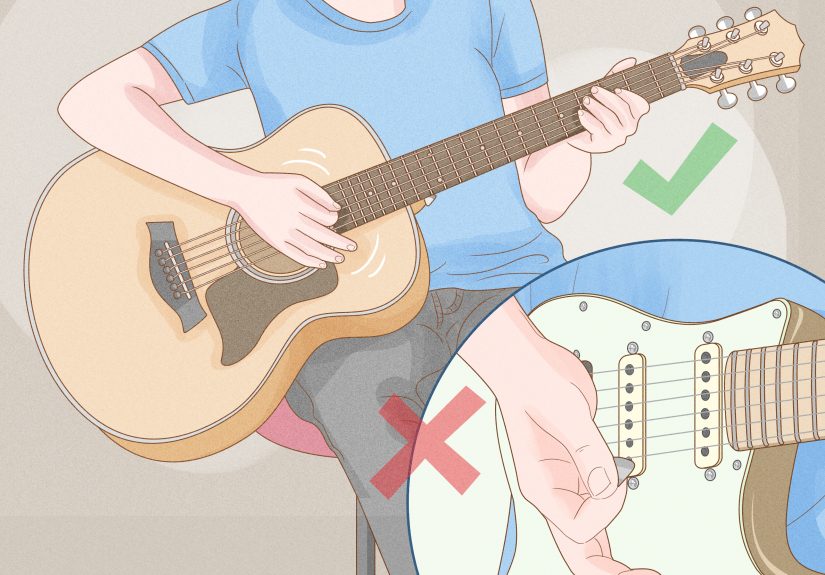
Good hand position can reduce soreness and prevent strain. Keep your wrist as relaxed and neutral as possible. Avoid sharply bending it inward for long periods. Your thumb should support the back of the neck lightly rather than clamping like a lobster claw.
When playing chords, curve your fingers so the tips press the strings. This helps avoid muting neighboring strings and reduces the amount of pressure needed. Place fingers close to the frets, because notes sound cleaner there with less effort.
Example: making a C chord easier
The C major chord can feel like beginner finger yoga. Instead of squeezing harder, check your angles. Place your ring finger close to the third fret on the A string, middle finger close to the second fret on the D string, and index finger close to the first fret on the B string. Keep your fingers curved. Strum slowly. If a note buzzes, adjust placement before adding pressure.
Do Not Rush Barre Chords
Barre chords are famous for humbling beginners. They require one finger to press multiple strings at once, which can feel impossible at first. If your fingertips are already sore, barre chords can make things worse.
Build basic chord strength first. Practice open chords, simple songs, and single-note exercises. When you start barre chords, practice them briefly and focus on technique. Use the side of your index finger slightly, keep your wrist comfortable, and do not practice them until your hand aches. Barre chords are a milestone, not a punishment.
When Finger Soreness Usually Gets Better
Many beginners notice improvement within a few weeks of consistent practice. Some players develop comfortable calluses faster; others take longer. Your progress depends on your skin, practice routine, guitar setup, string type, and technique.
Do not compare your fingertips to someone else’s. Some people build calluses quickly; others need more time. The important thing is that soreness should trend downward, not upward. If you are practicing regularly and pain keeps getting worse, check your guitar setup, reduce practice length, and consider getting feedback from a teacher.
Common Mistakes That Make Guitar Finger Pain Worse
Beginners often accidentally increase soreness by practicing in ways that feel productive but are actually inefficient. Here are the usual suspects:
- Practicing too long too soon: Your enthusiasm is wonderful. Your fingertips are not ready for a concert tour on day three.
- Pressing too hard: Clean sound comes from good placement and enough pressure, not maximum pressure.
- Ignoring setup: High action can make even simple chords painful.
- Skipping warm-ups: Cold hands tire faster.
- Practicing through sharp pain: Soreness is normal; injury signs are not.
- Using chords that are too advanced: Build gradually before living in barre-chord land.
Experience Notes: What Beginner Guitar Finger Soreness Really Feels Like
Most beginners remember the first week of guitar very clearly. The excitement is huge, but so is the surprise that three little chords can make your fingertips feel personally betrayed. A common experience is this: you learn Em and feel like a genius, then you try C major and suddenly your hand looks like it is trying to solve a puzzle designed by a mischievous raccoon.
The biggest lesson from real beginner experience is that soreness improves when practice becomes smarter, not more dramatic. One beginner might sit down determined to practice for an hour, only to quit after 12 minutes because every string feels like a cheese slicer. Another beginner practices 10 minutes in the morning and 10 minutes at night, focusing on clean placement and relaxed pressure. After two weeks, the second player usually feels better, remembers more, and still likes the guitar.
It also helps to learn the difference between productive discomfort and pointless suffering. Productive discomfort feels like mild fingertip tenderness after a focused session. Pointless suffering feels like gripping the neck so hard your shoulder rises toward your ear while the chord still buzzes. When that happens, the answer is rarely “try harder.” The answer is usually “move closer to the fret, relax your thumb, use less pressure, and slow down.”
Another familiar experience is discovering that the guitar itself matters. Many beginners start on an old acoustic that has been living in a closet since flip phones were cool. The strings are rusty, the action is high, and every chord requires the strength of a tiny superhero. Then they try a properly set-up guitar and suddenly realize they were not weak; their instrument was just being rude. A setup, fresh strings, or lighter gauge can make practice feel less like finger wrestling.
There is also an emotional side. Finger soreness can make beginners think they are not talented. That is usually false. Guitar is a physical skill, like typing, lifting weights, cooking knife work, or learning a sport. Your hands need repetition, recovery, and coordination. Nobody expects soft fingertips to become guitar-ready overnight. Give them time.
A useful trick is to end each practice session with something enjoyable, even if it is simple. Strum one chord with a steady rhythm. Play a two-chord song. Pick a melody on one string. This reminds your brain why the soreness is worth it. You are not practicing finger pain; you are practicing music. The soreness is just the toll booth on the road to your first clean song.
Finally, celebrate small wins. The first painless G chord matters. The first time your fingertips do not complain after 15 minutes matters. The first smooth chord change matters. Guitar progress often arrives quietly, then suddenly. One day your fingers hurt, buzz, and miss. A few weeks later, they land correctly before you even think about it. That is the magic of steady practice: your hands learn, your calluses form, and your guitar slowly stops feeling like a medieval device and starts feeling like an instrument.
Conclusion
The best way to ease finger soreness when learning to play guitar is to combine patience with practical technique. Practice in short daily sessions, press only as hard as needed, place your fingers close to the frets, keep your nails short, warm up gently, and take breaks before pain takes over. Make sure your guitar is properly set up, and consider lighter strings if your instrument feels too stiff.
Finger soreness is usually temporary, but it should be manageable. You are building calluses, coordination, and confidence at the same time. Treat your hands well, and they will reward you with cleaner chords, smoother changes, and far fewer “ouch” solos. The guitar is supposed to be challenging, not cruel. With the right approach, your fingertips will toughen up, your technique will improve, and your practice sessions will become something you look forward to instead of something your fingers try to avoid.