Table of Contents >> Show >> Hide
- Why Spit Is So Annoying on Wood (It’s Not Just the Humiliation)
- First: Identify What You’re Working With (A 30-Second Finish Check)
- The “Oh No, I Just Spit” Emergency Routine (5 Minutes)
- If the Spot Left a Ring or Hazy Patch (Saliva’s Dramatic Encore)
- Do You Need to Disinfect After Spit? (Sometimes. Not Always.)
- What NOT to Do (A Short List of Furniture Crimes)
- When a Tiny Spit Spot Becomes a Big Finish Problem
- Prevention: How to Avoid Future Sofa Table Spit Incidents
- 500 More Words of “Yep, This Happened”: My Sofa Table Spit Saga
- Conclusion
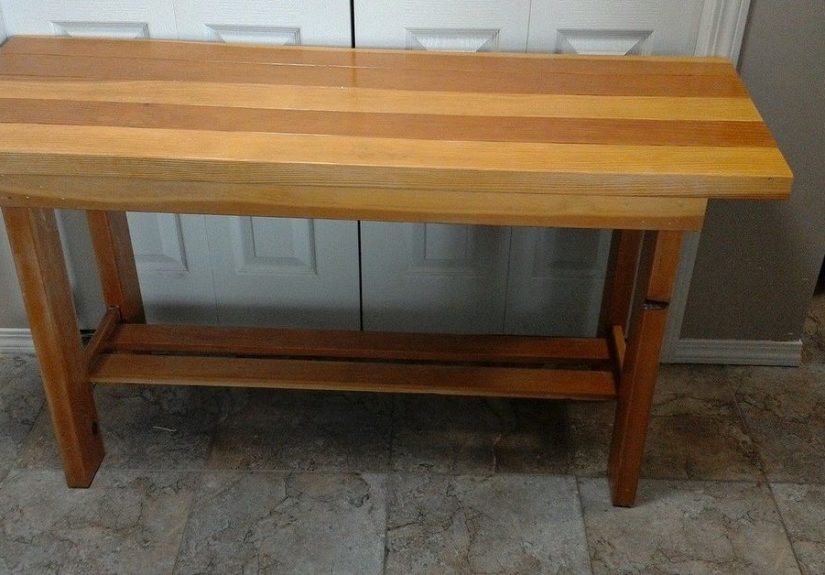
It happened in the blink of an eyeone innocent laugh, one poorly timed sip, and suddenly my living room had a new
feature: a tiny, glistening “splash zone” right on the sofa table. Not the couch. Not the rug. Not my own shirt
(for once). The sofa table. The furniture equivalent of a white button-down.
If you’ve ever stared at a suspicious spot on wood and thought, “Is that… moisture? Did I just redecorate with
saliva?”welcome. You’re among friends. The good news: most spit-on-wood situations are fixable. The better news:
you can clean, deodorize, and (if needed) disinfect without turning your table into a sad, cloudy science project.
Why Spit Is So Annoying on Wood (It’s Not Just the Humiliation)
Saliva is mostly water, but it’s also got enzymes, tiny bits of whatever you were eating or drinking, and sometimes
a little acidity. On a finished wood sofa table, spit can leave:
- A dull spot (moisture temporarily changing how the finish reflects light)
- A faint ring (like a mini coaster mark, but emotionally worse)
- A sticky patch (if there was sugar in your drink, candy, or food involved)
- A “cloudy” haze (moisture trapped in or affecting the finish)
The key is speed and gentleness. Wood finishes are basically the table’s invisible raincoat. Your job is to clean
the mess without stripping the raincoat off in a panic.
First: Identify What You’re Working With (A 30-Second Finish Check)
You don’t need a lab coatjust a little curiosity. Most sofa tables are one of these:
1) Sealed / finished wood (most common)
The surface feels smooth, and liquid tends to bead. This is the easiest scenario: you’re cleaning a finish, not raw wood.
2) Waxed or oil-finished wood
Feels warm and “natural,” sometimes a bit matte. These can be beautiful but fussy. Strong cleaners can create blotches.
3) Unfinished or worn-through finish
It absorbs moisture quickly and may darken where it gets wet. These need extra cautionwater and harsh disinfectants can stain.
If you’re not sure, assume it’s finished and start gentle. You can always level up your cleaning method. You can’t
un-sand a table.
The “Oh No, I Just Spit” Emergency Routine (5 Minutes)
This is the fastest, safest way to clean saliva off a sofa table without damaging the finish.
-
Blotdon’t rub.
Use a soft, clean cloth (microfiber is ideal). Press lightly to pick up moisture. Rubbing can spread grit and
create micro-scratches that turn one tiny spit spot into a whole new “design concept.” -
Wipe with a barely damp cloth.
Lightly dampen a cloth with plain water and wipe the spot once or twice. The goal is to lift residue, not soak the wood.
-
Follow with a tiny amount of mild soap if needed.
If there’s any stickiness, mix a few drops of mild dish soap into a cup of water. Dip a cloth, wring it out well
(like, “this cloth pays rent and can’t afford to drip”), and gently wipe. -
Dry immediately.
Buff dry with a clean cloth. This step matters: standing moisture is how you get rings, haze, and regret.
-
Buff with the grain.
A quick, gentle buff restores shine and helps the finish look uniform again.
If the Spot Left a Ring or Hazy Patch (Saliva’s Dramatic Encore)
Sometimes moisture leaves a white ring or cloudy spot, similar to a water stain. The good news: white marks usually
mean the moisture is in the finish, not deep in the wood.
Option A: The “Warmth + Patience” Method
If it’s faint, do nothing for an hour. Seriously. Many small moisture marks fade as the finish dries. Meanwhile,
you can stand there looking disappointed at the table like a parent at a middle school talent show.
Option B: Non-gel white toothpaste (gentle polishing)
For a small white haze on a sealed surface, use a non-gel, non-whitening white toothpaste. Put a
pea-sized amount on a soft cloth and rub lightly with the grain. Wipe clean with a slightly damp cloth, then dry.
If you want a little more lift, mix a tiny amount of baking soda with the toothpaste to make a mild pastethen use
a feather-light touch. If you’re scrubbing hard enough to feel victorious, you’re scrubbing too hard.
Option C: A small “oil sit” treatment (for white rings)
For white rings that look like moisture trapped in the finish, some people use a small amount of mayonnaise or
petroleum jelly. Apply a thin layer, let it sit briefly, then buff off. The idea is that oils can help displace
moisture and even out the look of the finish.
Important: test in an inconspicuous spot first. If your table’s finish is delicate or already worn, oils can darken
or change the sheen.
Option D: Low heat help (carefully)
Some water-mark fixes involve gentle heat to encourage moisture to evaporate from the finish. If you try this,
keep it conservative:
- Use low heat.
- Keep the heat source moving.
- Never apply high heat directly to the finish.
- Stop immediately if the finish looks soft, tacky, or more cloudy.
Do You Need to Disinfect After Spit? (Sometimes. Not Always.)
In most everyday situations, cleaning is enoughespecially on a decorative surface like a sofa table that isn’t a
food-prep area. But if someone is sick, if the table is touched constantly (remote controls, phones, snacks), or if
you just want peace of mind, you might choose to disinfect.
Rule #1: Clean first, disinfect second
Disinfectants work better on clean surfaces. So remove the saliva/residue with soap and water (or a wood-safe cleaner)
first, then disinfect if needed.
Rule #2: Choose a surface-safe disinfectant
Wood finishes don’t love harsh chemicals. Avoid anything that’s likely to strip, dull, or discolor the finish unless
the product label specifically says it’s appropriate for sealed wood surfaces.
If you use a disinfectant wipe or spray, follow the label directionsespecially the “contact time,” meaning how long
the surface must stay visibly wet to be effective. Wiping it dry too soon can turn “disinfection” into “moisturizing
the germs,” which is not the vibe.
Rule #3: Be cautious with bleach on wood
Bleach solutions can disinfect many hard surfaces, but bleach can also discolor or damage wood finishes and is
generally a last resort for furnitureespecially if the finish is worn, the piece is antique, or the surface is
unsealed. If you do use any bleach solution, follow label directions, use proper ventilation, and never mix bleach
with ammonia or other cleaners.
What NOT to Do (A Short List of Furniture Crimes)
When you’re trying to remove spit stains from a sofa table, panic can lead to questionable choices. Here’s what to avoid:
- Soaking the surface (too much water can cause warping, swelling, or cloudy finish issues)
- Ammonia-based cleaners (can degrade or discolor some finishes)
- Abrasive scrubbers or “magic erasers” (they can act like fine sandpaper and dull the finish)
- Rubbing alcohol as a default (it can strip or etch certain wood finishes)
- Random “kitchen sink” mixtures (especially anything involving bleach + something else)
When a Tiny Spit Spot Becomes a Big Finish Problem
If you cleaned quickly but still see a stubborn dull patch, you might be dealing with finish damage rather than residue.
Common signs:
- The spot looks different no matter how you clean it
- The sheen changed (gloss turned matte, or matte turned shiny)
- The surface feels rough or slightly tacky
- The mark gets worse with moisture
In that case, a simple clean won’t “fix” it, because nothing is dirty anymoreyour finish just needs help. Options include:
- Light polishing with a product meant for your finish type
- Touch-up markers for small discolorations
- Professional refinishing if the finish is failing or the damage is widespread
Prevention: How to Avoid Future Sofa Table Spit Incidents
Look, I’m not here to tell you to stop laughing or talking with your hands. That’s un-American. But you can make your
sofa table more forgiving:
- Use coasters (yes, even for “just water,” because condensation is sneaky)
- Keep a microfiber cloth nearby (it’s the adult version of keeping tissues in your pocket)
- Apply furniture protection appropriate for your finish (light polish, wax, or sealantused sparingly)
- Keep snacks and drinks on trays when people are chatting, laughing, or binge-watching anything comedic
500 More Words of “Yep, This Happened”: My Sofa Table Spit Saga
The moment I realized what I’d done, time slowed down like a dramatic movie sceneexcept the soundtrack was my own
internal screaming. I’d leaned forward to make a point (as one does), laughed mid-sentence (as one regrets), and the
tiniest mist of spit landed on the sofa table like it had booked the spot weeks in advance. It wasn’t a dramatic
spray. It was worse. It was subtle. Silent. Insidious. The kind of mess that makes you question whether you’re
still a dignified human or just a slightly sophisticated llama.
I froze. Not because I didn’t know what to do, but because I suddenly became extremely aware of how often people sit
near furniture and pretend not to notice things. I considered doing the same. Maybe it would evaporate. Maybe the
table would forgive me. Maybe no one would see it. Then I caught the light just rightand there it was: a small
glimmering patch of betrayal.
I tried to play it cool. I reached for a napkin like I was casually wiping a perfectly normal surface that had
definitely not been spit on by a grown adult with opinions. But the napkin had that scratchy, papery texture that
feels like it wants to sand your furniture into a new shape. So I stopped mid-wipe, because now I had two problems:
a spit spot and the creeping realization that I might damage the finish in front of an audience.
That’s when I learned the most important lesson in sofa table cleanup: be gentle and be fast.
I grabbed a microfiber cloth (the hero of modern living rooms), blotted the spot, and did a quick barely-damp wipe.
No drama. No soaking. No scrubbing like I was trying to erase my whole personality. Then I dried it immediately.
The whole process took under a minute, yet it felt like I had defused a bomb in formalwear.
Later, I checked the table again and noticed the faintest hazebarely there, but enough to make me obsessively tilt
my head like a confused golden retriever. I didn’t go nuclear. I didn’t dump vinegar on it. I didn’t introduce the
finish to random household chemicals like we were speed-dating. I waited. Andthis is the part I wish someone had
told me soonerwaiting worked. The haze faded as the surface fully dried. I buffed once with the grain, and the
table looked normal again.
So yes, I spit on a sofa table. I survived. The table survived. And now I keep a microfiber cloth within reach like
a responsible adult who definitely has it together (and not at all like someone preparing for the next comedic
moment that could turn into furniture maintenance).
Conclusion
Spit happens. Wood furniture happens. Sometimes both happen at the same time, directly under a beam of unforgiving
natural light. The smartest approach is simple: blot quickly, clean gently, dry immediately, and avoid harsh products
that can damage the finish. If a ring or haze shows up, treat it like a mild moisture markstart with the least
aggressive method, test first, and escalate carefully. With the right steps, your sofa table can go back to being a
stylish, innocent bystander in your living roomnot the crime scene of a laugh gone wrong.