Table of Contents >> Show >> Hide
- What “Instant Freezing” Actually Means
- Before You Start: Quick Safety + Success Notes
- How to Freeze Water Instantly: 7 Steps
- Step 1: Choose the right water (this matters more than you think)
- Step 2: Prep a nucleation trigger station
- Step 3: Chill the bottlescarefully and quietly
- Step 4: Check for “supercooled but still liquid”
- Step 5: Remove the bottle like it’s a sleeping baby dragon
- Step 6: Trigger the instant freeze (two reliable options)
- Step 7: Repeat with adjustments until it’s consistent
- Why It Works: The Science in Plain English
- Troubleshooting: The 6 Most Common “Why Didn’t It Work?!” Moments
- Quick FAQ: Instant Ice Edition
- Bonus: Real-World Experiences With Instant Freezing (About )
- Conclusion
If you’ve ever seen a video where a bottle of water “magically” turns to ice in seconds, you’ve witnessed a real (and wildly satisfying) science trick:
supercooled water. It’s not sorcery. It’s physics doing a little moonwalk.
In this guide, you’ll learn how to freeze water instantly using a safe, at-home setupplus the science behind why it works, what can go wrong,
and how to nail it consistently without turning your freezer into an accidental slip-n-slide factory.
What “Instant Freezing” Actually Means
Under normal conditions, water freezes at 32°F (0°C). But sometimes water can cool below that point and still stay liquid. That’s called
supercooling. The water is basically “ready” to become ice… it just needs a reason to start.
That “reason” is usually nucleation: a tiny disturbance or a microscopic seed (like a speck of ice, a bubble, or a rough surface)
where ice crystals can begin forming. Once nucleation starts, crystallization can spread through the water fastsometimes in a dramatic wave you can see.
Why purified bottled water works best
Tap water often contains minerals and tiny particles that act like “built-in ice starters.” Purified or distilled bottled water tends to have fewer
nucleation sites, which makes it easier to supercool without freezing solid in the freezer.
Before You Start: Quick Safety + Success Notes
- Use plastic bottles or a sturdy glassbut avoid fragile glass that could crack with rapid temperature changes.
- Don’t shake the bottle while chilling or removing it. You’re trying to keep it calm, like a cat that heard a vacuum.
- Freezer temperatures vary. The timing is a range, not a law of nature.
- Skip extreme cooling methods (lab chemicals, cryogenic stuff). This guide sticks to household-safe techniques.
How to Freeze Water Instantly: 7 Steps
This is the classic “snap-freeze” method: supercool the water, then trigger nucleation so it freezes on command.
Step 1: Choose the right water (this matters more than you think)
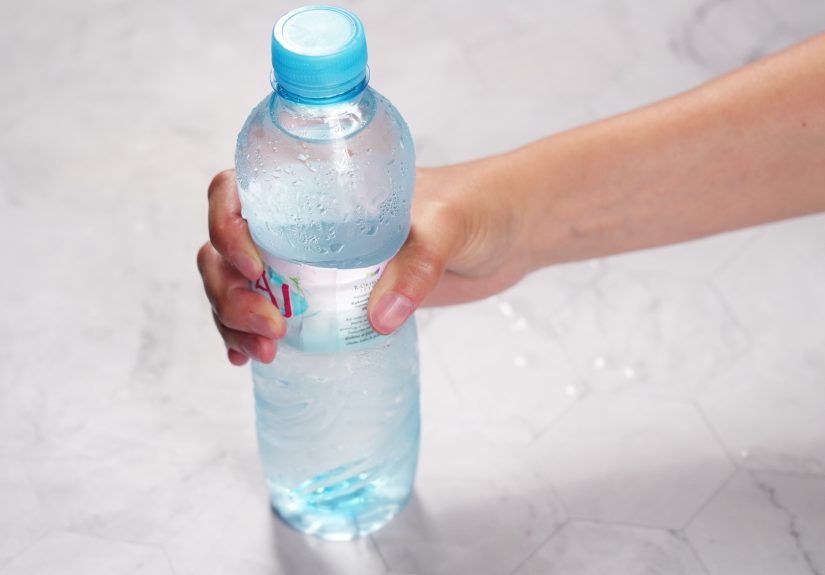
Start with unopened purified or distilled bottled water. The “unopened” part helps because it’s less likely to contain ice crystals or dust
introduced by air exposure. If you’re doing multiple attempts (recommended), grab 3–6 bottles so you can test different timing.
Step 2: Prep a nucleation trigger station
While the water chills, set up what you’ll use to trigger freezing:
- A plate or shallow bowl with ice cubes (the crystals will seed freezing instantly).
- Optional: a second plate in the freezer so it’s extra cold when you pour onto it.
- Optional: a clean thermometer if you want to confirm the water is below 32°F (0°C).
Step 3: Chill the bottlescarefully and quietly
Place the unopened bottles in the freezer where they won’t get bumped (not in the doortoo much movement). If possible, lay them on their sides so the
cooling is more uniform.
Typical timing is around 2 to 3 hours in a standard home freezer (often near 0°F / -18°C), but this can vary a lot based on:
bottle size, exact freezer temp, how full the freezer is, and how often the door opens.
Your mission: get the water below freezing without letting it actually form ice yet.
Step 4: Check for “supercooled but still liquid”
When you think it’s ready, open the freezer slowly and look at the bottle:
- If it’s fully frozen: you waited too long.
- If it’s slushy: you’re close, but nucleation has already started.
- If it looks totally liquid: it might be supercooled (or just not cold enough yet).
If you’re using a thermometer (optional), carefully check the water temperature. If it’s just under 32°F (0°C) and still liquid, you’re in the sweet spot.
Step 5: Remove the bottle like it’s a sleeping baby dragon
This step is all about not disturbing the water. Don’t shake it. Don’t drop it. Don’t do a victory dance near it.
Move smoothly and keep it upright.
Step 6: Trigger the instant freeze (two reliable options)
Option A: The “tap to freeze” method
- Place the bottle on a counter.
- Give it a firm tap (not a slam).
- If it’s properly supercooled, you’ll see ice crystals form and spread through the bottle.
Option B: The “pour onto ice” method (often the most dramatic)
- Take your plate/bowl of ice cubes.
- Slowly pour the supercooled water onto the ice.
- Watch the stream transform into a slushy “ice tower” as crystals propagate upward.
Step 7: Repeat with adjustments until it’s consistent
This experiment is famously a little finickybecause nucleation is picky. If it didn’t work perfectly on the first attempt, congratulations:
you’re doing real science now.
Adjust one variable at a time:
- Too frozen? Reduce freezer time by 10–20 minutes.
- Not freezing? Add 10–20 minutes, or make sure you used purified/distilled water.
- Freezes in the freezer every time? Try a different freezer spot (less vibration) and avoid moving the bottle at all.
Why It Works: The Science in Plain English
Freezing is a phase change. For water to become ice, molecules must arrange into an orderly crystal lattice. That usually begins at a nucleation site.
When water is supercooled, it’s in a metastable state: it’s colder than the freezing point, but it hasn’t started building ice crystals yet.
The moment you introduce a nucleation sitelike a tiny ice crystal from an ice cube or a small shock from tapping the bottlecrystallization can begin and
spread rapidly.
You’re watching two things happen fast:
- Nucleation begins (the first stable crystals form).
- Crystal growth takes over (the lattice propagates through the water).
That speed is also tied to latent heat: freezing releases heat. The system balances temperature and crystal growth in a quick cascade that
looks like instant ice.
Troubleshooting: The 6 Most Common “Why Didn’t It Work?!” Moments
1) “It froze solid in the freezer.”
Most likely you chilled it too longor your freezer runs colder than average. Shorten the time and try again. Using multiple bottles lets you find your
freezer’s “magic window.”
2) “It didn’t freeze when I tapped it.”
It might not be cold enough yet. Add a bit more time. Or your tap wasn’t enough to create nucleationtry pouring onto ice, which provides guaranteed
crystal seeds.
3) “It started freezing as soon as I opened the freezer.”
That can happen if ice crystals formed near the cap, or if the bottle got jostled. Choose a steadier freezer shelf, avoid the door, and keep the bottle
still during chilling.
4) “It’s slushy, not a cool ‘freeze wave.’”
Slush means nucleation already began slowly in the freezer. You were closereduce chilling time slightly so it stays fully liquid until you trigger it.
5) “My tap water never works.”
That’s normal. Minerals and tiny particles can trigger freezing early. Switch to purified or distilled water for a better chance of achieving supercooling.
6) “My results are inconsistent.”
Supercooling depends on tiny variables: vibrations, microscopic debris, temperature gradients, and freezer cycles. The fix is repetition and controlling
what you cansame bottle type, same freezer spot, similar timing, and minimal movement.
Quick FAQ: Instant Ice Edition
Can water really stay liquid below 32°F (0°C)?
Yes. Supercooled water exists in nature toolike in clouds and stormsuntil something triggers ice formation. That’s one reason icing conditions can be so
dangerous in aviation and weather.
Does this work with sparkling water or flavored water?
Sometimes, but it’s harder. Dissolved gases, sugars, and additives can change how freezing starts (and add extra nucleation sites). For the most reliable
“instant freeze” effect, stick with plain purified water.
What’s the easiest trigger: tapping or pouring?
Pouring onto ice is usually the most reliable because it directly introduces ice crystals. Tapping can be spectacular too, but it’s slightly more
sensitive to timing and bottle conditions.
Bonus: Real-World Experiences With Instant Freezing (About )
The first time you try this, it often feels like your freezer is personally judging you. One bottle freezes solid. Another stays liquid but refuses to
“snap” on cue. Then suddenly, you get one perfect run and start acting like you just won a Nobel Prize in Kitchen Physics. That roller coaster is normal.
One common experience: you pull the bottle out and it looks completely ordinaryclear, liquid, boring. Then you tap it and the freeze wave races from the
top down (or bottom up), turning crystal-clear water into an icy, cloudy bottle in seconds. People often describe it as a “snow globe effect,” because the
rapid formation of crystals can create a frosty, sparkling look inside the plastic.
Pouring creates a different kind of wow. You tilt the bottle over ice cubes and the stream starts to thicken mid-air, like it suddenly remembered it has a
job to do. The ice crystals build a slushy tower on the cube pile, and if you pour slowly, you can form layered ridgesalmost like a tiny frozen waterfall.
If you’ve ever wanted to feel like a wizard without actually breaking any laws of physics, this is your moment.
Another classic moment is the “premature freeze.” You gently crack the freezer door, and the bottle freezes right there on the shelf before you can grab
it. That usually means ice crystals formed near the lid or the bottle got a micro-jolt. It’s frustrating, but it’s also a great demonstration of how
sensitive nucleation can be. In a way, the water was supercooled and just waiting for an excuseyour freezer door provided the drama.
Many people find they get their best results after running a few “timing trials.” For example, you might chill three identical bottles and remove them at
2 hours 10 minutes, 2 hours 25 minutes, and 2 hours 40 minutes. In one freezer, 2:10 is too warm and nothing happens. In another, 2:40 is too long and you
get a bottle-shaped ice brick. But once you find your freezer’s sweet spot, the experiment becomes repeatableand that’s when it turns into a party trick
you can demo on demand.
A fun variation people report: if you pour supercooled water onto a single ice cube on a cold plate, the ice can grow upward and outward like a fast
crystal bloom. You can even see the freezing front crawl across the surface of a puddle if you pour into a shallow dish. It’s one of those experiences
where you stop thinking “this is a trick” and start thinking “okay, nature is cooler than my hobbies.”
The biggest takeaway from real attempts is that “instant ice” isn’t about brute force coldit’s about controlling the start of freezing. Once you feel
that click, you’ll understand why scientists talk about nucleation like it’s the secret handshake of phase changes.
Conclusion
Learning how to freeze water instantly is really learning how to supercool waterand then trigger freezing on your terms.
With purified water, a calm freezer setup, and the right timing window, you can reliably create that satisfying snap-freeze effect with a tap or a pour
onto ice.
Try a few test bottles, tweak your timing by small increments, and keep everything still until the big moment. Because the real magic isn’t that water can
freezeit’s that it can wait… and then freeze all at once when you tell it to.