Table of Contents >> Show >> Hide
- What Exactly Is a Moroccan Tile Table?
- Why Marrakech Is Famous for Tile Tables
- How Moroccan Tile Tabletops Are Made
- Decoding the Patterns and Colors
- Where to Shop for Moroccan Tile Tables in Marrakech
- How to Buy a Great Tile Table (Without Regrets)
- Bargaining in Marrakech (Friendly, Not Fear Factor)
- Getting a Moroccan Tile Table Home to the U.S.
- Styling Moroccan Tile Tables in American Homes
- Care and Maintenance: Keep the Shine, Skip the Stress
- How to Spot Authentic, High-Quality Moroccan Tile Tables
- Marrakech Moments: of Experience Around Moroccan Tile Tables
- Conclusion
Marrakech is the kind of city that makes you question why your home décor is so… obedient. In the medina, color isn’t an accentit’s a lifestyle. Tiles gleam like candy. Brass glows like sunset. And everywhere you turn, you’ll spot them: Moroccan tile tables (often called zellige or mosaic tables), sparkling with geometric patterns that look like math decided to become art.
This guide breaks down what Moroccan tile tables are, why Marrakech is a hotspot for finding them, how to spot the good stuff, and how to style and care for your table once it lands back home. Consider it your friendly, slightly nosy companion for shopping the souksand avoiding the heartbreak of buying a wobbly table that can’t handle a coffee mug without drama.
What Exactly Is a Moroccan Tile Table?
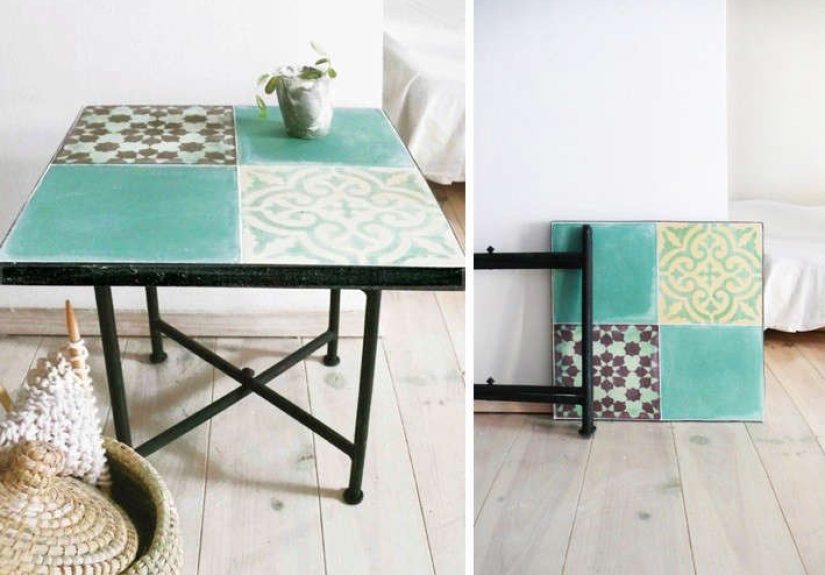
A Moroccan tile table is typically a small-to-medium accent table with a top made from hand-cut tile pieces arranged into geometric mosaics. The base is often wrought iron (curvy, romantic, and surprisingly sturdy), though you’ll also see carved wood bases or mixed materials depending on the workshop and intended use.
The tabletop is the star: tiny pieces of glazed tile are fit together like a puzzle, forming patterns such as eight-point stars, interlocking polygons, and repeating bands that feel hypnotic in the best way. The look is rooted in Moroccan architectural traditionthink courtyards, fountains, and intricate surface decorationscaled down to something you can actually set beside a sofa.
Zellige vs. “Mosaic” vs. “Cement Tile” Tables
- Zellige-style tables: Inspired by Morocco’s long tradition of handmade glazed clay tiles. Expect glossy surfaces, subtle ripples, and deliciously imperfect edges that prove a human made it.
- Mosaic tables: A broader term that often includes zellige-inspired tops, but may also describe tables using small tile chips or mixed materials.
- Cement tile look tables: Some tops mimic patterned cement tiles. They can be durable, but may need different care (especially sealing) depending on the finish.
Why Marrakech Is Famous for Tile Tables
While the craft traditions behind Moroccan tilework are deeply connected to historic centers like Fez, Marrakech is one of the most famous places to shop for Moroccan craftsbecause it’s a living marketplace. The medina’s souks are packed with artisan goods: metalwork, leather, lanterns, textiles, pottery, and plenty of mosaic and tile pieces that make your suitcase feel personally attacked.
Marrakech also has a design identity that celebrates bold pattern and layered craftsmanship. You’ll see zellige and mosaic surfaces in riads, palaces, and restored historic spaces, and that visual culture spills into the objects sold in workshops and stalls. In other words: the city is basically an open-air showroom for texture and detail.
How Moroccan Tile Tabletops Are Made
The magic of Moroccan tile tables isn’t just the final patternit’s the process. Traditional Moroccan tilework involves individual tiles shaped and assembled by hand. Rather than a printed design slapped onto a surface, the pattern is literally built piece by piece. That’s why the best Moroccan mosaic tables don’t look “flat” in personality. They have depth, variation, and a kind of shimmer that comes from human hands.
What to Look For in the Craftsmanship
- Handmade variation: Slight differences in glaze tone, tiny pits, uneven edges, and subtle surface ripples are normaland often desirable.
- Clean pattern alignment: The overall geometry should feel balanced. Handmade doesn’t mean sloppy; it means alive.
- Solid setting: The tile pieces should feel firmly embedded (no loose bits, no shifting, no “crunch” when you press lightly).
- Stable base: A beautiful top won’t save a table that rocks like it’s auditioning for a pirate movie.
Decoding the Patterns and Colors
Moroccan geometric design is famous for a reason: it’s mesmerizing without being chaotic. Many tabletops feature starburst motifs, repeating grids, and interlocking shapes that feel both ancient and modernlike they belong in a centuries-old courtyard and next to a minimalist couch.
Popular Color Stories You’ll See in Marrakech
- Cobalt + white: crisp, classic, and very “fountain courtyard chic.”
- Emerald + black: moody, dramatic, and perfect for a modern space that wants a little romance.
- Sunset tones: saffron, terracotta, and warm neutrals that echo Marrakech’s earthy palette.
- Ocean tones: turquoise, sea-glass, and deep blue that feel fresh on patios and bright rooms.
Tip: If you’re styling for a U.S. home, these tables pair especially well with natural textureslinen, oak, rattan, leather, plaster-like wallsbecause the table becomes the “jewelry” while everything else plays it cool.
Where to Shop for Moroccan Tile Tables in Marrakech
If you want the full Marrakech experience, you’ll end up in the medina’s souks: a maze of narrow lanes organized by trade, with artisans and vendors selling everything from teapots to textiles. This is where you can find tile tables in different sizes, patterns, and levels of qualitysometimes stacked like colorful pancakes.
Souks vs. Fixed-Price Artisan Spots
In the souks, bargaining is part of the culture. But if you’re not in the mood to negotiate (or you’d like to keep your blood pressure in a peaceful range), you can look for artisan centers and established shops where pricing may be more consistent and shopping can feel less intense.
How to Buy a Great Tile Table (Without Regrets)
Shopping for a Moroccan tile table is equal parts art appreciation and quality control. Here’s a practical checklist you can use in Marrakechyes, even if you’re distracted by the scent of mint tea and the urge to buy seventeen lanterns.
1) Check the Tabletop Like You’re a Detective
- Run your hand over the surface: It should feel solid. Minor unevenness is normal, but it shouldn’t feel fragile or “grainy.”
- Scan the grout lines: Look for cracking, crumbling, or gaps. Good grout should look consistent and well-set.
- Look for chips: A tiny chip can be okay (handmade life happens), but avoid tables with multiple damaged pieces.
2) Test the Base (Yes, in Public)
- Wobble test: Press gently on opposite sides. A good base should feel stable and balanced.
- Foot check: If the legs are uneven, ask if the workshop can adjust or add leveling pads.
- Weight reality check: Tile tables can be heavy. Make sure the size fits your space and your shipping plan.
3) Ask Smart Questions
- Is this tabletop handmade?
- What materials are used for the base (wrought iron, wood, mixed)?
- Is the table intended for indoor use, outdoor use, or both?
- How is it packed for shipping?
Bargaining in Marrakech (Friendly, Not Fear Factor)
Negotiation in the souks is normal. It’s not a battleit’s more like a social dance with numbers. A common approach is to get a sense of prices by looking at a few shops first, then negotiate from a place of basic confidence (even if you’re secretly nervous).
Practical bargaining tips
- Compare first: Look at a few tables so you understand the range for size and complexity.
- Be polite and calm: Humor helps. So does not acting like you’re buying the last table on earth.
- Offer reasonably: Many travelers aim to negotiate down from the initial ask, but keep it respectfulcraft takes time.
- Know when to walk away: If the quality is questionable or the vibe feels off, it’s okay to say “thank you” and move on.
Getting a Moroccan Tile Table Home to the U.S.
Tile tables are sturdy in daily lifebut they’re not immune to rough handling during travel. If you’re shipping, prioritize protective packing and clear agreement on who’s responsible if something arrives damaged.
Shipping and packing tips
- Ask for photos of the packing process: A good vendor won’t mind documenting it.
- Separate top and base when possible: This reduces stress on the tile surface during transit.
- Insist on corner protection and dense padding: Tile edges are the most vulnerable.
- Keep receipts and messages: Helpful for customs paperwork and any shipping claims.
If you plan to check it as luggage (brave soul), choose a very small table, wrap it obsessively, and accept that your suitcase may become a structural engineering project.
Styling Moroccan Tile Tables in American Homes
Moroccan tile tables are surprisingly flexible. Designers love Moroccan zellige and related handmade tile looks because the surface variation adds warmth and textureespecially in spaces that risk feeling too “perfect.” A tile table gives you that same handmade energy without committing to a full renovation.
Where tile tables look best
- As a patio bistro table: Add two chairs and suddenly your backyard feels like a boutique riad.
- As a living-room accent table: Perfect for lamps, drinks, or a stack of books you swear you’re reading.
- As a bedside table: A colorful tabletop makes even a basic bedroom feel curated.
- In an entryway: A small round mosaic table catches keys and compliments.
Pairings that always work
- Neutral upholstery + a bold tile top
- Brass accents + iron base (a match made in glow)
- Natural wood + blue/green tile palettes
- Minimalist rooms + one “statement” Moroccan piece
Care and Maintenance: Keep the Shine, Skip the Stress
Good news: tile tables are generally low-maintenance compared to many delicate furniture finishes. Still, a little care goes a long wayespecially because grout and certain tile styles can be sensitive to harsh cleaners.
Everyday cleaning
- Use a soft cloth and mild soap: Warm water + gentle dish soap usually does the job.
- Avoid acidic cleaners: Strong acids (including vinegar) can damage certain tile or grout surfaces over time.
- Wipe spills quickly: Especially if the tabletop includes porous grout or cement-like materials.
Long-term protection
- Use coasters: Not because the table is fragilebut because water rings are annoying and preventable.
- Consider sealing if recommended: Some grout or cement-style surfaces benefit from periodic sealing. Ask the seller what the tabletop is made from and whether sealing is appropriate.
- Outdoor caution: In freeze-thaw climates, tile and grout can suffer if water gets in and expands. If you live somewhere with harsh winters, bring the table indoors or keep it covered and dry.
How to Spot Authentic, High-Quality Moroccan Tile Tables
There’s a difference between “handcrafted character” and “this was rushed on a Friday.” Here’s how to tell:
Signs you’re looking at quality
- Organic variation: Handmade zellige-style pieces often show subtle color shifts and texture.
- Confident geometry: The pattern should feel intentional and balanced.
- Strong finishing: Edges are protected, grout looks clean, and the base feels structurally solid.
Red flags
- Loose tile pieces or grout that powders when touched
- Major wobble that can’t be easily corrected
- Perfectly uniform “printed” look if you’re specifically seeking handmade texture and variation
Marrakech Moments: of Experience Around Moroccan Tile Tables
If you want to understand Moroccan tile tables, don’t start with a shopping cartstart with a morning in Marrakech when the light hits the walls like warm honey and the city feels like it’s already mid-conversation. You step into the medina and immediately lose your sense of direction (don’t worry, it’s basically a local tradition). Somewhere between the call of scooters, the clink of metalwork, and the smell of spices you can’t name but suddenly need forever, you spot your first mosaic table: a round top covered in tiny geometric pieces, as if someone turned a kaleidoscope into furniture.
The experience of choosing a table is part treasure hunt, part personality test. Do you lean toward crisp blue-and-white starbursts that feel like a fountain courtyard? Or do you go boldemerald, black, saffronlike you’re decorating for a movie scene where everyone wears linen and says interesting things? In the souks, patterns repeat and then surprise you: a familiar star becomes a new rhythm of triangles; a border motif shifts from orderly to playful. You start noticing details you’d miss at home: the way the glaze catches sunlight, the slight ripples that prove it’s handmade, the tiny imperfections that make the surface feel alive instead of manufactured.
Then comes the human part. Maybe a vendor offers mint tea. Maybe you laugh at your own awkward bargaining instincts. The negotiation doesn’t have to be tenseit can be light, respectful, even funny. You learn quickly that asking questions isn’t “being difficult,” it’s being smart: What’s the base made of? Can the legs be adjusted? Is it meant for outdoor use? A good seller will answer clearly, and a great one will show you the workshop process with the quiet pride of someone who knows craftsmanship isn’t a trendit’s a legacy.
And once you commitonce you pick the tableyou suddenly become a logistics professional. You think about packing, padding, shipping timelines, and whether your future self will thank you for choosing the slightly smaller size that fits through a doorway without drama. You take photos. You double-check measurements. You imagine the table in your space: next to a couch, holding a cup of coffee, turning an ordinary corner into a moment.
Back home, that’s the real magic. A Moroccan tile table doesn’t just “match” a roomit changes how the room feels. It becomes a conversation starter and a mood setter. Friends touch the surface and ask where you found it. You realize the table carries memories: the sound of the souks, the warm air, the sense of discovery when you turned down a narrow lane and found something that felt personal. It’s décor, surebut it’s also proof that your home can hold stories, not just stuff.
Conclusion
Moroccan tile tables from Marrakech are more than pretty surfacesthey’re portable craftsmanship. Whether you buy one in the souks, through an artisan center, or from a trusted seller who ships internationally, the goal is the same: bring home a piece that feels handmade, structurally sound, and genuinely you.
Choose the pattern that makes you pause. Check the quality like you mean it. Care for it with gentle cleaning and a little common sense. And when it’s finally in your homeon a patio, by a bedside, in an entrywaylet it do what Marrakech does best: make everyday life feel a little more vivid.