Table of Contents >> Show >> Hide
- Signature Scorsese Easter Eggs: The Stuff He Sneaks In Again and Again
- 1) “Gimme Shelter” is basically his unofficial gangster bat-signal
- 2) In The Departed, X really does mark the spot (and sometimes the body)
- 3) Saul Bass title sequences: a classy calling card across multiple films
- 4) Scorsese shows up in his own worldssometimes because the universe forced him to
- 5) The “song choice as storytelling” habit is an Easter egg all by itself
- Happy Accidents and Legendary Improvisations
- 6) “You talkin’ to me?” wasn’t born on the pageit was born in the mirror
- 7) The “Funny how?” moment in Goodfellas wasn’t in the shooting script
- 8) In The Wolf of Wall Street, the chest-thump ritual became part of the movie’s DNA
- 9) Sometimes “going improv” is a gambleand New York, New York took the hit
- 10) Jonah Hill took the minimum to get in the room with Scorsese
- Obsessive Craft: The Details Scorsese (and His Teams) Sweat So You Can Feel It
- 11) De Niro didn’t just “research” Taxi Driverhe went full cab mode
- 12) Bernard Herrmann finished the Taxi Driver score… and then history closed the door
- 13) Taxi Driver avoided an X rating by changing how the blood looked
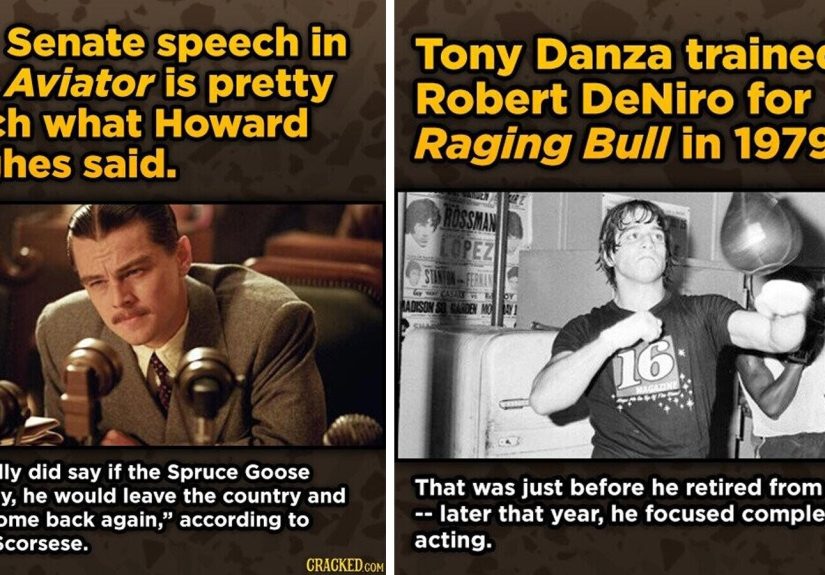
- 14) De Niro gained serious weight for Raging Bull, and the schedule had to respect the body
- 15) Raging Bull nearly got a director credit tantrum over one tiny sound detail
- 16) The Steadicam isn’t just a camera toolit’s a character tool in Raging Bull
- Camera Choreography and Technical Wizardry
- 17) The Goodfellas Copacabana shot is a magic trick that refuses to show its seams
- 18) The shot’s real secret: it’s a logistical ballet with zero patience for chaos
- 19) The Last Waltz had a gigantic shooting planlike a concert with a choreography bible
- 20) The Aviator didn’t just look periodit recreated extinct color processes
- 21) Hugo used 3D like a love letter, not a carnival ride
- 22) Its color inspiration dips into early photographic looks, not modern gloss
- 23) Shutter Island VFX: the magic was “make it real, then make it uneasy”
- 24) The Irishman used a specialized multi-camera rig for de-aging work
- Production Curveballs, Long Gestations, and Wild Industry Trades
- 25) Casino shot in real Vegas spacesoften when the city was trying to sleep
- 26) The opening titles of Casino carry a final “master signature”
- 27) Gangs of New York was a decades-long obsession before it became a movie
- 28) And yesthere’s a famously nerdy George Lucas assist in the production lore
- 29) After Hours: Scorsese’s “acting direction” could be… lifestyle-based
- 30) Spielberg and Scorsese literally traded projects: Cape Fear for Schindler’s List
- 31) Scorsese’s inspiration pipeline is real: one film can spark the next
- 32) Casting can be pure chaos: even a bus-shelter image can change a film
- Wrap-Up: Why Scorsese Trivia Feels Like a Second Movie Hiding Inside the First
- Extra: The Experience of Hunting Scorsese Easter Eggs (About )
Martin Scorsese movies don’t just have plotsthey have layers. The kind of layers you only notice on a rewatch at 1:17 a.m. when you suddenly realize, “Wait… did that shot just tell me something?” From improvised lines that became cinematic scripture to visual motifs that quietly tap you on the shoulder before somebody gets whacked, Scorsese films are basically built for trivia hunters.
Below are 32 behind-the-scenes stories and Easter eggs from Scorsese’s filmographyspanning gangster epics, Hollywood biopics, nerve-jangling thrillers, and one very fancy 3D love letter to cinema. It’s written for humans (not robots), so expect clear examples, quick context, and the occasional jokebecause if you can’t laugh while discussing a three-camera “monster rig,” what are we even doing here?
Signature Scorsese Easter Eggs: The Stuff He Sneaks In Again and Again
1) “Gimme Shelter” is basically his unofficial gangster bat-signal
When you hear the Rolling Stones’ “Gimme Shelter” in a Scorsese crime film, it’s not randomit’s a mood forecast. The song pops up across multiple titles, becoming a kind of recurring signature: not a literal Easter egg like a hidden object, but a repeated sonic wink that tells you, “Buckle up. Morality is about to get slippery.”
2) In The Departed, X really does mark the spot (and sometimes the body)
Keep your eyes peeled for X-shaped compositions and markingsan infamous visual motif that fans track through the film. It’s a subtle “death flag” technique: not an announcement, more like a quiet omen. Rewatches become a scavenger hunt where the movie feels like it’s whispering spoilers at you in geometry.
3) Saul Bass title sequences: a classy calling card across multiple films
If you’re the kind of person who never skips opening credits (respect), Scorsese rewards you. Legendary designer Saul Bass created title sequences for several Scorsese films, including Goodfellas, Cape Fear, The Age of Innocence, and Casino. It’s a behind-the-scenes “Easter egg” in the craft lineagelike spotting a master signature in the corner of a painting.
4) Scorsese shows up in his own worldssometimes because the universe forced him to
Director cameos can be cute, but Scorsese’s can be oddly electric. One famous example: he appears in Taxi Driver in a tense scene that feels less like “Hi, I’m the director!” and more like “I have arrived to make you uncomfortable.” It’s a cameo that doesn’t break the spellit tightens it.
5) The “song choice as storytelling” habit is an Easter egg all by itself
Scorsese needle drops aren’t background decoration; they’re narration with guitars. Pay attention to lyrics, era, and emotional timing. Often the music functions like an extra characterone that won’t testify in court, but absolutely knows what you did.
Happy Accidents and Legendary Improvisations
6) “You talkin’ to me?” wasn’t born on the pageit was born in the mirror
The iconic mirror monologue in Taxi Driver didn’t arrive fully formed in the script. The scene became legendary because of how it was developed and performedturning a character moment into a cultural quote factory. It’s the kind of improvisational lightning that makes writers proud and actors dangerous (in the best way).
7) The “Funny how?” moment in Goodfellas wasn’t in the shooting script
That scenethe one where the vibe turns from laughter to fear in about two secondswasn’t written into the shooting script the way you’d expect. It was built from a real-life style anecdote and crafted to generate genuine surprise in the room. It plays like a joke until it plays like a warning… which is basically the emotional job description of Goodfellas.
8) In The Wolf of Wall Street, the chest-thump ritual became part of the movie’s DNA
The early “hum-and-thump” energy isn’t just flavorit’s a character lens. It functions like a secret handshake into Mark Hanna’s world: finance as cult, motivation as hypnosis, and masculinity as percussion. It’s a great example of how a small behavioral detail can become a whole scene’s engine.
9) Sometimes “going improv” is a gambleand New York, New York took the hit
One of the more fascinating behind-the-scenes pivots in Scorsese’s career: he deliberately tried a looser, more improvisational approach on New York, New York. It’s a reminder that even masters experimentand sometimes the experiment doesn’t land commercially, even if it teaches the filmmaker something valuable.
10) Jonah Hill took the minimum to get in the room with Scorsese
In a town where people negotiate like it’s an Olympic sport, Hill famously accepted a much smaller paycheck for The Wolf of Wall Streetbecause the role (and the director) mattered more than the number. It’s behind-the-scenes trivia that also explains the performance: hungry, fearless, and all-in.
Obsessive Craft: The Details Scorsese (and His Teams) Sweat So You Can Feel It
11) De Niro didn’t just “research” Taxi Driverhe went full cab mode
Preparation in Scorsese films often crosses into lived experience, and De Niro’s work for Taxi Driver is a classic example. The performance feels so rooted because it’s not acting “at” the worldit’s acting from inside it.
12) Bernard Herrmann finished the Taxi Driver score… and then history closed the door
One of the most poignant behind-the-scenes facts in Scorsese lore: composer Bernard Herrmann completed and conducted recording sessions for the film’s score, then died shortly afterward. Knowing that adds an extra layer of ache to a soundtrack that already feels like neon loneliness.
13) Taxi Driver avoided an X rating by changing how the blood looked
Ratings battles can shape art in weird ways. In this case, the strategy involved altering the blood’s appearance so it wouldn’t read as vividly red on screen. It’s a practical trick with big consequences: the film reaches audiences without losing the emotional brutality of the scene.
14) De Niro gained serious weight for Raging Bull, and the schedule had to respect the body
The transformation in Raging Bull wasn’t just makeup magic. The production had to accommodate the physical reality of the performancebecause you can’t “fake” certain kinds of presence. The result is a character arc you can feel in posture, breath, and movement.
15) Raging Bull nearly got a director credit tantrum over one tiny sound detail
Scorsese’s reputation for precision isn’t a myth. There’s behind-the-scenes history of him agonizing over a small, specific line in the sound mix late in the processbecause the film in his head wasn’t “done” until the film in the speakers matched it.
16) The Steadicam isn’t just a camera toolit’s a character tool in Raging Bull
Some Scorsese sequences feel like the camera is breathing alongside the character. That’s not accidental. The way movement is designedespecially in ring-walk momentsturns cinematography into psychology: confidence, dread, adrenaline, and ego, all conveyed without a single line of dialogue.
Camera Choreography and Technical Wizardry
17) The Goodfellas Copacabana shot is a magic trick that refuses to show its seams
That famous “follow them inside” tracking shot is more than flexingit’s storytelling. You don’t just watch Henry move through a space; you watch the world reorganize itself to accommodate him. Doors open, people appear, privileges materialize. It’s a one-take fantasy of access.
18) The shot’s real secret: it’s a logistical ballet with zero patience for chaos
Long takes are unforgiving. If one person misses a cue, the whole thing collapses like a soufflé in a wind tunnel. That’s why these scenes feel “alive”: they’re alive because they’re engineered to be alivethen executed like a high-wire act with no net.
19) The Last Waltz had a gigantic shooting planlike a concert with a choreography bible
Scorsese didn’t just film a concert documentary; he staged it like cinema. Multiple camera operators, precise positions, cues, and a massive plan designed to capture lightning without pretending lightning is predictable. It’s one of the cleanest examples of “documentary” built with narrative discipline.
20) The Aviator didn’t just look periodit recreated extinct color processes
The film’s visual design intentionally shifts to mirror changing eras in cinema technology. Rather than simply “make it old-timey,” the team pursued specific color aesthetics associated with historical processes, creating a timeline in the palette itself. It’s a deep-nerd filmmaking flex… and it works.
21) Hugo used 3D like a love letter, not a carnival ride
Hugo is a Scorsese film about movies, shot with a deliberate approach to depth and texture. The 3D isn’t “stuff flying at your face” (okay, not only that); it’s built to make you feel space, gears, clocks, and early cinema wonder as something tactile.
22) Its color inspiration dips into early photographic looks, not modern gloss
The visual goal leaned toward historical inspirationevoking the feeling of early color imagery rather than contemporary digital slickness. That’s why the movie feels like a storybook that accidentally learned physics.
23) Shutter Island VFX: the magic was “make it real, then make it uneasy”
The film’s effects approach blended toolsminiatures, matte paintings, compositing, and morenot to show off, but to keep you uncertain about what you’re seeing. When the world feels solid but somehow wrong, that’s not just story. That’s design.
24) The Irishman used a specialized multi-camera rig for de-aging work
De-aging isn’t just “press youth filter.” It involves capturing performance data in ways that give VFX artists enough information to reshape age while keeping expression intact. The production employed a distinctive camera setup designed for that purposetechnical, demanding, and wildly ambitious.
Production Curveballs, Long Gestations, and Wild Industry Trades
25) Casino shot in real Vegas spacesoften when the city was trying to sleep
Las Vegas isn’t a film set; it’s an organism. Working inside actual casino environments (and around their schedules) adds a layer of authenticity you can’t fully fake. The film’s glow feels lived-in because, in many ways, it was.
26) The opening titles of Casino carry a final “master signature”
Those title sequences aren’t just stylishthey’re part of a larger design lineage in film history. When you learn who made them (and that it was among the last works of a legend), the credits become a kind of cinematic museum label: “Yes, this is art. Please stand back.”
27) Gangs of New York was a decades-long obsession before it became a movie
Some films are made because a studio needs a release date. Others are made because a director can’t stop thinking about them. Gangs of New York sits in the second category: a project that lived in development for years, waiting for timing, money, and momentum to align.
28) And yesthere’s a famously nerdy George Lucas assist in the production lore
When a giant production runs into a problem that requires screen trickery, it helps to know someone who’s built a career out of it. One memorable behind-the-scenes story involves Scorsese leaning on Lucas’s expertise for a specific effects challengeproof that even auteurs sometimes phone a friend.
29) After Hours: Scorsese’s “acting direction” could be… lifestyle-based
In at least one behind-the-scenes anecdote, Scorsese gave his lead actor restrictions designed to feed the character’s frustration. It’s intense, but it fits: the movie’s whole vibe is “one long night where the universe keeps moving your exit sign.”
30) Spielberg and Scorsese literally traded projects: Cape Fear for Schindler’s List
Hollywood collaboration sometimes looks like friendly lunches. Sometimes it looks like a straight-up project swap between two iconic directors. This trade is one of those “only in the movies” behind-the-scenes factsexcept it’s real life.
31) Scorsese’s inspiration pipeline is real: one film can spark the next
While working on one project, Scorsese encountered material that nudged him toward another. It’s a good reminder that film careers aren’t neat folders; they’re overlapping tabs. Sometimes a quiet reading moment on set becomes the seed of a future masterpiece.
32) Casting can be pure chaos: even a bus-shelter image can change a film
One of the best casting anecdotes in the Scorsese orbit: spotting the right face in the wild and saying, essentially, “Get that person.” It’s part instinct, part luck, part director brainwhere everything you see becomes a possible frame.
Wrap-Up: Why Scorsese Trivia Feels Like a Second Movie Hiding Inside the First
The best Scorsese film Easter eggs aren’t just “look, a cameo!” They’re structural: camera movement that acts, music that confesses, motifs that predict, and production choices that turn limitations into style. Once you learn the behind-the-scenes trivia, a rewatch becomes a guided tour: you’re not only watching the storyyou’re watching the craft decisions that made the story hit like it does.
And honestly? That’s the fun. Scorsese films are already intense on first view. On second view, they become puzzles. On third view, they become home renovation shows for your brain: “Here’s where they reinforced the tension beam,” “Wow, look at that structural foreshadowing,” “Oh no, the soundtrack is load-bearing.”
Extra: The Experience of Hunting Scorsese Easter Eggs (About )
Watching a Martin Scorsese film “normally” is already a full-contact sport. The pacing is sharp, the characters are volatile, and the world tends to tilt toward temptation like gravity has a bad influence. But watching Scorsese films as a trivia hunter is a different kind of experiencelike turning a great meal into a cooking class without ruining the taste.
The first thing people notice on an Easter-egg rewatch is how much storytelling happens outside dialogue. A camera move isn’t just a move; it’s an opinion. A song cue isn’t just mood; it’s an argument. When you start paying attention to recurring signatureslike the way certain tracks return across crime films, or how visual motifs quietly “stamp” a sceneyou get that delightful sensation of the movie talking to you in a second language. It’s still English, sure, but now it’s also rhythm, composition, and pattern recognition.
The experience gets even better in groups. One person notices a detail in the background; another remembers a behind-the-scenes anecdote; someone else connects it to a different Scorsese film and suddenly you’re building a tiny cinematic conspiracy boardexcept the conspiracy is “great filmmaking” and the evidence is everywhere. It becomes a social game: pause, point, argue, rewind, laugh, then fall silent because the next scene is too good to interrupt.
There’s also a specific joy in learning how the sausage is made and realizing it makes the film more impressive, not less. Knowing a scene was improvised doesn’t cheapen it; it raises the stakes. You can almost feel the risk in the momentactors and director trusting instinct, then shaping that instinct into something precise. Likewise, learning that a long take required choreography and repeated attempts doesn’t “explain away” the magic; it proves the magic was earned. It’s like seeing the blueprint after touring a cathedral: awe doesn’t disappear, it gains architecture.
Even the technical storiesspecial camera rigs, deliberate color timelines, practical effects blended with VFXtend to land emotionally because Scorsese’s teams use technique in service of meaning. The point isn’t “look what we can do.” The point is “look what the character is becoming,” or “feel how the world is shifting,” or “notice the trap before the character does.” That’s why the Easter-egg hunt never feels like homework: it feels like uncovering extra layers of intention.
If you want the full experience, try a themed rewatch: one night for improvised scenes, one night for camera choreography, one night for recurring music cues. You’ll start to recognize patterns the way you recognize a friend’s handwriting. And once that clicks, Scorsese film trivia stops being triviait becomes a richer way of seeing the movies you already loved.