Table of Contents >> Show >> Hide
- What “Medium White Oak” Really Means (and Why It Looks So Good)
- End Grain: Why the “Checkerboard” Construction Has a Fan Club
- Where Medium White Oak End-Grain Butcher Block Shines
- Finish Choices: Oil, Seal, or a Hybrid?
- Care and Maintenance: The Routine That Keeps It Looking Expensive
- Design and Build Details That Matter (More Than the Marketing Copy)
- Troubleshooting: When Your Beautiful Oak Starts Acting Like a Drama Queen
- Buying Checklist: How to Choose Without Getting Bamboozled
- Conclusion: A Little Maintenance for a Lot of Beauty
- of Real-World Experiences With Medium White Oak End-Grain Butcher Block
There are kitchen upgrades that whisper “nice.” And then there’s a medium white oak, end-grain butcher block,
which confidently announces: “I chop onions for sport, and I have excellent taste in wood.”
If you’ve been eyeing that warm, not-too-blonde, not-too-dark “medium” oak toneand you keep hearing the words
end grain like it’s the VIP lounge of cutting surfacesthis guide is for you. We’re going to break down
what you’re actually buying, why it costs more than you expected, how to keep it gorgeous, and when to oil it
(spoiler: not once every presidential election).
What “Medium White Oak” Really Means (and Why It Looks So Good)
“White oak” is a species group commonly used in American furniture, flooring, and kitchen surfaces because it’s
strong, handsome, and takes a finish like it was born for the camera. One of the reasons white oak has a reputation
for better moisture resistance than red oak is its structure: the pores in the heartwood can be filled with
tyloses, which helps reduce liquid movement through the wood. Translation: it’s not waterproof, but it’s
less “soggy sponge” and more “responsible adult.” That’s one reason white oak has long been used in tight cooperage
(think barrels) and other applications where liquids are involved.
Now about that “medium” part. A lot of white oak you see online is either very light (natural, raw, or clear-coated)
or very dark (stained or fumed). A medium white oak finish typically sits in the sweet spot: it highlights
grain and ray fleck without turning your kitchen into a Scandinavian snowfield or a Gothic library. It’s the “goldilocks”
tonewarm, balanced, and forgiving when life happens (because life will absolutely happen near a cutting board).
Hardness and durability: a quick reality check
White oak is a solid hardwood with a Janka hardness rating often cited around the mid-1300 lbf range. In normal-human
terms: it handles daily kitchen abuse well, especially when paired with a build style designed for impact and cutting.
It’s not indestructible (nothing in a kitchen isexcept maybe that mystery ladle in your drawer), but it’s a strong
choice for a butcher block surface.
End Grain: Why the “Checkerboard” Construction Has a Fan Club
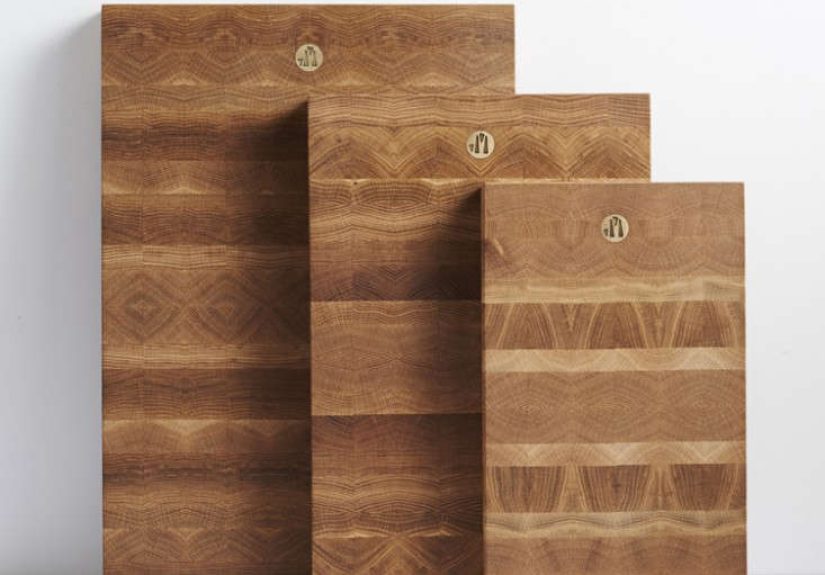
End-grain butcher block is built by turning wood pieces so the end fibers face up, creating that classic
checkerboard look. When you chop, you’re striking the ends of the wood fibers instead of slicing across the long grain.
The practical benefit? The fibers tend to separate under the knife and then rebound, so the surface can show fewer deep
cut marks over time compared to many edge-grain boards.
That’s why end grain is often described as:
- Knife-friendlier (less harsh impact than very hard surfaces, and it’s easier on edges than glass/stone)
- More resilient (cuts don’t telegraph as quickly, and the surface can “self-heal” to a degree)
- Heavier and thicker (it’s built like a tiny wooden weight plate)
The tradeoff is cost and care. End grain uses more material, more labor, and more glue joints. You’re paying for the
structureand for the fact that it’s the culinary equivalent of buying boots that can survive a mountain.
Where Medium White Oak End-Grain Butcher Block Shines
1) As a serious cutting surface
If you actually want to chop, mince, and carve directly on wood, end grain is the classic choice. It’s especially nice
for high-volume taskslike meal prep Sundays, holiday cooking, or those nights you decide to “just make salsa” and
somehow process seven pounds of tomatoes.
2) As a statement countertop (with the right finish expectations)
End grain can be used for countertop sections or islands, but it’s usually chosen for work zones rather than
wet zones. If your butcher block lives next to a sink, you’ll need a plan: standing water is the villain, and wood
movement is the plot twist. For many kitchens, end grain is perfect for an island or a dedicated prep run where spills
are wiped quickly.
3) As an heirloom-style kitchen centerpiece
“Medium white oak” has that upscale, architectural look that plays well with modern, transitional, and rustic styles.
It pairs nicely with matte black hardware, brass fixtures, and stone backsplasheswithout screaming for attention.
It’s the surface equivalent of a perfectly tailored jacket: it elevates everything around it.
Finish Choices: Oil, Seal, or a Hybrid?
The finish question is where people get passionately confused. The key is to decide what you want your surface to be:
a true cutting surface or a sealed countertop surface.
Option A: Oil (classic for cutting surfaces)
Traditional butcher blocks and cutting boards are commonly maintained with food-safe oils (often mineral oil) and
sometimes a wax blend on top. The goal is to condition the woodkeeping it from drying out and helping
repel moisture and stains (not eliminate them). This approach is popular because it’s easy to refresh: you clean, dry,
oil, wipe, and move on with your life.
Best for:
- Boards you actually cut on
- Surfaces you want to easily sand and renew
- People who prefer a natural feel over a glossy film
Option B: Film finishes (often used for countertops, not cutting boards)
Some countertop finishes cure into a tougher protective film and can offer better resistance to water rings and stains.
However, many makers and finish manufacturers advise against using film finishes as a cutting surfacebecause
knife cuts can damage the film and create areas that are harder to keep clean. If you want a sealed countertop, use it
like a countertop: prep on a separate cutting board, and treat the wood surface as the beautiful worktop it is.
Option C: “Best of both worlds” expectations (the honest version)
Here’s the most realistic approach for many households:
Oil-finish the end-grain butcher block you cut on, and
use a more protective finish for wood countertops you don’t cut on.
That way, your cutting surface stays renewable and your counters stay low-drama.
Care and Maintenance: The Routine That Keeps It Looking Expensive
Wood care isn’t hardit’s just consistent. Think of it like skincare, except your “face” is a plank of oak that
occasionally meets a cleaver.
Daily/after-use habits
- Scrape and wipe first (crumbs and garlic bits don’t deserve a long-term lease)
- Clean with mild soap and warm waterquickly
- Dry immediately (standing water is how boards get moody)
- Never dishwasher (unless you enjoy warped modern art)
Oiling schedule (the practical one)
Many manufacturers and kitchen-care guides suggest oiling about once a month, and more often when the surface looks
dryespecially early on or in dry climates. A simple rule: if the wood looks thirsty, it is thirsty.
How to oil like you know what you’re doing
- Make sure the surface is clean and fully dry.
- Apply a generous coat of food-safe oil to all sides (top, bottom, edges).
- Let it soak (30–60 minutes is common; longer for very dry wood).
- Wipe off excess and let it rest before heavy use.
- Optionally add a wax conditioner for extra water resistance and a nicer feel.
Removing smells and light stains
For everyday funk (hello, onion and fish), many cooks use a simple scrub with salt and a cut lemon, then wipe clean
and dry. For tougher stains, a light sanding followed by re-oiling is often the reset button.
Design and Build Details That Matter (More Than the Marketing Copy)
Thickness and weight
End-grain butcher block is commonly thicker than typical cutting boards. More thickness can mean more stability and a
longer refinishing lifebecause you can sand out wear over the years. It also means you’ll lift it once and immediately
understand why people add handholds.
Feet, handles, and “will this slide while I’m chopping?”
Rubber feet reduce sliding and allow airflow underneath, which helps prevent trapped moisture. Integrated handles or
finger grips make a heavy block manageable. If your board is countertop-size and never moves, stability comes from
proper installation and allowing the wood to expand and contract.
Wood movement and installation (countertop edition)
If you’re installing a butcher block top: wood expands and contracts across its width as humidity changes. The best
installations allow movement rather than fighting it. Sealing or finishing all sides helps reduce uneven moisture
exchange, and thoughtful attachment methods help prevent splitting or warping over time.
Troubleshooting: When Your Beautiful Oak Starts Acting Like a Drama Queen
Problem: rough, fuzzy grain
Usually caused by moisture raising the grain. Solution: let it dry fully, lightly sand, then oil.
Problem: small cracks or separations
Often a sign of dryness or humidity swings. Step one is conditioning (oil) and stabilizing the environment. If cracks
are deep and structuralespecially on a cutting surfaceconsider professional repair or replacement for safety.
Problem: warping
Common culprit: one side gets wet more than the other. Always dry thoroughly and oil all sides to help keep moisture
absorption more balanced.
Buying Checklist: How to Choose Without Getting Bamboozled
- Confirm it’s true end grain (checkerboard pattern is the giveaway, but ask specs anyway)
- Ask how it’s finished (oil vs sealed filmthis determines how you’ll use it)
- Look for seasoning/acclimation guidance (especially for countertop slabs)
- Check for complete-surface treatment (top, bottom, edges should be cared for)
- Plan for maintenance (if “monthly oiling” sounds impossible, pick a different surface)
Conclusion: A Little Maintenance for a Lot of Beauty
A medium white oak, end-grain butcher block is one of those rare kitchen pieces that feels both practical
and luxurious. It’s warm without being loud, tough without being harsh on your knives, and renewable when life leaves
marks. Treat it wellclean it quickly, dry it thoroughly, oil it regularlyand it will reward you with years of
chop-friendly service and a kitchen that looks like it has its act together (even if your spice drawer absolutely does not).
of Real-World Experiences With Medium White Oak End-Grain Butcher Block
Let’s talk about what it’s actually like living with one of these beautiesbecause the internet is full of glam shots
and not enough “here’s what happened when I left a wet dish towel on it overnight” honesty. The following experiences
are a composite of common owner stories and maker advice: the stuff people learn after the honeymoon period, once the
board has seen a few busy weeks and at least one chaotic dinner party.
First: everyone underestimates the weight. End-grain butcher blocks are dense, thick, and stubborn in the
best way. People buy them expecting “large cutting board” and receive “portable countertop.” The upside is stability:
once it’s down, it doesn’t scoot around like a lightweight board. The downside is you’ll immediately start planning
your lifting technique like you’re in a tiny kitchen CrossFit class. Owners who love theirs usually add a simple habit:
they stop moving it. It becomes a dedicated prep stationyour home base for onions, herbs, and those vegetables you
swore you’d eat more often.
Second: the medium white oak color is wildly forgiving and also sneakily honest. Forgiving because it hides
minor marks better than pale unfinished wood. Honest because water spots and dark stains are still possible if you let
moisture sit. The most common “oops” story is someone washing the board, leaving it to “air dry,” and coming back to
raised grain or a slightly cupped surface. The fix, nine times out of ten, is not panicit’s patience: dry it fully,
give it a light sanding if needed, and re-oil. People who do this once tend to become religious about towel-drying.
Third: maintenance becomes easier than expected when you stop treating it like a big project. The happiest owners keep
a bottle of food-safe oil and a rag in the same cabinet as their cutting tools. Once a month (or whenever the wood looks
thirsty), they wipe on oil while the coffee brews or while waiting for a pot to boil. It’s five minutes of effort that
prevents the board from drying out and reduces the chance of cracking. Many owners also like a wax conditioner on top
because it gives the surface a smoother feel and slightly better water beadingless “wood sponge,” more “wood with a raincoat.”
Fourth: end grain really does change how wear looks. People notice that the board doesn’t collect dramatic canyon-like
knife grooves the way some cheaper boards do. Instead, the surface develops a gentle “worked in” look, like a well-used
chef’s knifeproof of life, not a tragedy. And when it does get scarred (because you attacked a butternut squash like it
owed you money), a light sanding and re-oil often brings it back impressively fast. That renewability is a big part of the
appeal: this isn’t a precious object you’re afraid to use; it’s a working tool that ages gracefully.
Finally: the biggest satisfaction people report is the feel. Wood has a warmth that plastic and composite
boards can’t replicate, and white oak in a medium tone has a calm, elevated look that makes everyday cooking feel a little
more intentional. Owners who stick with the simple routineswipe, dry, oiltend to keep their boards for years, sometimes
decades. The board becomes part of the kitchen’s rhythm: chop, cook, clean, repeat. And if you take care of it, the board
quietly takes care of you, tooby being a stable, reliable surface that makes cooking feel better than it has any right to.