Table of Contents >> Show >> Hide
- 1) Start With How You Actually Live (Not How a Catalog Pretends You Do)
- 2) Nail the Layout First: The Room Will Suddenly Behave
- 3) Choose a Color Palette That Works With Your Light
- 4) Layer Your Lighting Like a Pro (Because “One Ceiling Light” Is a Cry for Help)
- 5) Rugs, Curtains, and Textiles: The “Cozy Math” That Makes a Room Feel Finished
- 6) Furniture That Works Hard (So Your Living Room Doesn’t Have To)
- 7) Wall Decor That Adds Personality (Without Making the Room Feel Busy)
- 8) Coffee Table Styling That Still Leaves Room for… Coffee
- 9) Small Living Room Ideas That Make a Big Difference
- 10) The “Confidence Zone” Trick: Add One Bold Move on Purpose
- 11) A Quick Living Room Refresh Checklist (When You Need Results by Tonight)
- Real-Life Experiences: What People Learn Decorating Living Rooms (500+ Words)
- Conclusion
A living room is basically your home’s “main character.” It hosts movie nights, surprise guests, birthday chaos, quiet coffee mornings, and that one chair that
mysteriously becomes a laundry valet. The goal of good living room design isn’t perfectionit’s a space that looks pulled-together and lives well.
Below are practical, designer-loved living room decorating and design ideas that help you plan a smart layout, choose a color palette, layer lighting, and
style the room so it feels finished (without feeling precious).
1) Start With How You Actually Live (Not How a Catalog Pretends You Do)
Before you buy a new rug or declare war on your throw pillows, get clear on your living room’s job description. Is it primarily for entertaining? Family
hangouts? Reading? Gaming? A mix? The best living room decor is functional decorchoices that support your routine while still looking intentional.
- Entertaining-heavy: Prioritize conversation seating, flexible side tables, and lighting that can shift from bright to cozy.
- TV-forward: Plan sightlines and reduce glare. Comfort matters more than “showroom spacing.”
- Multi-use: Consider zoneslike a small reading nook plus a main seating areaso the room doesn’t try to do everything in one spot.
2) Nail the Layout First: The Room Will Suddenly Behave
Living room layout is the foundation. When the layout works, everything elsecolor, decor, accessoriesfeels easier. When the layout is off, even the
fanciest sofa can look like it’s waiting for a bus.
Pick a focal point (then stop fighting it)
Most living rooms naturally have a “thing” that attracts attention: a fireplace, a big window, built-ins, or a TV wall. Decide what the focal point is and
arrange seating to acknowledge it. You can have secondary focal points (like a gallery wall or statement art), but the room needs one clear anchor.
Try the classic “sofa + two chairs” formula
A reliable, designer-approved approach is a balanced groupingoften a sofa paired with two chairsbecause it supports conversation and gives you flexibility
if the room changes later. It’s also easier to fit than a giant sectional in many spaces.
Use spacing rules that keep things comfy (not cramped)
A few real-world measurements make a room feel immediately more livable:
- About 18 inches between the coffee table and seating is a comfortable reach distance (close enough for snacks, far enough for knees).
- Leave breathing room between seating pieces so guests don’t feel like they’re perched in a furniture maze.
- Protect pathways in busy rooms: make sure you can walk through without doing that awkward sideways shuffle.
Make rugs do the “glue” work
Rugs define the seating zone. A common mistake is choosing a rug that’s too small, which makes furniture look like it’s floating on separate little islands.
In many living rooms, you’ll get the best result when the front legs of the sofa and chairs sit on the rug, visually connecting everything.
Layout ideas for common room shapes
-
Small living room: Use a loveseat or apartment-size sofa, add one or two armless/slim chairs, and swap a bulky coffee table for nesting
tables or an upholstered ottoman with a tray. -
Open-concept living room: “Float” the sofa (don’t push everything against the wall) to help define the living zone, and use a rug plus
lighting to visually separate it from dining or kitchen areas. -
Long/narrow living room: Create zonesoften two smaller seating moments instead of one stretched-out setup. Rugs can help mark each zone so
the room feels intentional rather than hallway-ish. - Awkward corners: Use them as moments: a reading chair and lamp, a plant stand, a small console, or a basket-and-blanket station.
3) Choose a Color Palette That Works With Your Light
Living room color ideas are everywhere, but the best palette depends on your room’s natural light and the fixed elements you’re not changing (flooring,
large furniture, built-ins). Start with what you already have, then build.
Warm vs. cool: let undertones do the heavy lifting
If your room feels chilly or flat, warm neutrals and earthy tones can add cozy energy. If it feels heavy or dim, lighter shades and soft contrast can make it
feel more open. Pay attention to undertones (yellow, red, green, blue) so the walls don’t surprise you at 4 p.m. when the sunlight changes.
Use light reflectance strategically
If you want a brighter, airier lookespecially in rooms that don’t get much daylightchoosing paint with stronger light reflection can help. Many paint pros
talk about LRV (Light Reflectance Value) as a guide for how much light a color bounces around the room. In general, higher LRV can help darker rooms feel
less cave-like.
Color ideas that rarely disappoint
- Soft greens and muted blues: Calm, flexible, and friendly with wood tones.
- Warm whites and creamy off-whites: Cozy without feeling stark.
- Greige and warm taupe: A dependable backdrop for almost any style.
- Earthy terracotta and clay tones: Adds warmth and personality without going neon.
4) Layer Your Lighting Like a Pro (Because “One Ceiling Light” Is a Cry for Help)
Lighting is the fastest way to make a living room feel high-end and welcoming. If your space relies on a single overhead fixture, it can feel harsh and
flatlike a waiting room that also judges you. A layered lighting plan creates depth and mood.
Think in three layers
- Ambient: General light (ceiling fixture, recessed lights).
- Task: Focused light for reading or hobbies (floor lamp by a chair, table lamp).
- Accent: Highlights for art, shelves, or architectural features (picture lights, sconces, subtle LEDs).
Simple upgrades that feel dramatic
- Add dimmers so you can shift the vibe from “game night” to “wind-down” instantly.
- Mix lamp heights to avoid a flat, overhead-only look.
- Use statement fixtures when you want a focal momentespecially in rooms with higher ceilings.
5) Rugs, Curtains, and Textiles: The “Cozy Math” That Makes a Room Feel Finished
Textiles are where comfort meets style. They soften sound, add color, and make a living room feel invitinglike you actually want to sit down, not just
admire it from a safe distance.
Area rugs: pick the right scale
A larger rug often makes a room feel bigger because it visually expands the seating zone. If you’re unsure, size upthen use furniture placement (front legs
on the rug) to anchor the arrangement.
Curtains: an instant “grown-up room” trick
Curtain panels add softness and height. A common designer move is to hang curtains higher and wider than the window frame, which can make windows look larger
and ceilings feel taller. Choose fabrics that match your lifestyle: washable options for pets/kids, heavier fabrics for a cozy vibe, lighter sheers for airy
spaces.
Throw pillows without the “pillow avalanche”
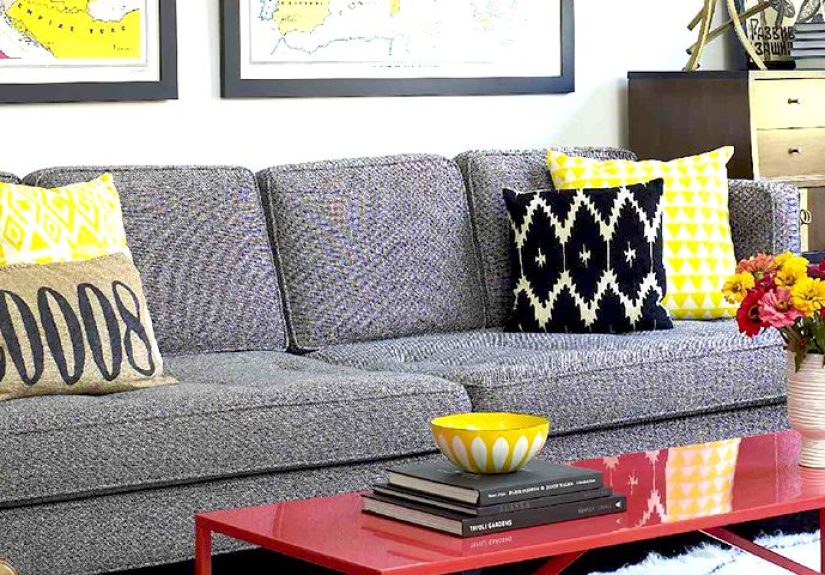
Pillows should support comfort, not block your ability to sit. Mix sizes and textures (linen, velvet, nubby weaves) and repeat a couple of colors from art
or the rug so it looks coordinated. If your sofa needs a life raft of pillows to look good, it may be time to rethink the sofanot the pillows.
6) Furniture That Works Hard (So Your Living Room Doesn’t Have To)
The best living room furniture has two talents: it looks good and it earns its keep. Choose an anchor piece (usually the sofa), then layer in flexible
supporting pieces.
Choose your anchor: sofa or sectional?
- Sofa + chairs: Flexible, easier to rearrange, great for conversation setups.
- Sectional: Maximum lounge factor, great for familiesjust make sure it doesn’t choke traffic flow.
Swivel chairs are secretly magical
Swivel chairs help in open layouts because they can face the TV, then pivot toward guests without anyone dragging furniture like it’s moving day. They’re a
practical “design upgrade” that feels intentional.
Ottomans and benches = flexible seating
A large ottoman can replace a coffee table (use a tray for stability) and add extra seating. Benches can work in larger rooms where you want more seats
without heavy visual weight.
Don’t sleep on secondhand
Vintage and thrifted pieces bring character. Even one secondhand accent chair, coffee table, or cabinet can add that “collected over time” look that makes a
living room feel personal rather than staged.
7) Wall Decor That Adds Personality (Without Making the Room Feel Busy)
Wall decor should support the room’s focal point, not compete with it. The easiest path is to choose one major wall moment and keep the rest calmer.
Gallery walls: curated, not chaotic
A gallery wall works best when there’s a unifying elementconsistent frame finishes, a repeated color, or a theme (photography, abstracts, travel prints).
Plan it on the floor first so you don’t end up with “three holes and a dream.”
Accent walls beyond paint
If you want impact without repainting the entire room, consider wallpaper, a large-scale textile, or a bold art piece. The trick is to make it look
intentional by repeating one or two colors elsewhere in the room (pillows, a vase, a throw).
Built-ins and shelving: style + storage
If you have shelves, aim for balance: stack books horizontally and vertically, add a few objects with different heights, and leave breathing room. Open
shelves look best when they’re not trying to store every item you’ve ever owned since middle school.
8) Coffee Table Styling That Still Leaves Room for… Coffee
A styled coffee table should look good and function. The easiest formula is:
- One tray to corral small items (remotes, matches, coasters).
- One stack of 1–3 books (or a decorative box if you’re not a “book on display” person).
- One living thing (a plant, fresh flowers, or a sculptural branch).
- One sculptural object (a bowl, candle, or decorative piece with texture).
Then remove at least one thing. Seriously. Most coffee tables look better after subtracting.
9) Small Living Room Ideas That Make a Big Difference
Small living rooms can be incredibly stylishit’s just a game of smart choices and fewer giant “statement” pieces that eat the room alive.
Use furniture with visible legs
Pieces that sit up off the floor (instead of boxy furniture that slams down visually) can make a small living room feel lighter and more open.
Go vertical
Use tall bookcases, wall-mounted shelves, and vertically oriented art to draw the eye upward and make the room feel taller.
Storage that doesn’t scream “storage”
Think: a console with drawers, a storage ottoman, baskets under a side table, or built-ins if you’re renovating. The goal is to hide the daily clutter so
the room feels calm without requiring you to become a minimalist monk.
10) The “Confidence Zone” Trick: Add One Bold Move on Purpose
If you’re nervous about making the room too safe (aka “beige but make it exhausted”), try one deliberate bold decision: a saturated accent color, a striking
rug, a dramatic light fixture, or a punchy piece of art. One strong choice can make everything else look more elevatedbecause it reads as confidence, not
chaos.
11) A Quick Living Room Refresh Checklist (When You Need Results by Tonight)
- Clear the floor: Remove anything that doesn’t belong (yes, even the mystery cables).
- Fix the lighting: Turn on lamps, not just overhead lights. Add a bulb with a warm tone if things feel icy.
- Anchor with a rug: Pull it forward so the seating zone feels connected.
- Restyle surfaces: Coffee table + side tables: tray, book, something living, then stop.
- Add one “softening” element: Curtains, a throw, or pillows that repeat the room’s palette.
Real-Life Experiences: What People Learn Decorating Living Rooms (500+ Words)
In real homes, living room design isn’t a straight line from “before” to “after.” It’s more like a sitcom: a few brilliant episodes, a few questionable
choices, and one recurring character (the chair) that refuses to leave. The most common experience people report is that the room doesn’t feel “done” until
the layout is solved. You can add new art, swap pillows, even repaint the wallsand still feel like something’s offif the sofa placement blocks traffic or
the seating is too far apart to actually talk. Once the furniture grouping feels natural, the room often improves dramatically without buying much else.
Another frequent lesson: rug size is emotional. Many homeowners start with a rug that’s too small because it feels safer for the budget. Then they live with
it and realize the room feels choppylike every piece of furniture is starting its own tiny island nation. When they eventually size up, the reaction is
almost universal: “Oh. That’s what it was supposed to look like.” The same thing happens with curtain placement. Hanging panels too low can visually squash a
room. When curtains go higher and wider, windows look bigger and the ceiling suddenly feels taller, as if the room stood up straighter.
Lighting is the other “why didn’t I do this sooner?” moment. People often experience a living room that looks fine in daylight but feels dull or harsh at
night. Adding a floor lamp near a chair, placing a table lamp across the room for balance, and using dimmable bulbs tends to create an instant mood upgrade.
It’s also common to realize that the overhead fixture doesn’t need to be the star of the showit can simply exist while lamps handle the charm.
Then there’s the TV dilemma. Many households wrestle with whether the TV should dominate the focal wall. The lived experience usually lands in a practical
middle: prioritize comfort and use decor strategies to make the screen blend. People often feel happiest when the TV is positioned for good viewing (no
neck-craning) and the surrounding wall designart, built-ins, cabinetry, or a consolehelps it feel integrated rather than accidental.
Finally, the biggest decorating experience is learning that “personal” beats “perfect.” Rooms that feel best over time are the ones where people stop trying
to copy a single photo and instead build a layered space: a rug that handles daily life, a sofa you can nap on, art that means something, and accessories
that are edited enough to feel calm. The living room becomes more beautiful when it’s allowed to be lived inbecause the point isn’t a showroom. It’s a
gathering space that reflects real life, real habits, and real comfort (with just enough style to make you smile when you walk in).
Conclusion
The best living room decorating and design ideas come down to a few essentials: plan a layout that supports how you live, choose a color palette that works
with your light, layer your lighting for warmth, and use rugs and textiles to connect the space. Add personality through art and collected pieces, keep
surfaces styled but functional, and remember that “finished” doesn’t mean “fragile.” A great living room looks good, feels good, and still has room for
snacks. Always.