Table of Contents >> Show >> Hide
- The viral moment in plain English
- Why "cultural appropriation" debates get heated so fast
- Cultural appropriation vs cultural appreciation: the difference most people miss
- So… was the outfit swap cultural appropriation?
- When a bystander call-out helpsand when it backfires
- How to wear traditional clothing respectfully (without turning life into a minefield)
- If someone accuses you of cultural appropriation in public
- What schools and event planners can do better
- Real-world experiences that mirror this situation (about )
- Conclusion: The real lesson from the outfit swap drama
Two friends. Two beautiful outfits. One coffee shop stop. And suddenly everyone’s a cultural studies professor with a cappuccino in hand.
If you’ve ever watched a perfectly normal moment turn into a morality tribunal (complete with side-eyes and unsolicited opinions),
you already know the vibe.
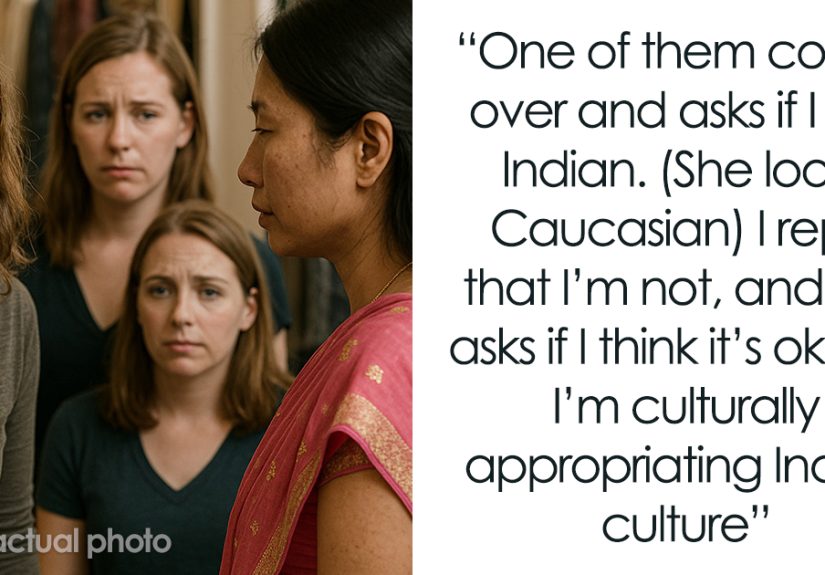
In this story, a woman swaps traditional attire with her friend for a cultural dress-up day. They’re excited, respectful, andcruciallydoing it together.
But a white woman at a coffee shop decides to “call her out” for cultural appropriation. The result? A tense exchange that raises a bigger question:
When is wearing another culture’s clothing appreciation, and when is it appropriation?
Let’s unpack what’s actually going onwithout yelling, without buzzword confetti, and without pretending every scarf is a sacred relic.
(Sometimes a scarf is just a scarf. Sometimes it’s not. Context is the whole point.)
The viral moment in plain English
The situation is simple: two friends from different cultural backgrounds decide to swap traditional outfits for a school event celebrating cultures.
Think: one friend wears a sari, the other wears a qipao/cheongsam (depending on the region and translation). They’re not mocking anyone.
They’re not selling the looks for profit. They’re not doing exaggerated accents or turning it into a costume skit.
On the way to campus, they stop at a coffee shop. One friend steps away briefly, leaving the other alone at the counter.
A stranger approaches and asks if she’s from the culture associated with what she’s wearing. When she says “no,” the stranger accuses her of cultural appropriation.
The woman being confronted pushes backpointing out the obvious: her friend encouraged the swap and is literally wearing her culture’s attire too.
The confrontation ends with the stranger retreating, and later, people debate whether the response was “too harsh.”
If you’re thinking, “This sounds like an internet comment section came to life,” you’re not wrong.
Why "cultural appropriation" debates get heated so fast
Cultural appropriation is one of those phrases that can mean “a real harm that’s worth addressing” and “a word people throw like confetti”
depending on who’s using it and how. That’s why these conversations go from zero to nuclear so quickly.
Because clothing is never just clothing
Traditional attire can carry history, identity, pride, religion, and sometimes pain. For many communities, the same cultural markers that once got them mocked,
punished, or excluded can later get trendyespecially when worn by people outside the culture.
That contrast is the emotional gasoline behind a lot of call-outs.
Because social media rewards certainty, not nuance
Online, it’s easier to post a hot take than ask a respectful question. It’s also easier to assume you know someone’s intentions than admit you don’t.
And once a conversation becomes a “gotcha,” people start performing for the audience instead of talking to the humans involved.
Because "helping" can turn into policing
Some people genuinely want to protect marginalized groups. Others want the social reward of being seen as “one of the good ones.”
And sometimes those two motives get tangledespecially when the person speaking up isn’t from the culture they claim to defend.
Cultural appropriation vs cultural appreciation: the difference most people miss
If you want a practical way to tell appropriation from appreciation, don’t start with “Is it allowed?”
Start with better questions:
- Relationship: Were you invited, welcomed, or guided by someone from that culture?
- Respect: Do you understand what you’re wearing and why it matters?
- Context: Is the setting appropriate (wedding vs costume party vs Halloween)?
- Power: Is a dominant group taking from a marginalized group without credit, consent, or care?
- Profit: Are you (or a brand) making money off it while the culture gets sidelined?
- Impact: Even if your intent is positive, does it still cause harm or reinforce stereotypes?
A quick framework: exchange vs extraction
Appreciation often looks like exchange: learning, participating with permission, buying from artisans, and treating the culture as livingnot as a prop.
Appropriation often looks like extraction: grabbing an aesthetic, stripping meaning, and getting applause while the culture gets ignored or stereotyped.
Sacred items are not “just accessories”
Museums and Indigenous educators repeatedly emphasize that some cultural items are restricted or sacredworn only by certain people or in certain contexts.
For example, many Native communities treat specific regalia, masks, and headdresses as deeply significant, earned, and not for imitation.
That’s not “fashion gatekeeping.” That’s cultural and spiritual protocol.
So… was the outfit swap cultural appropriation?
Based on the information in the story, the outfit swap reads far more like cultural appreciation than appropriation.
Here’s why:
1) Consent and collaboration were built in
The friends decided together. That matters. A big red flag in appropriation is when someone takes without permissionor without any real connection to the culture.
In contrast, swapping attire with a friend who’s excited to share it is closer to cultural exchange than cultural theft.
2) The intent wasn’t to mockand the behavior supported that
Appreciation isn’t just “I meant well.” It’s also how you act. In this scenario, the goal was a cultural celebration day, not a joke.
No caricatures, no “exotic costume” framing, no cheap stereotypes.
3) The setting was (mostly) appropriate
A cultural dress-up day is literally designed for learning and sharing. Could some events do a better job providing context so people don’t treat cultures like dress-up bins?
Absolutely. But the event itself isn’t automatically offensiveespecially when participants are invited to share their own traditions.
4) No commercialization or clout-chasing angle was central
One reason appropriation hurts is that it often comes with profit or praise that the original culture doesn’t get.
In this case, there’s no brand deal, no monetized “look at me being worldly” content, and no attempt to claim the culture as their own.
Could someone still feel uncomfortable seeing their culture’s clothing worn by outsiders? Yes. Feelings are real.
But a discomfort reaction isn’t automatically proof of wrongdoingespecially when the culture’s own members (like the friend) are actively participating and supportive.
When a bystander call-out helpsand when it backfires
Calling out harm can be important. But there’s a big difference between:
protecting people and performing protection.
The problem with "allyship" that centers the ally
In the coffee shop, the accuser asked a stranger to justify her clothing choicewithout first understanding the situation.
That’s not curiosity. That’s courtroom energy.
And here’s the twist: when a white bystander polices two people of color who are sharing cultures with each other,
it can recreate the very power dynamic they claim to opposewhere a white person appoints themselves the authority over what’s acceptable.
Better than a call-out: a call-in
If someone truly wants to help, a calmer approach usually works better:
- Ask a question first (“Heyare you celebrating something today?”).
- Listen to the answer.
- If there’s harm, explain it without humiliation.
- And if you’re not from the culture, be extra careful about speaking over it.
In other words: less “gotcha,” more “human.”
How to wear traditional clothing respectfully (without turning life into a minefield)
If you love traditional attire and want to participate respectfully, these guidelines are your best friend:
1) Get permission when possible
An invitation from a friend, community member, or event host changes the meaning. “Invited” is not a magic shield, but it’s a strong indicator of exchange.
2) Learn the basics
Know what the item is called, what it’s generally used for, and whether it has religious or ceremonial restrictions.
You don’t need a PhD. You do need enough context to avoid treating someone’s culture like a costume rack.
3) Avoid sacred or restricted items
If a community says, “This is earned,” “This is ceremonial,” or “This is not for outsiders,” believe them. Full stop.
(And yes, that includes “festival versions” of sacred regalia. Making it cheaper doesn’t make it okay.)
4) Support artisans, not knockoffs
Buying from makers within the culture (when accessible) supports living communities and reduces the “extraction” problem.
It also helps keep traditional crafts valued, not exploited.
5) Be mindful of the moment
Wearing a traditional outfit to a wedding you’re invited to? Often welcome.
Wearing it to Halloween because it looks “exotic”? That’s where the sirens start.
6) If someone from the culture says it hurts, don’t debate like it’s a sport
You can ask questions. You can listen. But avoid turning their lived experience into a courtroom cross-examination.
The goal is understanding, not “winning.”
If someone accuses you of cultural appropriation in public
A public accusation can feel embarrassing or unfaireven if you did nothing wrong. Here’s a practical way to respond without escalating:
Step 1: Check your safety and your bandwidth
You’re not obligated to educate a stranger mid-latte. If the vibe feels aggressive, it’s okay to disengage.
Step 2: Keep it short and factual
Try: “My friend and I swapped outfits with each other for a cultural celebration day. She invited me to wear this.”
No monologue. No TED Talk. Just context.
Step 3: Invite the actual cultural stakeholder (if present and willing)
If your friend is right there and comfortable speaking, a simple: “She’s heredo you want to ask her?” can reset the power dynamic fast.
Step 4: If you made a mistake, own it
A good apology isn’t “I’m sorry you’re offended.” It’s “I didn’t understand the significance. I’m sorry. I’ll do better.”
Step 5: Don’t confuse "calm" with "correct"
Some people will say you should always stay polite. But tone-policing can be a sneaky way of dismissing someone’s right to defend themselves.
You can be firm without being crueland you can set boundaries without writing a dissertation.
What schools and event planners can do better
“Cultural dress-up day” can be meaningfulor it can become a weird costume parade. The difference is structure.
- Rename it: Consider “Cultural Heritage Day” instead of “Dress-Up Day.” Words matter.
- Add context: Encourage participants to share what their clothing means, not just what it looks like.
- Set boundaries: Make clear that sacred/regalia items and stereotypes are not acceptable.
- Encourage consent: If you’re wearing something from another culture, do it with invitation and education.
The goal is celebration with carebecause “learning” shouldn’t require someone else’s identity to become your costume.
Real-world experiences that mirror this situation (about )
Not everyone will face a coffee shop confrontation, but many people run into smaller versions of the same tensionespecially in diverse schools,
workplaces, and friend groups. Here are a few common scenarios people describe, and what they tend to learn from them.
1) The wedding invitation outfit panic
Someone gets invited to a multicultural wedding and receives a message like, “Wear traditional clothes if you’d like!”
Excitinguntil they spiral at 1 a.m. wondering if they’re about to commit a social crime. The best outcomes usually happen when they ask a simple follow-up:
“Is there a specific style that’s appropriate? Anything I should avoid?” Hosts typically appreciate the care, and guests feel confident instead of costume-y.
People often report that the difference between “I wore it because it looked cool” and “I wore it because you invited me and I wanted to honor your celebration”
is felt immediately in how they carry themselves.
2) The "theme day" that goes sideways
Schools sometimes run “international day” events where students wear clothing linked to heritage. Many students love ituntil a few classmates treat it like
a joke, pairing traditional outfits with stereotypes, accents, or props. The lesson people mention again and again: the outfit isn’t the only message.
The posture, jokes, and framing matter just as much. A respectful outfit paired with respectful behavior tends to land as appreciation.
A respectful outfit paired with mockery lands as appropriation, even if the fabric is “technically authentic.”
3) The thrift store find with a complicated backstory
Plenty of people have found traditional garments in thrift shopscheongsams, embroidered jackets, saris used as fabric, and more.
Some describe feeling torn: “If I buy it, am I rescuing it or exploiting it?” The most thoughtful responses usually include learning what the garment is,
how it’s commonly worn, and whether it carries ceremonial meaning. Many people choose to wear it in a context that matches its purpose
(formal wear stays formal), and they avoid turning it into a novelty. When the uncertainty remains, some decide to donate it to a cultural organization
or use it respectfully as textile art with clear creditbecause “I didn’t know” doesn’t feel great as a long-term plan.
4) The public call-out that misses the target
People also report moments where a stranger tries to intervene “on behalf” of a cultureonly to get the situation wrong.
For example, a person wears traditional clothing because a friend or partner’s family invited them, and a bystander assumes appropriation.
The emotional takeaway is usually mixed: it’s reassuring that some people care about respect, but exhausting when the care becomes policing.
Many learn to keep a calm one-sentence explanation ready, then disengagebecause you can’t out-argue a stranger who showed up already convinced.
5) The friendship boost when sharing is mutual
On the brighter side, cultural exchange can deepen friendships. People describe swapping recipes, learning how to drape a garment properly,
hearing the story behind a pattern, and realizing, “Ohthis isn’t an aesthetic; it’s a family history.” When sharing is mutual, consent-based,
and grounded in real relationships, it often feels less like borrowing and more like being welcomed. And that’s the point: cultures aren’t museum exhibits.
They’re living communitiesand respectful curiosity is usually received differently than casual consumption.
Conclusion: The real lesson from the outfit swap drama
The outfit swap story isn’t really about a sari or a qipao. It’s about what happens when culture becomes a social battlefield
and when people confuse “being aware” with “being in charge.”
Cultural appropriation is a real issue, especially when power, profit, and stereotyping collide. But not every cross-cultural moment is appropriation.
Sometimes it’s appreciation. Sometimes it’s exchange. Sometimes it’s two friends trying to celebrate each other and make it to class on time.
The best rule of thumb is simple: center the people and the context, not your assumptions.
Ask questions. Learn. Avoid sacred items. Give credit. Support makers. And if you’re trying to help, make sure you’re not accidentally turning someone else’s culture
into your personal stage.
SEO tags (JSON):