Table of Contents >> Show >> Hide
- What the Agnes Handwoven Linen Pillow Is (and Why It’s Not Just “Another Neutral Pillow”)
- Why Linen Works So Well for Decorative Pillows
- Handwoven vs. Standard Woven: The “Feel It With Your Fingers” Difference
- The Agnes Martin Connection: Minimalism That Feels Warm, Not Sterile
- Insert Matters: The Secret to a Pillow That Looks Expensive
- How to Style an Agnes Handwoven Linen Pillow Without Overthinking It
- Care and Cleaning: Keep Linen Beautiful (Without Turning It Into a Science Project)
- Material and Sustainability Notes: Why European Linen Gets So Much Love
- Is the Agnes Handwoven Linen Pillow Worth It?
- Quick FAQ
- Final Take
- Experiences Related to the Agnes Handwoven Linen Pillow (Extra )
If your sofa could talk, it would probably ask for two things: a nap and better accessories.
Enter the Agnes Handwoven Linen Pillowan artisan-made, hand-loomed linen accent that’s less “seasonal trend”
and more “quiet confidence.” It’s the kind of pillow that doesn’t scream for attention… yet somehow becomes the one guests
“accidentally” hug for the entire conversation.
This article breaks down what the Agnes pillow is, why handwoven linen hits different, how to style it without turning your couch
into a pillow storage facility, and how to care for linen so it ages like a classic leather jacketonly softer, and with fewer rock bands involved.
What the Agnes Handwoven Linen Pillow Is (and Why It’s Not Just “Another Neutral Pillow”)
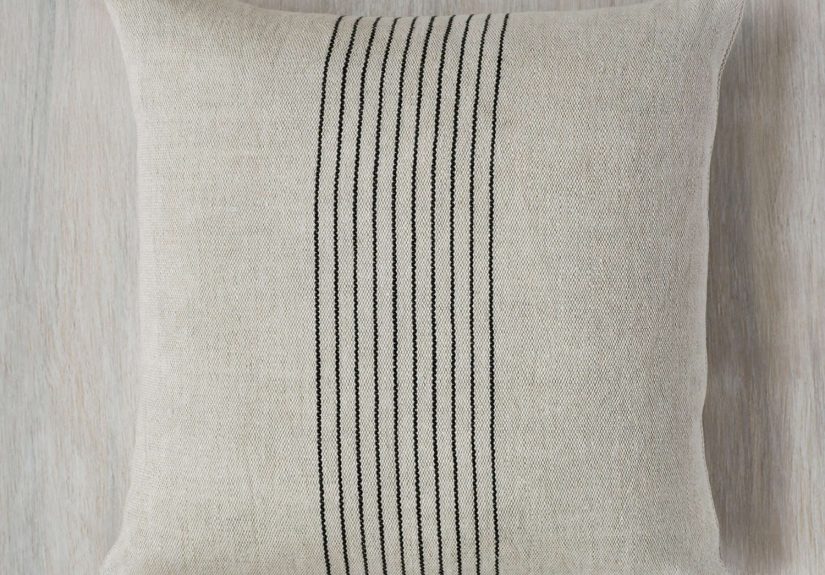
The Agnes Handwoven Linen Pillow is an artisan piece designed by Stephanie Seal Brown and often listed at 16″ x 16″
in 100% European linen, paired with a 10/90 down-feather insert. It’s described as inspired by the “quiet, strong voice”
of artist Agnes Martin, with a hand-loomed process that creates nuance and variabilitymeaning no two pillows are exactly alike.
In other words: it’s not a factory clone. It’s a small, functional work of texture.
You’ll typically see it priced like a true craft object rather than a fast-decor impulse buy, and availability can be limited.
That price tag makes more sense when you understand what “hand-loomed linen” really means in practice (spoiler: it’s not a five-minute shortcut).
Why Linen Works So Well for Decorative Pillows
Linen has a reputation for being breezy and relaxed, but the real magic is how it behaves over time. Good linen tends to:
- Breathe well (it doesn’t trap heat the way some synthetics do).
- Handle moisture better than you’d expect (helpful for real life: lounging, napping, and existing).
- Get softer with use while still keeping structure.
- Look intentional when wrinkleda rare talent, honestly.
Linen also has a naturally “textural” personality. Even when the color is calm, the surface isn’t flatso it adds depth to a room without needing loud patterns.
That’s why designers love linen for spaces that want to feel layered, warm, and grown-up (without feeling stuffy).
Handwoven vs. Standard Woven: The “Feel It With Your Fingers” Difference
With many decorative pillows, the fabric is consistentuniform threads, predictable finish, perfectly repeated texture.
Handwoven or hand-loomed linen is different. You get subtle variation: tiny shifts in thread thickness, natural slubs, and a surface that feels
alive instead of laminated.
This variability is a feature, not a flaw. It’s what makes a handwoven linen pillow look rich in both sunlight and lamplight,
and what keeps it from reading as “plain” even if it’s neutral.
The Agnes Martin Connection: Minimalism That Feels Warm, Not Sterile
The Agnes pillow is often linked (in name and spirit) to Agnes Martin’s signature energy: calm, restrained, and quietly powerful.
Think of it like “minimalism with a heartbeat.” Instead of shiny, hard-edged modern, it leans toward softnessclean lines and subtle contrast,
grounded by a material that’s human and tactile.
If your space already has strong shapes (modern sofa, clean-lined bed, simple shelving), a handwoven linen pillow is the antidote to the “showroom look.”
It adds the kind of detail people notice up closewithout cluttering your visual field from across the room.
Insert Matters: The Secret to a Pillow That Looks Expensive
Here’s the part nobody wants to admit: a beautiful cover with a sad insert looks like a designer outfit with deflated shoes.
The Agnes pillow is often paired with a down/feather blend (commonly listed as 10/90 down-feather),
which balances squish and supportplush enough to lounge on, structured enough to hold a shape.
The “Fuller Than the Cover” Trick
Many retailers and bedding pros recommend sizing an insert slightly larger than the cover for a fuller, tailored look.
For example, some 20″ x 20″ pillows are paired with a 22″ x 22″ insert to avoid that flat, understuffed vibe.
If you ever swap inserts in the future, this principle is your best friend.
Down vs. Down-Alternative (Quick Reality Check)
- Down/feather: softer “sink-in” feel, classic luxe look, excellent shape recovery if it’s good quality.
- Down-alternative: easier for allergies and often easier care; can look great but may feel bouncier.
If you’re styling for that relaxed-but-upscale “designer chop,” a down/feather blend is usually the easiest path.
How to Style an Agnes Handwoven Linen Pillow Without Overthinking It
The Agnes pillow plays well with others, but it also looks great as a solo statementespecially if you’re into a cleaner, more edited vibe.
Here are practical styling formulas that designers use (and normal people can copy without buying 27 new pillows).
1) The Minimalist Corners Move (Low Effort, High Impact)
Put one Agnes pillow on each end of the sofa or sectional. That’s it. You’ve created symmetry and intention.
If your couch is very large, add one lumbar in the middle for balance.
2) The “Texture Trio” (Best for Neutral Rooms)
- Agnes handwoven linen (matte texture, artisan variation)
- Bouclé or nubby wool (cozy, winter-friendly)
- Velvet or brushed cotton (soft sheen, depth)
This combo keeps the palette calm while making the sofa look layered and expensivelike it has a personal stylist.
3) The 2-2-1 Setup (Classic “Styled Sofa” Formula)
Start with two pillows on each side, then add one standout in the center. The Agnes pillow can be one of the “anchor” pieces
because it’s neutral and texturedmeaning it supports louder patterns without competing.
4) Bed Styling: The “Don’t Block the Mattress” Rule
For beds, scale matters. A 16″ x 16″ pillow like Agnes is great for layering in front of larger shams.
Example setup:
- Sleeping pillows + standard shams
- Euro shams (optional)
- One or two 16″ x 16″ accents (Agnes fits here)
- One lumbar for a finished look
Care and Cleaning: Keep Linen Beautiful (Without Turning It Into a Science Project)
Linen is tough, but it’s happiest with gentle handling. Most linen-care guidance in the U.S. points to the same core habits:
cooler water, mild detergent, and avoiding harsh chemicals that weaken fibers or mess with color.
Basic Linen-Care Rules for Pillow Covers
- Use cold or lukewarm water on a gentle cycle (or hand wash if you’re being extra careful).
- Choose a mild detergent (skip aggressive stain-fighters unless you’re spot-treating carefully).
- Avoid chlorine bleach unless a label explicitly allows it (and even then, tread lightly).
- Skip fabric softenerit can leave residue that dulls linen’s natural performance and feel.
- Air dry when possible, or tumble dry low if the care label permits.
Wrinkles: Friend, Not Enemy
Linen wrinkles. That’s part of its charm. If you want it smoother, iron while slightly damp or use a steamer.
If you like the relaxed look (most people do), shake it out and call it “effortless.”
How Often Should You Wash Decorative Pillows?
Covers can usually go longer between washes than pillowcases, but real life matters: pets, snacks, allergies, and whether your couch is basically a second bed.
A practical rhythm is to wash covers periodically (for example, every couple of months) and spot-clean in between.
Inserts typically need less frequent washingfollow the insert’s label and clean more often in humid climates or allergy-heavy homes.
Material and Sustainability Notes: Why European Linen Gets So Much Love
You’ll often see “European linen” called out as a quality marker. Part of that is history and craft, and part is supply chain:
flax grown in Western Europe is commonly associated with premium linen production. Linen also tends to be more labor-intensive to produce than cotton,
which helps explain why well-made linen products cost morebut can last longer and soften beautifully over the years.
If you like buying fewer, better things, a handwoven linen pillow is a surprisingly satisfying place to start.
It’s functional, used daily, and visually anchors a roomso the value shows up every time you walk past your sofa.
Is the Agnes Handwoven Linen Pillow Worth It?
If you want a quick seasonal refresh on a tight budget, this probably isn’t your pillow.
But if you care about craft, texture, and pieces that don’t date fast, it earns its keep.
It’s a “yes” if you want:
- A truly artisan look with subtle variation (not mass-produced uniformity)
- Premium linen that feels better with time
- A pillow that plays well with modern, minimalist, and transitional rooms
- A cover + insert combo that looks full and tailored
It’s a “maybe” if you need:
- Machine-wash-anytime convenience with zero thought
- Perfectly identical pillows (handwoven pieces have natural differences)
- A low-cost “swap it every year” décor cycle
Quick FAQ
Will linen shrink?
Linen can shrink with hot water or high heat drying. Cooler water and low heat (or air drying) help reduce that risk.
Does down-feather fill bother allergies?
Some people do better with down-alternative. If allergies are a concern, look for hypoallergenic options or consider a protective insert cover.
Is it pet-friendly?
Linen is fairly durable, but pet hair will show more on darker colors. A lint roller and a “no wrestlemania on the couch” policy help.
(Good luck enforcing that last one.)
Final Take
The Agnes Handwoven Linen Pillow is for people who want their home to feel calm, intentional, and quietly elevated.
It’s not flashy; it’s confident. And the handwoven linen texture does what great design always does: it makes the everyday feel a little more considered.
Experiences Related to the Agnes Handwoven Linen Pillow (Extra )
Because a pillow isn’t just something you look atit’s something you live withhere are experience-style notes that reflect what people commonly notice
when they bring an artisan linen pillow like Agnes into their space. Think of this as the “field report” section, minus the dramatic music.
1) The First Week: “Wait… this texture is the point.”
The biggest surprise is usually tactile. Handwoven linen doesn’t feel like a slick, flat fabric. It has tiny variationssubtle highs and lows
that make it feel crafted. In daylight, that texture becomes visual too: the surface can look slightly different depending on angle,
which is exactly why it reads as expensive even in a simple color palette.
2) The “Calm Anchor” Effect
In a living room with mixed objectsbooks, remotes, chargers, the mysterious single sock that appears from nowherethe Agnes pillow tends to act like a visual reset.
People often describe neutral, textured pillows as “grounding” because they give your eye a place to rest. It’s the décor equivalent of taking a deep breath.
3) The Insert Reality: Chop, Fluff, Repeat
Down-feather blends look great, but they also behave like a friendly golden retriever: they need a little attention to stay looking their best.
Owners typically give the pillow a quick fluff when tidying the room, and maybe a gentle “designer chop” at the top if they want it to look styled.
The good news is that a quality insert tends to bounce back nicelyso it doesn’t stay sad and flat for long.
4) Wrinkles Become a Non-Issue
Linen’s relaxed look makes people stop fighting wrinkles. The pillow doesn’t look “messy” when it creases; it looks lived-in on purpose.
That’s a rare win in home décor: something that looks better when you use it like a normal human.
5) It Plays Well With “Real Life” Rooms
A lot of decorative items are beautiful until someone actually sits down. Linen pillows tend to survive real living:
kids building forts, movie nights, friends leaning back with a drink, and the occasional accidental nap.
The fabric doesn’t feel precious in a fragile wayit feels substantial.
6) Seasonal Flex: Cool in Summer, Cozy in Winter
Linen has a reputation for warm-weather comfort, but in practice, it’s an all-season styling material.
In summer, the texture feels breezy and light. In winter, it layers beautifully with thicker fabrics like wool, shearling, or velvet.
People often keep linen pillows out year-round because they adapt without looking “out of season.”
7) The Compliment Pattern
Here’s the funny part: guests don’t always say, “Nice pillow.” They say, “What is that fabric?” or “This feels really nice,”
usually while absentmindedly holding it. That’s the signature of a strong accent piecepeople interact with it before they even realize they’re evaluating it.
Bottom line: the Agnes Handwoven Linen Pillow experience is less about “new décor” and more about upgrading how your space feels day to day.
It’s texture you can see, comfort you can use, and design that stays calm even when your life is not.