Table of Contents >> Show >> Hide
- Why DIY Laundry Detergent Is Having a Moment
- What Most “Homemade Laundry Detergent” Recipes Actually Are
- My DIY Laundry Detergent Experiment (a.k.a. “Confidence Meets Cotton Towels”)
- The Results I Did Not Expect
- What’s Going On Here? The “Soap vs. Detergent” Reality Check
- If You Still Want to Try DIY Laundry Detergent, Do It Like a Scientist (Not Like a Pinterest Raccoon)
- A Smarter Middle Ground: DIY Boosters Instead of DIY “Detergent”
- Sensitive Skin and Fragrance: Your Laundry Might Be the Culprit
- Safety Notes (Because Laundry Lives in the Same House as Humans)
- So… Should You Make DIY Laundry Detergent?
- Extra: of Real-Life DIY Laundry Detergent Experience (a.k.a. “My Laundry Room Memoir”)
- Conclusion
I started this experiment with the confidence of someone who has watched exactly three “simple homemaking hacks” videos and now believes
they are one mason jar away from self-sufficiency. The pitch was irresistible: make DIY laundry detergent, save money, control ingredients,
and become the kind of person who casually says “I don’t buy detergent anymore” at brunch.
What actually happened was… educational. My laundry got clean-ish. My towels got weird. My washer gave me a few side-eye symptoms.
And I learned that “DIY laundry detergent” is a phrase that sometimes means “detergent,” but often means “soap dressed up in a trench coat.”
If you’re considering homemade laundry detergent, or you already made a bucket of it that’s now judging you from the corner of your laundry room,
here’s the honest play-by-playplus practical ways to avoid residue, odors, and washer drama.
Why DIY Laundry Detergent Is Having a Moment
The DIY laundry detergent trend makes sense on paper. Store-bought detergent can be pricey, ingredient lists can look like a chemistry final,
and a lot of us are trying to reduce waste or avoid heavy fragrance. Homemade laundry detergent promises a low-cost, low-plastic, customizable solution.
And when you look at common recipeswashing soda, borax (sometimes), baking soda, and grated soapit seems almost charmingly old-school.
But modern laundry is not the same as laundry in 1987. High-efficiency (HE) washers use less water, detergents are more concentrated,
and many formulas include enzymes and other cleaning helpers designed to work in cold water and with today’s fabrics.
DIY can work in certain situations, but it can also create problems that don’t show up until your clothes start feeling “off.”
What Most “Homemade Laundry Detergent” Recipes Actually Are
Most popular DIY laundry detergent recipes fall into two categories:
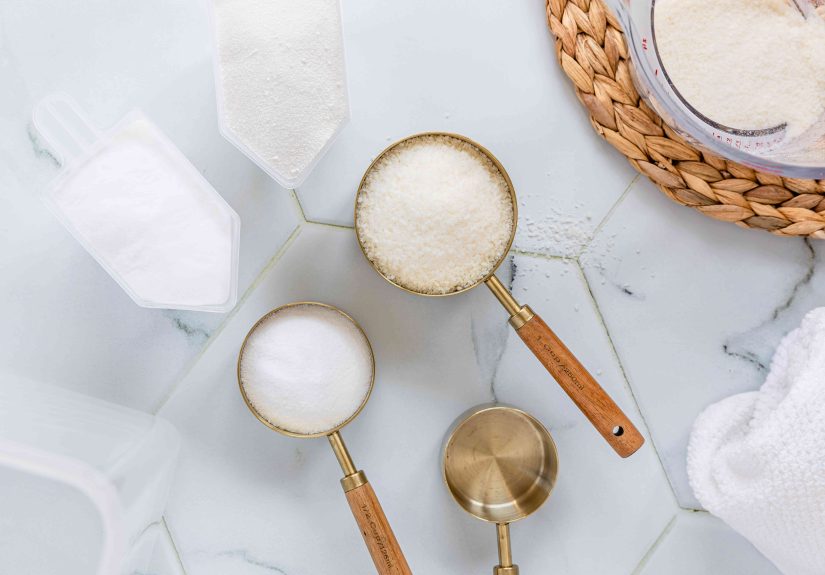
- Powder mixes: washing soda + borax or baking soda + grated bar soap (or soap flakes).
- Liquid “gel” mixes: melted/boiled soap + water + boosters that can thicken or separate over time.
To understand the results, it helps to understand what each ingredient is doing (and what it’s not doing).
Washing soda vs. baking soda: not twins
Washing soda (sodium carbonate) is more alkaline than baking soda (sodium bicarbonate). In laundry, washing soda can help loosen grime,
boost cleaning, and soften water a bit. Baking soda is milderfine for deodorizing and small boosts, but not a full replacement for detergent
performance. Recipes that swap these around like they’re interchangeable often end up underpowered.
Borax: the “controversial mineral” in many recipes
Borax is commonly used as a laundry booster and water softener, especially in hard-water areas. It can help prevent dinginess and improve cleaning,
but it’s not something you want to inhale, ingest, or casually sprinkle around like parmesan. If you use it, treat it like a real cleaning chemical:
avoid dust clouds, wash hands, store securely, and keep it far away from kids and pets.
Grated bar soap: where the plot thickens
Here’s the twist: many DIY recipes rely on soap as the main cleaning agent. Soap can clean, yesbut soap and detergent aren’t the same thing,
especially in hard water or HE washers. Soap can react with minerals in hard water and form residue (think “soap scum,” but in your clothes).
That residue can trap odors and dirt over time, dull fabrics, and make towels less absorbent.
Essential oils: scent is not cleaning
Adding a few drops of essential oil can make your laundry smell nice, but it won’t improve cleaning power in a meaningful way.
Oils can also irritate sensitive skin, and oil spots can stain if you overdo it. If you’re choosing DIY laundry detergent because you’re trying to reduce
irritation, fragrancenatural or notcan still be a trigger.
My DIY Laundry Detergent Experiment (a.k.a. “Confidence Meets Cotton Towels”)
I made a classic powdered mix: washing soda, a booster mineral, and finely grated soap. I labeled it like a responsible adult and felt incredibly proud.
For the first few loadsbasic cotton tees, pajamas, and some lightly sweaty gym clothesit seemed fine. Clothes came out smelling “clean,”
and I told myself I had hacked capitalism.
Then I washed towels.
The Results I Did Not Expect
1) My towels stopped acting like towels
After a few washes, my towels felt… coated. Not crunchy, not stiff, just oddly “slick” and less thirsty. They still dried me, but with the enthusiasm
of a reluctant paper towel. This is one of the most common DIY laundry detergent complaints: soap-based mixes can leave residue that reduces absorbency,
especially in hard water or when you accidentally use too much product.
2) My “clean” gym clothes started smelling faster
Athletic fabrics are dramatic. They hold onto body oils and odor molecules, and they don’t love residue. My workout shirts came out okay at first,
but they began to develop that “fresh out of the dryer, suspicious by lunchtime” smell. When soap residue builds up, it can trap oils and bacteria food
in the fibersso odor returns quickly, even if the clothes looked clean.
3) The washer started hinting that it had concerns
I didn’t get a flashing error code that said, “Ma’am, please stop,” but I noticed subtle issues: extra suds on certain cycles, a film feeling around the drum,
and that faint “laundry room funk” that shows up when residue + moisture + time decide to start a club together.
This matters more with HE washers, because they use less water and are designed for low-sudsing products. Soap-heavy mixes can create more suds than expected,
and excess suds can lead to longer rinses, poor rinsing, or buildup.
4) Whites didn’t get brightersome got duller
Modern detergents often include builders and enzymes that help with stain removal, whitening, and overall soil suspension.
A DIY mix that’s mostly soap + alkalinity can clean surface dirt, but it may not remove body oils and complex stains as effectively,
especially in cold water. Over time, that can look like “mystery dinginess.”
What’s Going On Here? The “Soap vs. Detergent” Reality Check
Both soap and detergent contain surfactantsingredients that help water mix with oily soils so they can be rinsed away.
The difference is in how they behave in real-world laundry conditions.
- Soap can combine with minerals in hard water and form insoluble residue (the classic scum/ring problem).
- Detergent is formulated to work in a wider range of water conditions and often includes builders, enzymes, and anti-redeposition ingredients
that help keep dirt suspended so it doesn’t settle back onto fabric.
This is why many homemade laundry detergent recipes “work” for some people (soft water, light soil, warm water, simple cotton loads),
and slowly backfire for others (hard water, cold washes, HE machines, athletic wear, towels, cloth diapers, or heavy soil).
If You Still Want to Try DIY Laundry Detergent, Do It Like a Scientist (Not Like a Pinterest Raccoon)
I’m not here to snatch your mixing bowl. If you want to test homemade laundry detergent, you can reduce the risk of weird results by setting yourself up
for honest feedback and fewer side effects.
Step 1: Check your washer manual and warranty language
Some manufacturers recommend using HE detergents and warn against over-sudsing and residue buildup. If you have a newer HE machine (especially a front-loader),
consider the possibility that using a non-standard cleaner could contribute to issuesor complicate warranty conversations.
Step 2: Assume you need less than you think
Overuse is a top reason DIY mixes cause residue. If you try a powder mix, start with a very small amount (think: tablespoons, not scoops),
and evaluate rinse quality. “More bubbles” does not mean “more clean.” In fact, excess suds can prevent good rinsing.
Step 3: Respect water hardness (it’s the silent co-author of your laundry)
Hard water changes everything. If you’re in a hard-water area, soap-based mixes are more likely to leave residue.
Consider testing your water hardness and adjusting your approach: use a water-softening strategy, avoid soap-heavy recipes,
and run periodic washer cleaning cycles.
Step 4: Don’t judge performance on one load
The early loads can be misleading because fabrics haven’t built up residue yet. Pay attention over two to four weeks:
towel absorbency, odor return, fabric hand-feel, and any film in the washer.
Step 5: Pretreat stains like an adult
One reason store detergents feel “stronger” is that they’re designed to tackle stains with surfactant systems and, often, enzymes.
If you use DIY detergent, you’ll likely need to pretreat oily stains (food grease, makeup, body oils) to get comparable results.
A Smarter Middle Ground: DIY Boosters Instead of DIY “Detergent”
If your goal is saving money or reducing fragrancebut you don’t want the residue rouletteconsider using a reputable commercial detergent
(especially for HE machines) and adding targeted boosters when needed.
- For odors: improve rinsing (extra rinse), don’t overload, and clean the washer regularly.
- For dingy towels: periodic deep-cleaning methods can help remove buildupused occasionally, not as a weekly punishment.
- For hard water: water softening strategies can dramatically improve cleaning.
The point isn’t to do more work. The point is to do less of the wrong work. Laundry is already a recurring side quest; it doesn’t need boss battles.
Sensitive Skin and Fragrance: Your Laundry Might Be the Culprit
If you’re making DIY laundry detergent because of itching, rashes, or eczema flares, keep two things in mind:
(1) residue from any cleanerDIY or commercialcan irritate skin if it doesn’t rinse well, and (2) fragrance is a common trigger for sensitive skin.
If skin irritation is part of your story, you may do better with a fragrance-free, dye-free detergent designed for sensitive skin,
plus an extra rinse cycle to reduce residue. DIY recipes that add essential oils can backfire for this exact reason.
Safety Notes (Because Laundry Lives in the Same House as Humans)
- Don’t inhale powders: washing soda and booster minerals can irritate eyes and airways. Mix gently, avoid dust, and wash hands.
- Store securely: keep DIY mixes and all laundry products away from children and pets.
- Avoid “kitchen chemistry” combos: never mix cleaning chemicals casually, and don’t treat the laundry room like a science fair.
- Pods are not candy: concentrated laundry products can cause serious harm if ingested; use child-safe storage practices.
So… Should You Make DIY Laundry Detergent?
Here’s my honest verdict: DIY laundry detergent can be a fun experiment and may work for some households, especially for light soil and simple cotton loads.
But many popular recipes are soap-based, and soap residue is a real riskparticularly with hard water, HE washers, towels, athletic wear, and cold washes.
If you love the idea of DIY, consider shifting from “full replacement detergent” to “smart boosters + better habits,”
and keep an eye on the long game: fabric absorbency, odor retention, washer cleanliness, and how much time you’re spending troubleshooting.
Saving money is great. Rewashing towels forever is not.
Extra: of Real-Life DIY Laundry Detergent Experience (a.k.a. “My Laundry Room Memoir”)
The funniest part of this whole experiment is how quickly I went from “I have unlocked the secret of clean clothes” to “Why do my towels feel like they’re
wearing lotion?” It started with that smug, satisfying moment of pouring a homemade powder into a jar. I even shook it like a bartender.
If there’s a TED Talk on overconfidence, I was doing the warm-up act.
Week one was bliss. My everyday clothes seemed fine, and the faintly “clean” smell made me feel like a responsible citizen. I told myself the lack of big
perfume clouds meant I was winning at adulthood. I ran through loads with the kind of optimism usually reserved for New Year’s resolutions.
I also did the thing where I stared into the washer window like I was watching a nature documentary: “Here we see the cotton tee in its natural habitat…”
Then came the towelsbig, thirsty, dramatic towels that had never asked for my homesteader era. After two or three loads, I noticed they didn’t grab water
the same way. They weren’t exactly repelling water, but drying off became less “ahhh spa day” and more “pat pat pat, are we done yet?”
I did what any reasonable person would do: I blamed the towels. Clearly they were going through something.
Around the same time, my gym clothes started doing that trick where they smelled fine out of the dryer but suspiciously “lived-in” as soon as they warmed up.
It wasn’t full-on funk, just an early warning system that said, “Hello, we are holding onto oils and we’d like to speak to a manager.”
That’s when I realized that “looks clean” is not the same as “is clean,” especially with modern performance fabrics.
The real turning point was the washer itself. I started seeing extra suds on cycles that usually don’t produce much foam.
The drum felt a little filmy, like it needed a rinse and a pep talk. I began doing extra rinses, whichironicallyfelt like the opposite of saving money.
My DIY detergent wasn’t just a product; it was becoming a lifestyle, and not a lifestyle I had time to subscribe to.
What surprised me most wasn’t that DIY could be imperfect. It was how delayed the consequences were. The first loads were the honeymoon phase.
The “results” showed up later, quietly, in towel absorbency and odor return and washer vibes. That’s the lesson I’d pass on:
if you’re going to test homemade laundry detergent, test it like a grown-upsmall batches, small doses, and honest evaluation over a few weeks.
Because the laundry room will always tell the truth… eventually.
Conclusion
DIY laundry detergent is one of those ideas that sounds too good not to tryuntil you try it and your towels unionize.
If you’re curious, experiment carefully, measure lightly, and watch for residue and rinse quality.
If you want reliable cleaning (especially for HE machines, hard water, towels, and athletic wear), a well-formulated detergentused in the right amount
is often the simplest path to truly clean laundry.