Table of Contents >> Show >> Hide
- Why Marble Needs Extra Protection
- 12 Steps to Protect a Marble Countertop
- Step 1: Seal the Marble Early and Reseal It on Schedule
- Step 2: Learn Your Marble’s Finish and Test It
- Step 3: Blot Spills Immediately
- Step 4: Use Only Gentle, pH-Neutral Cleaners
- Step 5: Dry the Surface After Cleaning
- Step 6: Keep Acids Far Away
- Step 7: Always Use Cutting Boards
- Step 8: Use Coasters, Trays, and Mats for Daily Offenders
- Step 9: Set Hot Pots on Trivets, Not Directly on the Stone
- Step 10: Prevent Scratches, Chips, and Edge Damage
- Step 11: Treat Stains by Type, Not by Panic
- Step 12: Call a Professional for Etching, Deep Stains, or Surface Damage
- Common Mistakes That Ruin Marble Faster
- Simple Daily and Weekly Marble Care Routine
- What Protection Really Looks Like
- Experience: Living With Marble in the Real World
Marble countertops are the divas of the kitchen world. They are gorgeous, dramatic, expensive, and just a little too emotionally affected by lemon juice. One minute your marble looks like it belongs in a luxury townhouse. The next minute, somebody leaves a wet coffee mug on it and now the counter looks like it has seen things.
The good news is that marble is not impossible to live with. It simply rewards good habits and punishes lazy ones with the enthusiasm of a strict Victorian headmistress. If you want that elegant veining to stay beautiful for years, you need a practical care routine, the right products, and a few smart daily rituals.
This guide breaks down exactly how to protect a marble countertop in 12 realistic steps. No fluff. No magical thinking. Just clear advice for keeping marble cleaner, brighter, and less likely to end up with mystery rings, etch marks, and stains that seem to appear out of thin air.
Why Marble Needs Extra Protection
Before jumping into the steps, it helps to know what makes marble so high-maintenance. Marble is a natural stone, and it is more porous and softer than many homeowners expect. That means it can absorb staining liquids and react to acidic foods and cleaners. Sealer helps, but it is not a superhero cape. It buys you time. It does not make your countertop invincible.
That is why smart marble care is really a combination of prevention, gentle cleaning, fast spill response, and occasional resealing. Think of it less like owning a countertop and more like adopting a very beautiful pet that hates vinegar.
12 Steps to Protect a Marble Countertop
Step 1: Seal the Marble Early and Reseal It on Schedule
The first line of defense is a good penetrating, food-safe sealer designed for natural stone. If your marble is newly installed, sealing it early is one of the smartest things you can do. A penetrating sealer works below the surface to help repel moisture and staining liquids.
Here is the important part: sealer does not stop etching from acids, and it does not last forever. Depending on the type of marble, the finish, and how busy your kitchen is, resealing may be needed every 6 to 12 months. In a heavy-use kitchen, you may need it more often. If your countertop sees daily cooking, coffee spills, and the occasional red sauce incident, do not treat resealing like an optional hobby.
Step 2: Learn Your Marble’s Finish and Test It
Polished marble and honed marble behave a little differently. Polished marble usually looks glossier and may resist absorption a bit better. Honed marble has a softer, matte look and can hide etching more easily, though it may absorb liquids faster.
A simple water test can tell you whether the counter is ready for resealing. Place a few drops of water on the surface and wait. If the water darkens the stone or seems to soak in instead of beading up, your marble is asking for help. Politely answer with sealer.
Step 3: Blot Spills Immediately
This is not the time to “get to it later.” Marble loves to turn small delays into lasting souvenirs. Wine, coffee, oil, citrus juice, tomato sauce, vinegar, salad dressing, and even plain water left too long can cause trouble.
When a spill happens, blot it right away with a soft cloth or paper towel. Do not wipe aggressively because that can spread the spill across a larger area. Blot, lift, rinse gently if needed, and dry. Fast action is one of the easiest ways to prevent both stains and etching.
Step 4: Use Only Gentle, pH-Neutral Cleaners
If your cleaning routine sounds like a chemistry experiment, your marble would like to resign. Stick to a pH-neutral stone cleaner or a small amount of mild dish soap mixed with warm water. That is usually enough for everyday care.
A soft microfiber cloth is your best friend here. It lifts grime without grinding debris into the surface. Avoid harsh all-purpose sprays, bleach-heavy products, rough scrubbers, scouring powders, and anything labeled as “deep degreasing” unless it is specifically safe for marble. Marble does not want your strongest cleaner. It wants your gentlest good judgment.
Step 5: Dry the Surface After Cleaning
Many people clean marble and then walk away while the surface air-dries. That sounds harmless, but it can leave water spots, streaks, or moisture sitting on a porous surface longer than necessary.
After wiping the counter with your cleaner, rinse away any residue with a damp cloth and then dry thoroughly with a clean, soft towel. This simple extra minute helps preserve the finish and keeps the countertop looking polished instead of hazy.
Step 6: Keep Acids Far Away
Acid is marble’s arch-nemesis. Lemon juice, vinegar, tomato sauce, wine, some fruit juices, and many common cleaning sprays can dull the finish and create etch marks. An etch is not technically a stain. It is surface damage. Think of it as a tiny chemical bite taken out of your countertop.
Use trays, plates, or cutting boards under acidic ingredients while prepping food. Never use vinegar to disinfect marble. Never use lemon as a “natural cleaner.” That advice belongs in the same category as using a chainsaw to trim your bangs. Bold, memorable, and not recommended.
Step 7: Always Use Cutting Boards
Yes, marble looks like a dreamy place to slice limes for cocktails or chop herbs like a TV chef. No, it is not a good idea. Knives can scratch the surface, and food juices can seep into vulnerable spots or damage the finish.
Keep one or two cutting boards on the counter where food prep usually happens. Wooden boards work well for produce and bread, while plastic boards are handy for raw proteins. This habit protects both the stone and your knife edges. Everybody wins.
Step 8: Use Coasters, Trays, and Mats for Daily Offenders
Coffee makers, olive oil bottles, soap dispensers, wine bottles, hand lotion, and even decorative jars can create rings, stains, or grime buildup if they sit directly on marble for too long. Put problem items on trays or mats. Use coasters under glasses, especially anything cold, alcoholic, or citrusy.
This step is especially useful near sinks and coffee stations, where moisture tends to linger. A simple tray can save you from a constellation of rings that slowly turns your elegant countertop into an abstract art project.
Step 9: Set Hot Pots on Trivets, Not Directly on the Stone
Marble has decent heat resistance, but that does not mean it enjoys being treated like a landing pad for scorching cookware. Sudden heat changes can stress the stone or the sealer, and repeated abuse is just asking for trouble.
Use trivets, hot pads, or heat-resistant mats under pans, Dutch ovens, sheet trays, and slow cookers. It is a small habit that reduces risk and makes your kitchen feel more intentional. Also, trivets are cheaper than regret.
Step 10: Prevent Scratches, Chips, and Edge Damage
Marble edges are especially vulnerable. Heavy appliances dragged across the surface, metal decor with rough bottoms, or climbing on the countertop to reach top shelves can all lead to scratches and chips.
Add felt pads under countertop accessories. Lift appliances instead of dragging them. Keep heavy objects back from delicate edges. And for the love of your future repair bill, do not stand on your marble countertop. Even if you are short. Even if the top cabinet has the good snacks.
Step 11: Treat Stains by Type, Not by Panic
If a stain appears, resist the urge to attack it with random products from under the sink. Marble responds best when you identify the stain first. Oil-based stains, organic stains, and rust stains do not all need the same treatment.
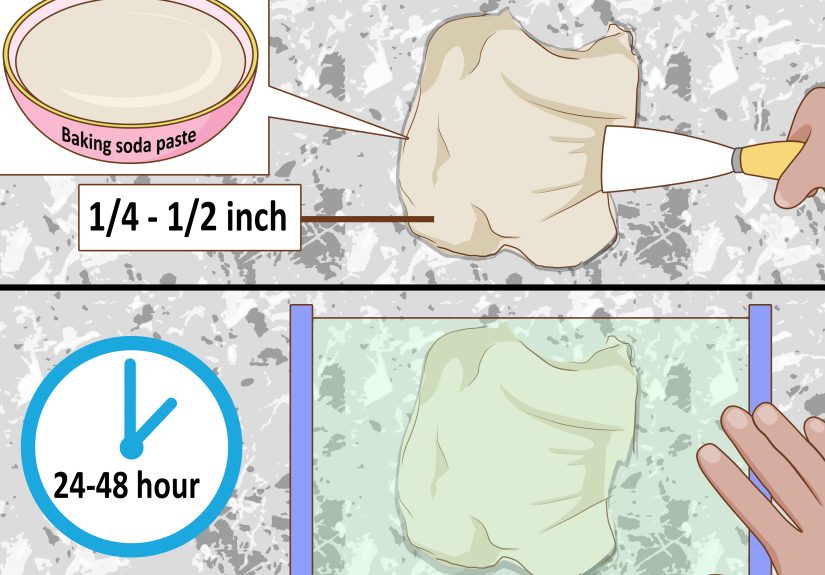
For light oily residue, a marble-safe cleaner may help. For some organic stains, homeowners sometimes use a stone-safe poultice method. The key is to test any treatment in an inconspicuous spot first and follow product directions carefully. Never mix chemicals. Never improvise with acidic cleaners. And never assume more scrubbing equals more success. On marble, it often equals a bigger headache.
Step 12: Call a Professional for Etching, Deep Stains, or Surface Damage
Some issues are DIY-friendly. Others are not. If your marble has deep etching, stubborn stains, chips, cracks, or widespread dullness, a stone restoration professional is usually the smartest next step. Pros can repolish, hone, or repair damage in ways that home care products cannot replicate.
There is no shame in calling for help. Marble is a premium material, and professional restoration can be far less expensive than replacing an entire slab because a homemade “fix” went spectacularly sideways.
Common Mistakes That Ruin Marble Faster
Even beautiful countertops can fall victim to bad habits. Here are the most common mistakes to avoid:
- Using vinegar, lemon, or acidic sprays for cleaning
- Letting spills sit while promising to clean them “after dinner”
- Skipping resealing for years
- Using abrasive pads, rough scrubbers, or scouring powders
- Placing hot pans directly on the stone
- Chopping food straight on the countertop
- Leaving soaps, oils, and cosmetics directly on the marble
- Trying random internet stain hacks without testing first
Simple Daily and Weekly Marble Care Routine
Daily
- Wipe crumbs and debris with a soft microfiber cloth
- Blot spills immediately
- Dry wet areas near the sink or coffee station
Weekly
- Clean with warm water and mild dish soap or a pH-neutral stone cleaner
- Rinse lightly and dry thoroughly
- Check for rings, dull spots, or areas that seem to absorb water faster
Every Few Months
- Do a water test to see whether resealing is needed
- Inspect edges, seams, and high-use prep zones
- Refresh your countertop habits before damage becomes visible
What Protection Really Looks Like
Protecting marble does not mean turning your kitchen into a museum where nobody is allowed to blink near the island. It means building small habits that keep beauty and function living in the same house. A sealed surface, a microfiber cloth, a cutting board, a trivet, and a quick response to spills can do more than the fanciest “miracle” cleaner ever will.
Marble will never behave exactly like quartz or laminate, and that is okay. People choose marble because it has character, movement, and timeless style. The goal is not to make it indestructible. The goal is to keep it elegant, practical, and charmingly dramatic without letting it become a full-time job.
Experience: Living With Marble in the Real World
Living with a marble countertop teaches you things that no showroom sample ever mentions. In the store, marble looks calm, polished, and impossibly sophisticated. At home, it becomes part of your daily life, which means it gets introduced to coffee drips, olive oil, hot pans, cookie dough, wet grocery bags, and family members who place citrus halves directly on the counter like they are auditioning for a cautionary tale.
One of the biggest surprises is how much better marble looks when you stop fighting it and start understanding it. At first, many homeowners either baby it too much or not enough. They are either afraid to set down a spoon, or they treat the surface like it is a cutting board at a diner. The sweet spot is somewhere in the middle. Once you learn the rules, marble becomes much easier to manage.
In real kitchens, the trouble usually starts around the busiest zones. The sink area collects standing water. The coffee corner attracts rings and splashes. The prep zone gets exposed to herbs, onions, oils, tomatoes, and lemon. These are the places where protection matters most. A tray under oils and soap, a towel near the sink, and a cutting board permanently parked in the prep zone can make an enormous difference without changing the look of the kitchen.
Another common experience is realizing that a “clean” countertop is not always a “protected” countertop. Plenty of people wipe marble with the wrong cleaner for months before noticing that the finish looks duller. Others assume sealing once means sealing forever. Marble has a way of humbling confidence. It does not need much, but it does need consistency.
The most successful marble owners usually follow the same pattern. They clean gently, dry thoroughly, deal with spills fast, and avoid the temptation to experiment with aggressive products. They also accept that marble is a natural material, not a plastic imitation of one. Tiny signs of age may happen over time, especially in a hardworking kitchen. That does not always mean the countertop is ruined. Often, it simply means the stone is being lived on.
There is also something satisfying about a well-maintained marble countertop. When the light hits it just right and the surface is clean, dry, and free of clutter, marble has a depth and softness that manufactured materials struggle to imitate. It feels classic. It feels expensive in the best way. It feels like the kitchen has its life together, even if the junk drawer absolutely does not.
So the real experience of marble is not about perfection. It is about rhythm. Wipe. Dry. Protect. Repeat. Once that rhythm becomes normal, marble stops feeling fussy and starts feeling worth it.