Table of Contents >> Show >> Hide
- What Was Found Beneath Petra’s Treasury?
- Why the Petra Tomb Discovery Matters
- Who Were the Nabataeans?
- The Treasury: Not a Bank, Probably a Tomb
- The “Holy Grail” Cup: Fun Headline, Real Artifact
- How Archaeologists Found the Hidden Tomb
- What the Skeletons May Reveal
- Was the Discovery Overhyped?
- Petra’s Bigger Mystery
- Why the Discovery Captured the World’s Imagination
- Experiences Related to the Hidden Tomb Discovered Beneath Petra’s Treasury
- Conclusion
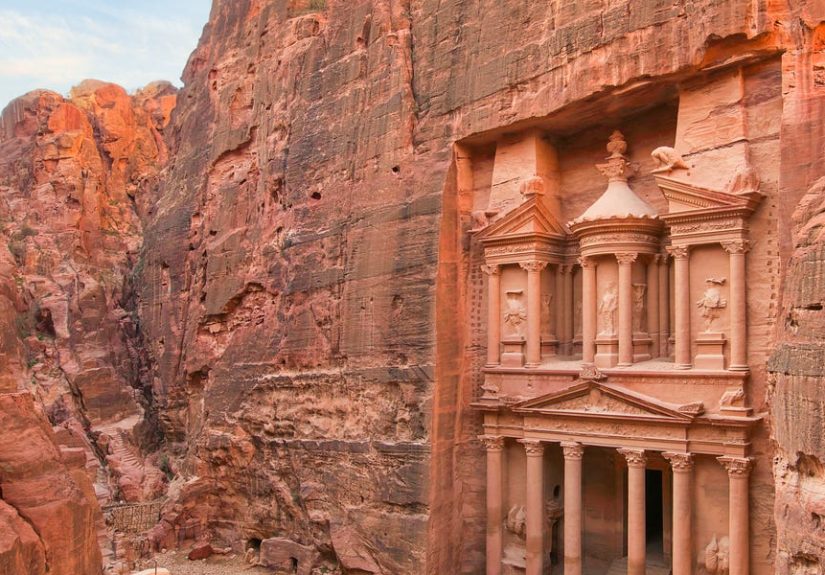
Petra has always known how to make an entrance. You walk through the narrow, rose-colored canyon called the Siq, the cliffs squeeze in like ancient theater curtains, and thenboomthe Treasury appears. Carved into sandstone with impossible elegance, Al-Khazneh looks less like architecture and more like something the desert decided to reveal only to people who earned the walk.
Now, Petra has done it again. Archaeologists have uncovered a hidden tomb beneath the area of Petra’s famous Treasury, revealing human remains, grave goods, and a fresh set of questions about the Nabataeans, the ancient people who turned this rugged desert landscape into one of the world’s most unforgettable cities. The discovery, reported in 2024, includes the remains of 12 individuals and a collection of bronze, iron, and ceramic artifacts that may date back around 2,000 years.
And yes, because the universe apparently enjoys a dramatic plot twist, one ceramic vessel drew instant comparisons to the “Holy Grail” from Indiana Jones and the Last Crusade, which famously used Petra’s Treasury as a filming location. Archaeology, meet Hollywood. Hollywood, please stop touching the fragile pottery.
What Was Found Beneath Petra’s Treasury?
The newly examined tomb was found beneath the Treasury, also known as Al-Khazneh, one of Petra’s most recognizable monuments. Researchers used remote sensing technology, including ground-penetrating radar, to identify suspicious underground features before excavation began. Once they opened the chamber, they found the remains of 12 ancient individuals along with burial objects made from ceramic, bronze, and iron.
That is no small thing. Many tombs at Petra have been disturbed, reused, emptied, or damaged over centuries. A burial context containing multiple human remains and associated grave goods gives researchers a valuable opportunity to study Nabataean funerary customs, social identity, health, diet, and possibly even family relationships through scientific testing.
The excavation involved a collaboration between Jordanian authorities, the American Center of Research, the University of St Andrews, the Petra Development and Tourism Region Authority, and a documentary team. While the television angle made the story travel fast, the science is what gives it lasting importance. Archaeologists are expected to continue studying samples through methods such as radiocarbon dating, optically stimulated luminescence testing, DNA analysis, ceramic study, and environmental research.
Why the Petra Tomb Discovery Matters
Petra is not exactly short on tombs. In fact, the city is famous for them. The Nabataeans carved monumental facades directly into sandstone cliffs, creating an ancient city that looks like a secret handshake between human ambition and geology. But this discovery matters because of where it was found and what it may preserve.
The Treasury is Petra’s superstar monument. It is the building people dream about before visiting Jordan, the image that appears on travel posters, history documentaries, and social media feeds with captions like “bucket list” and “I cried when I saw it.” Finding a tomb beneath or immediately associated with such an iconic structure raises big questions. Who was buried there? Were they elite members of Nabataean society? Did the tomb predate the Treasury, influence its construction, or relate to its function?
Those answers are not fully known yet. Responsible archaeology moves slower than viral headlines, which is annoying for impatient readers but excellent for truth. The tomb may help researchers better understand Petra’s early development, the role of Al-Khazneh, and how the Nabataeans honored their dead.
Who Were the Nabataeans?
The Nabataeans were an ancient Arab people who built a wealthy kingdom at the crossroads of major trade routes. Their capital, Petra, sat in what is now southern Jordan and connected caravans moving incense, spices, silk, textiles, metals, and luxury goods between Arabia, the Mediterranean, Africa, India, and beyond.
They were not merely desert survivors. They were desert engineers, merchants, diplomats, artists, and urban planners. Petra flourished because the Nabataeans understood two things extremely well: trade and water. In a dry landscape where a modern visitor may start negotiating with their water bottle after 20 minutes, the Nabataeans built channels, dams, cisterns, and pipelines that captured and controlled precious rainfall.
This water system helped transform Petra from a remote mountain basin into a thriving city. The Nabataeans also absorbed artistic influences from Hellenistic, Arabian, Egyptian, and Roman worlds, blending them into a distinctive architectural style. That cultural mix is visible in Petra’s grand facades, including the Treasury, where classical-looking columns and sculptural details meet local rock-cut traditions.
The Treasury: Not a Bank, Probably a Tomb
The name “Treasury” is a bit misleading. Al-Khazneh was not a bank lobby with ancient marble counters and a Nabataean version of a checking account. The Arabic name comes from later legends that treasure was hidden inside the urn near the top of the facade. Some people even fired bullets at it, hoping riches would tumble out. Spoiler: the urn is solid stone, which is one of history’s better practical jokes.
Most scholars believe the Treasury was likely a royal tomb or mausoleum, possibly linked to the reign of King Aretas IV, who ruled during Petra’s peak period around the first century BCE and first century CE. However, the exact purpose of the building is still debated. That uncertainty is part of what makes the hidden tomb discovery so compelling.
If the burial chamber is closely connected to the Treasury’s construction or ritual use, it may help clarify whether Al-Khazneh was built for royal commemoration, religious symbolism, elite burial, or a combination of functions. Ancient monuments rarely come with helpful labels saying, “Built for King So-and-So, please do not misinterpret.” Archaeologists must piece together evidence from architecture, artifacts, bones, soil, inscriptions, and context.
The “Holy Grail” Cup: Fun Headline, Real Artifact
One of the most viral details from the Petra tomb discovery was a ceramic vessel found with one of the skeletons. Because Petra’s Treasury appeared in Indiana Jones and the Last Crusade, and because the vessel vaguely resembled the film’s simple Grail cup, headlines practically wrote themselves.
But let’s be clear: archaeologists did not find the Holy Grail. They found a Nabataean ceramic object. That is still exciting, just less likely to grant eternal life or trigger a dramatic temple collapse.
The vessel matters because pottery is one of archaeology’s most useful tools. Ceramics can help date a site, identify trade connections, reveal local styles, and suggest how objects were used in burial practices. A plain-looking cup or jug fragment can tell researchers more about daily life than a shiny treasure chest ever could. History, inconveniently for movie villains, often prefers broken pottery to golden idols.
How Archaeologists Found the Hidden Tomb
Modern archaeology is not only about brushes, trowels, and dramatic hats. Increasingly, it begins with technology that can detect what lies beneath the surface without immediately digging into sensitive areas. In Petra, researchers used remote sensing tools to look for subsurface structures beneath the Treasury area.
Ground-penetrating radar works by sending signals into the ground and measuring how they bounce back from buried features. Differences in soil, stone, voids, walls, or chambers can create patterns that suggest something human-made may be hiding below. This does not automatically mean “tomb full of skeletons,” but it gives archaeologists a reason to investigate carefully.
That careful approach is essential at Petra. The site is fragile, heavily visited, and culturally priceless. Excavation is not a treasure hunt. It is controlled destruction: once soil layers are removed, they cannot be put back exactly as they were. That is why documentation, mapping, sampling, photography, and conservation planning matter as much as the exciting moment when a chamber is opened.
What the Skeletons May Reveal
The 12 skeletons found in the tomb may become some of the most valuable evidence from the excavation. Human remains can help researchers understand age, sex, health conditions, injuries, diet, ancestry, burial treatment, and possible kinship. If DNA is preserved, it may offer clues about population movement and family relationships in ancient Petra.
Isotope analysis may also reveal what people ate and whether they grew up locally or moved from elsewhere. That would be especially interesting in Petra, a city built on trade and cultural exchange. A person buried beneath the Treasury might have belonged to a local elite family, a connected merchant group, a religious community, or a broader population shaped by caravan routes.
Of course, scientists must be cautious. Twelve individuals are not enough to tell the entire story of Nabataean society. But they can provide intimate evidence from a place where written records are limited. Bones are not just remains; they are biographies written in calcium, collagen, and time.
Was the Discovery Overhyped?
As with many major archaeological announcements, the Petra tomb discovery sparked both excitement and skepticism. Some experts have noted that tombs near the Treasury were not entirely unexpected, and that previous investigations had already identified related burial spaces in the area. Others caution that media coverage can exaggerate the novelty of a find, especially when television cameras and Indiana Jones references are involved.
That does not make the discovery unimportant. It simply means the most accurate interpretation is more nuanced than “archaeologists found a secret tomb and solved Petra.” The tomb is significant because of its location, preservation, and potential research value. But it is not the final chapter on Petra’s mysteries. It is a new paragraph in a very old book.
Good archaeology welcomes that kind of debate. Skepticism is not party-pooping; it is quality control. When researchers argue carefully over evidence, the public gets a better, more honest understanding of the past.
Petra’s Bigger Mystery
Petra became a UNESCO World Heritage Site because of its extraordinary architecture, water systems, and cultural importance. Its rock-cut monuments combine local Nabataean traditions with influences from the wider Hellenistic and Roman worlds. The result is a city that feels both deeply local and globally connected.
Yet Petra still holds many unanswered questions. How exactly did Nabataean political power develop? What did their religious practices look like in daily life? How did elite families express status through tombs? How did Petra’s identity change after Rome annexed the Nabataean kingdom in 106 CE? How did earthquakes, trade shifts, and changing political landscapes reshape the city?
The hidden tomb beneath Petra’s Treasury may help answer some of these questions, especially if scientific testing reveals dates, biological data, and clearer artifact relationships. But its greatest gift may be reminding us that even famous places are not fully known. Petra is not frozen in postcard form. It is still being discovered.
Why the Discovery Captured the World’s Imagination
Part of the fascination comes from the location. The Treasury is already cinematic without any help from Hollywood. Add a hidden tomb, ancient skeletons, mysterious artifacts, and a cup that looks suspiciously ready for a movie close-up, and you have the kind of story that makes readers suddenly interested in archaeology during lunch breaks.
But the deeper reason is simpler: people love moments when the ancient world feels close. A sealed chamber beneath a monument reminds us that history is not only dates and dynasties. It is bodies, objects, rituals, grief, memory, and the human desire to be remembered.
The Nabataeans carved their monuments into cliffs, but they also carved themselves into the imagination of everyone who visits Petra. This tomb adds another human layer to that legacy. Beneath the grand facade were peoplereal peopleburied with care, objects, and meaning.
Experiences Related to the Hidden Tomb Discovered Beneath Petra’s Treasury
To understand why the hidden tomb discovery feels so powerful, imagine the experience of approaching Petra’s Treasury as a visitor. The journey does not begin with the monument itself. It begins with anticipation. You pass through the Siq, a long natural corridor with towering sandstone walls that change color as the light shifts. The path curves, narrows, widens, and teases. Then, through a final crack in the stone, the Treasury appears like the punchline to a 2,000-year setup.
Most travelers stop there for a moment, and honestly, who can blame them? Cameras come out. Guides begin explaining Nabataean history. Camels pose with the confidence of professional models. Someone nearby will almost certainly mention Indiana Jones. Yet the new tomb discovery changes the way a visitor might look at this space. The Treasury is no longer only a stunning facade. It is part of a layered archaeological landscape, with stories above, inside, around, and beneath it.
Standing before Al-Khazneh after learning about the tomb, you may find yourself paying attention to the ground as much as the columns. That dusty courtyard is not just a viewing platform for tourists. It is a historical surface covering older spaces, ancient decisions, and buried memories. Every footstep feels a little more meaningful when you realize that archaeologists found human remains below one of the most photographed places in the Middle East.
For history lovers, the discovery encourages a slower visit. Instead of rushing from the Treasury to the Monastery with the determination of someone trying to collect landmarks like souvenir magnets, it invites you to pause. Look at the carved details. Notice the erosion. Think about the people who designed this facade, the workers who cut it, the families who used nearby tombs, and the generations who told stories about treasure hidden in stone.
For travelers, the experience also highlights the importance of respectful tourism. Petra is not a movie set, even though movies made it more famous. It is a living heritage site, a place tied to Jordanian identity, local communities, and ongoing scientific research. Visitors can help protect it by staying on marked paths, not touching carved surfaces, avoiding litter, listening to licensed guides, and remembering that ancient sites are not props for selfies with better lighting.
The hidden tomb also makes Petra feel more intimate. Grand monuments can sometimes seem distant, as if they belong only to kings, architects, and textbooks. A burial chamber brings the story back to human scale. The people found beneath the Treasury may have lived in a world of caravan trade, incense routes, desert engineering, and political ambition. But they also lived ordinary human lives. They ate, aged, became ill, formed relationships, and were mourned.
That is the emotional power of archaeology. It turns stone into story. It turns artifacts into evidence of touch. It turns a ceramic vessel into a question: Who held this? Why was it placed here? What did it mean to the people who buried the dead?
The experience of reading about the tomb, or visiting Petra with this discovery in mind, is a reminder that history is rarely finished. The world’s most famous places can still surprise us. Beneath the landmark everyone knows may be the chapter no one has fully read yet. Petra’s Treasury has always looked like a doorway. Now, thanks to this hidden tomb, it feels even more like one.
Conclusion
The hidden tomb discovered beneath Petra’s Treasury is more than a sensational archaeological headline. It is a rare opportunity to study ancient human remains, burial customs, artifacts, and the possible social world of the Nabataeans in one of the most iconic locations on Earth. The discovery includes 12 skeletons and grave goods that may date back around 2,000 years, offering researchers a new window into Petra’s past.
At the same time, the find should be understood carefully. The “Holy Grail” comparison is fun, but the real treasure is scientific knowledge. The tomb will not magically answer every question about the Treasury, but it may help clarify how the Nabataeans used sacred space, honored the dead, and built a city that still leaves modern visitors speechless.
Petra has never needed exaggeration. A rose-red city carved into cliffs, engineered to manage desert water, and filled with monumental tombs is already dramatic enough. The hidden tomb beneath the Treasury simply reminds us that the ancient city still has secrets under its feetand archaeology is how we learn to listen.