Table of Contents >> Show >> Hide
- What Is the Royal System Shelving Unit?
- The Story Behind Poul Cadovius’s Design
- Why the Royal System Still Looks Contemporary
- How the Royal System Works in Different Rooms
- Royal System vs. Ordinary Shelving
- Styling Tips for a Royal System Shelving Unit
- Is the Royal System Worth It?
- Buying and Planning Considerations
- The Return of a Modern Classic
- Personal Experience and Real-Life Impressions
- Conclusion
Some furniture walks into a room quietly. The Royal System Shelving Unit floats in, hangs itself on the wall, and politely asks why your floor is doing all the storage work. Designed by Danish designer and manufacturer Poul Cadovius in 1948, the Royal System is one of those rare mid-century modern pieces that still feels strangely ahead of schedule. It is not loud. It is not trendy in the “buy it now, regret it by next spring” sense. It is a wall-mounted shelving system with the confidence of a well-tailored blazer: useful, elegant, and almost suspiciously good at making everything around it look more intentional.
After decades of admiration from collectors, architects, vintage hunters, and people who believe a good shelf can change a room, the Royal System returned to contemporary homes through dk3’s relaunch in 2010. Its renewed popularity makes perfect sense. Modern living often means smaller spaces, flexible rooms, hybrid work corners, and a desperate need to keep books, objects, laptops, speakers, ceramics, and emotional support notebooks from forming a small mountain on the dining table. The Royal System answers with a simple idea: move furniture off the floor and let the wall do something useful for once.
What Is the Royal System Shelving Unit?
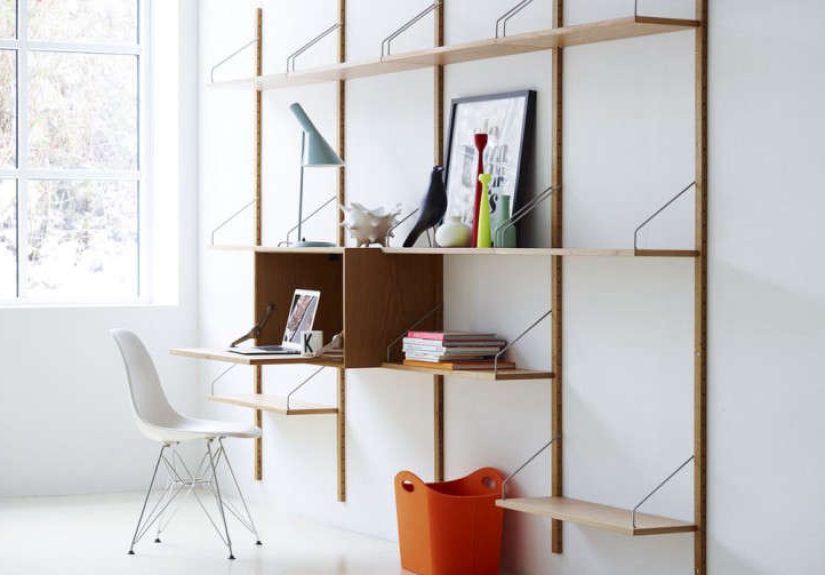
The Royal System Shelving Unit is a modular, wall-mounted storage system made from vertical wooden rails, shelves, metal brackets, cabinets, drawers, and desk components that can be arranged in multiple configurations. Instead of sitting heavily on the floor like a traditional bookcase, the system attaches to the wall and creates a lighter, more architectural look. That floating effect is not just decorative. It opens up visual space, makes rooms feel less crowded, and gives you more freedom to arrange furniture below and around it.
At its heart, the Royal System is a flexible framework. You can use it as a slim bookshelf in a living room, a compact home office station, a display wall for art and ceramics, a media storage area, or a stylish landing zone in an entryway. The shelves hang from rails using slender brackets, while optional cabinets and desk units add closed storage and work surfaces. In other words, it is furniture that knows life changes. One year it holds design books and a small lamp. The next year it becomes a work-from-home command center with a drawer full of cables pretending to be organized.
The Story Behind Poul Cadovius’s Design
Poul Cadovius had a remarkably modern thought for 1948: homes should not be controlled by bulky furniture. His famous idea was that most people live on the bottom of a cube, and if we use the walls as intelligently as the floor, we gain more room to live. That concept sounds obvious now, but in the late 1940s it was revolutionary. Traditional storage furniture was often large, heavy, and floor-bound. Cadovius offered a lighter alternative that felt almost architectural.
The Royal System became a symbol of Danish modern design because it balanced practicality with visual grace. Danish design is often praised for clean lines, honest materials, and human-centered function, and the Royal System checks all three boxes without waving a flag about it. It is efficient, but not cold. Minimal, but not boring. Technical, but still warm enough to sit above a sofa with family photos, a favorite vase, and that one art book everyone owns but nobody has fully read.
Why the Royal System Still Looks Contemporary
1. It Solves a Real Space Problem
The Royal System remains relevant because it solves a problem that has only become more common: rooms need to do more with less space. Apartments are smaller, open-plan homes require better organization, and the home office has moved from “nice extra” to “please stop taking video calls from the kitchen island.” A wall-mounted shelving system is ideal because it uses vertical space without swallowing the floor.
Unlike a freestanding bookcase, the Royal System creates breathing room below the shelves. This makes it especially useful in narrow living rooms, bedrooms, hallways, and compact studios. The design gives storage a sense of lift. Even when filled with books, the system tends to look composed rather than bulky. It is storage with posture.
2. It Is Modular Without Looking Mechanical
Many modular furniture systems are practical but visually clunky. They announce their modularity like a hardware store display. The Royal System is different. Its rails and brackets are part of the beauty. The construction is visible but refined, giving the system a delicate rhythm along the wall. Shelves can be moved, cabinets can be added, and work surfaces can be integrated, yet the finished composition still feels calm and intentional.
This is why the Royal System works in both historic mid-century interiors and modern minimalist spaces. It does not demand that everything else in the room wear a turtleneck and discuss Scandinavian architecture. It can live with contemporary sofas, vintage lounge chairs, woven rugs, plaster walls, modern lighting, and even the occasional chaotic houseplant.
3. It Has Warm Materials and Elegant Details
The reissued Royal System typically appears in wood finishes such as oak or walnut, with metal brackets in finishes such as brass or stainless steel depending on the configuration. The contrast between warm wood and slim hardware is one of its strongest visual signatures. Brass adds a softer, warmer character and may develop a natural patina over time, while stainless steel feels crisp and modern.
The details matter. The rails are narrow. The shelves are thin but substantial. The brackets do not overpower the design. Cabinets and drawers add function without turning the wall into a storage bunker. The whole system has a lightness that many modern shelving units try to copy but rarely achieve. It is the difference between “I installed shelves” and “my wall has become a thoughtful piece of furniture.”
How the Royal System Works in Different Rooms
Living Room: The Bookcase That Does Not Bully the Sofa
In a living room, the Royal System can act as a bookcase, media shelf, display wall, or all three. A two- or three-bay configuration can hold books, framed art, speakers, small sculptures, and storage boxes. Add a cabinet or drawer module, and suddenly remote controls, chargers, and other tiny domestic gremlins have a place to disappear.
The key is balance. Mix vertical stacks of books with horizontal piles, leave some negative space, and avoid turning every shelf into a museum of “things I found on sale.” The Royal System looks best when it has room to breathe. A few carefully chosen objects will do more than thirty tiny decorations lined up like they are waiting for roll call.
Home Office: A Desk That Does Not Eat the Room
One of the most appealing Royal System configurations includes a desk shelf or desk cabinet. This is perfect for a small home office, bedroom work area, or living room corner where a full desk would feel too heavy. The wall-mounted desk creates a functional workspace while preserving floor space underneath.
For remote work, pair the desk component with shelves above for books and supplies, then use drawers or cabinets for documents, cables, and stationery. A compact task lamp, a comfortable chair, and one good-looking tray can make the setup feel polished. You may still procrastinate, of course, but at least you will do it in excellent surroundings.
Dining Room: Display Without the China Cabinet Drama
Traditional china cabinets can feel formal, dark, and slightly judgmental. The Royal System offers a lighter way to display dinnerware, glassware, ceramics, and serving pieces. In a dining room, open shelves can show off objects you actually use, while closed cabinets can hide the less glamorous realities of hosting, such as mismatched napkins and emergency birthday candles.
Because the system is wall-mounted, it can work above a sideboard or float on its own. The result is clean and layered, especially when paired with simple dining furniture. It creates a sense of utility without making the room feel like a showroom.
Entryway: A Smart First Impression
An entryway needs storage, but it rarely has much space to offer. A small Royal System setup can hold keys, mail, sunglasses, bags, and decorative objects without crowding the floor. Add a mirror nearby, and the area becomes both practical and welcoming.
This is where the system’s slim profile really shines. It can turn a blank wall into a functional landing zone while still feeling elegant. It says, “Welcome home,” not “Please admire this pile of shoes.”
Royal System vs. Ordinary Shelving
Ordinary shelving stores things. The Royal System organizes space. That may sound like something whispered by an interior designer holding a tiny espresso, but it is true. A basic bookcase sits where it sits. The Royal System becomes part of the wall, which makes the whole room feel more open and considered.
Another advantage is adaptability. Freestanding furniture often has fixed proportions, but modular wall systems can grow or shift with your needs. You might begin with a one-bay shelf and later expand to a larger composition. You can add a desk, drawers, or cabinets depending on how the room evolves. For homeowners and renters who value long-lasting furniture, that flexibility is a major benefit.
The Royal System also offers a design pedigree that ordinary shelving cannot match. It is not just “a shelf.” It is a recognized Danish modern classic with a history, a designer, and a reason for being. That does not mean everyone needs one, but it does explain why design lovers treat it with a level of affection usually reserved for vintage cars and perfectly seasoned cast iron pans.
Styling Tips for a Royal System Shelving Unit
Start With Function First
Before styling the shelves, decide what the system needs to do. Is it primarily for books? A workspace? A display wall? Media storage? A combination? Function should lead the layout. Otherwise, you may end up with beautiful shelves that cannot hold the printer, which is how printers win. Do not let the printer win.
Create Visual Rhythm
Alternate heavy and light elements. Place larger books or boxes on lower shelves, then use smaller objects higher up. Mix textures such as wood, paper, ceramic, glass, and metal. Leave empty space around special pieces so they feel intentional. The Royal System’s structure already creates a pleasing grid, so you do not need to overdecorate.
Use Closed Storage Wisely
Cabinets and drawers are your best friends if you want the shelves to look calm in real life, not just on photo day. Use closed modules for clutter: cables, paperwork, craft supplies, office tools, game controllers, and anything else that causes visual static. Open shelving is wonderful, but it does not need to expose every tiny object you own to public judgment.
Let the Materials Lead
The Royal System already has strong material character, especially in walnut or oak. Keep nearby furniture and accessories complementary rather than competitive. Natural textiles, simple lighting, leather, linen, wool, stone, and neutral walls all work beautifully. For a bolder look, mount the system on a deep-colored wall so the wood and metal details stand out like jewelry.
Is the Royal System Worth It?
The Royal System is not a throwaway purchase. It belongs in the category of investment furniture: pieces chosen for longevity, function, craft, and design value. For someone who simply needs quick garage storage, it is probably overqualified. For someone who wants a flexible, beautiful shelving system that can move between uses and remain stylish for years, it makes a strong case for itself.
Its value comes from more than appearance. It is space-saving, modular, historically significant, and visually light. It can serve as a bookcase, desk, display wall, storage hub, or architectural feature. It also avoids the common problem of trendy furniture aging badly. The Royal System has already survived more than seven decades of changing interiors, which is more than can be said for many aggressively fashionable chairs.
Buying and Planning Considerations
Before choosing a Royal System configuration, measure carefully. Wall-mounted furniture depends on proper spacing, secure installation, and a layout that matches your daily habits. Consider wall width, ceiling height, outlet locations, baseboards, nearby doors, and how much weight the shelves will need to hold. Professional installation may be worth considering, especially for larger multi-bay systems or desk configurations.
Think about the future as well. If you may want to expand the system later, choose a starting layout that can grow. A one-bay unit can be perfect for a small office nook, while a three- or four-bay unit can anchor a living room wall. If you need a workspace, look at configurations with a deeper desk shelf or desk cabinet. If your goal is display, prioritize open shelves and leave enough room for objects of different heights.
Finish choice also matters. Walnut brings richness and depth, especially in rooms with warm tones or vintage pieces. Oak feels lighter and more casual, making it a good match for Scandinavian, Japandi, coastal modern, and contemporary interiors. Brass hardware leans warm and classic; stainless steel feels cooler and more restrained. There is no wrong answer, but there is probably one that will look better with your floors, lighting, and existing furniture.
The Return of a Modern Classic
The return of the Royal System Shelving Unit is not just nostalgia. It is a reminder that good design often comes from solving a real problem with clarity and beauty. Poul Cadovius looked at the wall and saw opportunity. More than seventy years later, that opportunity still feels fresh. Homes still need storage. Rooms still need flexibility. People still want furniture that works hard without looking like it is working hard.
That is why the Royal System continues to resonate. It has the soul of a mid-century classic and the usefulness of a contemporary storage solution. It can be quiet or dramatic, compact or expansive, practical or gallery-like. It does not chase attention, but it earns it. In a world full of furniture that shouts, the Royal System simply hangs there, beautifully, making the room smarter.
Personal Experience and Real-Life Impressions
Living with a shelving system like the Royal System changes the way you think about a wall. A blank wall usually feels like leftover space, something to decorate after the “real” furniture has been arranged. But a Royal System-style wall turns that surface into a working part of the room. The first impression is visual lightness. Even a generous configuration does not feel as heavy as a traditional bookcase because the floor remains open. That one detail can make a small room feel noticeably larger.
In everyday use, the modular nature is the quiet luxury. You begin to appreciate not only how the shelves look, but how easily they support different routines. A shelf that holds coffee-table books today might hold office supplies tomorrow. A cabinet that hides paperwork can later store table linens, camera gear, or the mysterious collection of chargers every household somehow develops. The system does not force one lifestyle. It adapts, which is exactly what good home design should do.
The Royal System also encourages better editing. Because open shelving puts objects on display, it gently pressures you to keep the best and store the rest. This is not minimalism in a strict, joyless sense. It is more like visual manners. Books, ceramics, framed photos, small lamps, and plants all have space to stand out. The room feels calmer because every object has a role. Even practical items look better when they are part of a balanced arrangement.
One of the most satisfying uses is as a compact work zone. A wall-mounted desk shelf feels efficient without making the room look like an office supply catalog moved in overnight. For apartments, guest rooms, or multipurpose living spaces, that matters. You can close the laptop, tuck away notebooks, and let the area return to being part of the home. The workspace does not dominate the room; it behaves itself, which is more than we can say for most inboxes.
Another real-life benefit is cleaning. Because the system floats, vacuuming or sweeping underneath is easier than working around a heavy cabinet or bookcase. The open floor also gives a room a more relaxed rhythm. It is a small practical advantage, but small advantages are what make furniture enjoyable over years instead of merely attractive for a week.
The only caution is planning. A wall-mounted system rewards careful measurement and thoughtful installation. You need to know what you want it to hold, where the studs or secure mounting points are, and how the composition will relate to surrounding furniture. This is not the kind of piece to install casually while saying, “Looks about right.” That sentence has caused many crooked shelves and possibly several family meetings. Done properly, however, the result feels built-in, refined, and deeply personal.
Ultimately, the experience of the Royal System is about freedom: freedom from bulky furniture, freedom to change the layout, and freedom to make a wall both beautiful and useful. It is modern not because it looks new, but because it still solves the way people live now. That is the mark of a true classic.
Conclusion
The Royal System Shelving Unit proves that timeless design is rarely complicated. It begins with a smart idea, honest materials, and enough flexibility to survive changing homes, habits, and tastes. Poul Cadovius designed a shelving system that lifted storage off the floor and gave walls a better job. dk3’s revival brought that idea back for a new generation of design lovers, apartment dwellers, remote workers, collectors, and anyone tired of furniture that behaves like a large wooden obstacle.
Whether used as a bookcase, home office, display wall, dining room storage piece, or entryway organizer, the Royal System remains elegant because it is useful first. Its beauty comes from proportion, restraint, and adaptability. That is why its return feels less like a comeback and more like a well-deserved continuation. Some classics never really leave; they just wait for us to catch up.