Table of Contents >> Show >> Hide
- When Baking Is a Love Language, But Not a Shared One
- Why She Might Have Felt “Inferior to Pastries”
- The Boyfriend Was Probably Loving Her Honestly, But Not Precisely
- She Also Needed to Say the Quiet Part Out Loud
- Was This About Pastries, Or Was It About Emotional Validation?
- What “Special” Actually Means in Relationships
- When “Taking a Break” Is Really a Slow Exit
- What Couples Can Learn From the Pastry Triangle
- If This Couple Had One More Honest Conversation
- Experiences Related to “Guy Shows Love Through Baking, GF Says She Feels Inferior To Pastries And Quietly Walks Away”
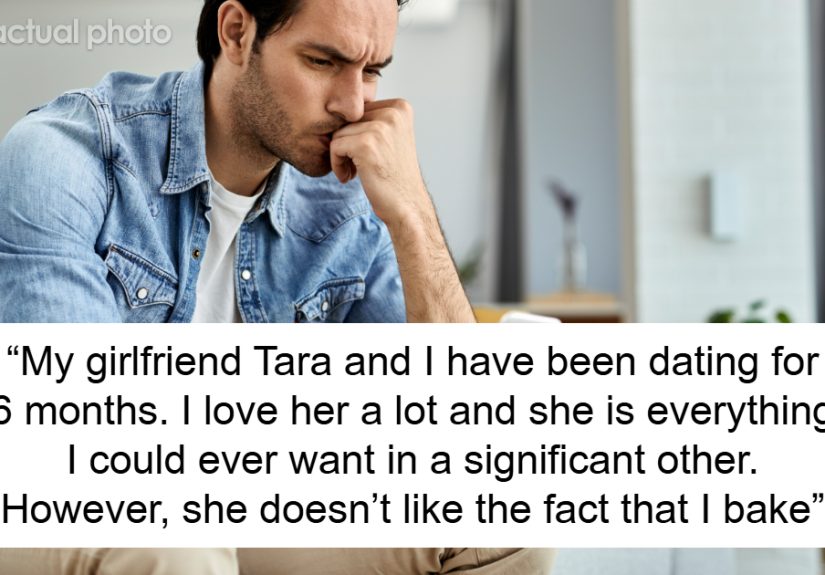
Some people write poetry. Some buy flowers. Some show up with a warm box of cream puffs and the energy of a golden retriever who just discovered butter. In this story, a guy tried to show love through baking, only to hear something he probably never expected: his girlfriend did not feel adored by the pastries. She felt outshined by them.
At first glance, that sounds almost too dramatic to be real. Inferior to pastries? Really? We are talking about croissants, not Beyoncé. But the emotional logic is less ridiculous than it appears. In relationships, a thoughtful gesture only lands when the other person experiences it as personal, intentional, and emotionally connecting. If it feels generic, routine, or more about the giver’s hobby than the receiver’s heart, even a lovely act can miss the runway and crash into hurt feelings.
That is what makes this situation so fascinating. On the surface, it is a funny internet-friendly conflict involving baked goods. Underneath, it is about love languages, insecurity, emotional validation, communication gaps, and the awkward truth that people can feel lonely even while holding a perfectly frosted tart.
This article takes a deeper look at why the boyfriend’s baking may have felt affectionate to him but unspecial to her, why the girlfriend’s reaction may have been about far more than dessert, and what couples can learn when romance starts to feel like a competition with a tray of cinnamon rolls.
When Baking Is a Love Language, But Not a Shared One
Let’s start with the obvious: baking can absolutely be an expression of love. It takes time, labor, planning, ingredients, cleanup, and patience. Anyone who has ever washed flour out of a stand mixer at midnight knows this is not a casual flex. It is effort. It is care. It is often an act of service wrapped in sugar.
That said, relationships get messy when one person says, “Look at all I do for you,” while the other person quietly thinks, “Yes, but I still don’t feel seen.” That gap matters more than the gesture itself.
Plenty of people use the language of “love languages” to explain moments like this. The idea is simple: one partner may express affection through acts of service, while the other feels most loved through quality time, verbal reassurance, physical affection, or direct appreciation. Even though experts increasingly point out that love languages are more pop shorthand than hard science, the framework still helps explain why good intentions can produce surprisingly bad results.
If he was saying, “I made this éclair because I adore you,” but she was listening for, “I notice you, I choose you, and I want time with you,” then the emotional message may have gotten lost somewhere between the whisk and the cooling rack.
Why She Might Have Felt “Inferior to Pastries”
The girlfriend’s line sounds theatrical, but emotionally it points to something specific: comparison. Not comparison in the literal sense of believing she is in direct competition with puff pastry, but in the more human sense of wondering whether she matters as much as the thing her partner clearly lights up about.
People do this all the time. They compare themselves to a partner’s work, phone, friends, hobbies, fitness routine, family obligations, or creative passion. The object is not the real issue. The fear underneath is the issue. Am I special here, or am I just nearby? Am I loved for who I am, or am I merely receiving whatever nice thing would have been produced anyway?
That emotional spiral can get louder when someone already struggles with self-esteem, reassurance, or anxiety in relationships. Insecurity tends to turn neutral facts into loaded symbols. “He bakes a lot” becomes “He gets more joy from pastries than from me.” “He brought me dessert” becomes “He did the same sweet thing again, but where is the part that is uniquely for me?”
To be clear, insecurity does not automatically make someone unreasonable. It often means a person is interpreting closeness through a fear filter. They may crave reassurance but feel embarrassed to ask for it directly. So instead of saying, “I need to feel chosen in a more personal way,” they say something sideways, dramatic, or confusing. Enter the pastry problem.
The Boyfriend Was Probably Loving Her Honestly, But Not Precisely
This is where the boyfriend deserves some grace. A lot of people show love through what they know how to do best. Cooks cook. Builders fix things. Designers make playlists that somehow contain both Sade and a random Icelandic folk song. Bakers bake. That does not mean their affection is fake. It usually means their care flows through competence.
But loving someone honestly is not always the same as loving them precisely.
Precision in a relationship means understanding what makes the other person feel uniquely valued. Not “I did something nice,” but “I did something that felt personal to you.” Those are different. One says generosity. The other says attunement.
If he baked because baking soothed him, excited him, and happened to produce a pleasant bonus for her, she may have sensed that. People can often tell when a romantic gesture is partly self-expression and only partly emotional connection. There is nothing wrong with sharing your hobby with a partner. The problem begins when the hobby becomes the main character and the partner starts feeling like a supporting extra with a fork.
He may also have missed a crucial step that relationship experts repeatedly emphasize: turning toward bids for connection. If she made small comments, pulled away, or hinted that she wanted something more personal, and he responded with more pastries instead of curiosity, the disconnect likely grew. In other words, he may have offered kindness when what she wanted was understanding.
She Also Needed to Say the Quiet Part Out Loud
Now let’s hand the spatula of accountability to the girlfriend.
Feeling hurt does not make someone wrong, but feeling hurt also does not exempt them from communicating clearly. If she truly felt that baking did not make her feel special, the healthier move would have been to say so early, directly, and specifically. Something like:
“I know baking is your way of showing affection, and I appreciate the effort. But I think I need more one-on-one attention, words of affirmation, and time that feels centered on us.”
That is a usable sentence. “I feel inferior to pastries” is emotionally vivid, yes, but not exactly user-friendly. It sounds like a line from an indie breakup movie where everyone wears oversized sweaters and nobody finishes their coffee.
Indirect communication is one of the fastest ways to turn manageable needs into relationship fog. When people feel awkward asking for what they need, they often package it as criticism, distance, or withdrawal. Then the other partner becomes confused, defensive, or panicked. Suddenly the relationship is not about dessert at all. It is about not feeling emotionally safe enough to be plainspoken.
Was This About Pastries, Or Was It About Emotional Validation?
Most likely, this was never really about pastries. It was about validation.
Validation does not mean automatic agreement. It means letting a partner know that their inner experience makes sense, even if you would not react the same way. That distinction matters. A person can hear, “I understand why you feel that way,” and calm down long enough to have a productive conversation. Without that, hurt often mutates into defensiveness, sarcasm, or exit behavior.
Imagine how differently this story could have gone if he had said, “I didn’t realize the baking was landing that way. I can see why you’d want to feel more personally chosen by me. Tell me what that would look like.” That is not surrender. That is skill.
Likewise, imagine if she had said, “I know this is your way of caring. I’m not rejecting you. I just need affection that feels less tied to your hobby and more tied to my emotional needs.” Same relationship, same people, wildly better odds.
What “Special” Actually Means in Relationships
A lot of relationship conflict comes from this tiny slippery word: special.
To one person, special means effort. To another, it means exclusivity. To another, it means attention. To another, it means being remembered in a personal, almost embarrassingly specific way. “You got me the exact tea I like when I’m stressed” is special. “You stayed off your phone and listened” is special. “You noticed I was quiet before I even said anything” is special.
What may not feel special? A repeated gesture that is lovely but broad. If he baked for everyone, talked constantly about technique, posted the pastries online, and glowed most brightly while discussing laminated dough, she may have felt like an audience member at a one-man baking show. A delicious show, but still.
That does not mean the gesture had no value. It means the emotional customization was weak. Romance is rarely about how impressive the act is. It is about how accurately it reaches the other person.
When “Taking a Break” Is Really a Slow Exit
The quiet walk-away piece of this story matters too. When one partner asks for distance, becomes harder to read, or frames the relationship as “too much” while still leaving emotional crumbs on the table, it often creates a painful limbo. Not quite together. Not quite over. Just enough hope to keep the other person emotionally suspended like a soufflé in a drafty kitchen.
Sometimes breaks are healthy. They can cool down conflict, make space for reflection, and help people regulate emotions. But a break works only when both people understand the purpose, the boundaries, and the timeline. Otherwise, “I need space” easily becomes the relationship version of buffering forever.
If the girlfriend quietly distanced herself instead of addressing the core issue, she may have already been halfway out emotionally. That does not make her cruel by default, but it does suggest the breakup was probably about more than baked goods. The pastry complaint may have been the symptom, not the disease.
What Couples Can Learn From the Pastry Triangle
1. Good intentions do not cancel mismatched impact
You can mean well and still miss the emotional mark. Intention matters, but impact decides whether your partner feels connected.
2. Affection should be translated, not assumed
Do not assume your favorite way of loving is automatically your partner’s favorite way of receiving. Ask better questions. What makes you feel chosen? What kind of care sticks with you? What makes you feel ignored, even when I think I’m being loving?
3. Validation is cheaper than conflict and less fattening than panic-baking
If your partner says something that sounds odd, dramatic, or overly sensitive, pause before arguing with the packaging. Look for the need inside it.
4. Hobbies are healthy, but they cannot replace emotional presence
Your passions should enrich your relationship, not become a wall between you and the person beside you. Share them, yes. Hide inside them, no.
5. “Special” requires specificity
Being romantic is not about doing nice things in bulk. It is about doing the kind of nice thing that makes your partner think, “Wow, that was really for me.”
If This Couple Had One More Honest Conversation
If these two had sat down for one brutally honest and kind conversation, they might have discovered that neither was the villain. He may have been sincere but overly reliant on one form of affection. She may have been longing for reassurance but communicating from frustration instead of clarity. He was saying love through labor. She was looking for love through personal attention. Both may have cared. Neither may have been translating.
And that is the real sting of stories like this. Not that a relationship ended over pastries, but that it probably ended over meanings that were never fully unpacked. The dessert was visible. The emotional mismatch was not.
So no, she was not literally competing with a tart. But she may have been competing with the feeling that the most vibrant part of him appeared when he was baking, not bonding. Once that belief takes hold, every éclair becomes evidence.
Which brings us to the simple, slightly annoying, always-useful truth about relationships: love is not just about giving. It is about giving in a way the other person can actually receive.
Experiences Related to “Guy Shows Love Through Baking, GF Says She Feels Inferior To Pastries And Quietly Walks Away”
Stories like this resonate because they are weirdly specific and universally familiar at the same time. Plenty of couples have their own version of “the pastry problem.” It may not involve baking, but it involves one person offering love in a form that feels generous to them and the other person quietly feeling missed.
For example, one partner may cook every night, believing dinner is devotion. The other may appreciate the food but still feel starved for conversation. Another person may buy thoughtful gifts, book fun weekend outings, or handle every practical errand, yet their partner still feels emotionally underfed because what they really wanted was reassurance, eye contact, or uninterrupted time.
There are also people who use a hobby as a way to love without realizing they are also using it as a way to hide. Baking, woodworking, gardening, gaming, running, photography, even “being productive” can become safe zones. Inside those activities, a person feels capable, calm, admired, and in control. Relationships, on the other hand, demand emotional improvisation. You cannot solve a partner’s sadness the way you fix a recipe. So some people unconsciously retreat to the arena where they feel most competent.
On the receiving side, the experience can be confusing. You tell yourself, “They are doing nice things. Why am I still hurt?” That confusion often creates guilt. Then guilt creates silence. Then silence becomes resentment. By the time the truth comes out, it sounds exaggerated: “I feel invisible.” “I feel replaceable.” “I feel like your hobby matters more than I do.” Those statements may sound dramatic, but they usually grow from many smaller moments that never got named in time.
Some couples do recover from this pattern beautifully. The turning point is usually not a grand apology. It is a translation moment. One person says, “I thought I was loving you.” The other says, “I know you were. But this is how I experience love.” That conversation can change everything. Suddenly the baker still bakes, but also writes a note, plans a phone-free date, and asks a better question. The partner who felt unseen learns to state needs before they harden into bitterness.
Other couples do not recover, and that matters too. Sometimes the mismatch is not just about communication style. Sometimes it reveals incompatible emotional needs, poor timing, different maturity levels, or a deeper inability to repair hurt together. In those cases, the pastry argument becomes the oddly memorable final chapter of a relationship that was already wobbling.
That is why this story lingers. It is funny enough to share, but uncomfortable enough to recognize. Most people have been one of these characters at some point: the sincere giver, the quietly disappointed receiver, or the person standing in the kitchen realizing too late that the problem was never dessert. It was disconnection, dressed up in powdered sugar.