Table of Contents >> Show >> Hide
- Can You Really Grow Parsley from Cuttings?
- How to Grow Parsley from Cuttings: 13 Steps
- Step 1: Start with a healthy parsley plant
- Step 2: Pick stems that are young but sturdy
- Step 3: Cut 4 to 6 inches below a leaf node
- Step 4: Remove the lower leaves
- Step 5: Trim off flowers, weak tips, or damaged growth
- Step 6: Choose your rooting method
- Step 7: Place the cuttings correctly
- Step 8: Give the cuttings bright light, but don’t scorch them
- Step 9: Keep moisture steady and humidity friendly
- Step 10: Be patient while roots develop
- Step 11: Pot up once roots are established
- Step 12: Help the new plant adjust
- Step 13: Harvest the right way for continued growth
- Best Growing Conditions for Rooted Parsley Cuttings
- Common Mistakes When Growing Parsley from Cuttings
- How Long Does It Take to Grow Parsley from Cuttings?
- Is Water or Soil Better for Parsley Cuttings?
- Real-World Experiences: What Growing Parsley from Cuttings Usually Teaches You
- Conclusion
Parsley is one of those herbs that quietly shows up everywhere. It lands on roasted potatoes, sneaks into soups, rescues sad pasta, and somehow still gets treated like “just garnish.” Rude. The good news is that if you already have a healthy parsley plant, you may be able to turn a few stems into brand-new plants without starting from seed. That matters because parsley seeds are famously slow, a little dramatic, and not exactly known for springing to life overnight.
Now for the honest gardener-to-gardener truth: growing parsley from cuttings is possible, but it is usually less predictable than starting parsley from seed. Still, if you want to experiment, save money, or keep a favorite plant going indoors, cuttings are absolutely worth trying. With the right stems, clean water or a light rooting mix, and a little patience, you can encourage roots and eventually pot up your new parsley babies.
This guide walks you through 13 practical steps for how to grow parsley from cuttings, plus the common mistakes that turn a promising stem into green confetti. We’ll also cover what success looks like, how long rooting usually takes, and what real gardeners tend to learn the hard way the first time around.
Can You Really Grow Parsley from Cuttings?
Yes, you can grow parsley from cuttings, especially from fresh, healthy, non-woody stems taken from an actively growing plant. That said, parsley is still more commonly propagated from seed. So think of cuttings as the clever shortcut with a little personality, not the guaranteed easy mode.
The main idea is simple: you cut a healthy stem just below a leaf node, remove the lower leaves, and give that stem a chance to form roots in water or a moist rooting medium. Once the roots are long enough, you move the cutting into soil and keep conditions steady while it settles in. If all goes well, you get a new parsley plant for the price of approximately one glass of water and several moments of suspicious staring.
How to Grow Parsley from Cuttings: 13 Steps
Step 1: Start with a healthy parsley plant
Your cutting will only be as good as the plant it comes from. Choose a parsley plant that looks vigorous, leafy, and free from yellowing, disease spots, pests, or wilt. Skip stressed plants. If the mother plant is limping through life like it just finished a marathon in flip-flops, the cutting will struggle too. Fresh, actively growing parsley gives you the best odds of rooting.
Step 2: Pick stems that are young but sturdy
Look for stems that feel fresh and flexible, not ancient, fibrous, or floppy. The best parsley cuttings are usually taken from outer stems that are mature enough to handle the process but still actively growing. Avoid flower stalks if your parsley has started to bolt. Once parsley puts its energy into flowering, leaf quality drops and propagation tends to get less cooperative.
Step 3: Cut 4 to 6 inches below a leaf node
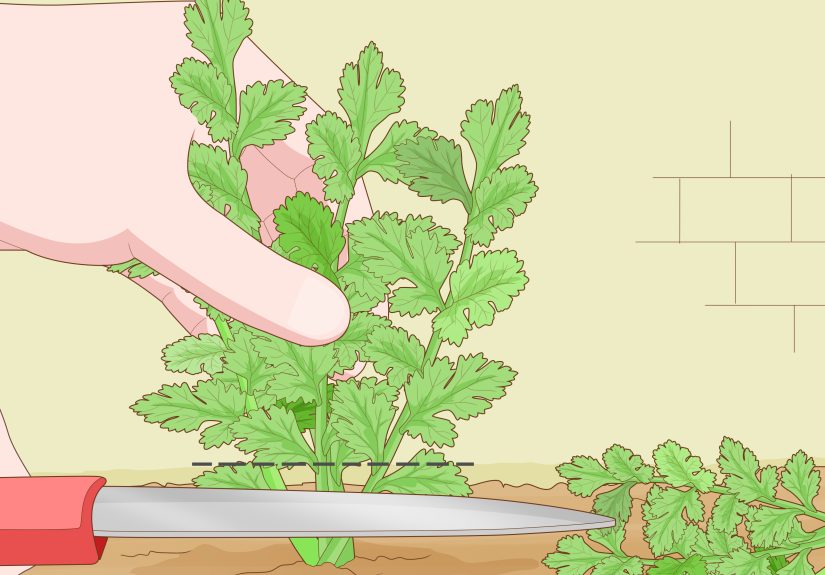
Use clean scissors or pruning snips and take cuttings about 4 to 6 inches long. Make the cut just below a leaf node, which is the spot where leaves join the stem. That area is important because roots often emerge from nodes. Take a few cuttings instead of just one. Propagation is gardening’s version of “don’t put all your eggs in one basket.” A backup stem is a beautiful thing.
Step 4: Remove the lower leaves
Strip the leaves from the lower 2 to 3 inches of each stem. You want a clean lower section that can sit in water or be tucked into a rooting mix without leaves rotting below the surface. Keep a leafy top section intact so the cutting can still photosynthesize, but do not leave too much foliage. Too many leaves mean more moisture loss, and that can make cuttings collapse before roots have time to form.
Step 5: Trim off flowers, weak tips, or damaged growth
If the cutting has a flower bud, damaged leaf, or weak floppy tip, remove it. Your goal is to redirect the cutting’s energy toward root production, not toward supporting unnecessary extra growth. Think of this as reducing the plant’s monthly expenses so it can focus on building savings. In plant terms, the savings account is roots.
Step 6: Choose your rooting method
You have two good options: root parsley in water or root it in a light, moist propagation mix. Water is easy because you can watch root development, which is satisfying and mildly addictive. A rooting mix, such as a loose blend with perlite, peat, or vermiculite, can reduce transplant shock later because the cutting starts in a medium closer to potting soil. For beginners, water is usually the simplest place to start.
Step 7: Place the cuttings correctly
If you’re rooting in water, place only the stripped lower portion of the stems in a clean glass or jar of fresh water. Keep the leaves above the waterline. If you’re using a rooting medium, insert each cutting deeply enough that at least one node is below the surface, then firm the mix gently around the stem. Some gardeners use rooting hormone at this stage. It is optional, not mandatory.
Step 8: Give the cuttings bright light, but don’t scorch them
Set the cuttings in a bright location. A sunny windowsill can work, especially indoors, but harsh all-day blazing heat can stress unrooted stems. Bright indirect light or gentle morning sun is often ideal while roots are forming. Once the plant is established, parsley generally handles full sun to part shade well, but cuttings need a softer landing while they are still basically stems with ambition.
Step 9: Keep moisture steady and humidity friendly
For water rooting, top up the glass as needed and change the water regularly so it stays fresh. For soil or rooting mix, keep the medium evenly moist but never soggy. If you want to boost humidity, loosely cover the pot with clear plastic, making sure the plastic does not rest on the leaves. The goal is to reduce water loss, not create a swampy little fungus resort.
Step 10: Be patient while roots develop
Parsley is not usually the speed demon of the herb world. If you root cuttings in water, you may see fine roots begin in about a week, though timing can vary based on light, temperature, stem freshness, and your general luck level that month. In a rooting medium, visible proof is less obvious, so watch for new leaf growth and gentle resistance when you tug very lightly on the stem.
Step 11: Pot up once roots are established
Once roots are roughly 1 to 2 inches long, move the cuttings into a small pot with rich, well-drained potting mix. Parsley likes soil that holds some moisture but drains well. A container must have drainage holes. That is not a suggestion. It is a peace treaty between you and root rot. Plant the rooted cutting at the same depth it was sitting in water or rooting mix, then water it in gently.
Step 12: Help the new plant adjust
The first week after potting is the awkward “getting to know you” phase. Keep the soil evenly moist, place the pot in bright light, and avoid letting it dry out completely. If you plan to move parsley outdoors, harden it off gradually over several days by increasing its exposure to outdoor conditions a little at a time. Sudden full sun, wind, or chilly nights can send a freshly rooted cutting into a dramatic spiral.
Step 13: Harvest the right way for continued growth
Once your new plant is established, harvest outer stems first and cut them near the base instead of snipping only the leafy tops. This encourages fresh growth from the center and helps the plant stay fuller. Avoid taking more than about one-third to one-half of the plant at once. Parsley is generous, but it does not enjoy being scalped in the name of dinner.
Best Growing Conditions for Rooted Parsley Cuttings
After rooting, parsley grows best in soil that is rich in organic matter, drains well, and stays evenly moist. It can do well in containers, raised beds, or a garden bed with improved soil. It usually prefers full sun to partial shade, and in hotter areas, a little afternoon shade can help keep leaves tender.
Indoors, a bright window is important. South-facing light is often ideal, though any bright location can help if the plant receives enough light each day. Rotate containers now and then so growth stays balanced. If the plant gets leggy, pale, or weak, lack of light is often the culprit.
Common Mistakes When Growing Parsley from Cuttings
- Using old, tough stems: Woody or tired stems are less likely to root well.
- Leaving leaves underwater: Submerged leaves rot fast and foul the water.
- Giving too little light: Dim conditions lead to weak growth and slower rooting.
- Overwatering after potting: Wet soil without drainage invites root problems.
- Transplanting too early: Tiny roots are easy to damage and quick to sulk.
- Ignoring airflow or hygiene: Dirty containers and stagnant conditions invite rot.
How Long Does It Take to Grow Parsley from Cuttings?
If conditions are good, parsley cuttings rooted in water may begin forming roots in roughly a week, though some take longer. Potting up and establishing the plant takes additional time. In practical terms, expect a few weeks before your new parsley feels truly settled and ready for regular harvesting. This is still often faster than waiting on parsley seed germination, which has a reputation for taking its sweet time.
Is Water or Soil Better for Parsley Cuttings?
Water is easier to monitor, which makes it great for beginners and impatient people who enjoy checking jars three times a day “just to see.” Soil or a rooting mix can produce sturdier transition roots and may reduce transplant shock. Neither method is automatically perfect. If you are trying parsley propagation for the first time, start several cuttings and test both methods. Let the plant decide which strategy wins at your house.
Real-World Experiences: What Growing Parsley from Cuttings Usually Teaches You
The first experience many gardeners have with parsley cuttings is surprise. Not because the method is impossible, but because parsley has a reputation for being a seed-grown herb. So when someone drops a few stems into water and sees tiny roots begin to appear, there is usually a moment of genuine delight. It feels like getting bonus fries at the bottom of the bag: unexpected, oddly thrilling, and immediately something you want to tell another plant-loving person about.
Another common experience is learning that fresh stems matter more than fancy supplies. Gardeners often try one beautiful-looking cutting from a tired grocery bundle and one from a vigorous home plant, then discover the healthier fresh stem performs far better. That lesson sticks. Propagation becomes less about “secret tricks” and more about plant quality, cleanliness, and timing.
People also tend to notice how much easier the process feels when they take multiple cuttings. One stem may flop, one may rot, one may do absolutely nothing for days, and one may root like it has a point to prove. That is normal. Successful gardeners stop expecting every cutting to behave the same way. Instead, they treat propagation like a numbers game with a little room for luck and a lot of room for observation.
Light is another major theme in real-world parsley experiences. A jar on a dim kitchen counter often produces stretched, unhappy stems. Move that same jar near a brighter window, and suddenly the cuttings look more alert and far less tragic. After potting up, new growers also discover that parsley likes consistency. Not bone-dry soil, not soggy soil, and not the sort of random watering schedule that depends on whether you remembered the plant while making coffee.
One especially useful lesson is that rooted parsley still needs a gentle transition into life in soil. Beginners sometimes see roots, celebrate wildly, pot the cutting, then forget that those early roots are delicate. A rooted cutting is not yet a tough, independent herb shrub. It still needs stable moisture, decent light, and a little time to adapt. Once gardeners understand that, survival rates tend to improve.
Many people who grow parsley from cuttings also end up using the method as a seasonal bridge. They take cuttings from an outdoor plant before cold weather arrives, root them indoors, and keep fresh parsley going through part of winter. That may not feel dramatic, but in January, when the outdoor garden looks like a collection of regrets, a pot of fresh green parsley on the windowsill feels downright luxurious.
Perhaps the biggest real-life takeaway is this: parsley from cuttings is not a gimmick, but it also is not magic. It rewards care, patience, and a willingness to experiment. Some gardeners fall in love with the method. Others decide they still prefer seed for larger plantings. Both conclusions are perfectly reasonable. The win is understanding that you have options, and that a humble herb can teach an outsized lesson in patience, observation, and tiny green victories.
Conclusion
If you want a practical, low-cost way to make more parsley, growing parsley from cuttings is well worth trying. It works best with fresh, healthy stems, bright light, steady moisture, and a little patience while roots form. Is it the only way to propagate parsley? No. Is it the most traditional? Also no. But it is a fun, useful method that can help you multiply a favorite plant, keep herbs going indoors, and cut down on seed-starting wait time.
In other words, if you have parsley and a pair of scissors, you already have the beginning of a very respectable herb project.