Table of Contents >> Show >> Hide
- Why Grow an Onion from an Onion?
- Can You Really Grow a New Onion from an Old Onion?
- What You Need Before You Start
- How to Grow an Onion from an Onion Step by Step
- How to Regrow Green Onions from Onion Scraps
- The Secret to Bigger Onions: It Is Not Just Luck
- Common Problems When Growing an Onion from an Onion
- When and How to Harvest
- Container Growing Tips
- What Gardeners Usually Experience with This Method
- Final Thoughts
If you have ever stared at an onion on the counter and noticed a green shoot poking out like it suddenly got ambitious overnight, good news: that onion is not plotting world domination. It is simply ready for round two. Learning how to grow an onion from an onion is one of the easiest, cheapest, and oddly satisfying gardening tricks around. It feels a little like kitchen magic, except with dirt under your fingernails and fewer dramatic sound effects.
The best part is that you do not need to be a master gardener with a greenhouse, a cowboy hat, and strong opinions about compost tea. You can start with one store-bought onion, a pot or garden bed, decent sunlight, and a bit of patience. In many cases, an old onion can regrow green shoots quickly, and with the right care, the rooted base can also produce multiple new onion plants. That said, there is a small catch: growing a big, beautiful storage onion from a mature onion bulb is possible, but it is usually less predictable than growing onions from seed or transplants. Think of it as the scrappy underdog method. It works, but it likes to keep you humble.
This guide walks you through everything you need to know, from choosing the right onion and preparing the base to planting, watering, harvesting, and avoiding the classic mistakes that turn your onion experiment into a soft, moldy science project. We will also cover how to regrow green onions from scraps, how to encourage larger bulbs, and what real gardeners usually experience when they try this at home.
Why Grow an Onion from an Onion?
There are three big reasons gardeners love this method. First, it is practical. Instead of tossing a sprouting onion, you can turn it into food. Second, it is beginner-friendly. You do not need expensive tools, fancy raised beds, or a gardening diploma. Third, it is fun. There is something deeply satisfying about watching yesterday’s dinner ingredient become tomorrow’s garden plant.
Growing an onion from an onion is especially useful if your goal is one of these:
- Regrowing fresh green onion tops for cooking
- Creating new small bulbs from the buds at the onion base
- Experimenting with kitchen scraps instead of buying starter plants
- Teaching kids how vegetables regrow without turning the lesson into a nap
Still, it helps to set realistic expectations. If you want huge, uniform storage onions that look ready for a county fair photo shoot, seeds or transplants are usually the more reliable route. But if you want fresh onion greens, a low-cost gardening project, or a chance to multiply what you already have, this method is a winner.
Can You Really Grow a New Onion from an Old Onion?
Yes, but the result depends on what part of the onion you plant and what you expect to harvest. A mature onion bulb contains a basal plate at the root end. That is the business end. When you plant that rooted section, it can produce new shoots. In many cases, those shoots can be separated and grown into individual onion plants. This is why one onion can sometimes turn into several smaller onions instead of one giant replacement bulb.
Here is the simple version:
- Planting the root end of a bulb onion can produce new shoots and sometimes several new bulbs.
- Regrowing green onions or scallions from scraps is even easier and faster, especially if roots are still attached.
- Growing large dry onions for storage is more dependable from seed or transplants than from mature bulb scraps.
So yes, you can do it. Just do not expect every grocery-store onion to transform into a perfect jumbo onion with movie-star confidence.
What You Need Before You Start
One reason this method is so popular is that the supply list is wonderfully short. You probably already own half of it.
Supplies
- 1 healthy onion, preferably one that is firm and already sprouting or still has a solid root end
- A sharp knife
- A pot with drainage holes or a garden bed
- Loose, well-drained potting mix or garden soil enriched with compost
- Water
- A sunny location with at least 6 hours of direct sun
If you are regrowing green onions from scraps, you can also start them in a small jar or cup of shallow water before moving them to soil.
How to Grow an Onion from an Onion Step by Step
Step 1: Choose the Right Onion
Pick an onion that is firm, healthy, and not mushy. A sprouting onion is often ideal because it is already signaling that it wants to grow. Avoid bulbs with rot, dark wet spots, or a smell that suggests they have started a side career in compost.
Yellow, white, and red onions can all work. The method is the same. The biggest difference comes later, when day length and climate affect how well your onion forms bulbs.
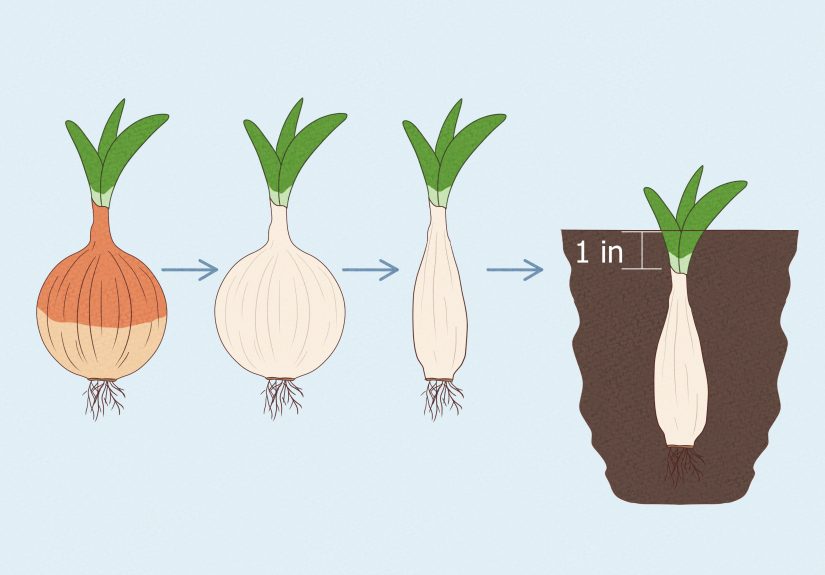
Step 2: Cut Off the Root End
To regrow a bulb onion, cut off about the bottom third of the onion, including the root end. Leave the root plate intact. This section contains the growing points that will send up new shoots. If the onion is already sprouting from the middle, even better. Nature has already started the engine.
After cutting, let the piece dry for a day or two. This short drying period helps the cut surface firm up before planting, which can reduce the chance of rot once it goes into damp soil.
Step 3: Plant It Root-Side Down
Fill your pot or prepare your garden bed with loose, fertile, well-drained soil. Place the onion base root-side down and cover it with about 1 inch of soil. Do not bury it like treasure. Onions enlarge partly above the soil line, so deep burial is not the goal.
If you are planting in the ground, give the onion enough room for airflow and future growth. A spacing of about 4 to 6 inches works well if you plan to let the shoots develop into bulbs. If you only want green onions, you can grow them closer together.
Step 4: Give It Sunlight
Onions like full sun. Put the container where it will get at least 6 hours of direct light each day. More is often better. If you grow indoors, use your brightest sunny window. Outdoor beds, raised beds, and sunny patios are all fair game.
Light matters more than many beginners expect. Weak light makes onions stretch and sulk. Strong light makes them stand tall like they pay taxes and own a wheelbarrow.
Step 5: Water Evenly, Not Constantly
Keep the soil evenly moist but not soggy. Onions are shallow-rooted, so they do not like drying out for long stretches. At the same time, sitting in water is a great way to invite rot. The sweet spot is moist, airy soil with good drainage.
A useful habit is to check the top inch of soil. If it feels dry, water thoroughly. If it still feels damp, let it be. Overwatering is one of the fastest ways to turn onion dreams into onion soup before harvest.
Step 6: Watch for New Shoots
Before long, you should see green shoots growing from the center. If your onion base contains multiple buds, you may get several shoots. This is where the magic happens. You started with one onion bottom, and now it is acting like a tiny onion apartment complex.
You can let the shoots grow together for fresh greens, or you can separate them once they are established.
Step 7: Separate the Shoots if You Want New Bulbs
Once the onion base has developed healthy top growth and some root mass, gently dig it up and pull the cluster apart. You may find several small starts attached at the base. Separate them carefully and replant each one on its own.
This step is especially helpful if your goal is to grow individual onions instead of a crowded clump. Replant each section about 4 to 6 inches apart in fertile, sunny soil.
How to Regrow Green Onions from Onion Scraps
If bulb onions feel like a medium-difficulty side quest, green onions are the beginner level where everyone gets a confidence boost. To regrow green onions, save the white bottom portion with the roots attached. Place it in a jar with just enough water to cover the roots. Put the jar in a warm, sunny spot and change the water regularly.
Within a week or two, new green shoots usually appear. Once the shoots reach several inches tall, you can snip what you need for cooking. For longer growth, transplant the rooted piece into soil. This gives you stronger plants and a longer harvest window than water alone.
Green onions are perfect for impatient gardeners because they grow quickly. You can clip the tops for salads, soups, eggs, stir-fries, and all those recipes where a handful of chopped onion magically makes you look more organized than you are.
The Secret to Bigger Onions: It Is Not Just Luck
If your real dream is a full-size bulb, a few things matter more than optimism.
1. Pick the Right Onion Type for Your Region
Onions form bulbs in response to day length. That means the right variety for Georgia is not automatically the right choice for Minnesota. In general:
- Short-day onions do best in the South
- Intermediate-day onions fit many middle regions
- Long-day onions perform best in northern areas
If the day-length type does not match your location, you may get lots of green leaves and disappointing bulbs. It is one of the sneakiest reasons gardeners end up muttering at onions in late summer.
2. Plant Early in the Cool Season
Onions are cool-season crops. They make leafy growth first, and each leaf contributes to bulb development later. More healthy leaves usually mean a bigger onion. Plant as early as your climate allows, whether that means early spring in colder regions or fall to winter planting in the South.
3. Feed the Soil
Onions like fertile ground. Before planting, mix compost into the soil. If your soil is poor, add a balanced vegetable fertilizer according to label directions or based on a soil test. Later, a light side-dressing can support continued growth. Just do not go overboard with nitrogen late in the season, or you may get lush tops and underwhelming bulbs.
4. Keep Weeds Out
Onions are not great at competing with weeds. They have shallow roots and narrow leaves, so weeds can steal moisture and nutrients fast. Mulch lightly once plants are established, and weed carefully. Think of it as giving your onions a fair fight.
5. Do Not Crowd Them
Crowded onions stay small. If you want mature bulbs, give each plant space. If you want scallions, crowding is less of a problem because you harvest earlier.
Common Problems When Growing an Onion from an Onion
Rotting Before It Sprouts
This usually means too much water, poor drainage, or planting a damaged onion. Let the cut end dry before planting, and use loose soil that drains well.
Lots of Tops, Tiny Bulbs
This can happen when the onion variety does not match your region, the plants are crowded, or the growing season started too late. It can also happen because mature onion scraps are simply less reliable for big bulbs than seedlings or transplants.
A Flower Stalk Appears
This is called bolting. Once onions bolt, they shift energy toward flowering instead of bulb growth. It is common with larger sets and older bulb material. Harvest bolting onions early and use them fresh, because they usually do not store well.
Weak Indoor Growth
If your onion is trying but looking pale and floppy, it probably needs more light. Move it to a sunnier window or outside if the weather allows.
When and How to Harvest
For Green Onions
You can harvest green shoots as needed once they are tall enough to use. Snip the tops and let the plant continue growing. This is the easiest harvest and the one most likely to make you feel like a gardening genius.
For Bulb Onions
Wait until the tops begin to yellow and fall over. That is the plant’s way of saying, “I am done here.” Pull the bulbs, brush off loose soil, and cure them in a warm, dry, well-ventilated place. Once the skins and necks are dry, trim the tops and store the onions in a cool, dry place.
Sweet onions usually do not store as long as pungent storage varieties, so use those sooner. If your onion came from a regrown base and looks a little quirky, congratulations: that is called character.
Container Growing Tips
If you do not have a garden bed, containers work very well. Use a pot with drainage holes and high-quality potting mix. Place it in full sun and water often enough to keep the soil evenly moist. Containers dry out faster than garden soil, so check them more frequently, especially in warm weather.
Containers are especially great for regrowing onion bottoms and green onions from scraps because you can keep them close to the kitchen. The shorter the trip between plant and skillet, the more likely you are to actually use your harvest instead of admiring it like a museum exhibit.
What Gardeners Usually Experience with This Method
Now for the real-world truth: growing an onion from an onion is one of those gardening projects that often starts with a tiny burst of smug delight. You notice the onion sprouting in the pantry, rescue it heroically, tuck it into a pot, and then check it approximately 47 times in the next three days. That part is universal. So is the moment when you realize onions are fairly low-drama, right up until they are not.
Most gardeners find that the fastest success comes from harvesting the green tops. The plant responds quickly, the shoots are useful in the kitchen, and the whole process feels rewarding almost immediately. This is why so many people who try the method once keep doing it. A rooted onion base on the windowsill or back step becomes a kind of edible spare change: small, handy, and weirdly satisfying.
Trying to get full bulbs is where experience gets more interesting. Some people plant the onion base and are thrilled when several shoots appear. Then they discover those shoots are actually a crowd, not a single neat replacement onion. Once separated and replanted, they may grow into multiple smaller onions rather than one giant bulb. That surprises beginners, but it is not failure. It is just how the plant behaves.
Another common experience is learning that sunlight solves more problems than overthinking ever will. Indoors, onions often sprout eagerly and then turn thin or floppy because the light is too weak. Move the same plant outdoors into a bright, sunny location, and suddenly it starts acting like it has a purpose in life. Gardeners also notice that onions do not appreciate soggy feet. The first instinct is often to water too much, especially after planting a cut onion base. Then the base softens, and the lesson arrives in classic gardening fashion: moist is good, swampy is tragic.
People growing in containers usually report solid results, especially with green onions and smaller bulb projects. Pots make it easier to control soil quality, avoid heavy clay, and keep the experiment close to the house. The trade-off is that containers dry out faster, so neglect shows up sooner. Gardeners who succeed long term usually settle into a simple rhythm: sunny spot, regular moisture, occasional feeding, and no drama.
There is also the issue of expectations. Many first-time growers imagine one supermarket onion turning into a flawless row of giant storage onions. Real life is a little messier. Some onions bolt. Some split into clusters. Some produce a handful of useful greens and then call it a career. But that does not make the project a waste. In fact, that unpredictability is part of the experience. You learn how onions grow, how bulbs divide, how day length matters, and why gardeners keep talking about soil, spacing, and timing like they are sacred poetry.
And then there is the kitchen payoff. Even a modest success changes the way people look at food scraps. Once you regrow onion tops for omelets, soups, tacos, or baked potatoes, it becomes much harder to throw away a rooted onion end without at least considering its future. That may be the biggest experience of all: not just growing food, but noticing how much life is still tucked inside what looked like leftovers.
Final Thoughts
If you want an easy, affordable, and surprisingly fun gardening project, growing an onion from an onion is worth trying. It is a great way to reuse kitchen scraps, harvest fresh onion greens, and learn how onions really grow. While it is not always the most reliable method for producing giant storage bulbs, it absolutely works for regrowth, experimentation, and everyday home gardening.
Start with one healthy onion, give it sun, loose soil, and steady moisture, and see what happens. At minimum, you will get a useful lesson and probably some fresh greens. At best, you will multiply one onion into several new plants and feel absurdly proud every time you chop them into dinner. Which, to be fair, is one of the nicer forms of pride.