Table of Contents >> Show >> Hide
- Why Track a Gas Meter in the First Place?
- The Big Idea: Watch the Meter, Don’t Touch the Gas
- How an Optical Mouse Sensor Becomes a Meter Reader
- Old Gas Meters vs. Modern Monitoring
- What Makes This Project So Delightfully Weird?
- Turning Readings Into Useful Home Data
- Accuracy: The Difference Between “Cool” and “Useful”
- Why Not Just Use a Camera?
- Safety Comes Before Cleverness
- The SEO-Friendly Lesson: Analog Data Still Matters
- What This Project Teaches Makers
- When a DIY Gas Meter Monitor Makes Sense
- Experience Notes: Living With a Mouse-Based Meter Monitor
- Conclusion
A disassembled computer mouse keeping track of a gas meter sounds like the kind of sentence that crawls out of a junk drawer at 2 a.m. and demands a soldering iron. Yet the idea is wonderfully practical: take the optical sensor from an old mouse, aim it at the moving dial of a mechanical gas meter, and turn a stubbornly analog device into a source of useful home energy data. It is part recycling project, part home automation experiment, and part proof that “obsolete” hardware often just needs a new job title.
The phrase “Disassembled Mouse Keeps Track Of Gas Meter” refers to a clever DIY approach for monitoring gas usage without cutting into pipes, altering the meter mechanism, or trying to measure gas flow directly. Instead, the system watches the meter face, detects movement, and translates that motion into consumption data. In a world full of smart thermostats, smart plugs, smart refrigerators, and allegedly smart toasters, this little project gives an old gas meter a digital sidekick without pretending the meter was born in Silicon Valley.
Why Track a Gas Meter in the First Place?
Natural gas is still used in many American homes for heating, hot water, cooking, fireplaces, and sometimes clothes dryers. The problem is that traditional gas billing often arrives after the fact. By the time a homeowner sees a spike, the furnace has already been working overtime, the water heater has been doing its steamy little marathon, or someone has discovered the joy of twenty-minute showers. Real-time or near-real-time gas meter monitoring helps reveal patterns before the bill arrives wearing tap shoes.
For homeowners interested in energy efficiency, gas meter data can answer surprisingly useful questions. How much gas does the house use overnight? Does consumption jump when the outdoor temperature falls below freezing? Is the water heater cycling more than expected? Did a new thermostat schedule actually save energy, or did it simply make the living room feel like a lightly refrigerated sandwich? Data turns vague guesses into measurable clues.
The Big Idea: Watch the Meter, Don’t Touch the Gas
The smartest part of this project is its restraint. A gas meter is not a toy, and natural gas systems deserve respect. The safe concept is to observe the meter externally rather than modify it. In the original spirit of the project, the device uses an optical mouse sensor to detect the rotation of a mechanical dial. That dial already represents gas flow, so the sensor is not measuring gas directly; it is reading the visual behavior of a gauge that is already designed to record usage.
This matters because gas meters are utility equipment. They must remain accessible, unobstructed, and unaltered. A responsible monitoring setup should be removable, non-invasive, and designed so it does not interfere with meter reading, inspection, ventilation, or emergency access. The goal is not to “hack” the gas system. The goal is to politely watch it from a safe distance, like a very nerdy birdwatcher with an Arduino.
How an Optical Mouse Sensor Becomes a Meter Reader
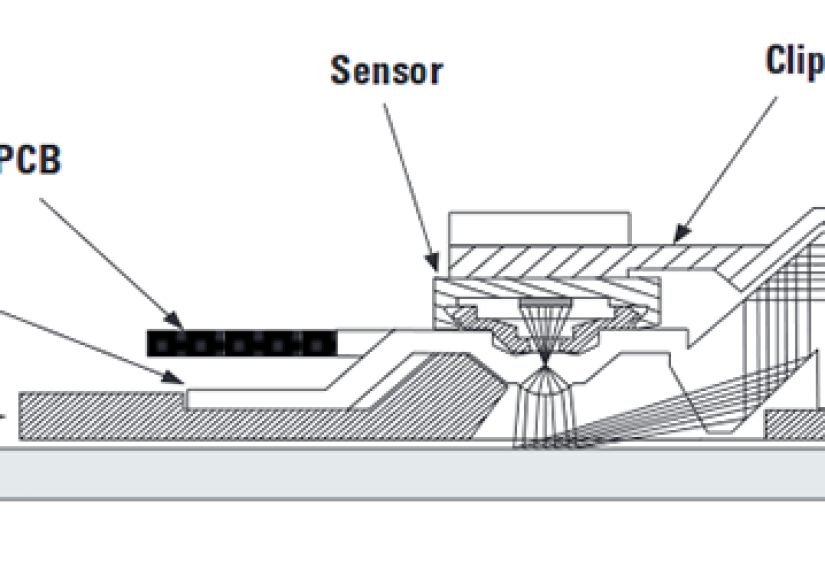
An optical mouse works by taking rapid, low-resolution images of the surface beneath it. The sensor compares one image to the next and calculates movement. On a desk, that means your cursor moves. On a mechanical gas meter, the same basic sensing idea can be used to detect motion on a rotating dial or indicator.
In the gas meter project, the mouse is not being used as a mouse anymore. The useful part is the optical sensor, sometimes paired with small LEDs to illuminate the dial. When the dial rotates through a recognizable position, the electronics can register that a known amount of gas has passed through the meter. From there, a microcontroller can count events, calculate usage, and send the data to a logging system.
The appeal is obvious: old optical mice are cheap, common, and full of tiny imaging technology. The downside is also obvious: mouse sensors were designed to stare at mouse pads, not dusty outdoor meter faces behind plastic windows. Lighting, focus, reflections, alignment, and calibration all become part of the puzzle. In other words, the mouse sensor is clever, but it is not magic. It still needs patience, testing, and a sense of humor when the first readings look like the meter is doing interpretive dance.
Old Gas Meters vs. Modern Monitoring
Some modern meters make energy monitoring easier by providing pulse outputs, magnetic indicators, or optical marks that can be read with relatively simple sensors. A pulse output might represent a fixed amount of gas per pulse. A reed switch or hall-effect sensor can sometimes detect a magnet inside a meter’s index. Optical sensors can detect a reflective mark on a dial or wheel. These approaches are common in DIY energy monitoring communities because they convert mechanical movement into countable digital events.
Older meters, however, may not provide convenient signals. That is where image-based monitoring becomes interesting. Instead of waiting for a friendly pulse output, the device visually interprets a dial. A small imaging chip, a camera module, or an optical mouse sensor can look for position changes. It is more complex than counting pulses, but it can be useful when the meter offers no easy electronic interface.
What Makes This Project So Delightfully Weird?
The best DIY projects often feel obvious only after someone else builds them. A computer mouse already detects motion. A gas meter dial already moves. Combine the two, and suddenly a broken office accessory becomes a home energy monitor. It is the kind of reuse that makes engineers nod thoughtfully and makes normal people ask why there are mouse parts taped near the utility meter.
This project also demonstrates a valuable maker principle: use the sensor you already have. In professional products, a designer might choose a purpose-built optical module, industrial enclosure, certified power supply, and polished dashboard. In a garage or basement prototype, the first question is often, “What’s in the parts bin?” A disassembled mouse may not be the most elegant sensor in the universe, but it is available, inexpensive, and surprisingly capable.
Turning Readings Into Useful Home Data
Counting dial movements is only the beginning. The real value appears when readings are logged over time. A microcontroller can turn meter events into a running total, daily usage, hourly usage, or estimated energy cost. With the right software, that information can be displayed in a dashboard, compared with outdoor temperature, or used to spot unusual consumption patterns.
Home automation platforms have made this kind of data more useful. Energy dashboards can show long-term trends, while systems using MQTT, ESPHome, or similar tools can move sensor readings into a smart home environment. The result is a simple but powerful feedback loop: the meter records gas use, the sensor captures it, the software visualizes it, and the homeowner finally gets to see what the furnace has been up to while everyone was asleep.
Example: Spotting Heating Behavior
Imagine a home where gas usage rises sharply every morning between 5:30 and 7:00. That could be the furnace recovering from a nighttime setback temperature. If the homeowner adjusts the thermostat schedule and sees a smoother curve the next week, the data has done its job. It has turned a vague energy-saving idea into something measurable.
Example: Comparing Appliance Loads
A gas water heater may create short, repeated usage bursts, while a furnace may create longer cycles. A gas range may appear as small, irregular events. Over time, the usage pattern becomes a fingerprint of the home’s habits. No, it will not identify who made midnight noodles, but it may reveal that the water heater works harder than expected after laundry days.
Accuracy: The Difference Between “Cool” and “Useful”
A gas meter monitoring project must be accurate enough to be helpful. If the sensor misses dial rotations, the recorded total falls behind. If it double-counts events, the data exaggerates usage. If the sensor shifts slightly, yesterday’s careful calibration may become today’s nonsense. This is why mechanical mounting, lighting stability, and software filtering matter.
A practical system needs a way to compare its readings with the official meter display. Periodic manual checks help verify whether the monitor is drifting. For example, if the dashboard says the home used 12 units but the meter shows 10, the system may be counting too aggressively. If the dashboard says 8 while the meter shows 10, the sensor may be missing events. In DIY energy monitoring, calibration is not a one-time ceremony; it is an ongoing relationship, like owning a houseplant that occasionally demands firmware.
Why Not Just Use a Camera?
A camera-based meter reader can be more flexible than an optical mouse sensor. It can read digits, recognize pointers, or process images with modern computer vision. ESP32-CAM boards and small single-board computers have made image-based monitoring more accessible. Some systems can digitize water, gas, and electric meters by reading the visible display directly.
However, cameras may require more power, more storage, better lighting, and more complicated software. A mouse sensor is simpler and charmingly minimal. It does not need to capture a beautiful photo; it only needs enough visual information to detect movement or position. That makes the disassembled mouse approach a wonderful prototype even if a polished commercial design might use a different sensor.
Safety Comes Before Cleverness
Any discussion of gas meter monitoring needs a giant caution sign wearing sensible shoes. Never open, bypass, modify, block, wrap, or interfere with a gas meter or its piping. Never attach anything that prevents utility access or creates a hazard. Never run unsafe wiring near gas equipment. If there is any smell of gas, suspected leak, damaged equipment, or concern about meter access, the correct move is to leave the area when necessary and contact the gas utility or emergency services according to local guidance.
A responsible project should be external, removable, weather-aware, and designed with utility access in mind. It should not depend on adhesives, brackets, or enclosures that damage the meter, obstruct markings, trap moisture, or hide evidence of a problem. The best home energy monitor is the one that collects useful information while remaining boring from a safety perspective. Boring is excellent when gas is involved.
The SEO-Friendly Lesson: Analog Data Still Matters
The story of a disassembled mouse tracking a gas meter is bigger than one quirky project. It reflects a larger shift in home energy awareness. People want more immediate feedback about consumption, cost, comfort, and efficiency. Smart meters and utility portals help, but not every home has convenient access to detailed data. DIY monitoring fills part of that gap by giving technically curious homeowners a way to understand their own usage patterns.
This is especially valuable because energy behavior is often invisible. You can see lights turned on, but you cannot easily see gas moving through a pipe. You can feel warm air from a furnace, but you cannot instantly know how much fuel it consumed. A meter reader makes the invisible visible. Once a homeowner can see usage patterns, small improvements become easier to test.
What This Project Teaches Makers
First, it teaches that sensors are everywhere. A mouse sensor, a door contact, a hall-effect sensor, a photodiode, or a camera can become part of a measurement system when paired with the right idea. Second, it teaches that old infrastructure does not have to remain silent. Mechanical meters, analog dials, and rotating indicators can all become data sources through careful observation.
Third, it teaches humility. The physical world is messy. Reflections change. Plastic yellows. Sunlight sneaks into enclosures. Batteries drain. Wi-Fi gets moody. A project that works beautifully on the bench may behave differently outdoors near a meter. That is not failure; that is engineering saying hello.
When a DIY Gas Meter Monitor Makes Sense
A project like this makes the most sense for educational observation, personal energy awareness, and non-invasive experimentation. It is useful for people who enjoy home automation, data logging, and hardware reuse. It is less suitable for anyone who needs certified billing accuracy, utility-grade reliability, or a zero-maintenance device. Your gas company’s meter remains the official source for billing. Your DIY dashboard is a learning tool, not a legal metering instrument.
The best use case is trend awareness. You do not need laboratory precision to notice that gas use doubled during a cold snap or that a thermostat change reduced morning spikes. Even approximate data can help homeowners understand patterns, especially when it is consistent over time and checked against the actual meter.
Experience Notes: Living With a Mouse-Based Meter Monitor
The first experience most people have with a project like this is not triumph. It is fiddling. The sensor must “see” the dial well enough to detect movement, which means alignment becomes a tiny drama. Move the sensor a little too high, and the reading becomes unreliable. Move it too low, and it may stare at a featureless patch of meter face like it is contemplating its life choices. Add too much light, and reflections can wash out the image. Add too little, and the sensor becomes a digital mole.
In practical use, the enclosure matters more than beginners expect. A gas meter is often outside or in a utility area, so the monitoring device may face temperature swings, dust, humidity, insects, vibration, and accidental bumps. A clean prototype made on a desk can become temperamental when placed in the real world. The best experience comes from treating the enclosure as part of the measurement system, not as an afterthought. It should protect the electronics while remaining removable and never blocking access to the meter.
Calibration is the second big lesson. At first, it is tempting to trust every pulse or detected rotation. Then reality arrives holding a clipboard. A false count may appear when the lighting changes. A missed count may occur if the dial moves through the detection zone too quickly or the software threshold is too strict. The practical solution is to compare the logged value with manual meter readings over several days. Small adjustments can turn chaotic data into a dependable trend line.
The third experience is surprisingly satisfying: once the data begins to behave, the home starts telling stories. You may see the furnace cycling before sunrise, the water heater firing after showers, or gas use dropping after weather improves. It becomes easier to connect household habits with energy consumption. The dashboard does not scold anyone; it simply points at the facts and raises one digital eyebrow.
There is also a maintenance lesson. A mouse-based monitor is clever, but it is not a forget-it-forever appliance. It may need occasional inspection, cleaning, recalibration, or software tweaks. If the sensor shifts, the readings can drift. If the meter window gets dirty, image quality can suffer. If the power supply is unreliable, the log may have gaps. These are normal trade-offs in DIY monitoring. The reward is learning how real measurement systems behave outside perfect lab conditions.
Perhaps the most memorable experience is the conversation it starts. Someone will eventually ask why there is a former computer mouse involved in gas tracking. That is when the project becomes more than data collection. It becomes a tiny demonstration of engineering creativity: a discarded device, a mechanical meter, a microcontroller, and a practical question all meeting in one place. It is not glamorous. It is not sleek. But it is smart in the best maker sense of the word.
Conclusion
Disassembled Mouse Keeps Track Of Gas Meter is a perfect example of practical imagination. It takes familiar hardware, applies it to an old problem, and shows how analog systems can be gently pulled into the digital age. The project is not about defeating the gas meter or replacing utility equipment. It is about observing safely, learning from patterns, and turning household energy use into visible information.
For makers, the lesson is simple: useful sensors are hiding in plain sight. For homeowners, the lesson is even better: energy data can make everyday decisions clearer. And for the old optical mouse, the lesson is glorious: retirement is overrated. Sometimes your second career involves staring at a gas meter and helping someone understand their heating bill.
Note: This article is for educational discussion of non-invasive home energy monitoring concepts only. Do not open, modify, bypass, obstruct, wrap, or tamper with a gas meter or gas piping. Contact your utility provider or a qualified professional before placing any device near utility-owned equipment.