Table of Contents >> Show >> Hide
- Why Tuna Steak Is the Perfect “Fast Gourmet” Protein
- Choose the Right Tuna: Your Shopping Shortcut to a Better Dinner
- The Core Method: Pan-Seared Tuna Steak (Restaurant Vibes in Minutes)
- 3 Gourmet Flavor Paths That Still Keep Dinner Fast
- Common Mistakes (and How to Avoid Tuna Tragedy)
- Fast Sides That Make Tuna Dinner Feel Like a “Whole Situation”
- Quick “Chef Moves” That Upgrade Tuna Instantly
- Conclusion: Your 10-Minute Ticket to Gourmet Dinner
- Experience Notes: What I’ve Learned Making Tuna Steak Feel Fancy (Without Making It Hard)
Tuna steak is the unicorn of weeknight dinners: it cooks faster than your rice cooker can get emotionally invested,
yet it can taste like something you’d pay too much for while pretending not to look at the bill. When it’s done right,
tuna is buttery and clean, with a seared exterior that whispers “restaurant” and a rosy center that says,
“Relax, I’ve got this.”
When it’s done wrong… well, let’s just say tuna can go from “silky” to “sad beige coaster” in about 90 seconds.
The good news: making tuna steak that feels gourmet is less about complicated technique and more about a few smart moves:
buy the right cut, dry it well, use real heat, and stop cooking before your tuna starts filing a complaint.
Why Tuna Steak Is the Perfect “Fast Gourmet” Protein
Tuna is naturally meaty (especially ahi/yellowfin and bigeye), which means it behaves a lot like a steak in the pan:
it loves high heat, it rewards a good sear, and it’s happiest when the inside is still tender and slightly translucent.
Most tuna steaks are best served rare to medium-rareso your “cook time” is often 2–4 minutes total.
Add a punchy sauce, a bright salad, or a quick starch, and you’ve got a dinner that looks fancy without requiring
a culinary degree or a pep talk.
Choose the Right Tuna: Your Shopping Shortcut to a Better Dinner
Look for “center-cut” steaks with even thickness
Aim for steaks that are about 1 inch thick and evenly shaped. An even thickness means even cookingno awkward moment
where one end is perfect and the other end is auditioning for tuna jerky.
Fresh vs. frozen: both can be excellent
High-quality frozen tuna can be fantastic because it’s often frozen quickly near the source, which helps preserve
texture. If you buy frozen, thaw it slowly in the refrigerator. Avoid thawing on the counteryour tuna deserves better
than a risky spa day in the danger zone.
“Sushi-grade” is marketingask better questions
In the U.S., “sushi-grade” isn’t a regulated label. Instead, ask the fishmonger:
Is this tuna suitable for serving rare? and When was it cut?
Also: trust your senses. Tuna should smell clean, not fishy. The flesh should look moist, not slimy, with a fresh color.
Food safety note (quick, practical, not preachy)
Many people enjoy tuna seared with a rare center. If you prefer to follow the most conservative safety approach,
fish is commonly recommended to reach 145°F. If you’re pregnant, immunocompromised, or cooking for someone who is,
consider fully cooking the tunaor choose a different quick protein for that meal. Gourmet is supposed to feel good,
not stressful.
The Core Method: Pan-Seared Tuna Steak (Restaurant Vibes in Minutes)
This is the go-to technique for a fast gourmet-style dinner. Think: sizzling pan, quick crust, tender center, applause.
What you need
- 2 tuna steaks (about 6 oz each, ~1 inch thick)
- Kosher salt and freshly ground black pepper
- High-heat oil (avocado, grapeseed, canola, or refined olive oil)
- A heavy skillet (cast iron or stainless steel is ideal)
- Optional but powerful: instant-read thermometer
Step 1: Dry the tuna like you mean it
Pat the tuna very dry with paper towels. Moisture is the enemy of a good searwater has the audacity to steam instead
of brown. If you want a crust that tastes like “chef,” start with a surface that’s not damp.
Step 2: Season simply (or strategically)
Salt and pepper are enough for a classic seared tuna steak. If you want more flavor without slowing down dinner,
choose one quick boost:
- Sesame crust: brush lightly with oil or soy sauce, then press into sesame seeds.
- Spice rub: coriander + paprika + black pepper + a tiny pinch of cayenne.
- Quick marinade (10 minutes max): soy sauce + sesame oil + grated ginger + a little honey.
Avoid long acidic marinades (lots of lemon or vinegar) unless you actually want the exterior to start “cooking” before
it hits the pan.
Step 3: Preheat the pan until it’s properly hot
Heat your skillet over medium-high to high heat. Add a thin layer of oil and wait until it shimmers.
You want confident heathot enough to sear quickly before the interior overcooks.
Step 4: Sear fast, flip once
Place the tuna in the pan and don’t fuss with it. Let it develop a crust.
Typical timing for a 1-inch steak:
- Rare: about 30–60 seconds per side
- Medium-rare: about 60–90 seconds per side
- Medium: about 90 seconds to 2 minutes per side
Times vary based on thickness and how hot your pan truly is. If you’re using a thermometer, a common “chef-style” target
is pulling tuna around the low-to-mid 120s°F for rare-to-medium-rare, then letting it rest briefly.
Step 5: Rest, then slice against the grain
Rest the tuna for 2–5 minutes. Then slice against the grain into 1/2-inch slices.
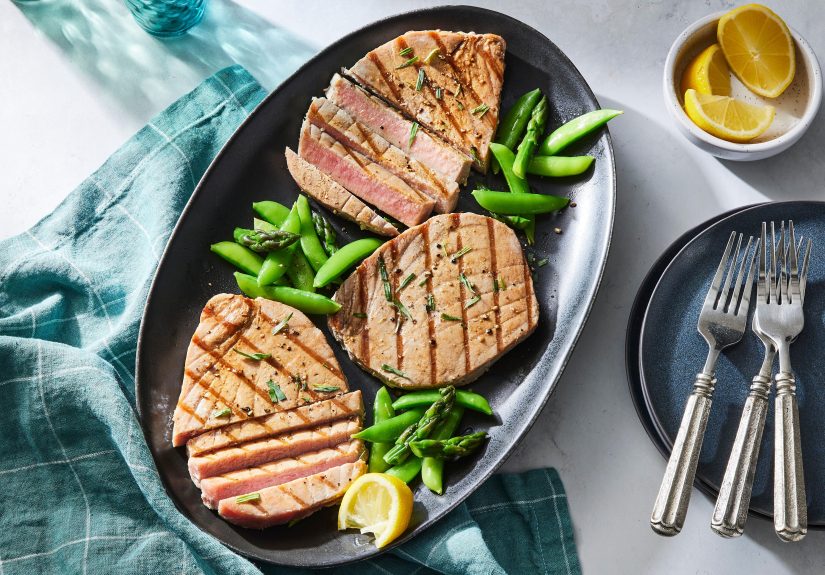
The center should be rosy and tender, framed by a savory crust. If it’s fully gray-brown inside, it’ll likely eat dry.
(It’s not ruinedyou can flake it into a salad or pasta. But it won’t feel “gourmet steak night.”)
3 Gourmet Flavor Paths That Still Keep Dinner Fast
1) Sesame-Crusted Tuna with Soy-Lime Drizzle
Press tuna into sesame seeds. Sear quickly. Drizzle with a mix of soy sauce, lime juice, a touch of honey, and a few
drops of sesame oil. Add sliced cucumbers and quick rice. You just made a “bowl place” dinner at home, minus the line.
2) Tuna Steak with Caper Butter (Big Bistro Energy)
While the tuna rests, melt a tablespoon of butter and stir in capers, lemon zest, and chopped parsley.
Spoon over sliced tuna. Serve with roasted potatoes or a simple arugula salad.
It tastes like you know what you’re doingeven if you’re still wearing socks with cartoons on them.
3) Peppercorn-Crusted Tuna with Quick Pan Sauce
Coat tuna with cracked black pepper. Sear. Deglaze the pan with a splash of white wine or broth,
swirl in a little butter, and finish with a squeeze of lemon. Serve with sautéed spinach or green beans.
It’s bold, classic, and weeknight-friendly.
Common Mistakes (and How to Avoid Tuna Tragedy)
Mistake: Cooking it like chicken
Tuna isn’t chicken. It’s more like steak: it’s at its best when the center stays tender.
If you want well-done fish, choose salmon or cod for a more forgiving texture.
Mistake: Starting with a wet surface
Pat dry. Then pat dry again. If you do nothing else, do this.
Mistake: A lukewarm pan
Tuna needs high heat for a fast crust. A timid pan turns searing into steaming, and steaming turns “gourmet” into “meh.”
Mistake: Overcrowding
Give each steak space. Crowding drops the pan temperature and traps steam. If needed, cook in batches or use two pans.
Mistake: Skipping the rest
Resting helps the juices redistribute and makes slicing cleaner. It’s two minutes. You can use that time to plate
sides or pretend you’re on a cooking show.
Fast Sides That Make Tuna Dinner Feel Like a “Whole Situation”
5-minute options
- Arugula salad with lemon, olive oil, and flaky salt
- Sliced cucumbers + avocado + rice vinegar + sesame seeds
- Microwaved rice with scallions and a drizzle of soy sauce
10–15 minute options
- Garlic sautéed spinach
- Roasted asparagus (hot oven or air fryer)
- Quick soba noodles with soy-lime dressing
Quick “Chef Moves” That Upgrade Tuna Instantly
- Finish with something bright: lemon, lime, vinegar, or pickled ginger.
- Add crunch: sesame seeds, toasted almonds, or crispy shallots.
- Use a compound butter: butter + herbs + capers = instant restaurant sauce.
- Slice and fan it out: plating matters. Your taste buds will act impressed.
Conclusion: Your 10-Minute Ticket to Gourmet Dinner
Cooking tuna steak is about speed and confidence. Dry the surface, heat the pan, sear quickly, and stop before the tuna
goes from tender to tired. Once you’ve got the core technique, you can spin it a dozen wayssesame crust, peppercorn,
caper butter, soy-ginger drizzleand every version still feels like a fast gourmet-style win.
And if anyone asks how you made it taste so good, you can say, “Oh, it’s just a simple sear,” while secretly enjoying
the fact that you just cooked a restaurant-style dinner in the time it takes to watch two ads and regret them both.
Experience Notes: What I’ve Learned Making Tuna Steak Feel Fancy (Without Making It Hard)
The first time I cooked tuna steak at home, I treated it like “normal fish,” which is a polite way of saying I cooked it
until it looked safe enough to introduce to my parents. It tasted… fine. But it didn’t taste like tuna steak I’d ordered
at restaurantsthe kind that arrives sliced, glossy, and confident, like it owns a tiny scarf collection.
The difference, I learned, wasn’t some secret culinary handshake. It was mostly timing, heat, and restraint.
Tuna doesn’t want a long cook. It wants a fast sear and a graceful exit. The best batch I ever made happened when I was
running late and accidentally did everything “right” because I didn’t have time to overthink it:
I patted the steaks dry, heated the pan properly, and seared them quickly because I needed dinner now.
The center stayed rosy, the outside browned, and suddenly my kitchen smelled like “somebody who owns a linen napkin.”
I also learned that tuna steak is basically a choose-your-own-adventure for flavor. One night it’s sesame-crusted with
a soy-lime drizzle and cucumber salad. Another night it’s peppery with a quick butter sauce and a pile of sautéed greens.
If you keep a few “fast gourmet” ingredients aroundcapers, sesame seeds, soy sauce, a lemon, a knob of butteryou can
make wildly different dinners without changing your core technique.
The biggest practical win? Tuna makes weeknights feel special without demanding a full production.
It’s the dinner you cook when you want something better than “whatever is in the freezer,” but you also refuse to spend
your entire evening washing dishes. I’ve served it on random Tuesday nights and watched it upgrade the mood of the table.
People sit up straighter. Conversations get more interesting. Someone inevitably says, “Wow, this is really good,” and you
get to act casual while internally doing a small victory dance.
The only recurring challenge is smoke. A hot pan means a little drama, so I’ve learned to turn on the fan, crack a window,
and accept that “fast gourmet” sometimes comes with a brief fog machine effect. It’s worth it.
Also: when in doubt, pull the tuna early. You can always sear it a little more, but you can’t un-cook it once it’s crossed
into dry territory. If you accidentally overcook it, don’t panicflake it into a salad, fold it into pasta, or toss it with
a punchy dressing and call it “meal prep.” Tuna is forgiving emotionally, even if it’s fast to judge you thermally.
Now, tuna steak is one of my favorite “shortcut fancy” dinners. It’s quick, flexible, and impressive in a way that feels
almost unfair. And honestly? A dinner that tastes gourmet in under 15 minutes is exactly the kind of magic weeknights need.