Table of Contents >> Show >> Hide
- The Quick Answer (Because We’re All Busy)
- Why Mammogram Guidelines Don’t All Match
- A Practical “Choose Your Lane” Guide
- What Counts as “Average Risk” vs “Higher Risk”?
- Age-by-Age: What Mammogram Frequency Usually Looks Like
- If You’re High-Risk, the Schedule Changes (Often Earlier + More Tools)
- Dense Breasts: What It Means for Frequency (and Follow-Up)
- 2D vs 3D Mammograms (Tomosynthesis): Does It Change How Often You Go?
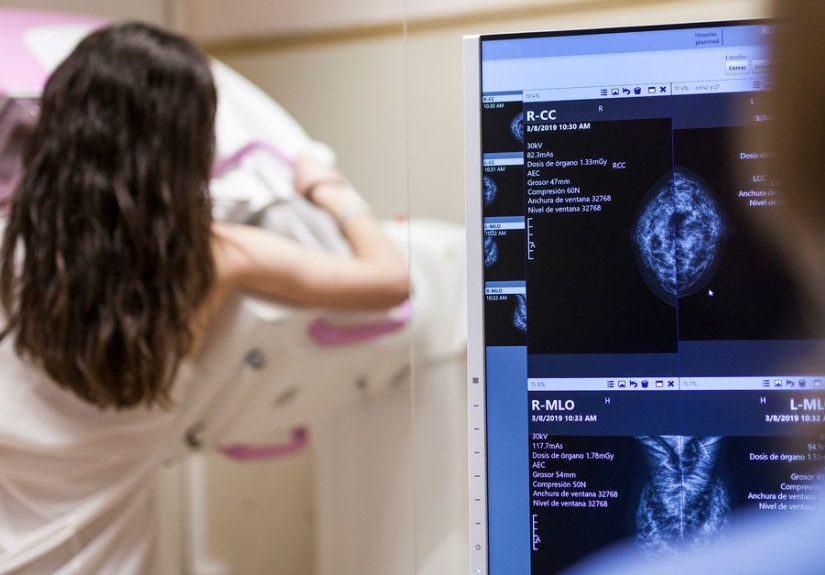
- What to Expect at Your Mammogram (So It’s Less Weird)
- Getting “Called Back” Isn’t Automatically Bad News
- Cost, Coverage, and How to Pay Less (or Nothing)
- Questions to Ask Your Clinician (This Makes the Decision Easy)
- Bottom Line
- Real-World Experiences (): What Mammograms Are Actually Like
If you’ve ever tried to figure out mammogram schedules, you’ve probably discovered a strange truth: you can ask three reputable experts and get four confident answers. It’s like arguing about the “best” pizzaexcept the stakes are higher and nobody’s having fun.
The good news: the “right” mammogram frequency usually comes down to two thingsyour age and your personal risk. The even better news: once you understand why guidelines differ, it’s much easier to pick a plan that feels sensible (instead of like you’re spinning a wheel labeled “annual,” “biennial,” and “ask your doctor forever”).
The Quick Answer (Because We’re All Busy)
For average-risk adults, most mainstream U.S. guidance now centers on starting routine screening at age 40. The main split is how often:
- Every 2 years (biennial) from about 40–74 is commonly recommended by a major federal preventive panel.
- Every year (annual) starting at 40 is commonly recommended by several radiology and specialty groups.
- Some organizations suggest a hybrid approach: start in your 40s, screen annually in midlife, then consider every other year later if you’re healthy and prefer fewer callbacks.
High-risk? You may need to start earlier and/or add imaging such as breast MRI. If you’re not sure whether you’re high-risk, you’re not aloneand a simple risk assessment can clarify a lot.
Why Mammogram Guidelines Don’t All Match
Different guideline groups weigh the same factsbut prioritize different trade-offs:
1) Benefits: finding cancer early
Screening mammograms can detect cancers before they’re felt and can reduce the chance of dying from breast cancer. Earlier detection often means less aggressive treatment and better outcomes.
2) Harms: false alarms, overdiagnosis, and anxiety spirals
Mammograms can also lead to:
- False positives (an abnormal result that turns out not to be cancer), which can mean extra imaging or biopsies.
- Overdiagnosis (finding a cancer that would never have caused harm in a person’s lifetime), which can lead to overtreatment.
- Stress while waiting for follow-upaka the longest week of your life.
Groups that emphasize minimizing these downsides often favor biennial screening for average-risk adults. Groups that emphasize maximizing early detection more strongly often favor annual screening.
A Practical “Choose Your Lane” Guide
Think of screening frequency like choosing a lane on the highway. Both lanes go the same direction; one has more exits (and more chances to get pulled into a detour).
Lane A: Every 2 years (the “fewer detours” plan)
This approach aims to reduce the number of false alarms and follow-up testing while still capturing much of the life-saving benefit of screening for average-risk adults.
Lane B: Every year (the “more check-ins” plan)
This approach aims to catch changes sooner, but it can also increase callbacks and additional testing over time. Many people feel reassured by the yearly cadenceespecially if they have risk factors that don’t quite push them into a formal “high-risk” category.
Lane C: A customized rhythm (the “it depends, but in a good way” plan)
This might look like annual screening through your 40s and early 50s, then switching to every other year lateror staying annual if you prefer maximum monitoring and are comfortable with the trade-offs.
What Counts as “Average Risk” vs “Higher Risk”?
Here’s the simplest way to think about it:
- Average risk generally means no known high-risk genetic mutation, no personal history of breast cancer, and no major high-risk exposures (like certain chest radiation at a young age).
- Higher-than-average risk can include strong family history, certain inherited gene mutations (such as BRCA variants), prior chest radiation when young, or certain high-risk biopsy findings.
Tip: Some radiology groups encourage a formal breast cancer risk assessment by age 25 so people who need earlier screening don’t miss the window.
Age-by-Age: What Mammogram Frequency Usually Looks Like
Under 40
If you’re under 40 and average risk, routine screening is less common. But if you have symptoms (a new lump, persistent nipple discharge, skin changes, etc.), that’s not “wait and see” territorytalk to a clinician. The workup may involve diagnostic mammography, ultrasound, or other imaging based on your age and breast tissue.
Example: A 35-year-old with a new lump may start with ultrasound, then get diagnostic mammography if needed. Screening schedules are for people without symptomssymptoms get their own fast lane.
40–49
This is where modern guidance has shifted: many groups now support starting at 40. Your “how often” choice usually falls into annual or biennial screening.
Example decision: If you’re 42, average risk, and the idea of extra callbacks makes your eye twitch, biennial screening may feel right. If you’re 42 with dense breasts and a close relative diagnosed young, annual screening may feel more comfortable while you also discuss whether you meet criteria for supplemental imaging.
50–74
Most major guidance agrees that screening in these decades is valuable. Frequency often remains annual or biennial based on your preferences, risk factors, and past screening experience (for example, if you’ve had multiple false positives, you might lean toward fewer screenings; if you’re anxious about waiting two years, you might lean annual).
75 and beyond
The evidence is less clear for routine screening at older ages, and recommendations often emphasize individualized decision-making. A useful question is: “If we found a cancer on screening, would I pursue treatment?” If the answer is yes and you’re in good health, continued screening may make sense. If not, you may choose to stop.
If You’re High-Risk, the Schedule Changes (Often Earlier + More Tools)
If you fall into a high-risk categorysuch as carrying certain genetic mutations, having a very strong family history, or having had chest radiation when youngerscreening may start earlier and often includes breast MRI in addition to mammography.
Example: A 30-year-old with a known high-risk gene mutation may be advised to use annual MRI and mammography (timing and specifics vary by risk profile and clinician guidance). The big idea: high-risk screening tends to be more intensive because the baseline risk is higher.
Dense Breasts: What It Means for Frequency (and Follow-Up)
Dense breast tissue is common and can do two annoying things at once:
- It can slightly increase breast cancer risk.
- It can make cancers harder to see on a mammogram (because dense tissue and tumors can look similar on imaging).
Because of this, some people with dense breasts discuss supplemental screening (like ultrasound or MRI), especially if they have additional risk factors. Importantly, major preventive guidance has said evidence is still evolving on whether supplemental tests improve long-term outcomes for dense breasts after a normal mammogramso this is often a shared decision.
Also new: Mammography facilities now provide clearer breast density notifications to patients, which helps you know whether dense tissue is part of your personal screening equation.
2D vs 3D Mammograms (Tomosynthesis): Does It Change How Often You Go?
A standard mammogram is often digital (2D). Many centers also offer 3D mammography (also called tomosynthesis), which takes multiple images and reconstructs a layered view.
What this can mean for you:
- 3D mammography may improve cancer detection and reduce “come back for more pictures” callbacks in some people.
- It doesn’t automatically change the recommended interval, but it can make the screening experience smoother (fewer false alarms is everyone’s love language).
What to Expect at Your Mammogram (So It’s Less Weird)
Mammograms are quick, but they are not subtle. A few tips that can make the day easier:
Before your appointment
- Skip deodorant (and lotions/powders) on your underarms and breasts that daysome ingredients can show up on images.
- If you get breast tenderness with your cycle, consider scheduling when your breasts are less sore.
- Bring prior images if you’re going to a new facility. Comparisons reduce unnecessary callbacks.
During the exam
You’ll stand at the machine, and each breast is compressed briefly to get a clear image. Compression is uncomfortable for some people, but it’s fast. If you’re in significant pain, tell the technologistpositioning adjustments can help.
Afterward
You can go about your day. There’s no lingering radiation in your body from the imaging.
Getting “Called Back” Isn’t Automatically Bad News
A callback means the radiologist needs more views or a closer lookoften because of overlapping tissue, motion blur, or a benign finding that needs clarification.
That said, callbacks can feel emotionally loud. If it happens to you, consider these sanity-saving steps:
- Ask what kind of follow-up is needed (extra views? ultrasound? both?).
- Ask how soon you can schedule it (shorter wait = fewer doom spirals).
- Remember: many callbacks end with “all clear.”
Cost, Coverage, and How to Pay Less (or Nothing)
In the U.S., many health plans cover recommended preventive screening with low or no cost-sharing, depending on your plan and the service classification. Medicare covers screening mammograms on a regular schedule as well.
If you’re uninsured or underinsured, there are programs that help eligible people access free or low-cost mammograms through public health screening initiatives. (Translation: if cost is the barrier, you still have options.)
Questions to Ask Your Clinician (This Makes the Decision Easy)
- “Am I average risk or higher risk? What puts me in that category?”
- “Given my history and preferences, should I screen every year or every two years?”
- “Do I have dense breasts, and does that change my plan?”
- “Would I benefit from supplemental screening like MRI or ultrasound?”
- “What’s your approach for screening after 74 if I’m healthy?”
Bottom Line
Most people at average risk can feel confident starting mammograms at 40 and continuing through their 70sthen reassessing based on health and preferences. Whether you choose annual or every-other-year screening depends on how you personally balance early detection with the possibility of extra testing and false alarms.
If you’re high-risk or have dense breasts, your plan may need to be more personalizedand it’s worth having that conversation sooner rather than later. The “best” schedule is the one you’ll actually follow consistently.
Real-World Experiences (): What Mammograms Are Actually Like
Let’s be honest: most people don’t skip mammograms because they hate early detection. They skip because the process is awkward, the waiting is stressful, and the whole thing feels like scheduling a tiny appointment with anxiety. If that’s you, you’re in very good company.
The first-timer nerves are real. Many people describe their first mammogram as a strange mix of “I’m proud of myself” and “Why is the machine so cold?” It’s common to worry about pain, but what you’ll often hear afterward is: “It wasn’t fun, but it was faster than I expected.” The compression can be uncomfortablesometimes intensely so for a few secondsbut the technologist usually works quickly, and good positioning makes a big difference. People who speak up (“That’s too muchcan we adjust?”) often report a noticeably better experience.
Then there’s the mental game of waiting for results. Even if you’re calm by nature, the period between the exam and the report can feel like your brain is trying to audition for a disaster movie narrator. A surprisingly helpful strategy many people use is to schedule the mammogram at a time when they’ll be busy afterwardwork meetings, errands, anything that keeps the mind from spiraling. Another common tip: don’t Google every word on the patient portal. Your search history deserves peace.
Callbacks are the emotional plot twist nobody asked for. Plenty of patients have stories that start with: “They called me back and I freaked out…” and end with: “…and it was nothing.” Overlapping tissue, a blurry spot, or a benign cyst can trigger additional images. People who’ve been through it often say two things helped most: getting the follow-up scheduled quickly, and reminding themselves that a callback is often about claritynot catastrophe.
Some people find a rhythm that makes screening easier. They book the next appointment before leaving the imaging center (future-you will be grateful), pick a facility they like, and treat the day like a small self-care errand: comfy bra, easy top, maybe a coffee afterward. If you have cyclical breast tenderness, many report that timing the exam for a less tender part of the month reduces discomfort.
And for those who’ve had a scareor a diagnosisscreening can feel empowering. Survivors and higher-risk patients often describe regular imaging as both emotionally challenging and deeply grounding. The scans aren’t just tests; they’re checkpoints that help them stay engaged with their health. If you feel nervous, it doesn’t mean you’re doing it wrong. It means you’re humanand you’re showing up anyway.
Friendly reminder: This article is educational and not personal medical advice. Your best schedule is a shared decision with a qualified clinician who knows your history.