Table of Contents >> Show >> Hide
- Why Boil Sweet Potatoes (Instead of Baking or Roasting)?
- Sweet Potato Prep: What to Do Before the Pot
- The Key Technique: Start in Cold Water (Yes, Cold)
- How Long to Boil Sweet Potatoes (Timing Cheat Sheet)
- Method 1: How to Boil Sweet Potatoes Whole
- Method 2: How to Boil Sweet Potatoes Cubed
- How to Keep Boiled Sweet Potatoes From Getting Watery
- Should You Salt the Water?
- Peel On or Peel Off?
- What to Do With Boiled Sweet Potatoes
- Storage and Freezing Tips
- Common Boiling Problems (And How to Fix Them)
- Real-Life “Experience” Section: The Things People Learn After Boiling Sweet Potatoes a Dozen Times
- Conclusion
Boiling sweet potatoes sounds almost too basiclike “how to blink” or “how to open a bag of chips without summoning a loud crinkle demon.” But if you’ve ever ended up with sweet potato cubes that are half-mush, half-rock, or a mash that tastes like it took a swim in the deep end, you already know this “simple” method has a few sneaky details.
This guide walks you through how to boil sweet potatoes whole or cut, how long to cook them, how to keep them from getting watery, and how to turn your perfectly tender spuds into meals you actually want to eat. Expect clear steps, a little kitchen humor, and the kind of practical tips that save dinner.
Why Boil Sweet Potatoes (Instead of Baking or Roasting)?
Boiling is the quickest route to soft, scoopable, mashable sweet potatoesespecially when you need them as an ingredient: think mashed sweet potatoes, casseroles, soups, baby food, smoothies (yes, really), or meal-prep bowls.
It’s also low-fuss: no oven wait, no pan babysitting. And nutritionally, boiling can be a smart choice because it doesn’t require added oil, and cooking sweet potatoes in water can help soften starches and make them easier to digest for some people. (Bonus: if you’re watching blood sugar, boiled sweet potatoes are often discussed as a gentler option than higher-heat methods.)
Sweet Potato Prep: What to Do Before the Pot
1) Choose your sweet potatoes like you mean it
Look for sweet potatoes that feel firm, with smooth-ish skin and no deep wrinkles, soft spots, or mystery bruises. Small to medium sweet potatoes are usually easier to cook evenly (and they fit in normal human-sized pots).
2) Scrub them clean (even if you plan to peel)
Sweet potatoes grow in the ground, which is basically nature’s glitterexcept it’s dirt and it gets everywhere. Rinse under cool water and scrub with a vegetable brush. If you’re keeping the skins on, scrub extra well.
3) Decide: whole, halved, or cubed?
- Boil whole if you want easy peeling after cooking, less water absorption, and a more “baked-like” interior (but slower).
- Boil cubed if you want speed and even cooking, especially for mashing, purees, soups, and meal prep.
- Boil halved if you want something in-between (faster than whole, less fussy than cubes).
Tools you’ll want
- Large pot with lid (optional lid, but helpful)
- Colander or strainer
- Knife + cutting board (if cutting)
- Fork or paring knife (for doneness checks)
- Vegetable peeler (optional)
The Key Technique: Start in Cold Water (Yes, Cold)
Here’s the biggest “tiny detail” that changes everything: put sweet potatoes in the pot and cover with cold water, then bring it up to a boil. Starting cold helps the inside and outside cook more evenlyso you don’t get mushy edges and a firm center.
Also: keep the boil friendly. You want a steady boil at first, then a gentle boil or simmer so the sweet potatoes cook through without being knocked around like they owe the water money.
How Long to Boil Sweet Potatoes (Timing Cheat Sheet)
Cooking time depends on size, how you cut them, and whether they’re peeled. Use this as a reliable starting point, then test for doneness.
| Cut/Size | Typical Boil Time | Best For |
|---|---|---|
| 1-inch cubes | 10–15 minutes | Mash, soups, salads, meal prep |
| 2-inch chunks | 15–25 minutes | Chunkier mash, quicker side dishes |
| Halved lengthwise | 20–30 minutes | Fast “whole-ish” cooking |
| Whole (small–medium) | 20–30+ minutes | Easy peeling, less water absorption |
| Whole (large) | 30–50 minutes | Big batch cooking, stuffing, purees |
Real talk: times vary. Your best friend is the doneness testbecause sweet potatoes don’t care about your schedule.
Method 1: How to Boil Sweet Potatoes Whole
Step-by-step
- Wash and scrub the sweet potatoes. Trim off any stringy root ends if you want (not required).
- Place them in a large pot and cover with cold water by about 1 inch. Add salt if you like (it seasons the potato lightly).
- Bring to a boil over high heat.
- Reduce heat to maintain a gentle boil/simmer.
- Cook until a fork or knife slides into the thickest part with little resistance. Depending on size, this usually takes about 20 to 50 minutes.
- Drain in a colander. Let them sit for 2–3 minutes to steam off excess moisture. Then peel (the skins often slip off easily when warm).
Whole sweet potato pro tip
If you’re making mash or puree, boiling whole can help reduce waterlogging because the skin acts like a little raincoat. Peel after cooking for a smoother, less watery result.
Method 2: How to Boil Sweet Potatoes Cubed
Step-by-step
- Wash and peel (optional) the sweet potatoes.
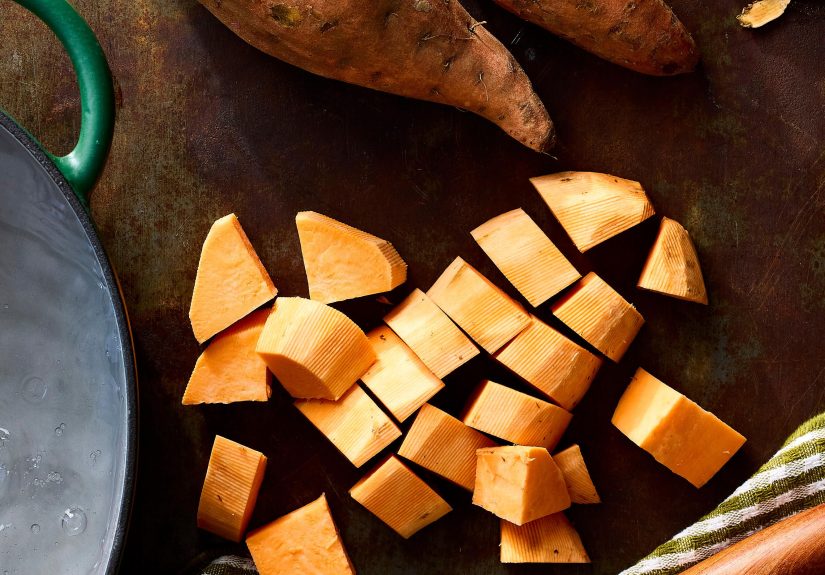
- Cut into even-sized pieces. For most recipes, 1-inch cubes are the sweet spot: fast cooking and easy mashing.
- Place cubes in a pot and cover with cold water by about 1 inch.
- Add salt if desired.
- Bring to a boil, then reduce to a steady simmer.
- Boil until fork-tender, usually 10–15 minutes for 1-inch cubes. Larger chunks take longer.
- Drain well, then return the cubes to the warm pot (off heat) for 1–2 minutes to let steam evaporate. This helps prevent watery mash.
Doneness test (the one that doesn’t lie)
Sweet potatoes are done when a fork or paring knife slides in easily and the center feels tendernot crunchy, not resistant. Test a few pieces (not just the smallest “teacher’s pet” cube that cooked faster).
How to Keep Boiled Sweet Potatoes From Getting Watery
Watery sweet potatoes usually come from one of three things: overcooking, boiling too hard, or not letting excess moisture escape. Here’s how to fix that:
- Cut evenly: Same-size pieces cook at the same speed (your mash will thank you).
- Simmer, don’t thrash: A gentle simmer cooks through without blasting the outside into mush.
- Drain thoroughly: Give them time in the colandersteam is moisture leaving the building.
- Steam-dry: Put drained potatoes back in the warm pot for a minute or two so excess water evaporates.
- Don’t overboil: Once fork-tender, get them out. Overcooked sweet potatoes turn into spongey water magnets.
Should You Salt the Water?
You don’t have to, but a modest pinch (or about a teaspoon per pot) lightly seasons the sweet potato from within. If you’re using the sweet potatoes in a dessert (pie, casserole with marshmallows, etc.), you can skip the saltor keep it minimal. Sweet and salty can play nicely together, but we’re not trying to make “ocean caramel yam surprise.”
Peel On or Peel Off?
Both work. Here’s a simple way to decide:
- Leave the peel on when boiling whole for easier handling, potentially less water absorption, and quick peeling after cooking.
- Peel before boiling when you’re cubing for mash, purees, or recipes where you want a very smooth texture.
- Keep the peel if you like the texture and want extra fiberjust scrub well first.
What to Do With Boiled Sweet Potatoes
Boiled sweet potatoes are basically the “choose your own adventure” of the kitchen. Here are a few crowd-pleasers:
1) Quick mashed sweet potatoes (weeknight style)
Drain well, steam-dry, then mash with butter (or olive oil), a splash of milk, salt, and pepper. Want to level up? Add cinnamon, smoked paprika, maple syrup, or a pinch of cayenne.
2) Meal-prep bowl base
Toss cubed boiled sweet potatoes with a little olive oil, salt, and your favorite spice blend. Pair with black beans, shredded chicken, sautéed greens, and a squeeze of lime.
3) Smooth soup shortcut
Boiled sweet potatoes blend quickly into creamy soups. Try blending with broth, sautéed onion, garlic, and ginger. Finish with coconut milk and a squeeze of lemon.
4) Sweet potato salad (yes, it’s a thing and it’s good)
Use tender-but-not-mushy cubes. Toss with chopped herbs, green onion, a tangy vinaigrette, and crunchy add-ins like pepitas.
5) Baby food / soft foods
Boiled sweet potatoes puree easily. If needed, thin with breast milk, formula, or a little cooking water. (If you’re prepping for someone with swallowing issues, aim for very smooth texture and follow medical guidance.)
Storage and Freezing Tips
- Refrigerator: Cool completely, then store in an airtight container for a few days.
- Prevent sogginess: For cubes, pat dry or let steam escape before sealing the container.
- Freezer: Cubes freeze better if you spread them on a sheet pan first, freeze until firm, then bag them.
- Reheating: Warm gently on the stovetop or microwave. For better texture, reheat cubes in a skillet to evaporate extra moisture.
Common Boiling Problems (And How to Fix Them)
Problem: Outside mushy, inside firm
This usually means the water was boiling too aggressively or you started in already-boiling water. Next time: start in cold water and simmer gently.
Problem: Sweet potatoes taste bland
Add a little salt to the water, and finish with seasoning after cooking. Sweet potatoes love a final pop: butter + salt, lime + chili, cinnamon + maple, or garlic + herbs.
Problem: They’re watery after mashing
Drain longer, steam-dry in the pot, and avoid overcooking. If it’s already watery, put the mash in a saucepan over low heat and stir gently to cook off moisture.
Problem: They fall apart in the pot
They were cut too small for the time given, boiled too hard, or cooked too long. Use slightly larger cubes, simmer gently, and start checking early.
Real-Life “Experience” Section: The Things People Learn After Boiling Sweet Potatoes a Dozen Times
If you’ve ever cooked sweet potatoes and thought, “Why is this so dramatic?”welcome. Sweet potatoes are wonderful, but they’re also the type of ingredient that will humble you in front of a pot of water. Here are the most common real-kitchen lessons (and the fixes) that come from actually making them again and again.
First: size matters more than you think. Two “medium” sweet potatoes can behave like totally different vegetables. One is a sleek little torpedo that cooks fast; the other is a chonky linebacker that needs extra time. That’s why timing charts are only a starting point. The real secret is checking doneness at the thickest part, and doing it earlier than you think you need tobecause the difference between “perfectly tender” and “mash that tastes like bathwater” can be five minutes.
Second: the boil should not look like a jacuzzi audition. A roaring boil bangs the pieces around, breaks edges, and encourages that mush-on-the-outside effect. A steady simmer is calmer, more even, and less likely to turn your cubes into sweet potato confetti. If you’re cooking cubes for a salad or for roasting later, this is especially important you want tender pieces that still hold their shape.
Third: steam is your friend. People often drain potatoes and immediately mash, then wonder why it’s watery. That visible steam rising off the potatoes? That’s moisture escaping. Give it a minute. Let them sit in the colander, then return them to the warm pot off heat so extra water can evaporate. This tiny pause can make the difference between a creamy mash and a spoonable puddle.
Fourth: whole vs. cubed is a strategic choice, not just a mood. Whole sweet potatoes boil slower, but they can be easier to peel after cooking, and many cooks feel the skin helps reduce water absorption. Cubes cook fast and evenly, but they can take on more water if you overcook them. If you’re making a casserole, a pie filling, or any recipe where texture matters, it’s worth choosing the method that matches your end goal instead of defaulting to whatever seems easiest at 6:17 p.m. on a Tuesday.
Fifth: the best seasoning often happens after boiling. Boiling is great for texture, but it’s not the method that builds deep flavor on its own. That’s where finishing steps shine. Toss cubes with olive oil, salt, and smoked paprika. Mash with butter and a pinch of cinnamon. Or go savory with garlic, black pepper, and chopped herbs. If your boiled sweet potatoes taste “fine” but not “wow,” don’t blame the potatoblame the lack of a finishing move.
Finally: boiled sweet potatoes are a meal-prep superhero if you treat them right. Cool them completely before sealing a container so condensation doesn’t make them soggy. Store cubes flat so they don’t mash each other into a sad orange paste. And if you freeze them, freeze in a single layer first so you can grab a handful instead of hacking at an orange iceberg. Do it this way and you’ll have sweet potatoes ready for quick soups, bowls, breakfasts, and side dishes which means future-you gets dinner help from past-you. And honestly, that’s the best kind of kitchen magic.
Conclusion
Boiling sweet potatoes is simplebut the good kind of simple, where a few smart choices deliver consistently great results. Start in cold water for even cooking, simmer instead of raging-boil, and drain/steam-dry to avoid watery texture. Once you’ve nailed those basics, you can boil sweet potatoes whole for easy peeling, cube them for speed, and use them in everything from silky mash to soups and meal-prep bowls.