Table of Contents >> Show >> Hide
- How Home Sales Normally Behave Through the Year
- Why This Autumn Looks Different
- What the Data Says About This Fall’s Housing Market
- What an Unusual Autumn Means for Sellers
- What This Means for Buyers
- A Market Shifting from Weather-Driven to Rate-Driven
- Real-Life Autumn Market Experiences
- Bottom Line: Don’t Underestimate the Fall Market
For years, real estate pros could practically set their calendars by the housing market.
Spring and early summer were the busy-bee months for home sales, fall was when things
quietly cooled off, and winter was basically “see you in March.” Lately, though, autumn
has decided it’s done following the script.
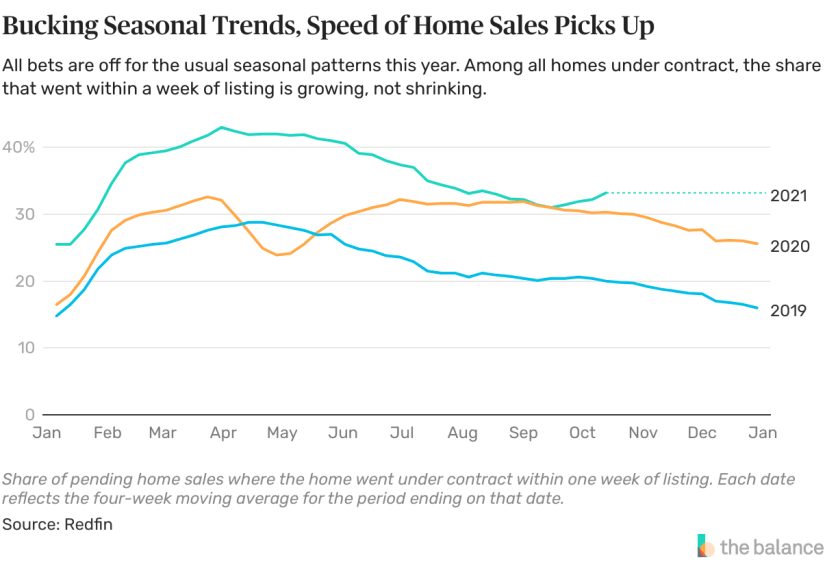
In the past couple of seasons, especially 2024 and 2025, home sales in October and
November have looked surprisingly lively. Instead of the usual slide into a sleepy fall,
we’re seeing buyers jump back in when mortgage rates dip and more sellers finally test
the waters after sitting on ultra-low pandemic-era loans. National Association of
Realtors (NAR) data shows existing-home sales ticking up in late fall, even hitting the
fastest pace since February in October 2025, despite budget worries, inflation hangovers,
and even a federal government shutdown weighing on the broader economy.
So what’s going on? Why is the autumn pace defying the usual pattern for home sales?
Let’s unpack the traditional seasonality of the housing market, what’s changed in this
new rate-driven era, and what buyers and sellers should actually do with this information
(spoiler: “wait until spring” is no longer automatic advice).
How Home Sales Normally Behave Through the Year
Real estate seasonality is usually one of the most predictable things in housing. Across
the U.S., home shopping tends to follow the school year, the weather, and basic human
laziness about moving while it’s freezing outside. Historically, more listings and more
closings roll in during spring and early summer, then slip into lower gear by late
summer and fall.
Spring and Summer: The Classic Rush
Spring is typically the all-star season for home sales. As soon as the snow melts in
colder markets and daylight sticks around for evening showings, buyers emerge in droves.
Families like to time moves before the next school year, and sellers know they can
usually command stronger prices and faster offers. National analyses using listing and
sales data show that prices often peak in June or July, with homes selling faster and
with more competing offers.
Summer keeps the momentum going, though it can get a little patchy in July and August
as people disappear to beaches and national parks. There are still plenty of closings,
but the frantic pace of late spring can ease just a bit. Overall, though, spring and
early summer are normally the “high season” for residential real estate.
Fall and Winter: Traditionally the Slow Lane
By late August and into September, activity usually slows. Kids are back in school;
weekend schedules fill up with sports and holidays; and in many parts of the country,
the idea of packing a moving truck in November sounds less than appealing. Traditionally:
- New listings decline in September and October.
- Buyer traffic drops as people focus on the holidays.
- Median days on market stretch longer into late fall and winter.
That classic pattern meant sellers often held off until spring to list, and buyers who
could be flexible sometimes scored better deals in late fall or winter, when competition
thinned out and “stale” listings had motivated owners behind them.
Why This Autumn Looks Different
The last few years have broken a lot of “normal,” and housing is no exception. Instead
of a simple weather-based cycle, we now have a market where interest rates, inventory,
and affordability shocks are heavily re-writing the usual seasonal script.
Mortgage Rate Swings Are Rewriting the Calendar
Mortgage rates surged to roughly 23-year highs in late 2023 before easing again in 2024
and 2025 as inflation cooled and the Federal Reserve signaled more dovish policy.
In prior eras, lower rates usually showed up gradually and synced nicely with the spring
buying season. Now, rate drops can show up in October just as easily as they do in May.
And buyers notice. When the average 30-year mortgage rate slid into the low 6% range in
fall 2025down from peak levels around the high 7% range in 2023pending sales and
closed sales picked up, even though it was “supposed” to be slowdown season.
The result: instead of autumn acting like the off-switch for demand, it behaved more
like a surprise bonus round.
In other words, the new rule of thumb is less “spring is when everyone buys” and more
“people jump when rates soften,” whether that happens in May or October.
The Mortgage Lock-In Effect Is Finally Easing (a Little)
Another big twist in the story is the much-discussed “lock-in effect.” Millions of
homeowners refinanced into 2–3% mortgages during the pandemic. Once rates soared above
7%, many of those owners essentially chained themselves to their comfy monthly payment
rather than moving and taking on a higher rate. Economists have documented how this
lock-in effect depresses mobility and keeps inventory artificially tight.
As mortgage rates have eased from their peaks, some of that lock-in is finally cracking.
Homeowners who wouldn’t even consider selling at a 7.5% rate are more open to moving
when they can get something in the low 6% range. It’s not a flood of inventory, but it’s
enough to nudge new listings highereven in autumn, when listing activity normally
drops.
Inventory and Prices Are Creating a New Kind of Seasonality
At the same time, total housing inventory has been inching up from rock-bottom levels.
By late 2024 and into 2025, existing-home supply in months rose into the mid-4-month
rangestill below the 5–6 months that typically signal a balanced market, but noticeably
more breathing room than the ultra-tight days of 2021–2022.
Meanwhile, prices haven’t exactly relaxed. Median existing-home sale prices hit a
record for the month of Octoberover $415,000 nationallywith more than two years of
uninterrupted year-over-year price gains.
Affordability is still strained, but the combination of slightly lower rates and more
inventory is making autumn feel less like a dead zone and more like a second-chance
window for buyers who sat out the spring frenzy.
Some major portal data even suggests we’re entering a “new kind of seasonality,” where
buyers react more to rate movements than the time of year. When rates dip, search
activity and sales riseeven if there are pumpkins on the porch instead of tulips in
the yard.
What the Data Says About This Fall’s Housing Market
If we zoom in on the numbers, the story gets clearer. In October 2025, NAR reported that
existing-home sales rose about 1.2% from the prior month to a seasonally adjusted annual
rate of roughly 4.1 million units. That’s the fastest pace since February and about 1.7%
higher than October of the previous year.
Even more surprising: this rebound happened despite a federal government shutdown that
had analysts worried about disruptions to mortgage processing and other housing-related
services. Instead, buyers snapped up opportunities as soon as rates eased, proving that
demand was not dead, just impatiently waiting for a better monthly payment.
This isn’t the first time autumn has overperformed recently, either. In November 2024,
existing-home sales jumped nearly 5% month-over-month and more than 6% year-over-year,
with inventory and prices rising in tandem.
Instead of cooling off, the late fall market delivered one of the strongest readings of
the year.
Regional and Segment Highlights
Autumn’s unusual pace hasn’t been perfectly uniform, but several patterns stand out:
-
Southern and Midwestern markets have shown some of the
strongest fall gains, helped by relatively better affordability and more new
construction compared with coastal metros. -
Move-up buyers are still cautious, but some are choosing to sell
and buy in the same season rather than trying to juggle a winter sale and a spring
purchase. -
First-time buyers remain below the “healthy” 40% share of the
market but are slowly gaining ground as rates ease and more modestly priced homes
appear.
What an Unusual Autumn Means for Sellers
If you’re thinking of selling, the takeaway is simple: don’t automatically wait for
April just because that used to be the playbook.
1. Treat Fall Like a Second Spring (When Conditions Line Up)
When mortgage rates dip and local inventory rises off ultra-tight lows, fall can behave
like a second spring spike in demand. Buyers who lost out in multiple-offer situations
earlier in the year are often still watching the market and ready to pounce when
something good hits their price range.
If your local data shows:
- Rates down from earlier peaks,
- Days on market holding steady or shrinking, and
- Inventory at manageable (not flooded) levels,
listing in October or November could mean less competition from other sellersbut still
plenty of buyer interest.
2. Lean Into Serious Buyers
Fall buyers tend to be serious. People touring homes between Halloween parties, soccer
tournaments, and Thanksgiving travel are not casually “just looking.” They often have a
specific timeline: a new job, a lease ending, or a life change like marriage, divorce,
or a new baby.
That seriousness can translate into smoother negotiations. You may not see 20 offers on
day one like in early 2022, but the offers you do get are more likely to be clean and
realistic, with fewer buyers walking away over minor inspection surprises.
3. Get Real About Pricing and Presentation
A decade-high level of buyer choice in some markets means buyers can instantly spot
when a home is overpriced or underprepared. Data from major listing portals and
brokerages highlights how sensitive autumn buyers are to correct pricing when they have
more options on the screen.
This means:
- Price realistically based on recent local sales, not last year’s headlines.
- Stage for coziness: warm lighting, clean curb appeal, and tidy outdoor spaces.
- Highlight energy efficiency, insulation, or updated systemsbuyers are cost-conscious.
What This Means for Buyers
For buyers, a surprisingly strong autumn market is both good and challenging news.
More Choices, But Still Not a Buyer’s Market
The rise in inventory and the loosening lock-in effect mean you’re likely to see more
homes on the market than in the depths of the pandemic frenzy. But with national median
prices still climbing and inventory still below pre-2020 norms, this is no fire sale.
Your best strategy in autumn:
- Get fully pre-approved so you can move quickly when the right home appears.
- Know your must-haves vs. nice-to-haves before you tour.
- Watch weekly rate movessmall dips can meaningfully change your monthly payment.
Don’t Chase the Rate, Know Your Payment
In a rate-driven market, it’s tempting to obsess over every 0.1% change in mortgage
quotes. A more practical approach is to focus on your total monthly housing cost:
principal, interest, taxes, insurance, and HOA if applicable.
If autumn brings a rate dip that allows you to comfortably afford a solid, well-located
home that fits your life, waiting “just in case” rates fall further by spring may backfire.
If rates do fall much more, additional buyers will pile in and push prices higher again.
Sometimes a “pretty good” autumn rate plus a good house beats a “perfect” spring rate
plus 10 extra competitors.
A Market Shifting from Weather-Driven to Rate-Driven
Taken together, recent data suggests we’re shifting from a purely weather-driven housing
market to a more rate-driven, affordability-driven one. Spring and early summer are
still busy, but they no longer own all the action. When mortgage rates dip, pent-up
demand shows up quickly, even in months that used to be quiet.
For homeowners and buyers, that means the old wisdom of “always list in spring” or
“never bother shopping in late fall” is out of date. The smarter play is to:
- Track local inventory and pricing trends.
- Keep an eye on mortgage rate movements throughout the year.
- Make decisions based on your personal timeline, not the calendar alone.
Autumn may still come with falling leaves and football, but it’s no longer guaranteed
to bring falling home sales.
Real-Life Autumn Market Experiences
Numbers are great, but what does this unusual autumn pace for home sales feel like on
the ground? Here are a few examples that mirror what agents and buyers are seeing in
markets across the country.
A First-Time Buyer Finally Gets a Win in October
Imagine a first-time buyer who spent the spring touring crowded open houses and losing
out on three different starter homes. By July they were burnt out, and by August,
mortgage rates had inched higher, making the monthly payment sting even more. They hit
pause and decided to “try again next year.”
Then, in early October, rates dropped by half a percentage point. Their agent called and
said, “Your budget just went up by about $20,000 in purchasing power.” At the same time,
a few more homes in their price range popped up as rate-sensitive sellers finally
listed. Instead of jostling with 10 other offers, they competed with just one. The home
didn’t go for an absurd price over list, and the sellers even agreed to cover a portion
of closing costs to get the deal done before the holidays.
That’s the new autumn feel in many markets: still competitive, but less chaotic, and
with moments of opportunity when rates ease and inventory loosens.
A Move-Up Seller Uses Fall to Avoid the Spring Stampede
On the other side of the table, consider a couple who bought a small townhouse five
years ago and now need more space. They refinanced into a low-3% mortgage in 2021, so
moving means trading a cheap payment for a more expensive one. For two years, they
simply refused.
In early fall 2025, they watched rates pull back from their 2023 highs. Their agent
showed them how much equity they’d built, how much the townhouse might fetch in the
current market, and how the math looked with a new rate around the low 6% range. The
numbers weren’t perfect, but they were workable, especially with a slightly larger
down payment and a conservative budget on the new home.
Instead of waiting for spring, they listed in October. Because fewer similar homes were
on the market, their townhouse stood out. They attracted solid offers quickly, gave the
buyers an extended closing to accommodate everyone’s schedules, and then shopped for
their next home in November with a clear budget in hand. They didn’t dodge every
stressorbuying and selling at the same time rarely is stress-freebut by leaning into
autumn’s “serious but not overwhelming” vibe, they avoided the spring stampede.
Investors and “Off-Season” Opportunities
Small investors and “house hackers” are also paying attention to fall’s changing
rhythm. For years, they treated late fall and winter as their hunting season, assuming
they’d encounter tired listings, nervous sellers, and more room to negotiate. That’s
still true in some pockets, but the script is evolving.
When NAR and other data sources started showing stronger-than-usual late-year sales,
savvy investors adjusted. Instead of assuming they’d have the field to themselves in
November, they now watch rate moves and weekly pending-sale numbers. If rates drop,
they prepare for more competition, even in what used to be their “secret” buying
season. They’re factoring in the possibility that a well-priced duplex or small
single-family rental could attract multiple offers any month of the year.
The common theme in all these stories is flexibility. The people who benefit from this
new autumn pace are the ones willing to move when conditions line upwhether that’s in
April, August, or the week before Thanksgiving.
Bottom Line: Don’t Underestimate the Fall Market
Autumn used to be the time when real estate agents cleaned up their open house signs
and prepared for a quiet winter. Today, it’s a season you ignore at your own risk.
Shifting mortgage rates, easing lock-in effects, and slowly improving inventory have
turned fall into a legitimate window of opportunity.
If you’re a seller sitting on equity, autumn might deliver a solid price without as
much competition from other listings. If you’re a buyer, you may find a bit more
breathing room than in the peak spring monthswhile still needing to stay nimble and
realistic in a market where affordability remains tight.
The old calendar still matters, but it’s no longer the boss. In today’s housing
landscape, the real “season” for home sales is whenever the numbers make sense for you
and the broader market gives you a chance to actwhether the leaves are green or bright
orange.