Table of Contents >> Show >> Hide
- Why Scalise’s Message Mattered to Independent Agents
- Tariffs: Economic Leverage or Price-Tag Boomerang?
- Tax Reform and the TCJA Deadline
- From Campaign Promise to Signed Law
- The Small Business Lens: Why Section 199A Hits Home
- Tariffs, Inflation and Insurance Costs
- Economic Recovery Is More Than One Lever
- Flood Insurance and State-Based Regulation
- What Businesses Can Learn From the Scalise Speech
- Experience Notes: What This Topic Looks Like on Main Street
- Conclusion
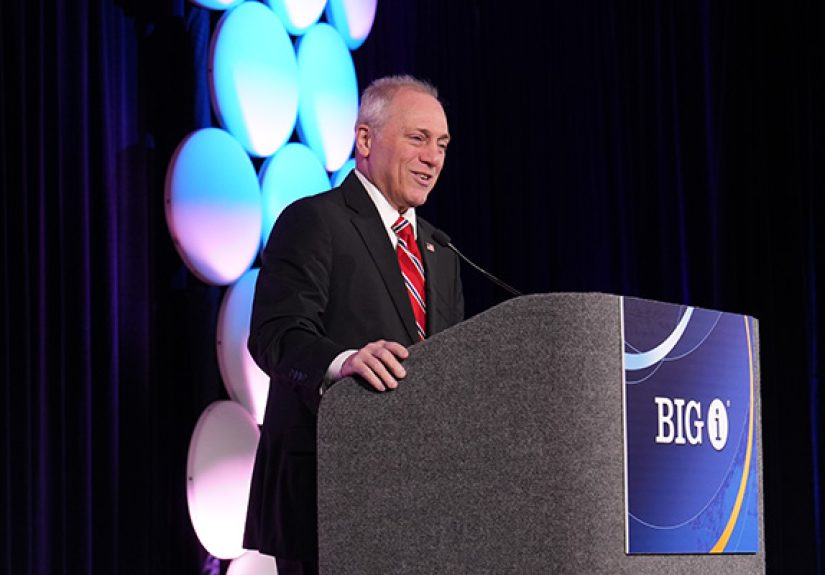
When House Majority Leader Steve Scalise stepped before members of the Big “I” at the 2025 Legislative Conference in Washington, D.C., he did not bring a sleepy Capitol Hill lecture. He brought a full plate: tariffs, tax reform, small business survival, flood insurance, state regulation and the grand political promise of getting the American economy back on track. In other words, the sort of menu that makes policy wonks reach for a second coffee and Main Street business owners reach for a calculator.
The IA Magazine report captured a timely moment. President Donald Trump had just reached the 100-day mark of his second administration, Republicans controlled both chambers of Congress, and lawmakers were racing toward a tax deadline that could reshape household budgets and business planning across the country. Scalise, a Louisiana Republican who represents the state’s 1st Congressional District and serves as the second-highest-ranking Republican in the House, used the keynote to argue that economic recovery depends on a familiar Republican recipe: lower taxes, stronger domestic production, reciprocal trade and less federal interference in industries best regulated close to home.
For independent insurance agents, this was not abstract Washington theater. Tariffs can affect the cost of vehicles, building materials and replacement parts. Tax reform can determine whether agency owners hire another producer, upgrade technology or postpone succession planning. Flood insurance policy can decide whether clients can close on a home, rebuild after a storm or afford coverage in the first place. So yes, a speech about tariffs and tax reform may sound dry on paper, but for the independent agency system, it lands right in the middle of the renewal meeting.
Why Scalise’s Message Mattered to Independent Agents
Independent insurance agencies live at the intersection of public policy and private risk. A family buying homeowners insurance may not think about congressional tax negotiations. A contractor pricing a commercial auto policy may not follow every twist in tariff policy. Yet both feel the results. If supply chains tighten, claims costs can rise. If business deductions expire, agency owners may become more cautious. If the National Flood Insurance Program faces uncertainty, real estate transactions and consumer confidence can wobble.
That is why Scalise’s appearance at the Big “I” conference mattered. The Big “I,” formally the Independent Insurance Agents & Brokers of America, has long advocated for independent agents on issues such as tax policy, flood insurance, crop insurance, data privacy and preservation of state-based insurance regulation. IA Magazine noted that Scalise has been a frequent speaker to the group and a supporter of the independent agency system. In Washington terms, that means he knows the room. In normal-person terms, it means he did not need a 40-slide deck explaining why insurance agents care about Section 199A.
Tariffs: Economic Leverage or Price-Tag Boomerang?
Scalise defended the Trump administration’s reciprocal tariff strategy as a negotiating tool. The basic argument was simple: if other countries place heavy barriers on American products, the United States should not keep playing nice while its own industries lose ground. According to the administration’s view, reciprocal tariffs would pressure trading partners to return to the table and create fairer terms for U.S. companies.
That message resonates with manufacturers, energy producers and workers who believe global trade has too often benefited foreign competitors while hollowing out American industrial capacity. A Louisiana lawmaker like Scalise can also connect the argument to energy, ports, shipping and Gulf Coast commerce. For many communities, “trade policy” is not a textbook chapter. It is jobs, wages, machine shops, refineries, trucking routes and whether a local business can compete without feeling like it is boxing with one glove.
Still, tariffs are not magic coupons. They are taxes on imported goods, usually paid first by U.S. importers and often passed along to businesses or consumers. Retailers may raise prices. Contractors may pay more for materials. Auto repair shops may face higher parts costs. Insurers may eventually see higher claim severity if replacement costs rise. That is the boomerang risk: a tariff meant to protect domestic industry can also circle back as inflation pressure.
For independent agents, this matters because insurance pricing already reflects a complicated storm of costs: labor, litigation, weather losses, vehicle technology, building materials and reinsurance. Add trade uncertainty to the mix and clients may ask why premiums keep climbing. Agents then must explain that a premium is not pulled from a hat by a mysterious actuary wearing a cape. It reflects the real-world cost of repairing, replacing and rebuilding.
Tax Reform and the TCJA Deadline
The heart of Scalise’s message was tax reform. In 2025, much of the 2017 Tax Cuts and Jobs Act was approaching expiration. That created a major policy cliff for households and pass-through businesses. Supporters of extension argued that allowing the provisions to lapse would mean higher marginal tax rates, a smaller standard deduction, a reduced child tax credit and the loss of the 20% qualified business income deduction for many pass-through owners.
For the independent agency channel, the pass-through deduction was especially important. Many agencies are organized as S corporations, partnerships, LLCs or sole proprietorships. Their income passes through to the owner’s individual tax return instead of being taxed like a traditional C corporation. Section 199A was designed to provide a deduction of up to 20% of qualified business income, helping pass-through firms remain competitive after the corporate tax rate was permanently lowered to 21% under the TCJA.
Scalise framed this as a fairness issue. If large corporations benefited from a 21% rate while Main Street businesses faced higher individual rates without relief, the playing field would tilt. Independent agents understood that point quickly. Many agencies are not giant national chains with naming rights on stadiums. They are family-owned firms with local employees, community relationships and a budget that notices every software subscription, staff raise and carrier appointment fee.
From Campaign Promise to Signed Law
At the time of the IA Magazine report, Scalise spoke about using budget reconciliation to move tax legislation through Congress. Later in 2025, the broader tax and spending package known as the One Big Beautiful Bill Act was signed into law on July 4 as Public Law 119-21. The law made major changes to federal taxes, credits and deductions, including provisions affecting individuals, families, workers and businesses.
For independent agents, one major outcome was the permanent extension of the Section 199A qualified business income deduction at 20%. Earlier House language had proposed increasing the deduction, but the final law preserved the 20% structure and made it permanent. That gave pass-through businesses something they often value as much as a lower rate: certainty. Business owners can plan when they know the rules. They can budget, invest, hire and decide whether this is the year to finally replace the agency management system that everyone complains about but nobody wants to migrate. Every office has one.
The law also generated sharp debate. Supporters said it prevented a large tax increase, protected small businesses and encouraged investment. Critics warned that the package would increase deficits and reduce safety-net spending. That tension is central to modern tax politics: one side sees tax relief as fuel for growth; the other sees lost revenue and unequal benefits. The truth for business owners is practical. They want a tax code that is predictable, competitive and understandable without needing a decoder ring.
The Small Business Lens: Why Section 199A Hits Home
Section 199A may sound like a storage unit number, but for pass-through business owners it can influence real decisions. Consider a small independent agency with two owners, six employees and a growing commercial lines book. If the owners expect higher taxes next year, they may delay hiring an account manager, postpone a producer training program or avoid investing in better client portals. If the deduction remains stable, they may feel more comfortable making long-term moves.
That does not mean every dollar of tax relief instantly becomes a new job. Business decisions are messier than campaign slogans. Owners consider carrier appetite, local competition, premium growth, claims trends, interest rates and whether they can find qualified staff. But tax certainty reduces one major unknown. In a hard insurance market, where clients are already frustrated by pricing and underwriting pressure, agencies need room to modernize rather than merely survive.
Independent agents also serve as economic translators. They explain risk to households, contractors, restaurant owners, trucking firms, landlords and nonprofit boards. When Washington changes tax rules or trade policy, agents often see the effects before the talking heads finish arguing about them. A roofer facing higher materials costs may change coverage needs. A restaurant owner squeezed by food prices may review liability limits. A homeowner in a flood-prone area may suddenly ask whether federal insurance will still be available. Policy becomes personal very quickly when it shows up as a bill.
Tariffs, Inflation and Insurance Costs
One of the biggest economic challenges in recent years has been inflation. Even when headline inflation cools, certain categories remain stubborn: auto repair, home construction, labor, medical care and legal expenses. These categories matter deeply to insurance. If a bumper has sensors, cameras and calibration requirements, it is not just a bumper anymore. It is a tiny computer wearing car paint.
Tariffs can add another layer to that cost structure. Imported steel, aluminum, electronics, vehicle parts, appliances and construction materials can all feed into claims costs. A commercial property claim after a windstorm does not happen in a vacuum. It depends on lumber, shingles, HVAC systems, skilled labor and supply availability. If tariffs raise prices or create uncertainty, insurers eventually reflect those costs in rates. Agents then become the frontline educators, helping clients understand why “I did not file a claim” does not always mean “my premium cannot rise.”
This is where Scalise’s argument meets the practical marketplace. If tariffs succeed in bringing more production to the United States, the long-term result could be stronger supply chains and more domestic investment. If they mainly raise input costs, small businesses and consumers bear the pain. The policy question is not whether America should compete. Of course it should. The question is how to compete without accidentally making every repair estimate look like it was printed on gold leaf.
Economic Recovery Is More Than One Lever
“Getting the economy back on track” sounds like a single mission, but it requires more than one lever. Tax policy matters. Trade policy matters. Energy production matters. Federal spending matters. So do workforce participation, productivity, immigration rules, interest rates, housing supply and regulatory stability. Anyone promising a one-button fix should be treated the way you treat an email saying you won a yacht: with caution and a raised eyebrow.
Scalise’s message emphasized lower taxes, reciprocal trade, American competitiveness and a more business-friendly environment. Those priorities align with longstanding Republican economic philosophy. However, the broader economy also needs fiscal discipline. Tax cuts can support growth, but if deficits rise sharply, interest costs can crowd out other priorities. Tariffs can protect certain industries, but if applied broadly, they can raise prices. Deregulation can reduce compliance burdens, but weak oversight can create new risks. Good economic policy is a balance, not a bumper sticker.
For independent insurance agents, the best economy is not merely one with rising GDP. It is one where households can afford coverage, small businesses can grow, carriers can price risk responsibly and communities can recover from disasters. That requires healthy private markets, smart public programs and lawmakers who understand that a Main Street business is not a miniature version of a Fortune 500 company. It has fewer lawyers, fewer lobbyists and, usually, a printer that jams at the worst possible time.
Flood Insurance and State-Based Regulation
IA Magazine also highlighted Scalise’s comments on the National Flood Insurance Program and state-based insurance regulation. For agents, NFIP reauthorization is not a side issue. In flood-prone communities, it is central to housing, lending and disaster recovery. When the program approaches expiration, uncertainty spreads through real estate closings, renewals and client conversations.
Scalise praised the advocacy role of Big “I” members, noting that agents touch every congressional district. That point is politically powerful. Independent agents can explain how policy works outside Washington. They know what happens when a client cannot find affordable homeowners coverage, when a coastal property faces flood concerns or when federal delay creates confusion in local markets. Their stories are not theoretical white papers. They are Monday morning phone calls.
State-based regulation is another key priority. Insurance is traditionally regulated at the state level because risk varies dramatically by geography. Louisiana, Florida, Iowa, California and Vermont do not face identical property insurance challenges. A one-size-fits-all federal approach may sound efficient, but in insurance it can miss local realities. Agents often argue that state regulators are better positioned to understand market conditions, consumer needs and regional catastrophe exposure.
What Businesses Can Learn From the Scalise Speech
The biggest lesson from Scalise’s IA Magazine appearance is that business owners should pay attention before policy changes become emergencies. Waiting until December to understand a tax cliff is like waiting until the hurricane is visible from the porch to check whether you own a flashlight. It is technically possible, but nobody will applaud your planning.
Agency owners should review how federal tax changes affect entity structure, succession planning, compensation strategy and investment timing. They should also communicate proactively with clients. A client who understands why costs are rising is less likely to assume the agent is simply the messenger of doom with a license number. Clear communication can turn policy uncertainty into a trust-building moment.
Businesses should also scenario-plan around tariffs. That does not mean predicting every trade deal. It means identifying where imported goods, replacement parts or materials influence operations. Contractors, retailers, transportation firms, manufacturers and repair businesses may all need updated risk conversations. Insurance programs should reflect current replacement values, supply chain realities and business interruption exposures.
Experience Notes: What This Topic Looks Like on Main Street
On Main Street, economic policy rarely arrives wearing a name tag that says “Hello, I am federal tax reform.” It arrives as a client who says the new work truck costs more than expected. It arrives as a roofing contractor whose material quote changed between Monday and Friday. It arrives as an agency owner wondering whether to hire another account manager now or wait until Congress finishes arguing. That is why the Scalise message is worth viewing through lived business experience, not just political analysis.
Imagine a local independent agency in a coastal community. The owner is juggling homeowners clients worried about premiums, small contractors worried about equipment costs and families asking whether flood insurance is still available. At the same time, the agency itself is a pass-through business. The owner has payroll, rent, technology fees, cyber protection, licensing costs and carrier production goals. When lawmakers debate Section 199A, that owner hears something very specific: “Will I have enough after-tax cash flow to keep building this business?”
Now consider tariffs. A client who owns an auto body shop may face higher costs for imported parts. A homebuilder may face uncertainty in lumber, fixtures or appliances. A restaurant may watch food costs move unpredictably. None of these businesses wants a lecture on global trade theory while standing next to a spreadsheet that already looks like it needs therapy. They want to know how to price jobs, manage risk and keep customers from fleeing when costs rise.
This is where independent agents earn their reputation as local advisers. They are not just selling policies; they are helping businesses translate economic pressure into risk decisions. Should a contractor update equipment values? Should a retailer revisit business income limits? Should a property owner review flood exposure? Should a growing agency invest in automation before staffing costs climb further? Those are practical questions that connect directly to the themes Scalise raised.
The best business experience teaches humility. Tax cuts can help, but they do not solve every problem. Tariffs can create leverage, but they can also create headaches. Economic growth sounds great, but if insurance affordability collapses in a local market, the community still feels stuck. A serious recovery strategy must respect both national competitiveness and neighborhood-level resilience.
For agency owners, the action step is simple: do not watch Washington passively. Read policy updates, talk with tax professionals, engage trade associations and keep clients informed. The Big “I” model works because agents bring real stories to lawmakers. A congressional office may debate pass-through deductions in budget language, but an agent can explain how that deduction affects a family business, six employees and hundreds of clients who rely on advice when life gets messy.
In that sense, Scalise’s keynote was not just about Republican tax priorities or tariff strategy. It was a reminder that economic policy is a chain reaction. Congress pulls one link, and Main Street feels the tug. The smarter the conversation between policymakers and local professionals, the better chance the economy has of moving forward without leaving small businesses to carry the toolbox alone.
Conclusion
House Majority Leader Steve Scalise’s remarks at the Big “I” Legislative Conference brought together three issues that define the current economic debate: tariffs, tax reform and the search for durable growth. His argument centered on American competitiveness, permanent tax relief for small businesses and the need to use trade policy to secure better terms for the United States. For independent insurance agents, the speech landed because these issues directly affect agency operations, client costs and community resilience.
The most important takeaway is that policy certainty matters. Small businesses can adapt to many challenges, but they struggle when rules are temporary, costs are unpredictable and federal programs face repeated deadlines. Whether the issue is Section 199A, reciprocal tariffs, flood insurance or state-based regulation, Main Street needs clarity. Economic recovery is not built by slogans alone. It is built by rules that businesses can understand, plan around and trust long enough to invest.