Table of Contents >> Show >> Hide
- Why Winter Photos Instantly Create Holiday Mood
- The Snow Scene: Clean, Bright, and Quietly Dramatic
- Holiday Lights: The Tiny Stars We Put on Purpose
- Cozy Indoor Photos: Where the Holiday Mood Lives
- Winter Portraits: Faces, Breath, Scarves, and Red Noses
- Winter Landscapes: The Calm Before the Cookie Storm
- Editing Winter Photos Without Freezing the Feeling
- Specific Winter Photo Ideas That Bring Instant Holiday Cheer
- How Winter Photos Help Us Remember the Season
- My Personal Winter Photo Experience: The Images That Changed the Season for Me
- Conclusion: Let Winter Do the Decorating
- SEO Tags
There is a special kind of magic that only winter photos can deliver. Maybe it is the way snow softens a street until even the neighbor’s trash cans look like they belong in a greeting card. Maybe it is the warm glow of holiday lights reflecting on frosty windows. Or maybe it is simply that winter gives everyday life permission to become dramatic, cozy, sparkly, and slightly overdressed.
My winter photos are not just pictures of snow, trees, scarves, and suspiciously photogenic mugs of hot chocolate. They are little invitations to slow down. They capture the feeling of stepping outside when the world is quiet, seeing your breath float like cartoon dialogue, and realizing that even the cold has good lighting if you catch it at the right time.
In this collection-inspired guide, I want to walk you through the scenes, moods, and details that make winter photography so powerful during the holiday season. Whether you love Christmas lights, snowy landscapes, candid family moments, cozy interiors, or the cinematic blue hour after sunset, these winter photo ideas can help you feel the season before the first cookie tray even appears.
Why Winter Photos Instantly Create Holiday Mood
Winter photography works because it combines contrast. Outside, the world can be cold, pale, and quiet. Inside, everything feels warmer: candles, blankets, cookies, ornaments, laughter, and the kind of socks that say, “I have accepted my destiny as a couch person.” That contrast is exactly what makes holiday photography so emotional.
Snow acts like a natural reflector, bouncing light back into faces and brightening landscapes. Holiday lights add color and sparkle when the daylight disappears early. Frost, steam, shadows, and warm windows create texture. Even ordinary scenes begin to look like memories while they are still happening.
The best winter photos do not need to be perfect. In fact, a little imperfection makes them better. A crooked scarf, a child blinking in front of a Christmas tree, a dog refusing to cooperate with a festive sweater, or footprints ruining a flawless patch of snow can all become the soul of the image. Holiday mood is not about perfection. It is about recognition. You see the photo and think, “Yes, that feels like winter.”
The Snow Scene: Clean, Bright, and Quietly Dramatic
Snow photos are the classic winter postcard, but they can be tricky. Cameras often try to turn bright snow gray because they are designed to balance exposure. That means a beautiful white landscape can accidentally look like sad oatmeal. To keep snow looking fresh and luminous, winter photographers often slightly increase exposure compensation and pay attention to highlights.
One of my favorite winter photos is a simple path after fresh snowfall. No people, no decorations, no dramatic mountain peak. Just a narrow trail curving between trees, with small branches holding snow like powdered sugar. The reason it works is not because the scene is rare. It works because the eye wants to follow the path. It suggests a story: someone walked here, someone will walk here, and maybe there is a warm kitchen waiting at the end.
How to Make Snow Photos Feel Festive
Look for small color accents against the white: a red sled, green pine needles, gold lights, a plaid scarf, or a blue mailbox wearing a silly snow hat. Winter photos become more holiday-friendly when they include a warm detail that breaks the coldness. A single wreath on a snow-covered door can say more than a dozen over-decorated scenes.
Fresh footprints, animal tracks, falling flakes, and soft shadows can also add life. The goal is not just to photograph snow. The goal is to photograph snow doing something: covering, sparkling, falling, melting, hiding, glowing, or making the world look like it cleaned its room for company.
Holiday Lights: The Tiny Stars We Put on Purpose
Nothing says holiday mood faster than lights. String lights in windows, glowing porches, tree lights, candles, lanterns, and decorated streets all create visual warmth. The best time to capture outdoor holiday lights is often blue hour, the short window after sunset when the sky is deep blue but not completely black. During that time, lights sparkle while the surroundings still have detail.
Photographing holiday lights too late can make everything except the bulbs disappear. Photographing them too early can make the lights look weak. Blue hour gives you the best of both worlds: atmosphere and visibility. It is the photography version of catching cookies exactly between doughy and burned, which is basically a public service.
Creating Bokeh With Christmas Lights
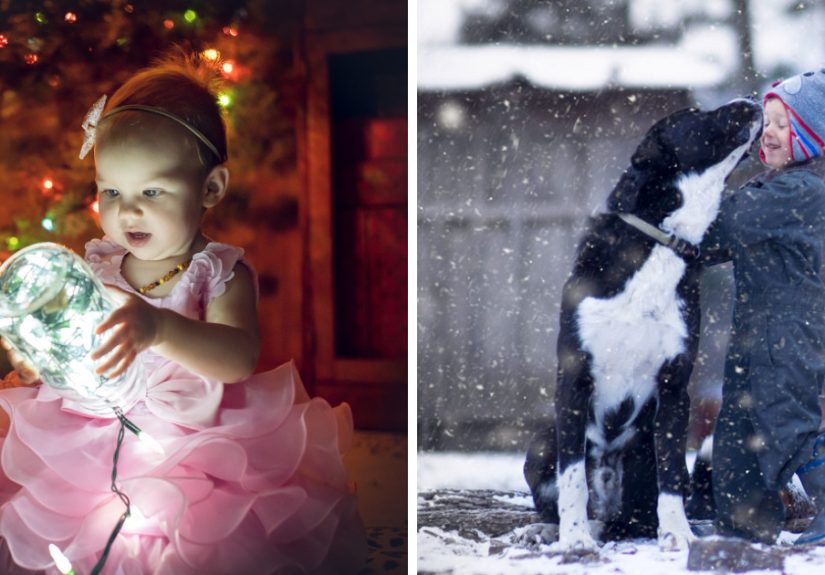
Bokeh is the soft, dreamy blur created by out-of-focus lights. For a classic holiday portrait, place your subject several feet in front of the lights, use a wide aperture, and focus on the person rather than the background. The lights turn into glowing circles, and suddenly your living room looks like it hired a production designer.
This works beautifully for portraits, pets, ornaments, mugs, wrapped gifts, and even close-up shots of hands decorating a tree. The secret is distance. The more separation between the subject and the lights, the creamier the background becomes. It is a small technical choice that creates a huge emotional effect.
Cozy Indoor Photos: Where the Holiday Mood Lives
Winter is not only about outdoor landscapes. Some of the best winter photos happen inside, where the season becomes personal. A half-decorated tree, flour on the counter, mittens drying near the door, a stack of wrapped gifts, or a family board game can carry more feeling than a perfect mountain scene.
Indoor holiday photography is about warmth. Natural window light is your friend during the day. At night, lamps, candles, and tree lights create atmosphere, but they can also confuse your camera. Instead of using harsh overhead lights, try softer side lighting. A lamp behind a mug of cocoa or a candle near a plate of cookies can make a scene feel intimate without turning it into a detective interrogation.
Details That Make Winter Photos Feel Real
The most memorable winter photos often focus on details: cinnamon sticks, ribbon curls, pinecones, snow on boots, handwritten gift tags, fogged-up glasses, marshmallows melting into hot chocolate, or a child’s mitten holding one suspiciously large cookie. These small objects are emotional shortcuts. They tell readers what the season smells like, tastes like, and sounds like.
When shooting details, move closer than feels normal. Fill the frame. Let the background fall away. A close-up of an ornament can reflect the room. A cookie tray can show the chaos of baking. A candle can turn a simple table into a quiet holiday ritual.
Winter Portraits: Faces, Breath, Scarves, and Red Noses
Winter portraits have personality. People bundle up, move differently, laugh harder in the cold, and make faces when snowflakes land on their eyelashes. That is visual gold. Instead of forcing stiff poses, I like winter portraits that feel like little moments: someone looking up at falling snow, adjusting a hat, holding warm drinks, or laughing because the wind just made everyone regret their hairstyle.
Backlighting can be beautiful in winter, especially when the sun is low. It can make hair glow, snow sparkle, and breath visible. But faces may need extra light. A reflector, a small flash, or simply turning the subject toward brighter snow can help keep skin tones natural.
Group Photos Without the Holiday Awkwardness
Holiday group photos can go wrong quickly. Someone always closes their eyes. Someone else thinks “formal portrait” means standing like a haunted lamp. The easiest fix is movement. Ask people to walk, toss snow, look at each other, hold mugs, or squeeze together under a blanket. Give them something to do, and the photo starts breathing.
For family winter photos, I prefer a mix of wide shots and close-ups. The wide shot shows the setting: snowy yard, decorated porch, glowing tree farm, or city street. The close-up shows the emotion: hands, smiles, rosy cheeks, and that one uncle who came dressed like he is leading an expedition to the North Pole.
Winter Landscapes: The Calm Before the Cookie Storm
Winter landscapes feel different from every other season. Trees lose their leaves, skies turn softer, and the land becomes simpler. This minimalism is powerful. A single cabin, fence, bench, or streetlamp can become the main character. Negative space, which is the empty area around your subject, makes winter images feel peaceful and elegant.
To create stronger winter landscape photos, look for lines and layers. A road leading into snow, a row of trees fading into fog, or shadows stretching across a frozen field can guide the viewer’s eye. Reflections in icy water, smoke rising from chimneys, and warm windows in cold surroundings add story.
The holiday mood does not always require obvious decorations. Sometimes a quiet snowy landscape feels festive because it gives the mind room to imagine. It feels like the opening shot of a movie where someone is definitely about to learn the true meaning of Christmas, probably after arguing with a charming baker.
Editing Winter Photos Without Freezing the Feeling
Editing is where winter photos can either become magical or turn into neon-blue freezer advertisements. Snow often picks up cool tones from the sky, especially in shade. A little blue can feel crisp and seasonal, but too much can make people look like they have been stored with the peas.
For holiday mood, balance cool outdoor tones with warm highlights. Keep snow bright but preserve detail. Lift shadows gently so faces and decorations remain visible. Add contrast carefully, because winter scenes already have strong light and dark areas. For indoor photos, warm tones can feel cozy, but avoid pushing orange too far unless you want everyone to look like gingerbread.
Choosing a Consistent Winter Photo Style
A cohesive winter photo collection usually has a clear mood. You might choose bright and airy snow scenes, rich and warm holiday interiors, moody blue-hour lights, or nostalgic film-inspired tones. Consistency helps the images feel like one story instead of random snapshots from a camera roll that had too much coffee.
Before editing, ask what the photo should feel like. Peaceful? Joyful? Cozy? Funny? Magical? The answer should guide your brightness, contrast, color temperature, and cropping. A snow-covered chapel may need soft elegance. A child face-first in a snowbank may need documentary honesty and perhaps a respectful pause for laughter.
Specific Winter Photo Ideas That Bring Instant Holiday Cheer
If you want winter photos that truly get people in the holiday mood, think in scenes. A decorated front porch after snowfall is always inviting. A close-up of hands hanging ornaments feels intimate. A pet sitting near wrapped gifts is almost unfairly cute. Steam rising from a mug near a window says “cozy” without needing a caption.
Tree farms are excellent because they combine nature, tradition, and family movement. City streets with lights and shop windows can feel cinematic. Snowy parks offer quiet beauty. Kitchens during holiday baking bring warmth and humor. Even a messy living room after gift wrapping can become a great image if you frame it as evidence of joyful chaos.
Try These Photo Prompts
Photograph the first snowfall from inside a window. Capture ornaments with blurred lights behind them. Shoot a streetlamp during falling snow. Take a portrait during blue hour with holiday lights in the background. Photograph boots by the door, cookies cooling on a rack, or a wreath dusted with snow. Create a small series called “Winter Morning,” “Holiday Night,” or “Things That Smell Like Cinnamon.”
These prompts work because they are simple. You do not need an expensive location or a professional studio. You need attention, timing, and the willingness to kneel in snow for art, which is noble until your jeans start making poor life choices.
How Winter Photos Help Us Remember the Season
Holiday memories are often built from sensory details: lights, songs, food, cold air, warm rooms, familiar decorations, and the return of traditions. Winter photos preserve those details before they blur together. Years later, a photo of a crooked tree or snowy sidewalk may bring back more emotion than a perfectly staged portrait.
That is why I love winter photography. It captures both the big and small versions of the season. The big version is sparkling lights, snowy landscapes, and family gatherings. The small version is mitten fuzz, cookie crumbs, half-melted snowflakes, and the quiet moment before everyone wakes up.
My Personal Winter Photo Experience: The Images That Changed the Season for Me
Every year, I tell myself I will take fewer winter photos and simply “be present.” This is a beautiful idea that lasts approximately nine minutes, usually until I see light hitting snow in a way that makes an ordinary sidewalk look like it has been personally blessed by a holiday movie director. Then the camera comes out, and there I am, crouching beside a mailbox like a wildlife photographer tracking a rare species called Festive Suburbia.
One of my favorite winter photo memories happened on a morning after a quiet snowfall. Nothing dramatic had happened. No grand travel destination. No perfect mountain view. Just a neighborhood street, parked cars wearing snow caps, and a row of trees holding white along their branches. The scene was so still that even my footsteps felt too loud. I took a photo of a red front door with a wreath on it, framed by soft snow. Technically, it was simple. Emotionally, it felt like the whole holiday season had knocked politely and said, “Hello, I brought cinnamon.”
Another winter photo I still love was taken indoors, late at night, after everyone had gone to bed. The Christmas tree lights were the only lights in the room. Wrapping paper scraps were scattered across the floor, a ribbon had somehow attached itself to a chair leg, and one lonely mug sat on the table like it had survived a festive battle. I photographed the mess instead of cleaning it first. That image became one of my favorites because it was honest. The holidays are beautiful, yes, but they are also tape stuck to your sleeve, scissors disappearing every five minutes, and someone asking where the gift tags are while standing directly beside the gift tags.
I have also learned that winter photos are better when I stop chasing perfection. Some of the best shots happen between the planned moments. A child looking bored in a puffy coat. A friend laughing because snow slid off a branch onto their hat. A dog proudly ruining a clean patch of snow. A hand reaching for the last cookie. These are the photos that feel alive because they contain motion, personality, and tiny disasters.
Cold-weather photography has taught me patience, too. Batteries drain faster. Fingers get stiff. Lenses fog when you rush from freezing air into a warm room. Sometimes the sky refuses to glow, the snow turns slushy, or the wind attacks with the enthusiasm of a villain. But those challenges make the successful images feel earned. When the blue hour arrives, the lights turn on, and the snow reflects just enough brightness, you forget the cold for a moment. You see the frame, press the shutter, and capture a little proof that winter can be generous.
Most of all, my winter photos remind me that holiday mood is not something you buy in a box of ornaments. It is something you notice. It is in windows, hands, breath, shadows, kitchens, sidewalks, and small traditions. Photography simply helps us catch it before it melts.
Conclusion: Let Winter Do the Decorating
Winter photos have a way of turning ordinary life into seasonal magic. A snowy path, a glowing window, a mug of cocoa, or a string of lights can instantly shift the mood from everyday routine to holiday wonder. The best part is that you do not need perfect weather, perfect gear, or perfect people. You need light, attention, and a willingness to see beauty in small things.
Whether you are photographing snow-covered streets, family portraits, holiday lights, cozy interiors, or funny behind-the-scenes moments, let your images tell the truth of the season. Make them warm, personal, and alive. Let the snow be bright, the lights be dreamy, and the memories be slightly messy. That is where the holiday mood lives.